Posts Tagged ‘authenticity’
“In the world of art, authenticity is often just an illusion”*…

Kelly Grovier with the simple rules to use in identifyng art forgery…
It’s everywhere: fake news, deep fakes, identity fraud. So ensnared are we in a culture of digitised deceptions, a phenomenon increasingly augmented by artificial intelligence, it would be easy to think that deceit itself is a high-tech invention of the cyber age. Recent revelations however – from the discovery of an elaborate, if decidedly low-tech, art forger’s workshop in Rome to the sensational allegation that a cherished Baroque masterpiece in London’s National Gallery is a crude simulacrum of a lost original – remind us that duplicity in the world of art has a long and storied history, one written not in binary ones and zeroes, but in impossible pigments, clumsy brushstrokes and suspicious signatures. When it comes to falsification and phoniness, there is indeed no new thing under the Sun.
On 19 February, Italy’s Carabinieri Command for the Protection of Cultural Heritage uncovered a covert forgery operation in a northern district of Rome. Authorities confiscated more than 70 fraudulent artworks falsely attributed to notable artists from Pissarro to Picasso, Rembrandt to Dora Maar, along with materials used to mimic vintage canvases, artist signatures, and the stamps of galleries no longer in operation. The suspect, who has yet to be apprehended, is thought to have used online platforms such as Catawiki and eBay to hawk their phoney wares, deceiving potential buyers with convincing certificates of authenticity that they likewise contrived.
News of the clandestine lab’s discovery was quickly followed by publicity for a new book, due for release this week, alleging that one of The National Gallery’s highlights is not at all what it seems. According to artist and historian Euphrosyne Doxiadis, author of NG6461: The Fake National Gallery Rubens, the painting Samson and Delilah – a large oil-on-wood attributed to the 17th Century Flemish master Peter Paul Rubens and purchased by the London museum in 1980 for £2.5m (then the second-highest price ever paid for a painting at auction) – is three centuries younger than the date of 1609-10 that sits beside it on the gallery wall and is incalculably less accomplished than the museum believes.
Doxiadis’s conclusion corroborates one reached in 2021 by the Swiss company, Art Recognition, which determined, through the use of AI, that there was a 91% probability that Samson and Delilah is the work of someone other than Rubens. Her assertion that the brushwork we see in the painting is crass and wholly inconsistent with the fluid flow of the Flemish master’s hand is strongly contested by The National Gallery, which stands by its attribution. “Samson and Delilah has long been accepted by leading Rubens scholars as a masterpiece by Peter Paul Rubens”, it said in a statement given to the BBC. “Painted on wood panel in oil shortly after his return to Antwerp in 1608 and demonstrating all that the artist had learned in Italy, it is a work of the highest aesthetic quality. A technical examination of the picture was presented in an article in The National Gallery’s Technical Bulletin in 1983. The findings remain valid.”
The divergence of opinion between the museum’s experts and those who doubt the work’s authenticity opens a curious space in which to reflect on intriguing questions of artistic value and merit. Is there ever legitimacy in forgery? Can fakes be masterpieces? As more sophisticated tools of analysis are applied to paintings and drawings whose legitimacy has long been in question (including several works attributed to Leonardo da Vinci, such as the hotly disputed chalk and ink drawing La Bella Principessa), as well as those whose validity has never been in doubt, debates about the integrity of cultural icons are only likely to accelerate. What follows are a handful of handy principles to keep in mind when navigating the impending controversies – five simple rules for spotting a fake masterpiece…
When a work of art isn’t what it appears to be: “Rembrandt to Picasso: Five ways to spot a fake masterpiece,” from BBC. Eminently worth reading in full.
* B.A. Shapiro, The Art Forger
###
As we ferret out the faux, we might send carefully-secured birthday greetings to Linus Yale, Jr.; he was born on this date in 1821. After launching a promising career as a portrait painter, Yale joined his father’s lock business and became the nation’s leading expert on banklocks. He created many locks, among them, the one for which he is best remembered, the “safe door lock,” the first modern “pin tumbler lock” (AKA “the Yale lock”).

“The problem with introspection is that it has no end”*…

Still, we persevere. Samantha Rose Hill considers Hannah Arendt‘s final unfinished work, in which the philosopher (and self-described political theorist) mounted an incisive critique of the idea that we are in search of our true selves. More specifically, she explores Arendt’s wrestling with the concept of authenticity…
… In the midst of the Second World War, French existentialism emerged out of German existentialism. If authenticity was a question of being for Heidegger and a question of freedom for Jaspers, for Jean-Paul Sartre, Simone de Beauvoir and Albert Camus it became a question of individual ethics. The underlying question shifted from ‘What is the meaning of Being?’ to ‘How should I be?’ The credo underpinning Sartre’s work – ‘existence precedes essence’ – meant that we are thrown into the world without any fixed substance, and this meant that we get to choose who we become. While philosophers like Thomas Hobbes and Jean-Jacques Rousseau tried to capture human nature by imagining what life was like before society, for Sartre, there is no human nature. We must always be imagining and reimagining who we are, which is to say we are always in the process of becoming. For Beauvoir, becoming was a creative enterprise, a work of art. And she argued that it was not enough to shape oneself within the existing conditions of the world, but that one must also shape the conditions of the world itself. Authenticity for the French existentialists was not about uncovering a pre-existing true self, but rather choosing to engage in a process of becoming.
Caught between German and French existentialism, Arendt offered a critique of authenticity in her final unfinished work, The Life of the Mind. In place of authenticity, Arendt turned to the concept of the will in order to think about how one decides to act in the world. A student of Heidegger and Jaspers, and a fellow traveller of Sartre, Camus and Beauvoir from 1933-41 during her years of exile in Paris, Arendt rejected the idea that a true self exists within the self. She was not a transcendental thinker. For her there was no capital-G God, and there was no capital-B Being. In place of an inner-authentic self, she argued that the inner organ of decision-making that guided one’s actions was the will.
Following the work of St Augustine and Jaspers, Arendt turned Heidegger on his head and argued that all thinking moves from experience in the world, not from Being. By arguing that thinking was a function of Being, Heidegger had tried to divorce thinking from the will in order to argue that it was one’s true inner Being that determined ultimately who they became in the world. But for Arendt, this was an abdication of personal responsibility and choice. It was a way of handing over one’s decision-making power. And for her, it is only the choices that we make in real time when confronted with decisions that determine who we will become, and in turn determine the kind of world that we will help to shape.
So, what is the will? And is it a persuasive alternative to authenticity?
Unlike ‘authenticity’, ‘willing’ is not a very desirable word. First of all, it’s not a thing one can possess, it’s an action, something one has to do. And unlike authenticity, there is no sense of comfort in ‘the will’. Authenticity promises certainty, whereas the will promises uncertainty. And in times of turmoil, it is all too human to prefer that which promises predictability to the unknown. Colloquially, willing usually appears around New Year’s Eve when people start talking about resolutions and how they’d like to change their lives. The will becomes a question of ‘willpower’. Or worse, willing can remind us of those difficult times when someone implores us ‘Are you willing to cooperate?’ ‘Are you willing to try?’ ‘Are you willing to do what it takes to get the job done?’ But for Arendt, the will was the means to our freedom, it was the promise that we can always be other than we are, and so to the world. The will is a space of tension inside the self where one actively feels the difference between where they are and where they would like to be.
Willing is the mental activity that goes on between thinking and judgment. It has the power to shape us by drawing us into conflict with ourselves. Without inner conflict, there is no forward movement. These are the basic principles of willing:
- Willing is characterised by an inner state of disharmony.
- Willing is experienced as a felt sense of tension within the body where the mind is at war with itself.
- Willing makes one aware of possible decisions, which creates a feeling of being pulled in multiple directions at once.
- Willing can feel very lonely. Decisions and choices are shaped by one’s environment, by the everydayness of being, but ultimately the responsibility for deciding is up to oneself.
- Willing makes one aware of the tension that exists between oneself as a part of the world, and oneself as an individual alone existing in relationship to the world.
- Willing is the principle of human individuation.
- Willing relates to the world through action.
- The will is the inner organ of freedom.
Everyone makes hundreds of decisions a day, but most of the time they aren’t conscious of the decisions they are making. Their decisions are not subjected to the will. Instead, they are simply following a routine of patterns that have been formed over time. In order to engage the will, one must be willing to pause. Because, while thinking moves from past experience, and imagination fixates on what might happen in the future, the past and the future are beyond the reach of the will. Willing is what happens before one acts. To be in a state of willing is to be in the Now.
Authenticity is attractive in part because it promises a sense of harmony, it is the promise that, if we know who we are, then we can act in a way where our actions are in alignment with our values. But the will is characterised by a sense of conflict. It is the inner organ that generates tension within the self, making one aware of the discrepancies between who they are and who they might like to be, or what they want and what they might be able to have. But it is this tension that is vital for bringing consciousness to decision-making…
Eminently worth reading in full: “Beyond authenticity,” from @Samantharhill in @aeonmag.
Pair with Lionel Trilling‘s Sincerity and Authenticity, the transcriptions of his 1970 Norton Lectures at Harvard, in which Trilling examined “the moral life in process of revising itself” as first sincerity (in the pre-Enlightenment, e.g., Shakespeare), then “authenticity” (in the 20th century, as the article linked above explains) became central to moral thought.
* Philip K. Dick
###
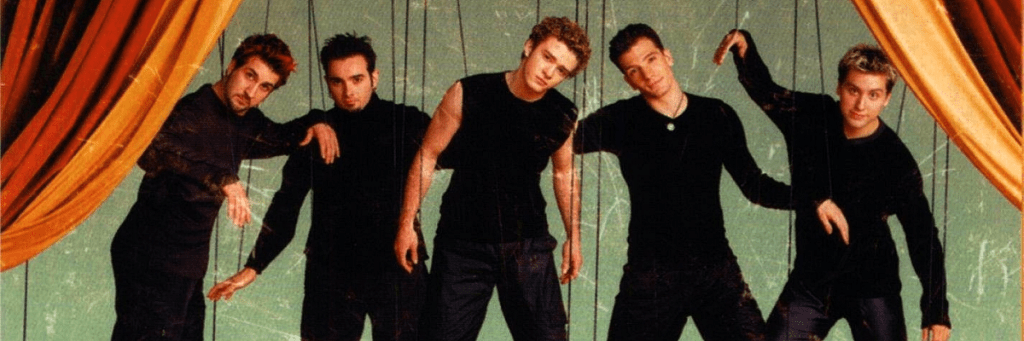
As we double down on determination, we might recall that it was on this date in 2000 that the boy band *NSYNC had its first number #1 hit, “It’s Gonna Be Me.”
“Make visible what, without you, might perhaps never have been seen”*…

Lawrence Weschler is no stranger to controversy. In 2000 he published an article in The New Yorker, recounting a theory that David Hockey had shared with him, that ignited a fire storm in the art world– and that burns (or at least smolders) to this day.
And he’s at it again…
A few months back—in the lee of the Rijksmuseum’s epic Vermeer show and Ren’s [Wechsler’s] controversial Atlantic magazine article (featured in our Issue #39) on Vermeer and Benjamin Binstock’s intriguing contention that eight of the thirty-four paintings conventionally attributed to the Delft master were in fact by his daughter Maria—the eminent curator Helen Molesworth invited Ren and Claudia Swan (the historian behind Rarities of These Lands and other classics on the Dutch Golden Age) to engage in a conversation evaluating both that show and Binstock’s thesis for an episode of her ongoing Dialogues podcast, out of the David Zwirner Gallery. And indeed, that half-hour episode dropped yesterday—and we thought you might enjoy hearing it here. Spoiler alert: Two of the top people in the field seem decidedly open to Binstock’s theory…

Fascinating: “Vermeer’s Daughter?”
* Robert Bresson
###
As we argue over attribution, we might send grateful birthday greetings to Leon Battista Alberti; he was born on this date in 1404. The archetypical Renaissance humanist polymath, Alberti was an author, artist, architect, poet, priest, linguist, philosopher, cartographer, and cryptographer. Indeed, with Johannes Trithemius, he is considered the father of cryptography. And he collaborated with Toscanelli on the maps used by Columbus on his first voyage.
But he is surely best remembered as the man who “wrote the book” on perspective: he authored of the first general treatise– De Pictura (1434)– on the the laws of perspective, which built on and extended Brunelleschi’s work to describe the approach and technique that established the science of projective geometry… and fueled the progress of painting, sculpture, and architecture from the Greek- and Arabic-influenced formalism of the High Middle Ages to the more naturalistic (and Latinate) styles of Renaissance.


“The best way to destroy the capitalist system is to debauch the currency”*…

… the capitalist system or for that matter, just about any economic system. So the keepers of those systems, the 169 authorities that issue money around the world, take that threat very seriously. About half of them depend on one company, De La Rue. As Samanth Subramanian explains, the pandemic has been a roller coaster ride for cash– and thus for De La Rue…
… De La Rue… is in the high-stakes business of authentication. It designs and prints national passports, as well as the silver foil labels that mark cigarette packs and alcohol bottles as genuine. Most crucially, it works with roughly half of the world’s central banks on their currency notes: designing them, developing security features to protect them from counterfeiting, and printing them. From its presses in Asia and Europe, De La Rue turns out up to 6 billion banknotes a year, making it the world’s largest commercial printer of currency.
That number is only a fraction of all the notes printed worldwide annually. The biggest central banks—such as those of the US, China, India, and Brazil—tend to have their own presses. Still, many smaller countries outsource their production of money. De La Rue prints British pounds, Fijian and Barbadian dollars, Qatari riyals, Sri Lankan rupees, and dozens more currencies…
[There follows a fascinating history of the company…]
… A major issuer like the Bank of England will place a currency order annually; smaller banks can order once every few years. But the past is not always a reliable guide. During times of inflation, for instance, the demand for notes grows. De La Rue is one of the few companies for which inflation—or, for that matter, regime change—is a good thing. The fall of Saddam Hussein warranted new notes; so did the creation of South Sudan.
Most countries are better prepared for more predictable cycles of cash use. Around the Middle East, central banks arrange to have more currency on hand before Eid al-Fitr, when it’s customary not only to spend money on festivities but also to hand out gifts of crisp new notes. The same goes for the Chinese New Year and Christmas.
The pandemic proved to be unexpectedly disruptive. A casual observer may have expected cash use to plunge in 2020, as people stayed home during lockdowns and worried about catching the virus from banknotes. In fact, disasters tend to drive people toward cash, as a physical store of safety and wealth. As a result, in most countries, the average value of notes drawn from ATMs went up by about 25-30%. Central banks also wanted new, cleaner notes, and larger stocks of notes in general, so they ordered more.
Across the US and Eurozone, total currency in circulation in September 2020 was more than 10% higher than the previous year. In the US, the number of notes circulating usually tends to rise by an annual 1-2 billion. In 2020, that figure surged to 6 billion.
De La Rue welcomed the bonanza. It had suffered a setback in 2019, when it failed to win a £490 million contract to print the new, post-Brexit British passport. (Ironically, the job went to an EU company). But after the pandemic glut of orders for new notes, demand sank to lower-than-normal levels between 2021 and 2022. The currency division’s revenues fell 2.1%, to £280.9 million. The chair of De La Rue’s board resigned in April 2023 after the company put out a profit warning—its third in a year (a new chair was appointed in May). For De La Rue, the hangover from the pandemic has been more challenging than the pandemic itself…
The world’s largest money printer made bank during the pandemic: “De La Rue: Currency printer to the world,” from @samanth_s in @qz.
* Vladimir Lenin
###
As we muse on money, we might recall that it was on this date in 1939 that The Wizard of Oz was first shown to the public in Dennis, MA, one of three test screenings ahead of the official release. Fearing the film would be unpopular, MGM executives opted to gauge audience reaction. The film was of course well received, and the studio proceeded with the star-studded Hollywood premier at Grauman’s Chinese Theater (on August 15).
And on the subject of currency, it’s worth noting that many view Dorothy’s trek to the Emerald City to be a lightly-veiled critique of the Gold Standard…

“If it looks like a duck, walks like a duck, and quacks like a duck, everyone will need to consider that it may not have actually hatched from an egg”*…

Emerging technology is being used (as ever it has been) to exploit our reflexive assumptions. Victor R. Lee suggests that it’s time to to recalibrate how authenticity is judged…
It turns out that that pop stars Drake and The Weeknd didn’t suddenly drop a new track that went viral on TikTok and YouTube in April 2023. The photograph that won an international photography competition that same month wasn’t a real photograph. And the image of Pope Francis sporting a Balenciaga jacket that appeared in March 2023? That was also a fake.
All were made with the help of generative artifical intelligence, the new technology that can generate humanlike text, audio, and images on demand through programs such as ChatGPT, Midjourney, and Bard, among others.
There’s certainly something unsettling about the ease with which people can be duped by these fakes, and I see it as a harbinger of an authenticity crisis that raises some difficult questions.
How will voters know whether a video of a political candidate saying something offensive was real or generated by AI? Will people be willing to pay artists for their work when AI can create something visually stunning? Why follow certain authors when stories in their writing style will be freely circulating on the internet?
I’ve been seeing the anxiety play out all around me at Stanford University, where I’m a professor and also lead a large generative AI and education initiative.
With text, image, audio, and video all becoming easier for anyone to produce through new generative AI tools, I believe people are going to need to reexamine and recalibrate how authenticity is judged in the first place.
Fortunately, social science offers some guidance.
Long before generative AI and ChatGPT rose to the fore, people had been probing what makes something feel authentic…
“Rethinking Authenticity in the Era of Generative AI,” from @VicariousLee in @undarkmag. Eminently worth reading in full.
And to put these issues into a socio-economic context, see Ted Chiang‘s “Will A.I. Become the New McKinsey?” (and closer to the theme of the piece above, his earlier “ChatGPT Is a Blurry JPEG of the Web“).
* Victor R. Lee (in the article linked above)
###
As we ruminate on the real, we might send sentient birthday greetings to Oliver Selfridge; he was born on this date in 1926. A mathematician, he became an early– and seminal– computer scientist: a pioneer in artificial intelligence, and “the father of machine perception.”
Marvin Minsky considered Selfridge to be one of his mentors, and with Selfridge organized the 1956 Dartmouth workshop that is considered the founding event of artificial intelligence as a field. Selfridge wrote important early papers on neural networks, pattern recognition, and machine learning; and his “Pandemonium” paper (1959) is generally recognized as a classic in artificial intelligence. In it, Selfridge introduced the notion of “demons” that record events as they occur, recognize patterns in those events, and may trigger subsequent events according to patterns they recognize– which, over time, gave rise to aspect-oriented programming.

You must be logged in to post a comment.