Posts Tagged ‘anthropocene’
“The hours of folly are measur’d by the clock, / But of wisdom: no clock can measure.”*…
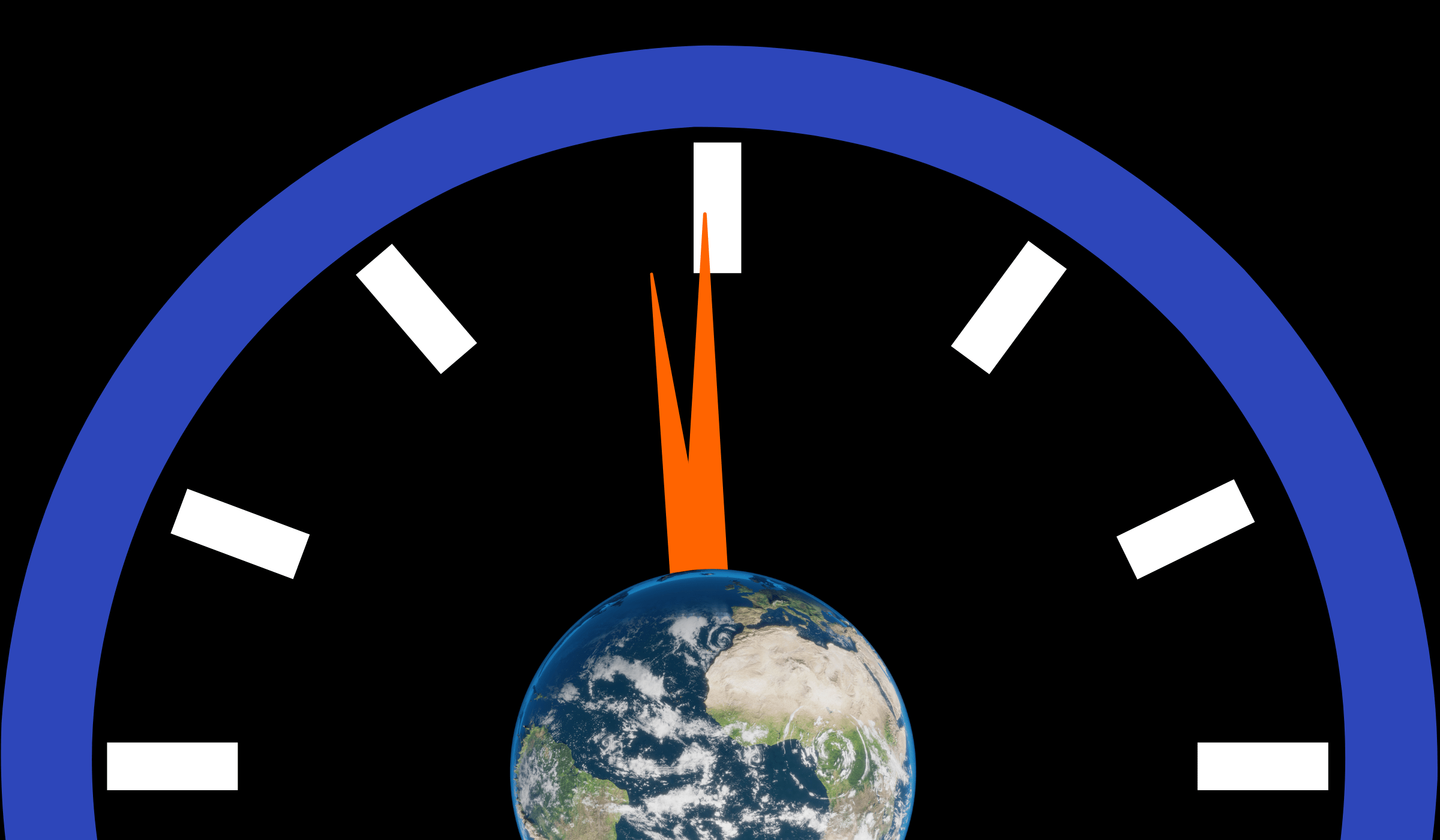
Our problems are so vast, our distance from them so great. Benjamin Cohen asks how we navigate our “derangement of scale”?
… Parents say the days are long but the years are short. Sophocles says time eases all things. Thoreau says time is but the stream we go a-fishing in. Einstein tells us time is an illusion. I don’t know what I’m supposed to do with that. All of them are right.
A human life can be 70, 80, maybe 90 years. The tuataras, a New Zealand reptile, can live to be 100, as can a crocodile. A Seychelles giant tortoise can live close to 200 years. Sea animals have us all beat. Bowhead whales can live past 200 years. For some sea urchin species, it’s 300. The ocean quahog clam can live past 500. On the other end are insects. An adult dragonfly might live a week. Shadflies, also called mayflies or fishflies, live just a day or two.
Geological time has an entirely different range of long and short. My friend studies ice cores from millions of years ago, examining glacial variation to better understand how climates change. The Pleistocene, Pliocene, Miocene. These are epochs, an official scientific term for a measure of time—less than a period, more than an age. Epochs span millions of years. They put our biological lifespans to shame. We are shadflies to the sandstone sediment of the Miocene.
Our current epoch, scientists argue, is called the Anthropocene. It’s new. The term comes from Paul J. Crutzen, a Nobel Prize-winning chemist who wrote that “human activities are exerting increasing impacts on the environment on all scales”—impacts so profound that we created an entirely new stamp on the timeline. The Anthropocene is a commentary on our scales of time as well as space. It isn’t just how old things are or how long they take, but how big they are and how vast their dimensions are.
I’ll admit a little hesitancy for the concept. It’s an audacious move, to declare the dawn of a new epoch from within; I’m not sure if there’s a bit too much modern exceptionalism at work. But I also can’t say the full scientific validity matters for me. Say what you will about the Anthropocene, but I nod to it for trying to gauge what’s so strange and difficult about our moment. It is the relationship between biological generations and geological epochs, between the scope of mortal activity and that of global planetary activity. It is all scales everywhere all at once.
Understanding the significance of our own lives requires some understanding of scale. “Just as the microscope and telescope extended our vision into spatial realms once too minuscule or too immense for us to see, geology provides a lens through which we can witness time in a way that transcends the limits of our human experiences,” Marcia Bjornerud, a geologist, writes. The Anthropocene, she suggests, is a fine time to “adopt a geologic respect for time and its capacity to transfigure, destroy, renew, amplify, erode, propagate, entwine, innovate, and exterminate.” We need to know how to navigate our epoch: to recognize our profusion of scales and strive to understand, amidst their collisions, not just how to care for the world beyond us but how a person can be, what it means to stand as a morally vested individual.
And yet we humans are still not particularly good at seeing ourselves in time or space. I’m certainly not. So here we are. Not only has our age come face to face with an emergency of scalar challenges—brashly called a global climate crisis—but we have produced a daunting sense of distance from addressing it. The problems are physically too far away, too large, too vast; the psychological distance we feel from addressing them is too great. It’s a double-distancing. Hopelessness comes from the scalar mismatch between we individuals, who are wee individuals, and the problems of an 8,000-mile-diameter earth.
All of this was on my mind when I first met Robert Socolow [here], an 88-year-old physicist who, over the course of his life, turned to environmental science and technology to help humanity respond to our most complex challenges of scale. One of those efforts has been with the Bulletin of the Atomic Scientists, where Socolow helps with their Doomsday Clock. That’s the device that, since 1947, tracks humanity’s proximity to self-destruction. The clock is a metaphor, presuming to measure Blake’s hours of folly by minute and second hand; the hands are set by “nuclear risk, climate change, disruptive technologies, and biosecurity,” among other concerns. They’ve changed positions 26 times in the decades since they began metaphorically ticking. Since 2010, the clock’s hands have only moved closer to midnight.
In 2025, Socolow himself revealed the face of the clock at a press conference in Washington, DC. It was January and he was at the US Institute of Peace in Foggy Bottom. With a crowd of reporters looking on, cameras flashing and shutters digitally clicking, Socolow stood by a modernist wooden stand and spun a turntable to reveal the clock hands at a small, acute angle against midnight. A world of scalar challenges fell into an urgent sort of order. The end was 89 seconds away.
Most of us are daunted, every day, by the vastness of planetary activity and the proximity of our personal choices. We look at the clock, unsure how to balance clashing scopes of time and space. But if I’m unsettled, I want proximity to settle me. I want to be close, I want to feel part of the world I inhabit and see and feel, I want to hold those I love near to me. So what should we do?…
… The confusion may come from what the writer Timothy Clark calls “derangements of scale.” Our experiences as modern global humans, Clark writes, are like being “lost in a small town” and then handed a map of the entire earth for locating yourself and finding your way. In the Anthropocene, he writes, “we have a map, [and] its scale includes the whole earth, but when it comes to relating the threat to daily questions of politics, ethics, or specific interpretations of history, culture, literature, etc., the map is often almost mockingly useless.” Our scales are too imbalanced; we are unable to think the unthinkable. It goes without saying that it can be paralyzing, demoralizing, to be an individual acting as part of the collective, globe-sized world…
[Cohen shares his conversations with Socolow, with call-outs to Tolstoy, Camus, Augustine, and Solnit…]
… The attempt to capture our smallness inside the grandness of the universe is a timeless human quest, I get that. Tolstoy’s theological view is a typical one; God is that which is without scale. Even if I’m not so theological about it, I share the modern anxiety. And that anxiety is currently a dominant emotion.
Clark writes that “deranged jumps in scale and fantasies of agency may recall rhetoric associated with the atomic bomb in the 1950s and after.” After talking to Socolow a number of times, I don’t think it recalls so much as continues that rhetoric. The new atomic age was a test case for the coming collisions of scale that derange us now. The Doomsday Clock was about sounding the alarm. It was meant to shake people, to grab them by the shoulders and yell that they pay attention to human-made catastrophe.
We’ve flipped in the past 50 years, nearly the exact span of my own life. A half century later, and so many people have gone from urgency to hopelessness. They feel bombarded by all scales, not just the next one.
There’s room to reconsider that bombardment. There’s time to think to the next scale. Socolow has been doing it his entire adult life. So were Augustine and Tolstoy and Camus and so is Solnit. It isn’t new, we aren’t alone.
And so Socolow and I stand in his home office, trying to measure. It’s misty outside and calm inside. He is thinking in linear feet of books, where the spatial scale of distance is a proxy for the temporal scale of his life’s work. I’m thinking in years, measuring my sense of contribution and belonging against the shadfly-like limitations of a mere biological lifespan. I’m cautious, excited, gratified that the two of us can talk and compare across the scales of our current lives. That Blake couplet in the epigraph above [title quote] runs through my head. Socolow’s keenly aware of his own place in our epoch. Nearly a hundred linear feet of a life’s work at an archive, and still, as we consider our various measures, he tells me, “I am searching for ways to be constructive, and there are small opportunities here and there so far.” There is wisdom here, even if no clock can measure it…
Eminently worth reading in full: “By All Measures,” from @longreads.com.
* William Blake, “Proverbs of Hell”
###
As we take the long view, we might we might rejoice in the naively and nobly inventive: it was on this date in 1605 that El Ingenioso Hidalgo Don Quijote de la Mancha (or The Ingenious Hidalgo Don Quixote of La Mancha— aka Don Quixote), the masterwork of Miguel de Cervantes (and of the Spanish Golden Age) and a founding work of Western literature, was first published. Widely considered the first modern novel (published in the Western world), it is also considered by many (still) to be the best; it is in any case the second most translated work in the world (after the Bible).

“Not in utter loneliness to live / Myself at last did to the Devil give!”*…

With an excerpt from his new book, Devil’s Contract: The History of the Faustian Bargain, Ed Simon on “the most important story ever told”– the story of Humanity’s transactional relationship with evil…
The legend of the Devil’s contract is the most alluring, the most provocative, the most insightful, the most important story ever told. It concerns a humanity strung between Heaven and Hell, the saintly and the satanic; how a man could trade his soul for powers omnipotent, signing a covenant with the Devil so that he could briefly live as a god before being pulled down to Hell. Frequently associated with Christopher Marlowe’s Doctor Faustus, that Elizabethan play wasn’t the origin of that myth, but his is certainly a sterling example of that eternal script. Yet long before that Renaissance play and long afterwards, we can find the inky traces of Faust’s damned signature in a multitude of works both high and low, canonical and popular. More disturbing than that is the way that the Devil’s hoof-prints can be found across the wide swatch of history, in our willingness to embrace power and engage in exploitation, to summon self-interestedness and to conjure cruelty…
…
… Tamburlaine the Great’s iconoclasm and The Jew of Malta’s irreverence aside, no work of sacred heresy in Marlowe’s oeuvre is as profound as Doctor Faustus. His quisling scholar selling his birthright for the pottage of trickery and illusion may be modernity’s operative metaphor, but Marlowe was hardly the originator of the myth. As you’ll read in the chapters ahead, Marlowe adapted the historical Johann Faust from German folkloric tradition, though the myth of a contract with Satan existed centuries before that unfortunate alchemist first crossed potassium nitrate with sulfur. Nor of course was Marlowe’s rendition the final word, as thousands of permutations of the basic story have been produced over the half-millennium, from Goethe to the musical Damn Yankees, Thomas Mann to the Dixie-fried pablum of the execrable Charlie Daniels Band number “The Devil Went Down to Georgia.” High culture like Franz Liszt’s Faust Symphony and Gustav Mahler’s Symphony No. 8; pop culture from the comic book Ghost Rider to the Jack Black flick Tenacious D in the Pick of Destiny.
“The figure of Faust is—after Christ, Mary, and the Devil—the single most popular character in the history of Western Christian culture,” writes Jeffrey Burton Russell in his classic Mephistopheles: The Devil in the Modern World. And of those characters, Faust is the most fully human to us, in his arrogance and his failure, his negotiations and his capitulations, in the whole litany of abuse which the cankered soul is capable of inflicting upon itself. Russell’s contention is far from hyperbole, and amending the word “character” to “narrative,” I’d say that there are few archetypal scripts in our culture as essential as the legend of a man selling his soul to the Devil. Thousands of works of literature and film, music and art, grapple with the bargain whereby somebody trades what’s most human for power or wealth, influence or knowledge. Only the myth of Adam and Eve being cast out of Eden competes with Faust in terms of influence, and that story is arguably an early variation on the Devil’s contract…
… though it is ostensibly a history, and this narrative moves onward rather chronologically, I prefer to think of the story it tells as being about a character who is outside of time, who lives parallel to past, present, and future. An eternal story. Because what this book is concerned with are the implications— culturally, politically, theologically—of these highly symbolically charged narratives concerning the abjuration of a soul, of the ceding of what’s intrinsic to us, of the capitulations and negotiations which make up any failed life, which is to say every life. More than a history, then, Devil’s Contract is an account of what it means to be human in all of our failings.
Increasingly an account of humanity right now. For all the legend’s archaicism, the muttered Latin and the alchemical conjuration, Faust’s story has always been estimably modern, perhaps the first modern story. Unlike Adam and Eve, with their inscrutable Bronze Age story composed in an idiom so ancient and foreign that centuries of theologians have disagreed on what the implications of each facet of the tale might mean, the details in the Faust legend are inescapably of our time. This is, after all, the story of a contract. The dénouement of most versions of the Faust story involves the signing of a legally binding document, an experience foreign to the authors of Genesis but replete in our own lives, whether interacting with human resources or clicking on an agreement with our phone company. Faust’s tale may deal in the numinous and the transcendent, but it’s also about bureaucracy and paperwork, our contemporary hell and its sacrament, respectively. We recognize Faust in a manner that no character in the Bible can ever be our contemporary…
…
… Marlowe staged his play at the very beginning of what is increasingly being called the Anthropocene, the geological epoch in which humanity was finally able to impose its will (in an almost occult manner) upon the earth. There are costs to any such contract, as the wisdom of the legend has it, so that it’s worth considering after five centuries of human domination of the planet that we might now be facing our own collective appointment at Deptford. We seem to finally be facing the final act, the apocalyptic tenor of our times, from climate change to nuclear brinkmanship making the continued survival of humanity an open question, our sad predicament the result of hubris, and greed, and vainglory. It may be appropriate to rechristen this age the Faustocene. Because whether or not the Devil is real, his effects in the world are. When it comes to “truth” and “facts,” the two words are not synonymous, and I wouldn’t at all be surprised if I could make out the smoke of some devilish chimera beyond the neon-line of the Rose Theater, deep within a darkness so all-encompassing that not a squib of light is capable of escaping…
“A Deal With the Devil: What the Age-Old Faustian Bargain Reveals About the Modern World” in @lithub.
See also: “You Are Equal To The Spirit You Understand,” Nathan Gardels‘ consideration of the lessons in Goethe’s Faust, in @NoemaMag.
* Johann Wolfgang von Goethe, Faust
###
As we reconsider our contracts, we might recall that it was on this date in 1834 that slavery was abolished in the British Empire, as the Slavery Abolition Act 1833 came into force (though it remained legal in the possessions of the East India Company until the passage of the Indian Slavery Act, 1843).

“Nature is the source of all true knowledge”*…

Jonathan Keats on why– and how– clocks that use nature to measure time can reintegrate people into the environment and counteract the calamities of the Anthropocene…
In his studio on the east coast of Vancouver Island, the master clockmaker Phil Abernethy is crafting a timepiece that will be calibrated in a manner that no horologist has ever attempted. It won’t show the minutes and hours of an ordinary human day. Instead, his clock will display time as experienced by some of the oldest trees on the planet.
Using techniques he’s honed over a lifetime, Abernethy will machine the gears by hand in traditional materials such as steel and brass. But the pendulum will respond to the forest: When trees grow quickly, the hours will advance more rapidly; more lethargic growth will result in a slower tempo. Over centuries, the long-term fate of the canopy will be registered on a calendar that may deviate from the Gregorian date by decades or more.
Abernethy has been commissioned to fabricate the arboreal clock by the Nevada Museum of Art. Standing 12 feet tall, the clock will be the first physical manifestation of an environmental timekeeping project I have been developing over the past decade. Some of the clocks in the project respond to rivers; Abernethy’s enlists a stand of bristlecone pine trees in Nevada’s Great Basin as living timekeepers.
Fluctuations in the bristlecones’ growth rate, affected by environmental conditions ranging from local rainfall to planetary climate change, will be measured by analyzing the thickness of tree rings in microcores retrieved from the mountain each year. These data will be used to determine the center of gravity for the pendulum, which will swing slower or faster depending on the tree ring thickness. Though the clock face will display time in the usual way, it won’t serve as a mechanism for human planning — a technology to impose order on the environment for our convenience — but rather to pace our lives to match the lived reality of other organisms.
Abernethy’s arboreal clock, in other words, upsets more than just the standards of horology. The environmental calamity known as the Anthropocene is a consequence of a worldview in which all that is not human is construed as a resource — even time itself. Other life forms are going extinct at an unprecedented rate, laid waste at a pace set by the world economy. Factory farming and logging, fossil fuel and plastics production, mining, human construction and infrastructure — all disregard the timing with which nonhuman systems emerge, ebb and flow. The globalized logic of industry, with its planetary supply chain, must keep up with human demand, turning civilization itself into a manifestation of logistics.
Our mastery of the world is a mastery of time. And as every industrialist knows, mastery of time requires the precision of a master clock to provide a temporal standard against which everything can be measured and controlled. Whether regulated by the swing of a pendulum or the oscillations of a strontium atom — as the most advanced atomic clocks are today — the master clock operates without an external feedback mechanism. The clock has become the ultimate authority. To question it would be tantamount to questioning modernity.
The design of Abernethy’s arboreal clock may be novel, but the underlying ideas are ancient. They predate pendulums and gearwork, originating in an era when people observed time in relation to other beings in order for all to flourish together. Ancient but mostly forgotten, these ideas are urgently needed today. Whatever practical use it might have, the arboreal clock is intended primarily to serve as a philosophical instrument…
…
… Humankind appears to be the only species to have contrived clocks that count without reference to something outside of themselves. We also appear to be the only species to have use for these contraptions, to use time in this peculiar way. (Mumford astutely described clocks as “power machinery whose ‘product’ is seconds and minutes.”)
All life depends on timekeeping. But nonhuman life treats time as a mixed medium: entangled with the environment, dependent on other organisms…
…
… Near the peak of Mt. Washington in Nevada’s Great Basin, which rises more than 11,600 feet above sea level, the bristlecone pines are as scraggly as the tree in “A Charlie Brown Christmas.” Until very recently, bristlecones didn’t grow at this elevation. To walk down the slope is to stroll through time, eventually reaching trees that are several thousand years old and as solid as sculpted stone.
Over the past decade, I have gotten to know these trees, visiting with members of the Long Now Foundation, the organization that stewards part of the mountaintop and has partnered with me on the clock at the Nevada Museum of Art. By observing the trees and their embodied experience of time, I have been able to see the inadequacy of my wristwatch.
The trees sensitized me to the time reckoning of other life forms, both plants and animals. They attuned me to the time kept collectively in living systems such as rivers, where the flow rate is affected by the melting of glaciers and the eagerness of beavers, not to mention the unquenchable thirst of industrial agriculture. By gearing the flow of time to match the flow of the Susitna or Matanuska — as I have done in partnership with the Anchorage Museum — fluvial clocks can integrate people into local watersheds.
An arboreal clock can likewise integrate people into the forest. Or to be more accurate, it can reintegrate people into their ecosystems, counteracting the human denaturing of the Anthropocene…
Eminently worth reading in full: “A Clock In The Forest,” from @jonathonkeats in @NoemaMag @longnow.
* Leonardo da Vinci
###
As we think about time, we might also contemplate natural space, and spare a thought for Abraham Ortelius; he died on this date in 1598. A cartographer, geographer, and cosmographer, he created the first modern atlas, the Theatrum Orbis Terrarum (Theatre of the World)– “the book that invented the world.”
Ortelius is generally considered one of the founders (with Gemma Frisius and Gerardus Mercator) of the Netherlandish school of cartography and geography. He was an important geographer of Spain during the age of discovery– and the first person proposing that the continents were joined before drifting to their present positions.

“Everything / is not itself”*…

Toward an ecology of mind: Nathan Gardels talks with Benjamin Bratton about his recent article, “Post-Anthropocene Humanism- Cultivating the ‘third space’ where nature, technology, and human autonomy meet“…
The reality we sense is not fixed or static, but, as Carlo Rovelli puts it, a “momentary get together on the sand.” For the quantum physicist, all reality is an ever-shifting interaction of manifold influences, each determining the other, which converge or dissolve under the conditions at a particular time and space that is always in flux…
The human, too, can be seen this way as a node of ever-changing interactions with the natural cosmos and the environment humans themselves have formed through technology and culture. What it means to be human, then, is not a constant, but continually constituted, altered and re-constituted through the recursive interface with an open and evolving world.
This is the view, at least, of Benjamin Bratton, a philosopher of technology who directs the Berggruen Institute’s Antikythera project to investigate the impact and potential of planetary-scale computation. To further explore the notion of “post-Anthropocene humanism” raised in a recent Noema essay, I asked him to weigh in on the nature of human being and becoming when anthropogenesis and technogenesis are one and the same process.
…
“I can’t accept the essentially reactionary claim that modern science erases ‘the Human.’ Demystification is not erasure. It may destabilize some ideas that humans have about what humans are, yes. But I see it more as a disclosure of what ‘humans’ always have been but could not perceive as such. It’s not that some essence of the Human goes away, but that humans are now a bit less wrong about what humans are,” he argues.
Bratton goes on: “Instead of science and technology leading to some ‘post-human’ condition, perhaps it will lead to a slightly more human condition? The figure we associate with modern European Humanism may be a fragile, if also a productive, philosophical concept. But dismantling the concept does not make the reality go away. Rather, it redefines it in the broader context of new understanding. In fact, that reality is more perceivable because the concept is made to dissolve.”
How so? “The origins of human societies are revealed by archaeological pursuits. What is found is usually not the primal scene of some local cultural tradition but something much more alien and unsettling: human society as a physical process.
…
All this would suggest, in Bratton’s view, “that cooperative social intelligence was not only the path to Anthropocene-scale agency for humans, but a reminder that the evolution of social intelligence literally shaped our bodies and biology, from the microbial ecologies inside of us to our tool-compatible phenotype. The Renaissance idea of Vitruvian Man, that we possess bodies and then engage the world through tools and intention, is somewhat backward. Instead, we possess bodies because of biotic and abiotic ‘technologization’ of us by the world, which we in turn accelerate through social cooperation.”
In short, one might say, it is not “I think therefore I am,” but, because the world is embedded in me, “thereby I am.”
…
Bratton’s view has significant implications for how we see and approach the accelerating advances in science and technology.
A negative biopolitics, so to speak, would seek to limit the transformations underway in the name of a valued concept of the human born in a specific time and place on the continuum of human evolution. A positive bio-politics would embrace the artificiality of those transformations as part of the responsibility of human agency.
Bratton states: “Abstract intelligence is not some outside imposition from above. It emerged and evolved along with humans and other things that think. Therefore, I am equally suspicious of the sort of posthumanism that collapses sentience and sapience into an anti-rationalist, flat epistemology that seeks not to calibrate the relation between reason and world, but is instead a will to vegetablization: a dissolving of agency into flux and flow. Governance then, in the sense of steerage, is sacrificed.”
To mediate this creative tension, what is called for is a theory of governance that recognizes the promise while affirming the autonomy of humans, albeit reconfigured through a new awareness, by striving to shape what we now understand as anthropo-technogenesis.
In the political theory of checks and balances, government is the positive and constitutional rule is the negative. The one is the capacity to act, the other to amend or arrest action that could lead to harmful consequences — the “katechon” concept from Greek antiquity of “withholding from becoming,” which I have written about before.
An ecology of mind, in the term of anthropologist Gregory Bateson, would encompass both by re-casting human agency not as the master, but as a responsible co-creator with other intelligences in the reality we are making together…
“The Evolution of What It Means To Be Human,” from Nathan Gardels and @bratton in @NoemaMag. Both the conversation and the article on which it is based are eminently worth reading on full.
Pair with: “Artificial Intelligence and the Noosphere” (from Robert Wright; for which, a ToTH to friend MK): a very optimistic take on a possible future that could emerge from the dynamic that Bratton outlines. Worth reading and considering; his visions of the socioeconomic and spiritual bounties-to-come are certainly enticing.
That said, I’ll just suggest that, even if AI is ultimately as capable as many assume it can/will be– by no means a sure thing– unless we address the kinds of issues raised in last week’s (R)D on this same general subject (“Without reflection, we go blindly on our way”) we’ll never get to Bratton’s (and Wright’s) happy place… The same kinds of things that Bratton implicitly and Wright explicitly are mooting for AI (as a knitter of minds in a noosphere) could have been said— were said— for computer networking, then for the web, then for social media… in the event, they knit— but not so much so much in the interest of blissful, enabling sharing and growth; rather as the tools of rapacious commercial interests (c.f.: Cory Doctorow’s “enshittification”) and/or authoritarians (c.f., China or Russia or…). Seems to me that in the long run, if we can rein in capitalism and authoritarians: maybe. In the foreseeable future: if only…
* Rainer Maria Rilke
###
As we contemplate collaboration, we might send mysterious birthday greetings to Alexius Meinong; he was born this date in 1853. A philosopher, he is known for his unique ontology and for contributions to the philosophy of mind and axiology– the theory of value.
Meinong’s ontology is notable for its belief in nonexistent objects. He distinguished several levels of reality among objects and facts about them: existent objects participate in actual (true) facts about the world; subsistent (real but non-existent) objects appear in possible (but false) facts; and objects that neither exist nor subsist can only belong to impossible facts. See his Gegenstandstheorie, or the Theory of Abstract Objects.

“Our remedies oft in ourselves do lie”*…

Charles F. Kennel and Martin Rees argue that the Anthropocene demands a massive realignment of priorities…
Our Earth has existed for 45 million centuries; and humans for a few thousand. But this century is the first when our species is so numerous—and so demanding of energy and natural resources—that we risk collectively despoiling our planet. It’s surely an ethical imperative that we should not deny future generations the wonders and beauty of the natural world. Policy must, in the words of the Brundtland Commission, “meet the needs of the present—especially the world’s poor—without compromising the ability of future generations to meet their own needs.” This requires a massive transformation in our lives—how we derive our energy, and how we feed ourselves. It’s an inspiring challenge for the younger generation, and an investment crucial for the future of humanity—and indeed all life on Earth. But it requires a massive realignment of priorities in all nations—a change in individual attitudes, as well as in public policy.
…
Planet Earth is on a perilous course. Society’s delayed adjustment to Anthropocene dynamics has amplified risks to global, regional, and local human security and threatens a comprehensive crisis, especially if risks materialize in reinforcing ways. This, the Crisis of the Anthropocene, is likely to be most acute when world population peaks—according to U.N. demographers this should happen before the end of the century. The number of humans at risk will therefore be largest when resource consumption and stress on eco-environmental systems are maximal and extreme climatic events disrupt ecologies at their most vulnerable. Since threats we presently think distinct are the most likely to interact and cascade then, we will not have the luxury of dealing with them one at a time, as we are trying to do today.
The nations of Earth need to transform their economies in little more than one human generation to meet the challenges posed by Anthropocene dynamics…
Read on for their prescription: “Two Distinguished Scientists on How to Rescue Humanity,” from @kennel_charles and @LordMartinRees in @NautilusMag.
* Shakespeare, All’s Well That Ends Well
###
As we face the future, we might send precipitant birthday greetings to atmospheric scientist Bernard Vonnegut; he was born on this date in 1917. While he was not as well-known as his novelist brother Kurt (nor in some circles, as his architect father Kurt Sr.), he is nonetheless widely remembered for his discovery that that silver iodide could be used effectively in cloud seeding to produce snow and rain.

You must be logged in to post a comment.