Posts Tagged ‘toys’
“In the lingo, this imaginary place is known as the Metaverse”*…

The estimable Genevieve Bell looks back beyond Neal Stephenson’s Snow Crash to the deeper-than-you-might-think history of “the metaverse”– and explains the importance of understanding it…
…histories are more than just backstories. They are backbones and blueprints and maps to territories that have already been traversed. Knowing the history of a technology, or the ideas it embodies, can provide better questions, reveal potential pitfalls and lessons already learned, and open a window onto the lives of those who learned them. The metaverse—which is not nearly as new as it looks—is no exception…
I think there are even earlier histories that could inform our thinking. Before Second Life. Before virtual and augmented reality. Before the web and the internet. Before mobile phones and personal computers. Before television, and radio, and movies. Before any of that, an enormous iron and glass building arose in London’s Hyde Park. It was the summer of 1851, and the future was on display… The Great Exhibition of the Works of Industry of All Nations, as the extraordinary event was formally known, was the brainchild of Prince Albert, Queen Victoria’s beloved consort…
Just as there is a straight line from the Midway to Coney Island to Disneyland, there is a straight line from the White City to the 1939 New York World’s Fair to the Consumer Electronics Show. We can also draw a line between the Great Exhibition and today’s metaverse. Like the virtual world that the metaverse’s promoters promise, the Great Exhibition was a world within the world, full of the splendors of its day and promises about the future. But even as it opened up new spaces of possibility—and profit—it also amplified and reproduced existing power structures through its choices of exhibits and exhibitors, its reliance on the Royal Society for curation, and its constant erasure of colonial reality. All this helped ensure that the future would look remarkably British. The exhibition harnessed the power of steam and telegraphy to bring visitors to a space of new experiences, while masking the impact of such technological might; engines and pipes were hidden underground out of plain sight. It was a deliberate sleight of hand. If Brontë saw magic—not power, xenophobia, and nationalism—that was what she was intended to see.
I think our history with proto-metaverses should make us more skeptical about any claims for the emancipatory power of technology and technology platforms. After all, each of them both encountered and reproduced various kinds of social inequities, even as they strove not to, and many created problems that their designers did not foresee. Yet this history should also let us be alive to the possibilities of wondrous, unexpected invention and innovation, and it should remind us that there will not be a singular experience of the metaverse. It will mean different things to different people, and may give rise to new ideas and ideologies. The Great Exhibition generated anxiety and wonder, and it alternately haunted and shaped a generation of thinkers and doers. I like to wonder who will author this metaverse’s Bleak House or Alice in Wonderland in response to what they encounter there.
The Great Exhibition and its array of descendants speak to the long and complicated human history of world-making. Exploring these many histories and pre-histories can be generative and revelatory. The metaverse will never be an end in itself. Rather, it will be many things: a space of exploration, a gateway, an inspiration, or even a refuge. Whatever it becomes, it will always be in dialogue with the world that has built it. The architects of the metaverse will need to have an eye to the world beyond the virtual. And in the 21st century, this will surely mean more than worrying about ancient elm trees and the tensile strength of glass. It will mean thinking deeply about our potential and our limitations as makers of new worlds…
To understand what we are—and should be—building, we need to look beyond Snow Crash: “The metaverse is a new word for an old idea,” from @feraldata in @techreview via @sentiers (soft paywall). Eminently worth reading in full.
See also “So what is “the metaverse,” exactly?” (source of the image above).
* Neal Stephenson, Snow Crash
###
As we stew over simulacra, we might recall that it was on this date in 1903 that Morris Michtom began selling stuffed bears in his toy shop on this day in 1903. Earlier, he had asked President Theodore Roosevelt for permission to use the president’s nickname, Teddy, to which the president agreed. Soon, other toy companies were churning out copies of their own “Teddy Bears”– still among the most popular children’s toys (and also popular as adult gifts signifying affection, congratulations, or sympathy).

“There are only patterns, patterns on top of patterns, patterns that affect other patterns. Patterns hidden by patterns. Patterns within patterns.”*…
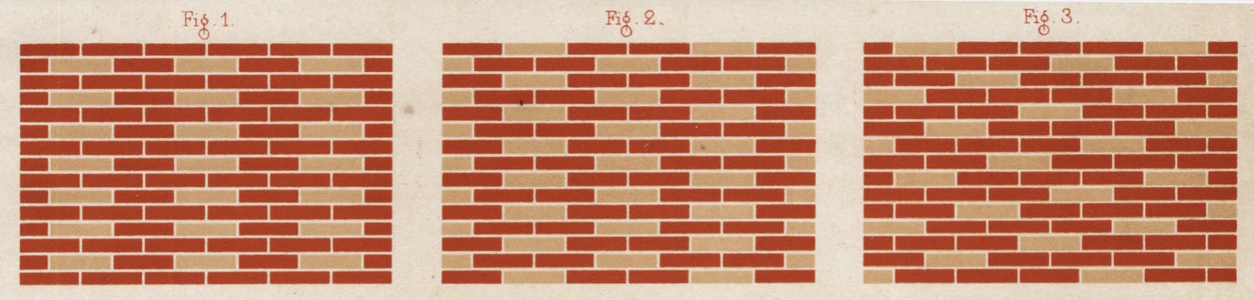


… and so many more in a beautiful 1878 book of brick patterns, published in France by architect J Lacroux: “Brick Tease,” from @presentcorrect.
* Chuck Palahniuk, Survivor
###
As we muse on masonry, we might send carefully-designed birthday greetings to John W. “Jack” Ryan; he was born on this date in 1926. A Yale-trained engineer, Ryan left Raytheon (where he worked on the Navy’s Sparrow III and Hawk guided missiles) to join Mattel. He oversaw the conversion of the Mattel-licensed “Bild Lili” doll into Barbie (contributing, among other things, the joints that allowed “her” to bend at the waist and the knee) and created the Hot Wheels line. But he is perhaps best remembered as the inventor of the pull-string, talking voice box that gave Chatty Cathy her voice.

“Our goal at DOOM! will be to consider a plurality of futures and then doing everything that we can to prevent nuclear war, oblivion and ruin”*…

Readers may recall a recent post featuring an essay written by GPT-3, a machine-learning language model: “Are Humans Intelligent?- a Salty AI Op-Ed.” Our friends at Nemesis (@nemesis_global; see here) have upped the ante…
The end of trends has been heralded by various outlets for years (see here, here and many more on our Are.na channel).
But COVID time is crazy. We had a hunch that the hype cycle itself was finally in its true death throes – related to economic collapse, popular uprising, a general sense of consumer fatigue, and the breakdown of a consensus reality in which such trends could incubate. Since trends are a temporal phenomenon (they have to start, peak, fade away, typify a time, bottle the zeitgeist, etc.) we began with a simple survey about the breakdown of narrative time, first circulated through our personal social media accounts…
Then we ran the same questions through an online survey distributed to 150 randomly chosen respondents, deployed in collaboration with General Research Laboratories. These responses, which will likely appear in a future memo, ranged from deeply personal to millenarian to an extreme form of ‘new optimism’.
Then our process took a crazier turn. In July 2020, OpenAI released GPT-3 for beta testing – a natural language processing system (colloquially, an “AI”) that uses deep learning to produce human-like text. K Allado-McDowell, writer, co-founder of the Artists + Machine Intelligence program at Google AI and friend of Nemesis, had started doing experimental collaborative writing with GPT-3. By exploring its quirks, K was already building an empirical understanding of GPT-3’s ability to articulate the nature of consciousness, memory, language, and cosmology… We were drawn to the oracular quality of the text generated by GPT-3, and became curious about how it could interact with the material we had gathered.
With the generous help of K – who had quickly become a skilled GPT-3 whisperer – we began feeding it our survey results, in the form of essayistic synopses that summarized the key points of the respondents and quoted choice answers. We left open-ended, future-facing sentence fragments at the end of these and let GPT-3 fill in the rest, like a demented version of Gmail’s suggestive text feature….
As we worked, GPT-3 quickly recognized the genre of our undertaking: a report concerned with the future written by some kind of consultancy, expert group, or think tank. So it inadvertently rebranded us, naming this consultancy DOOM!…
What follows is a text collaboratively composed by Nemesis, GPT-3, K Allado-McDowell and our survey respondents, but arguably authored by none of us, per se. Instead you could say this report was written by the “third mind” of DOOM! which spontaneously arose when we began to process this information together with the conscious goal of generating predictions about the future. The outputs of our GPT-3 experiments have been trimmed, edited for grammar, minorly tweaked and ordered into numbered chapters….
An AI-written “report of the future,” eminently worthy of a close reading at (at least) two levels: “The DOOM! Report.”
* GPT-3’s renaming of and mission statement for its “client”
###
As we welcome contemplate centaurs, we might we might send freaky (if not altogether panicked) birthday greetings to John W. “Jack” Ryan; he was born on this date in 1926. A Yale-trained engineer, Ryan left Raytheon (where he worked on the Navy’s Sparrow III and Hawk guided missiles) to join Mattel. He oversaw the conversion of the Mattel-licensed “Bild Lili” doll into Barbie (contributing, among other things, the joints that allowed “her” to bend at the waist and the knee) and created the Hot Wheels line. But he is perhaps best remembered as the inventor of the pull-string, talking voice box that gave Chatty Cathy her voice.
“There is a magic in graphs”*…

Joseph Priestley 1769, London
illustrates the succession of empires to give students a more global view of history across space and time. Vertical space indicates each empire’s significance, as assigned by Priestley. Click here for zoomable version
Data visualization leapt from its Enlightenment origins and into the minds of the general public in the 1760s. It cast more powerful spells throughout the following century. By 1900, modern science, technology, and social movements had all benefited from this new quantitative art. Its inventions include the timeline, bar chart, and thematic map. Together, these innovations changed how we understand the world and our place within it. Data visualization helped a new imagination emerge, wired to navigate a reality much bigger than any single person’s lived experience…
From the introduction to Stanford Library’s (more specifically, the David Rumsey Map Center‘s; @DavidRumseyMaps) glorious exhibition “Data Visualization and the Modern Imagination,” curated by R.J. Andrews (@infowetrust).
Visit the exhibition here.
* Henry D. Hubbard, in the preface to Graphic Presentation
###
As we show and tell, we might recall that it was on this date in 1908 that Henry Winzeler founded the Ohio Art Company. Ohio Art began by offering metal picture frames, but soon settled into into two lines of business: toys (e.g., windmills and a climbing monkey) and custom metal lithography products for food container and specialty premium markets.
Those two themes merged in the very late 1950s, when Ohio Art acquired the rights to French electrician André Cassagnes‘ L’Écran Magique (The Magic Screen)– a drawing toy that allowed users to spin knobs to create line drawings, which could be erased by by turning the device upside down and shaking it. Ohio Art renamed it the Etch A Sketch… and it went on to sell over 100 million units and to earn a place in the National Toy Hall of Fame.

“Money laundering is a very sophisticated crime and we must be equally sophisticated”*…

It’s bad form to mention money-laundering. Instead, you talk about asset-management structures and tax beneficial schemes. — John Sweeney
This is the untold history of how prominent civil servants in the UK tailored US-devised anti-money laundering (AML) policies in ways that suited the needs of Britain’s financial services industry. In the aftermath of these initial compromises in 1987, criminal money managers in both the US and the UK were able to continue to operate in an environment that easily allowed them to hide and use dirty money. The researchers analysed six months of previously unseen personal correspondence and documents exchanged between various actors in the UK Government during 1987. From this they conclude that the core of the current, global AML regime, was not the destruction of drug money laundering and banking secrecy, nor the ending of criminal financial enablers and with it hot money; rather it was the protection and leverage of national trading interests on both sides of the Atlantic. And the drive to protect these interests would see crime control laws made, amended and changed to cater for the interests of the US and UK banking and finance industries. The file had been classified as secret and held by the UK Treasury until it was released to the public in 2017 as an archive document transferred to The National Archives in accordance with The Public Records Act and the Freedom of Information Act…
Mary Alice Young and Michael Woodiwiss tell the extraordinary story of governments effectively competing with criminal gangs at “A world fit for money laundering: the Atlantic alliance’s undermining of organized crime control.”
(Image above: source)
* Attorney General (1993 to 2001) Janet Reno… whose words can be understood, per the article cited above, in more than one way…
###
As we follow the money, we might recall that it was on this date in 1957 that George B. Hansburg was issued a patent (#2,793,036) for his invention of “an improved pogo stick”– the modern two-handled pogo stick.
While spring stilts had been invented in 1891, the original pogo stick was created in 1920 by Max Pohlig and Ernst Gottschall– the first two letters of whose surnames gave the device its name.

You must be logged in to post a comment.