Posts Tagged ‘perception’
“The control of large numbers is possible, and like unto that of small numbers, if we subdivide them”*…

It’s always been intuitively obvious that we handle small numbers more easily than large ones. But the discovery that the brain has different systems for representing small and large numbers provokes new questions about memory, attention, and mathematics…
More than 150 years ago, the economist and philosopher William Stanley Jevons discovered something curious about the number 4. While musing about how the mind conceives of numbers, he tossed a handful of black beans into a cardboard box. Then, after a fleeting glance, he guessed how many there were, before counting them to record the true value. After more than 1,000 trials, he saw a clear pattern. When there were four or fewer beans in the box, he always guessed the right number. But for five beans or more, his quick estimations were often incorrect.
Jevons’ description of his self-experiment, published in Nature in 1871, set the “foundation of how we think about numbers,” said Steven Piantadosi, a professor of psychology and neuroscience at the University of California, Berkeley. It sparked a long-lasting and ongoing debate about why there seems to be a limit on the number of items we can accurately judge to be present in a set.
Now, a new study in Nature Human Behaviour has edged closer to an answer by taking an unprecedented look at how human brain cells fire when presented with certain quantities. Its findings suggest that the brain uses a combination of two mechanisms to judge how many objects it sees. One estimates quantities. The second sharpens the accuracy of those estimates — but only for small numbers…
Although the new study does not end the debate, the findings start to untangle the biological basis for how the brain judges quantities, which could inform bigger questions about memory, attention and even mathematics…
One, two, three, four… and more: “Why the Human Brain Perceives Small Numbers Better,” from @QuantaMagazine.
* Sun Tzu
###
As we stew over scale, we might spare a thought for a man untroubled by larger (and more complicated) numbers, Émile Picard; he died on this date in 1941. A mathematician whose theories did much to advance research into analysis, algebraic geometry, and mechanics, he made his most important contributions in the field of analysis and analytic geometry. He used methods of successive approximation to show the existence of solutions of ordinary differential equations. Picard also applied analysis to the study of elasticity, heat, and electricity. He and Henri Poincaré have been described as the most distinguished French mathematicians in their time.
Indeed, Picard was elected the fifteenth member to occupy seat 1 of the Académie française in 1924.


“The lovely flowers embarrass me, they make me regret I am not a bee”*…

… But then, what would it be like to be a bee? In the tradition of Thomas Nagel (bats), Peter Godfrey-Smith (octopuses), and Kristin Andrews (crabs), Lars Chittka explores…
Understanding the minds of alien life-forms is not easy, but if you relish the challenge, you don’t have to travel to outer space to find it. Alien minds are right here, all around you. You won’t necessarily find them in large-brained mammals—whose psychology is sometimes studied for the sole purpose of finding human-ness in slightly modified form. With insects such as bees, there is no such temptation: neither the societies of bees nor their individual psychology are remotely like those of humans (figure 1.1). Indeed, their perceptual world is so distinct from ours, governed by completely different sense organs, and their lives are ruled by such different priorities, that they might be accurately regarded as aliens from inner space.

Insect societies may look to us like smoothly oiled machines in which the individual plays the part of a mindless cog, but a superficial alien observer might come to the same conclusion about a human society. Over the course of this book, it will be my goal to convince you that each individual bee has a mind—that it has an awareness of the world around it and of its own knowledge, including autobiographical memories; an appreciation of the outcomes of its own actions; and the capacity for basic emotions and intelligence—key ingredients of a mind. And these minds are supported by beautifully elaborate brains. As we will see, insect brains are anything but simple. Compared to a human brain with its 86 billion nerve cells, a bee’s brain may have only about a million. But each one of these cells has a finely branched structure that in complexity may resemble a full-grown oak tree. Each nerve cell can make connections with 10,000 other ones—hence there may be more than a billion such connection points in a bee brain—and each of these connections is at least potentially plastic, alterable by individual experience. These elegantly miniaturized brains are much more than input-output devices; they are biological prediction machines, exploring possibilities. And they are spontaneously active in the absence of any stimulation, even during the night.
To explore what might be inside the mind of a bee, it is helpful to take a first-person bee perspective, and consider which aspects of the world would matter to you, and how. I invite you to picture what it’s like to be a bee. To start, imagine you have an exoskeleton—like a knight’s armor. However, there isn’t any skin underneath: your muscles are directly attached to the armor. You’re all hard shell, soft core. You also have an inbuilt chemical weapon, designed as an injection needle that can kill any animal your size and be extremely painful to animals a thousand times your size—but using it may be the last thing you do, since it can kill you, too. Now imagine what the world looks like from inside the cockpit of a bee.
You have 300o vision, and your eyes process information faster than any human’s. All your nutrition comes from flowers, each of which provides only a tiny meal, so you often have to travel many miles to and between flowers—and you’re up against thousands of competitors to harvest the goodies. The range of colors you can see is broader than a human’s and includes ultraviolet light, as well as sensitivity for the direction in which light waves oscillate. You have sensory superpowers, such as a magnetic compass. You have protrusions on your head, as long as an arm, which can taste, smell, hear, and sense electric fields (figure 1.2). And you can fly. Given all this, what’s in your mind?…
Further to an earlier post, “What it’s like to be a bee,” from @LChittka and @PrincetonUPress, via @TheBrowser.
* Emily Dickinson
###
As we buzz, we might spare a thought for a successful entrepreneur whose empire depended on bees (and their capacity to pollinate plants), Washington Atlee Burpee; he died on this date in 1915. A horticulturist, we turned his childhood interest in the selective breeding of poultry, and his passion for research in the genetics of breeding into Burpee Seeds, the world’s largest mail-order seed company.

“No problem can be solved from the same level of consciousness that created it”*…
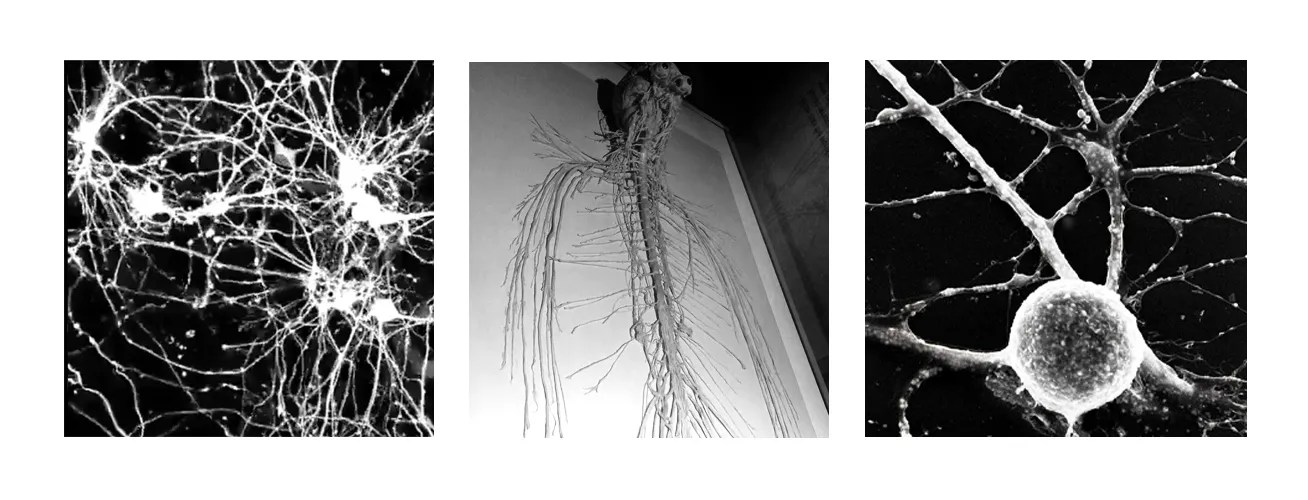
Annaka Harris on the difficulty in understanding consciousness…
The central challenge to a science of consciousness is that we can never acquire direct evidence of consciousness apart from our own experience. When we look at all the organisms (or collections of matter) in the universe and ask ourselves, “Which of these collections of matter contain conscious experiences?” in the broadest sense, the answer has to be “some” or “all”—the only thing we have direct evidence to support is that the answer isn’t “none,” as we know that at least our own conscious experiences exist.
Until we attain a significantly more advanced understanding of the brain, and of many other systems in nature for that matter, we’re forced to begin with one of two assumptions: either consciousness arises at some point in the physical world, or it is a fundamental part of the physical world (some, or all). And the sciences have thus far led with the assumption that the answer is “some” (and so have I, for most of my career) for understandable reasons. But I would argue that the grounds for this starting assumption have become weaker as we learn more about the brain and the role consciousness plays in behavior.
The problem is that what we deem to be conscious processes in nature is based solely on reportability. And at the very least, the work with split-brain and locked-in patients should have radically shifted our reliance on reportability at this point…
The realization that all of our scientific investigations of consciousness are unwittingly rooted in a blind assumption led me to pose two questions that I think are essential for a science of consciousness to keep asking:
- Can we find conclusive evidence of consciousness from outside a system?
- Is consciousness causal? (Is it doing something? Is it driving any behavior?)
The truth is that we have less and less reason to respond “yes” to either question with any confidence.And if the answer to these questions is in fact “no,” which is entirely possible, we’ll be forced to reconsider our jumping off point. Personally I’m still agnostic, putting the chances that consciousness is fundamental vs. emergent at more or less 50/50. But after focusing on this topic for more than twenty years, I’m beginning to think that assuming consciousness is fundamental is actually a slightly more coherent starting place…
“The Strong Assumption,” from @annakaharris.
See also: “How Do We Think Beyond Our Own Existence?“, from @annehelen.
* Albert Einstein
###
As we noodle on knowing, we might recall that it was on this date in 1987 that a patent (U.S. Patent No. 4,666,425) was awarded to Chet Fleming for a “Device for Perfusing an Animal Head”– a device for keeping a severed head alive.
That device, described as a “cabinet,” used a series of tubes to accomplish what a body does for most heads that are not “discorped”—that is, removed from their bodies. In the patent application, Fleming describes a series of tubes that would circulate blood and nutrients through the head and take deoxygenated blood away, essentially performing the duties of a living thing’s circulatory system. Fleming also suggested that the device might also be used for grimmer purposes.
“If desired, waste products and other metabolites may be removed from the blood, and nutrients, therapeutic or experimental drugs, anti-coagulants and other substances may be added to the blood,” the patent reads.
Although obviously designed for research purposes, the patent does acknowledge that “it is possible that after this invention has been thoroughly tested on research animals, it might also be used on humans suffering from various terminal illnesses.”
Fleming, a trained lawyer who had the reputation of being an eccentric, wasn’t exactly joking, but he was worried that somebody would start doing this research. The patent was a “prophetic patent”—that is, a patent for something which has never been built and may never be built. It was likely intended to prevent others from trying to keep severed heads alive using that technology…
Smithsonian Magazine

“If it looks like a duck, walks like a duck, and quacks like a duck, everyone will need to consider that it may not have actually hatched from an egg”*…

Emerging technology is being used (as ever it has been) to exploit our reflexive assumptions. Victor R. Lee suggests that it’s time to to recalibrate how authenticity is judged…
It turns out that that pop stars Drake and The Weeknd didn’t suddenly drop a new track that went viral on TikTok and YouTube in April 2023. The photograph that won an international photography competition that same month wasn’t a real photograph. And the image of Pope Francis sporting a Balenciaga jacket that appeared in March 2023? That was also a fake.
All were made with the help of generative artifical intelligence, the new technology that can generate humanlike text, audio, and images on demand through programs such as ChatGPT, Midjourney, and Bard, among others.
There’s certainly something unsettling about the ease with which people can be duped by these fakes, and I see it as a harbinger of an authenticity crisis that raises some difficult questions.
How will voters know whether a video of a political candidate saying something offensive was real or generated by AI? Will people be willing to pay artists for their work when AI can create something visually stunning? Why follow certain authors when stories in their writing style will be freely circulating on the internet?
I’ve been seeing the anxiety play out all around me at Stanford University, where I’m a professor and also lead a large generative AI and education initiative.
With text, image, audio, and video all becoming easier for anyone to produce through new generative AI tools, I believe people are going to need to reexamine and recalibrate how authenticity is judged in the first place.
Fortunately, social science offers some guidance.
Long before generative AI and ChatGPT rose to the fore, people had been probing what makes something feel authentic…
“Rethinking Authenticity in the Era of Generative AI,” from @VicariousLee in @undarkmag. Eminently worth reading in full.
And to put these issues into a socio-economic context, see Ted Chiang‘s “Will A.I. Become the New McKinsey?” (and closer to the theme of the piece above, his earlier “ChatGPT Is a Blurry JPEG of the Web“).
* Victor R. Lee (in the article linked above)
###
As we ruminate on the real, we might send sentient birthday greetings to Oliver Selfridge; he was born on this date in 1926. A mathematician, he became an early– and seminal– computer scientist: a pioneer in artificial intelligence, and “the father of machine perception.”
Marvin Minsky considered Selfridge to be one of his mentors, and with Selfridge organized the 1956 Dartmouth workshop that is considered the founding event of artificial intelligence as a field. Selfridge wrote important early papers on neural networks, pattern recognition, and machine learning; and his “Pandemonium” paper (1959) is generally recognized as a classic in artificial intelligence. In it, Selfridge introduced the notion of “demons” that record events as they occur, recognize patterns in those events, and may trigger subsequent events according to patterns they recognize– which, over time, gave rise to aspect-oriented programming.

“No one ever explained the octopuses”*…

We humans are forward-facing, gravity-bound plodders. David Borkenhagen wonders if the liquid motion of the octopus can radicalize our ideas about time…
… The octopus may navigate its ocean home with ease, but it can seem like a creature from another planet. It populates our popular visions of cosmic beings and extraterrestrial life, with its eight arms, three hearts, and a malleable body without bones. What’s more, its ability to camouflage itself, coupled with a propensity to hide in tight holes, make it a master of disguise. If seen, a water siphon that expels inhaled water can instantly propel the creature away from danger in any direction in three-dimensional aquatic space. Its web of radially symmetrical arms allow it to crawl in any direction with equal competence, regardless of how its head is oriented. Its soft and malleable body can move through any crevasse larger than its beak. And with its two eyes positioned on opposite sides of its head, it has a near-total field of vision with almost nothing hidden ‘behind’. These abilities give the octopus a radically different relationship to its surroundings compared with other species, human or otherwise. It is a relationship free of constraints.
And what about our bodies? Compared with the octopus, human beings appear corporeally constrained. We lack the fluid mobility and wide field of vision of our (very, very) distant cephalopod cousins. Instead, we have two eyes stuck in the front of our heads. We have a paltry two legs, hardwired for forward movement. And we are bound to our terrestrial ecological niche, where our bodies must continually counteract the downward pull of gravity.
It’s not only that our experiences of space are different. Our experiences of time are likely different, too. We think about the passage of time through our terrestrial experience of unidirectional motion through space – our metaphors of time are almost all grounded in the way our bodies move forward through the environment. Given this fact, how would an octopus, who can easily see and move in all directions, conceptualise time? Current research methods may be able to take us only part of the way toward an answer, but it’s far enough to consider a radical possibility: if we became more like an octopus, could we free time, metaphorically speaking, from its constraints? Could we experience it as multidimensional, fluid and free?…
[Borkenhagen reviews the research on octopuses and what it tells us about how their relationships with time and death]
… In many ways, the octopus represents a challenge, or a profound limit, to our conventional ways of thinking about time and death. But it’s more than a challenge. It’s also an invitation. With its unconstrained movements and semelparous lifecycle, the octopus offers a radically different perspective on the fluidity and flexibility of existence. Could we learn to move through time as an octopus moves through space? With equal access to the past, present and future – viewed wide or with sharp focus – we might better navigate the challenges of living and dying on Earth. The octopus invites us to think in a way that dissolves the boundaries between the present and the future, understanding our ‘ending’ less as a fixed point and more as a fluid process stretching across generations. As the boundary between life and death dissolves and becomes more porous, so do the boundaries between ourselves and others. The metaphors we used to inhabit our time here may seem impoverished, but there’s another way. It’s in the unconstrained movements of an octopus traveling through space – fluid, flexible and free…
“Octopus Time,” from @posts_modern in @aeonmag. Eminently worth reading in full.
Pair with The Mountain in the Sea by Ray Nayler and/or “Stories of Your Life” in the short story collection of the same title, by Ted Chiang
* Gail Garriger (@gailcarriger)
###
As we re-understand unfolding, we might recall that it was on this date in 1871 that the American Museum of Natural History opened to the public in New York City. Organized into a series of exhibits, the Museum’s collection–which had been gathered from the time of the Museum’s founding in 1869– went on view for the first time in the Central Park Arsenal, the Museum’s original home, on the eastern side of Central Park. The cornerstone of the Museum’s first building was laid in Manhattan Square (79th Street and Central Park West), the Museum’s current location, in 1874; but it is obscured from view by the many Museum buildings in the complex that today occupy most of the Square.

You must be logged in to post a comment.