Posts Tagged ‘invention’
“It is a good morning exercise for a research scientist to discard a pet hypothesis every day before breakfast. It keeps him young.”*…

The Chimp-Pig Hypothesis is, to put it mildly, a revolutionary proposition. Uri Bram suggests that we use it– whether we believe it or not– to stretch ourselves…
In this post I’m going to explain, as best I can, an idea about evolution that many of my friends find (to say the least) outlandish.
I’m not very knowledgeable about genetics, and I can’t really vouch for how plausible the hypothesis is. (But note: on the same grounds, I can’t really vouch for how plausible Darwinian evolution is).
My interest is actually in something else: what does it feel like to have your beliefs overturned? You know the story: as was true for every previous generation, some of the things we believe today must be entirely wrong, and yet very few of us ever make a 180 on anything. It’s easier to accept we must be wrong about something than to actually admit we are wrong about anything. Which ought to worry us.
I’m frankly more interested in moral wrongs than scientific one. But the tricky thing is that successful moral revolutions are so complete that once they’re over we struggle to imagine how anyone ever believed X. (Kazuo Ishiguro is the only person I know to have actually captured what this probably feels like, but my co-blogger and I also made an attempt in this piece for WIRED).
Fear not: I’m coming back to the chimps and pigs. To me, the Chimp-Pig hypothesis is a rare theory that is 1) internally consistent and coherent enough not to be ridiculous, 2) overturns everything we think we know about a major area of knowledge, and 3) doesn’t have any meaningful implications for our current lives, so it won’t really hurt anyone if you give it some credence and it turns out to be false.
Which is all to say: to me, the most interesting interaction you can have with the Chimp-Pig hypothesis is to let yourself believe it, at least briefly, and then observe what it feels like to have your world overturned. The Chimp-Pig hypothesis may not be one of the great revolutions of your lifetime, but I think it’s one of the best practice cases I’ve ever seen. And when your real moment of truth comes, it’d be good to have some practice…
Fascinating– and challenging: “The Chimp-Pig Hypothesis,” from @UriBram.
* Konrad Lorenz
###
As we rehearse, we might spare a thought for Rube Goldberg; he died on this date in 1970. A cartoonist, sculptor, author, engineer, and inventor, he is best remembered as a satirist of the American obsession with technology; his series of “Invention” cartoons used a string of outlandish tools, people, plants, and steps to accomplish simple, everyday tasks in the most complicated possible way. (His work has inspired a number of “Rube Goldberg competitions,” the best-known of which, readers may recall, has been profiled here.)

Goldberg was a founder and the first president of the National Cartoonists Society, and he is the namesake of the Reuben Award, which the organization awards to the Cartoonist of the Year.

“Among the Igbo the art of conversation is regarded very highly, and proverbs are the palm-oil with which words are eaten”*…

… Indeed. But, as T. W. Lim writes, palm oil has become so much more in our consumer economy…
My family used to take road trips to Malaysia when I was growing up, and I can clearly remember the first time I noticed the oil palms. They were unlike anything else in the landscape, which up to that point had been a patchwork of jungle, paddies, billboards, and the occasional roadside stand selling steamed sweet corn. The palms were distinctive, their dense crowns dark and heavyset atop sawtooth trunks, but what caught my eye was how these trees, unlike the other trees, had obviously been organized. When I asked my parents what they were, they said, “these are oil palms, which people plant to make money.”
This was the 1980s, and the rapidly developing country was agog at the miraculous versatility of palm oil – and the world’s seemingly endless appetite for this primordial goop, from which a whole new way of life could be coaxed. Looking back, I’m struck by the optimism. I have no way of knowing if conditions on palm oil plantations then were any less brutal and exploitative than they are today, but they were certainly less publicized. Maybe we’d still be optimistic if demand for palm oil hadn’t done a hockey stick.
But even in Singapore, situated between the two largest palm oil producers in the world, we didn’t think much about what problems the plantations might have brought. The first sign of trouble was the haze, which first came in the mid-90s. Smoke from massive forest fires in Indonesia hung over Singapore for days on end. It hung pale gray in the sky, turning sunsets red. The Indonesian government claimed it was due to indigenous tribes practicing slash-and-burn farming, but even the middle schoolers knew it was for oil palm. The haze has since become an annual event, varying only in its severity.
I’ve been thinking about palm oil for the same reason Spencer’s been thinking about rubber. These two agricultural commodities both emerged from the same systems of colonialism and forced labor, and together they shaped much of modern material culture. Much as rubber replaced spices and coffee as the cash crop of choice for the planter-barons of Malaya in the late 19th century, palm oil replaced rubber in the late 20th, capturing in two brushstrokes the transitions into the age of the internal combustion engine and the age of the global consumer. And just as rubber explains car culture and contemporary transportation systems, palm oil explains household consumption – and they both reveal the manufacturing systems, labor relations, and corporate structures that lie beneath.
As troubling as I find the systems that produce it, there’s an undeniable elegance to palm oil. Like fossil fuels, palm oil represents a technological shortcut to a wide variety of highly useful chemical compounds. Palm oil contains more saturated fat (50%) than other common edible vegetable oils, so it can be separated into a large number of fractions, each with different physical properties. An ideal palm oil derivative can be found for nearly any product that requires fat – soaps can be made foamier, hobnobs crisper, and ice creams more luscious. In industrial settings, palm oil derivatives are used in mold-release agents for concrete casting and to replace petroleum products in polymer production. Palm oil became integral to the tinning process almost as soon as tin cans were invented, and people were still filing patents for tinning oils based on palm oil in the 1950s. Palm oil was so plentiful, so cheap, and so well suited to the purpose, that tinned steel became obsolete before we bothered to find a better oil for tinning.
Because palm oil is still predominantly used in consumer packaged goods, especially in processed foods, it can seem like a luxury commodity – something used to make inconsequential things. It’s reasonable to think our civilization is less dependent on hobnobs than on the pneumatic tire. But hobnobs and road transport both embody larger social systems, and whether we choose to change our relationship with palm oil might depend more on social systems than physical ones. Trying to imagine a world without palm oil is almost like trying to imagine a post-consumer society, which is precisely why it’s an interesting subject.
Read on for a fascinating consideration of a seemingly universal ingredient, the first in a series: “A Technological Shortcut,” from @the_prepared.
* Chinua Achebe
###
As we interrogate ingredients, we might recall that it was on this date in 1789 that Baptist minister Elijah Craig distilled the first bourbon whisky from corn (another universal ingredient– gift article). Craig, who is also credited with many other Kentucky firsts (e.g., fulling mill, paper mill, ropewalk) is also said to have been the first to age the product in charred oak casks, a process that gives bourbon its brownish color and distinctive taste.

“A new scientific truth does not triumph by convincing its opponents and making them see the light, but rather because its opponents eventually die, and a new generation grows up that is familiar with it”*…
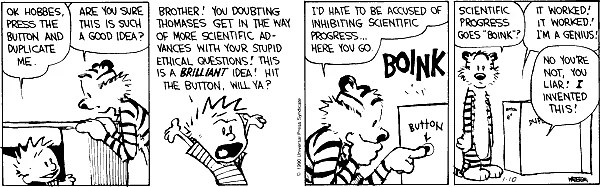
It’s very hard, historian of science Benjamin Breen explains, to understand the implications of a scientific revolution as one is living through it…
2023 is shaping up to be an important year in the history of science. And no, I’m not talking about the reputed room-temperature semiconductor LK-99, which seems increasingly likely to be a dud.
Instead, I’m talking about the discoveries you’ll find in Wikipedia’s list of scientific advances for 2023. Here are some examples:
• January: Positive results from a clinical trial of a vaccine for RSV; OpenAI’s ChatGPT enters wide use.
• February: A major breakthrough in quantum computing; announcement of a tiny robot that can clean blood vessels; more evidence for the ability of psychedelics to enhance neuroplasticity; major developments in biocomputers.
• March: OpenAI rolls out GPT-4; continued progress on mRNA vaccines for cancer.
• April: NASA announces astronaut crew who will orbit the moon next year; promising evidence for gene therapy to fight Alzheimer’s.
• May: Scientists use AI to translate brain activity into written words; promising results for a different Alzheimer’s drug; human pangenome sequenced (largely by a team of UCSC researchers — go Banana Slugs!); more good news about the potential of mRNA vaccines for fighting cancer.
And skipping ahead to just the past two weeks:
• nuclear fusion ignition with net energy gain was achieved for the second time
• a radical new approach to attacking cancer tumors entered Phase 1 trials in humans
• and — announced just as I was writing this [in August, 2023] — one of the new crop of weight loss drugs was reported to cut rates of heart attack and stroke in high-risk individuals by 20% (!).
Also in January of 2023: the New York Times asked “What Happened to All of Science’s Big Breakthroughs?”
The headline refers to an article published in Nature which argues that there has been a steady drop in “disruptive” scientific and technological breakthroughs between the years of 1945 and 2010. Basically, it’s a restatement of the concept of a “Great Stagnation” which was proposed by the economist Tyler Cowen in 2011. Though the paper cites everyone from Cowen to Albert Einstein and Isaac Newton, it’s worth noting that it doesn’t cite a single historian of science or technology (unless Alexandre Koyré counts)…
Naturally, as a historian of science and medicine, I think that there really are important things to learn from the history of science and medicine! And what I want to argue for the rest of this post boils down to two specific lessons from that history:
- People living through scientific revolutions are usually unaware of them — and, if they are, they don’t think about them in the same way that later generations do.
- An apparent slowdown in the rate of scientific innovation doesn’t always mean a slowdown in the impacts of science. The history of the first scientific revolution — the one that began in the famously terrible seventeenth century — suggests that the positive impacts of scientific innovation, in particular, are not always felt by the people living throughthe period of innovation. Periods when the pace of innovation appears to slow down may also be eras when society becomes more capable of benefitting from scientific advances by learning how to mitigate previously unforeseen risks.
[… There follows a fascinating look back at the 1660s– the “original” scientific revolution– at Boyle, Newton, at what they hoped/expected, and at how that differed for what their work and that of their colleagues actually yielded. Then the cautionary tale of Thomas Midgley..]
As we appear to be entering a new era of rapid scientific innovation in the 2020s, it is worth remembering that it often takes decades before the lasting social value of a technical innovation is understood — and decades more before we understand its downsides.
In the meantime, I’m pretty psyched about the cancer drugs…
As Thomas Kuhn observed, “The historian of science may be tempted to exclaim that when paradigms change, the world itself changes with them.”
On the difficulty of knowing the outcomes of a scientific revolution from within it: “Experiencing scientific revolutions: the 1660s and the 2020s,” from @ResObscura.
* Max Planck
###
As we try to see, we might spare a thought for William Seward Burroughs; he died on this date in 1898. And inventor who had worked in a bank, he invented the world’s first commercially viable recording adding machine and pioneered of its manufacture. The very successful company that he founded went on to become Unisys, which was instrumental in the development of computing… the implications of which we’re still discovering– and Burroughs surely never saw.
Nor, one reckons, did he imagine that his grandson, William Seward Burroughs II, would become the cultural figure that he did.

“The only advantage of not being too good a housekeeper is that your guests are so pleased to feel how very much better they are”*…

Roomba is on the rise, but is the humble carpet sweeper poised for a rebound? Edward Tenner considers…
Every so often technology critics charge that despite the exponential growth of computer power, the postwar dreams of automated living have been stalled. It is true that jetpacks are unlikely to go mainstream, and that fully autonomous vehicles are more distant than they appear, at least on local roads. And the new materials that promised what the historian of technology Jeffrey L. Meikle has called
“damp-cloth utopianism”—the vision of a future household where plastic-covered furnishings would allow carefree cleaning—have created dystopia in the world’s oceans.Yet a more innocent dream, the household robot, has come far closer to reality: not, it is true, the anthropomorphic mechanical butler of science-fiction films, but a humbler machine that is still
impressive, the autonomous robotic vacuum cleaner. Consider, for example, the Roomba®. Twenty years after introducing the first model, the manufacturer, iRobot, sold itself to Amazon in August 2022 for
approximately $1.7 billion in cash. Since 2013, a unit has been part of the permanent collection of the Smithsonian’s National Museum of American History.As the museum site notes, the first models found their way by bumping into furniture, walls, and other obstacles. They could not be programmed to stay out of areas of the home; an infrared-emitting
accessory was needed to create a “virtual wall.” Like smartphones, introduced a few years later, Roombas have acquired new features steadily with a new generation on average every year. (They have also inspired a range of products from rival manufacturers.) Over 35 million units have been sold. According to Fortune Business Insights Inc., the worldwide market was nearly $10 billion in 2020 and is estimated to increase from almost $12 billion in 2021 to $50.65 billion in 2028.…
Adam Smith might applaud the Roomba as a triumph of the liberal world order he had endorsed. Thanks to the global market- place for design ideas, chips, and mechanical parts, he might remark,
a division of labor—Roomba is designed mainly in the United States by an international team and manufactured in China and Malaysia—has benefited consumers worldwide. Smith would nonetheless
disapprove of the economic nationalism of both the United States and China that has made managing high-technology manufacturing chains so challenging.Yet Smith might also make a different kind of observation, high-lighting the technology’s limits rather than its capabilities…
Yet Smith might also make a different kind of observation, high-lighting the technology’s limits rather than its capabilities… Could household automation be not only irrelevant to fundamental human welfare, but harmful? As an omnivorous reader, Smith would no doubt discover in our medical literature the well-established dangers of sedentary living (he loved “long solitary walks by the Sea side”) and the virtues of getting up regularly to perform minor chores, such as turning lights on and off, adjusting the thermostat, and vacuuming the room, the same sorts of fidgeting that the Roomba and the entire Internet of Things are hailed as replacing. In fact the very speed of improvement of robotic vacuums may be a hazard in itself, as obsolescent models add to the accumulation of used batteries and environmentally hazardous electronic waste.
As the sustainability movement grows, there are signs of a revival of the humble carpet sweeper, invented in 1876, as sold by legacy brands like Fuller Brush and Bissell. They offer recycled plastic parts, independence of the electric grid, and freedom from worry about hackers downloading users’ home layouts from the robots’ increasingly sophisticated cloud storage…
Via the estimable Alan Jacobs and his wonderful Snakes and Ladders: “Adam Smith and the Roomba®” from @edward_tenner.
(Image above: source)
* Eleanor Roosevelt
###
As we get next to godliness, we might spare a thought for Waldo Semon; he died on this date in 1999. An inventor with over 100 patents, he is best known as the creator of “plasticized PVC” (or vinyl). The the world’s third most used plastic, vinyl is employed in imitation leather, garden hose, shower curtains, and coatings– but most frequently of all, in flooring tiles.
For his accomplishments, Semon was inducted into the Invention Hall of Fame in 1995 at the age of 97.

“All good things must come to an end”*…

Rusty Foster reports that…
Matt Bors announced that The Nib is shutting down after its retroactively ironically themed final issue, “The Future.” “The Nib has published more than 6,000 comics and paid out more than $2 million to creators.” It will be replaced by: nothing, just another void where independent cultural criticism used to be…
Today in Tabs
The Nib will be online through August; you can still enjoy it’s extraordinary offerings (and buy its issues) until then. Happily Rusty’s Today in Tabs continues– one hopes for a long, long time…
[Image above: from KC Green‘s “This Is Not Fine,” on The Nib]
* Geoffrey Chaucer, Troilus and Criseyde
###
As we bid a fond adieu, we might recall that it was on this date in 1844 that inventor (and celebrated painter) Samuel F.B. Morse inaugurated the first technological competitor to the post when he sent the first telegraph message: “What hath God wrought?” Morse sent the famous message from the B&O’s Mount Clare Station in Baltimore to the Capitol Building. (The words were chosen by Annie Ellsworth, the daughter of the U.S. Patent Commissioner, from Numbers 23:23.)

You must be logged in to post a comment.