Posts Tagged ‘Growth’
“A finite game is played for the purpose of winning, an infinite game for the purpose of continuing the play”*…

We all know that our behavior has to change if we’re going to continue healthily and happily to inhabit the earth. And we all have a few ideas of changes we can make to make a difference. But they are mostly incremental and remedial. What might a society designed to have a healthy relationship to its environment look like? Spencer R. Scott has some guidelines…
Many see the Industrial Revolution as its own kind of Renaissance. Over the past 300 years it enabled an accumulation of wealth that the world has never before seen. Yet, industrialization and the fossil-fuels that aided its growth did not come without a price. As a recent report warns, six of nine planetary boundaries have been exceeded. This unprecedented material abundance is only enjoyed by some, yet has polluted and put at risk the whole world’s air, rivers, oceans, forests, and food, and has caused two of humanity’s largest crises: climate change and the biodiversity crisis. The era of the industrial civilization is foreclosing on itself, and many are now pointing to the need for an ecological civilization to take its place. This would be a true Renaissance, where human and ecological flourishing alike are at the center of everything we do.
Before industrialization, humanity existed in an agricultural civilization during which productivity was low and people were organized around meeting basic needs. The industrial civilization ushered in a new high-productivity era that inevitably affected peoples’ values, lifestyles, beliefs, and the institutions that governed them. An ecological civilization will similarly necessitate a major paradigm shift. As Jeremy Lent asserts in “What Does An Ecological Civilization Look Like?”, we need “a transformation in the way we make sense of the world, and a concomitant revolution in our values, goals, and collective behavior.”
From Latin, ecology means “knowledge of home” and ecological means the “applied knowledge of home.” While the old industrial system is characterized by an indifference to how life on this planet works, an ecological civilization operates with ecological principles at its core – with behaviors, values, goals, and institutions organized around the applied knowledge of life on Earth.
In her book, Biomimicry: Innovation Inspired by Nature, Janine Benyus outlines some of Life’s Principles here on Earth:
Life runs on sunlight. Life rewards cooperation. Life builds from the bottom up. Life banks on diversity. Life recycles everything. Life builds resilience through diversity, decentralization, and redundancy. Life optimizes rather than maximizes. Life selects for the good of the whole system. In short, life creates the conditions conducive to life.
Inspired by Benyus’ Life’s Principles and the work of sustainable development scholar, Jiahua Pan, I created 6 ingredients for an ecological civilization…
Six ingredients for a more resilient future: “An Ecological Civilization is the Renaissance We’ve Been Waiting For,” from @SpencerRScott.
* James Carse, Finite and Infinite Games
###
As we think systemically, we might spare a thought for Guillaume Amontons; he died on this date in 1705. A physicist who made formative contributions to the understanding of friction, he was also an accomplished designer of scientific instruments– perhaps most notably, the air thermometer, which relies on increase in volume of a gas (rather than a liquid) to measure temperature. His approach led to the emergence of the concept of “absolute zero” (long before the advent of cryogenics). These days, there’s more attention at the other end of the scale…


“Anyone who believes exponential growth can go on forever in a finite world is either a madman or an economist”*…

… something that nature seems to know. The population of the world, now roughly 8.1 billion, seems poised to shrink. To some, this is good news; to others, a cause for alarm. Phoebe Arslanagić-Wakefield and Anvar Sarygulov, co-founders of Boom, fall into that latter camp. But their provocative analysis of the dynamics of the Baby Boom is relevant to anyone concerned with the future of population on earth…
… In the countries that it touched, the Baby Boom created generations massive in size. In the US alone, 76 million babies were born in its peak 18 years, 30 million more than were born in the previous 18, a demographic difference bigger than the 1960 population of Egypt, the Philippines, or Ethiopia. By 1965, people born during the Baby Boom made up 40 percent of America’s population.
Today, a fifth of both the UK’s and the USA’s population are baby boomers and we live in the world they created. Despite that, as mentioned above, the most widely known piece of information about the Boom is its most pervasive myth, that it was caused by the end of World War Two.
The Baby Boom was not the result of people making up for lost time during the war: it saw total lifetime fertility rates rise, meaning that people did not simply shift when they had their children but had more of them overall. And in many countries, including the US, UK, Sweden and France, the rise in birth rates began years before the war had even started, while neutral Ireland and Switzerland experienced Booms that began during the war, in 1940.
Instead, to explain the Baby Boom, we must consider why it was that the iron law of fertility – that as incomes go up, births must come down – was suspended for this extraordinary period of time…
Fascinating and important: “Understanding the Baby Boom,” from @PMArslanagic and @ASarygulov.
By way of further background on our current situation: “Population bomb, bust – or boon? New UNFPA report debunks 8 myths about a world of 8 billion.“
[image above: source]
###
As we grapple with growth, we might send hygienic birthday greetings to Melville Bissell; he was born on this date in 1843. An inventor and entrepreneur, he created and marketed the first modern carpet sweeper… which, as explained in the article featured above, was a seminal contribution to the advances in household technology that helped fuel the Baby Boom.

“Nature is full for us of seeming inconsistencies and glad surprises”*…

George Musser talks with biologist Michael Levin about his practice of uncovering the incredible, latent abilities of living things…
Michael Levin, a developmental biologist at Tufts University, has a knack for taking an unassuming organism and showing it’s capable of the darnedest things. He and his team once extracted skin cells from a frog embryo and cultivated them on their own. With no other cell types around, they were not “bullied,” as he put it, into forming skin tissue. Instead, they reassembled into a new organism of sorts, a “xenobot,” a coinage based on the Latin name of the frog species, Xenopus laevis. It zipped around like a paramecium in pond water. Sometimes it swept up loose skin cells and piled them until they formed their own xenobot—a type of self-replication. For Levin, it demonstrated how all living things have latent abilities. Having evolved to do one thing, they might do something completely different under the right circumstances.
Not long ago I met Levin at a workshop on science, technology, and Buddhism in Kathmandu. He hates flying but said this event was worth it. Even without the backdrop of the Himalayas, his scientific talk was one of the most captivating I’ve ever heard. Every slide introduced some bizarre new experiment. Butterflies retain memories from when they were caterpillars, even though their brains turned to mush in the chrysalis. Cut off the head and tail of a planarian, or flatworm, and it can grow two new heads; if you amputate again, the worm will regrow both heads. Levin argues the worm stores the new shape in its body as an electrical pattern. In fact, he thinks electrical signaling is pervasive in nature; it is not limited to neurons. Recently, Levin and colleagues found that some diseases might be cured by retraining the gene and protein networks as one might train a neural network. But when I sat down to talk to the audacious biologist on the hotel patio, I mostly wanted to hear about slime mold…
Read on for a fascinating conversation: “The Biologist Blowing Our Minds,” @drmichaellevin and @gmusser in @NautilusMag.
* Margaret E. Barber
###
As we’re amazed, we might send tidy birthday greetings to Irwin Rose; he was born on this date in 1926. A biologist and biochemist, he shared the 2004 Nobel Prize in Chemistry for the discovery of ubiquitin-mediated protein degradation.
Ubiquitin is a small protein molecule that attaches to other proteins, tagging them for removal, which are thus recognized by the cell’s proteasomes. These structures are the cell’s waste-disposal units, allowing the proteins to be broken down into tiny pieces for reuse; this ubiquitin-mediated process cleans up unwanted proteins resulting during cell division, and performs quality control on newly synthesized proteins… which matters, as faulty protein-breakdown processes lead to such conditions as cystic fibrosis, several neurodegenerative diseases, and certain types of cancer.

“To overcome a desperate situation, make a complete turn in one sudden burst”*…
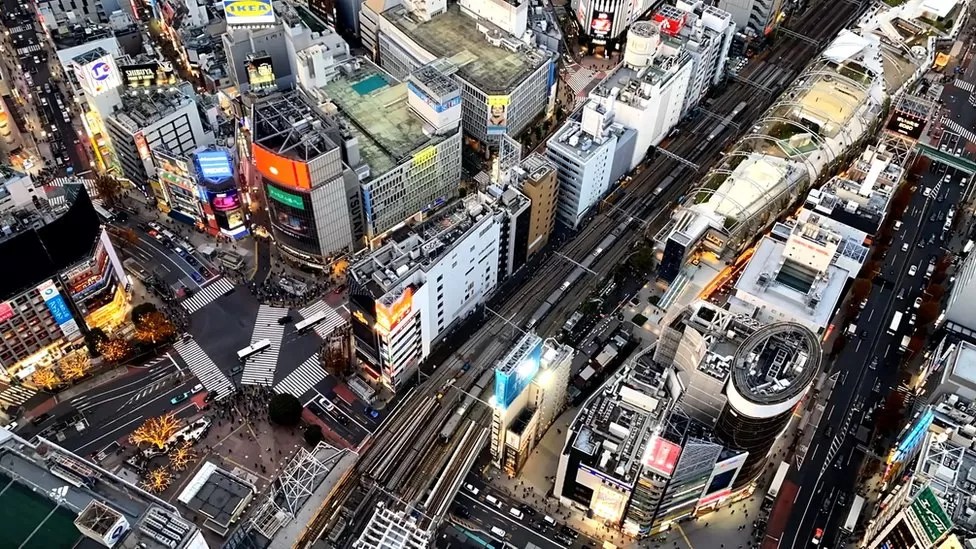
Rupert Wingfield-Hayes, the BBC’s Tokyo correspondent, on the riddle of Japan…
This is the world’s third-largest economy. It’s a peaceful, prosperous country with the longest life expectancy in the world, the lowest murder rate, little political conflict, a powerful passport, and the sublime Shinkansen, the world’s best high-speed rail network.
America and Europe once feared the Japanese economic juggernaut much the same way they fear China’s growing economic might today. But the Japan the world expected never arrived. In the late 1980s, Japanese people were richer than Americans. Now they earn less than Britons.
For decades Japan has been struggling with a sluggish economy, held back by a deep resistance to change and a stubborn attachment to the past. Now, its population is both ageing and shrinking.
Japan is stuck…
His diagnosis and his prognosis: “Japan was the future but it’s stuck in the past,” @wingcommander1 in @BBCWorld.
* Japanese proverb
###
As we ponder progress, we might recall that it was on this date in 2011 that three reactors at the Fukushima Daiichi Nuclear Power Plant exploded and released radioactivity into the atmosphere a day after the 2011 Tōhoku earthquake and tsunami.
The radiation releases forced the evacuation of 83,000 residents from towns around the plant. The meltdown caused concerns about contamination of food and water supplies, including the 2011 rice harvest, and also the health effects of radiation on workers at the plant. Scientists estimate that the accident released 18 quadrillion becquerels of caesium-137 into the Pacific Ocean, contaminating 150 square miles of the ocean floor.

“There must be some other way out of here, said the joker to the thief / There’s too much confusion, I can’t get no relief”*…

The dangers of rapid scaling: Praveen Seshadri on what ails Google and how it can turn things around…
I joined Google just before the pandemic when the company I had co-founded, AppSheet, was acquired by Google Cloud. The acquiring team and executives welcomed us and treated us well. We joined with great enthusiasm and commitment to integrate AppSheet into Google and make it a success. Yet, now at the expiry of my three year mandatory retention period, I have left Google understanding how a once-great company has slowly ceased to function.
Google has 175,000+ capable and well-compensated employees who get very little done quarter over quarter, year over year. Like mice, they are trapped in a maze of approvals, launch processes, legal reviews, performance reviews, exec reviews, documents, meetings, bug reports, triage, OKRs, H1 plans followed by H2 plans, all-hands summits, and inevitable reorgs. The mice are regularly fed their “cheese” (promotions, bonuses, fancy food, fancier perks) and despite many wanting to experience personal satisfaction and impact from their work, the system trains them to quell these inappropriate desires and learn what it actually means to be “Googley” — just don’t rock the boat. As Deepak Malhotra put it in his excellent business fable, at some point the problem is no longer that the mouse is in a maze. The problem is that “the maze is in the mouse.”
It is a fragile moment for Google with the pressure from OpenAI + Microsoft. Most people view this challenge along the technology axis, although there is now the gnawing suspicion that it might be a symptom of some deeper malaise. The recent layoffs have caused angst within the company as many employees view this as a failure of management or a surrender to activist investors. In a way, this reflects a general lack of self-awareness across both management and employees. Google’s fundamental problems are along the culture axis and everything else is a reflection of it. Of course, I’m not the only person to observe these issues (see the post by Noam Bardin, Waze founder and ex-Googler).
The way I see it, Google has four core cultural problems. They are all the natural consequences of having a money-printing machine called “Ads” that has kept growing relentlessly every year, hiding all other sins.
(1) no mission, (2) no urgency, (3) delusions of exceptionalism, (4) mismanagement…
A provocative diagnosis: “The maze is in the mouse.” Eminently worth reading in full.
* Bob Dylan, “All Along the Watchtower”
###
As we go back to basics, we might recall that it was on this date in 1955 that a boy was born to University of Wisconsin graduate students Joanne Simpson and Abdulfattah Jandali. He was given up for adoption and taken in by a machinist and his wife in Mountain View, California. They named him Steve Jobs.

You must be logged in to post a comment.