Posts Tagged ‘entertainment’
“Everyone waits in line”*…

What we can learn from studying the crowd-management approaches at Disneyland…
Who gets to do what and when at a themepark may sound like a trivial question, but I think it’s a perfect little microcosm for the distributional problems that are at the heart of all political economy – questions that the pandemic’s shortages and shocks threw into stark relief…
Stay in your lane: “The definitive answers to Disney’s pernicious queueing debates,” from Cory Doctorow (@doctorow)
The video that Cory recommends:
(image at the top: source)
* Paul Theroux
###
As we bide our time, we might recall that it was on this date in 1971 that traffic-choking crowds jammed Walt Disney World to capacity (on the day after Thanksgiving). Shortly before noon the Florida park closed its gates to additional visitors.

“Horror is a universal language; we’re all afraid”*…
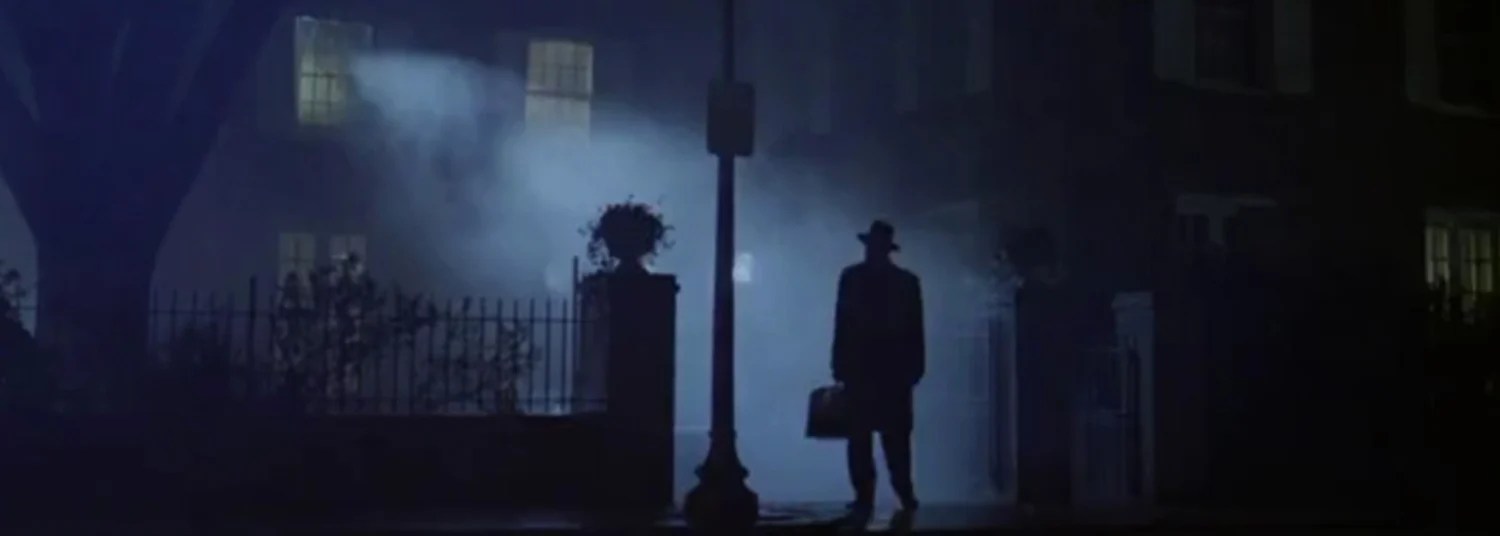
It’s that time of year again…
Why do so many people voluntarily seek out entertainment that is designed to shock and scare them? What do they get out of it? A thrill, a jolt to the nervous system – or is there something deeper going on?
Horror movies come in various forms, which can be divided into two main subgenres: supernatural ones (think of wailing ghosts, rotting zombies or mind-shattering abominations from forbidden dimensions), and the more psychological (your masked-serial-killers and giant-reptiles varieties). Common to them all is that they aim to evoke negative emotions, such as fear, anxiety, disgust and dread. They also tend to be enormously popular. According to a survey my colleagues and I conducted a few years ago, more than half of US respondents – about 55 per cent – say they enjoy ‘scary media’, including movies such as The Exorcist (1973), books such as King’s Salem’s Lot (1975) and video games such as Amnesia: The Dark Descent (2010).
What’s more, people who say they enjoy scary media really mean it. We also asked our respondents how frightening they wanted their horror to be. It might sound like a weird thing to ask – like asking how funny they want their comedies to be – but we wanted to test an old Freudian idea that the negative emotions elicited by the genre are unfortunate byproducts; a price that audiences are willing to pay in order to watch movies that allow them to confront their own repressed desires in monstrous disguise. But that’s not what we found. About 80 per cent of our respondents said they wanted their horror entertainment to be in the moderate-to-highly frightening range. By contrast, a measly 3.9 per cent said that they prefer horror that’s not scary at all.
So, fear and the other negative emotions are central to the appeal of horror, a fact not lost on the creators of horror entertainment. Surely you’ve seen movie trailers claiming to be ‘The scariest movie of all time!’ or promising to make you sleep with the lights on for weeks afterwards. More inventively, the US filmmaker William Castle once took out life insurance on his audience. If any audience member died from fear as they watched his movie Macabre (1958), their bereaved ones would receive $1,000 from Lloyd’s of London. (Nobody did die. But the gimmick surely drew more horror hounds to the picture.)
Unsurprisingly, given their appeal, horror movies are big business. In 2019, 40 new horror movies were released in North America, grossing more than $800 million in the domestic theatrical market alone. Likewise, the US haunted attractions industry is growing steadily, in 2019 generating up to $500 million in ticket sales. The following year, 2020, naturally saw lower numbers, but even in that year of COVID-19 lockdowns and empty movie theatres, horror movies broke all previous records in terms of market share. That development continued into 2021, with the horror genre now accounting for almost 20 per cent of the market share at the US box office. Evidently, people want scary entertainment, even when you’d think the real world was scary enough.
Despite the broad appeal of the horror genre, it is haunted by bias and prejudice. Many people, apparently, think that horror movies are dumb, dangerous or both – artistically unsophisticated, morally corrosive, and psychologically harmful, with a dubious appeal primarily for maladjusted teenage boys. But what does the science say?
Firstly, horror is not a particularly male genre. While boys and men are slightly more likely than girls and women to say that they enjoy horror, the difference is much smaller than many people seem to think. In our aforementioned survey, when we asked to what extent respondents agree with the statement ‘I tend to enjoy horror media’, on a scale from 1 to 5, men averaged at 3.50, whereas women averaged at 3.29.
Secondly, horror movies are not only watched by teenagers. Yes, the movies are often marketed to that audience, and the appetite for horror does seem to peak in late adolescence, but it doesn’t emerge out of the blue the day that kids turn 13, and it doesn’t disappear in older people either. An ongoing research project of ours is finding that the desire to derive pleasure from fear is evident even in toddlers, who universally enjoy mildly scary activities, such as chase play and hide-and-seek. Even old folks seem to enjoy the occasional thrill provided by mildly frightening media such as crime shows. The British crime drama Midsomer Murders (1997-) always seemed to me like light horror for seniors, with its eerie theremin theme tune and the inexplicably abundant, often startlingly grisly murders in the otherwise peaceful fictional Midsomer County.
Thirdly, there is no evidence that horror fans are particularly maladjusted, depraved or unempathetic. When my colleagues and I looked into the personality profile of horror fans, we found that they are about as conscientious, agreeable and emotionally stable as the average person, while also scoring higher than average on openness to experience (meaning that they enjoy intellectual stimulation and adventure). It’s true they do tend to score fairly highly on sensation seeking, which suggests that they tend to be easily bored and on the lookout for excitement. Maladjusted or depraved, though? Nope, no evidence.
If horror movies do not attract the maladjusted and the depraved, do they then create psychotic monsters? One might think so, judging from the moral panics that have surrounded the horror genre throughout its recent history, from Victorian-era concern over ‘penny dreadfuls’ – sensationalist, often spooky or grisly stories sold in cheap (one-penny) instalments – to modern-day media meltdowns over slasher movies…
There is no substantial evidence to support that concern – audiences know that what they are watching is fiction. The psychological effects of violent media are still discussed by scholars and scientists, but the ‘monkey see, monkey do’ model of media psychology has been severely criticised on methodological and empirical grounds, and now seems to have been abandoned by most experts. In fact, one recent study covering the period 1960-2012 in the US found that, as movie violence went up, real-world violence actually went down.
…
A taste for horror is natural and should not be seen as pathological. Kids who are attracted to monster comics such as Tales from the Crypt (1950-55) and The Walking Dead (2003-19) are perfectly normal, as are teenagers who love slasher movies or adults who enjoy haunted attractions. That taste makes good sense from an evolutionary perspective. People evolved to be curious about danger, and they use stories to learn about the world and themselves. Horror stories specifically allow them to imaginatively simulate worst-case scenarios and teach them about the dark sides of the world, and about the dark spectrum of their own emotional lives…
Horror movies… can function as inoculation against the stresses and terrors of the world. They help us improve our coping skills, and they might function as a kind of enjoyable exposure therapy. There is also some preliminary evidence to suggest that people who suffer from anxiety disorders can find comfort in horror movies, presumably because these movies allow them to experience negative emotions in controlled and controllable doses, practise regulation strategies, and ultimately build resilience.
In addition to those psychological benefits, there might be social benefits of watching horror movies. Consider how scientists of religion have puzzled over the prevalence of painful religious rituals. Why do people fire-walk and pierce themselves with sharp objects in religious contexts? Apparently, one major function is that such psychologically and/or physically painful behaviours strengthen group identity and make group members more altruistic toward each other. You go through a painful experience together, which reinforces group bonds. It’s a similar story for horror entertainment…
Horror movies have gotten a bad rap, but watching them has surprisingly wholesome effects: “Fear not,” from Mathias Clasen (@MathiasClasen), director of the Recreational Fear Lab (@RecFearLab) at Aarhus University in Denmark.
* “Horror is a universal language; we’re all afraid. We’re born afraid, we’re all afraid of things: death, disfigurement, loss of a loved one. Everything that I’m afraid of, you’re afraid of and vice versa. So everybody feels fear and suspense. We were little kids once and so it’s taking that basic human condition and emotion and just f*cking with it and playing with it. You can invent new horrors.” – John Carpenter (in a 2015 interview with Interview Magazine)
###
As we shiver, we might send bracing birthday greetings to Robert Alphonse Picardo; he was born on this date in 1953. An actor probably most widely known known for his roles as Dr. Dick Richards on ABC’s China Beach; the Emergency Medical Hologram (EMH), also known as The Doctor, on Star Trek: Voyager; the Cowboy in Innerspace, Coach Cutlip on The Wonder Years (for which he received an Emmy nomination); and as Richard Woolsey in the Stargate television franchise.
But Picardo also has a distinguished resume in horror, having starred in The Howling (1981), Legend (1985), Munchies (1987), Bate’s Motel (1987), 976-EVIL (1988), Gremlins 2: The New Batch (1990), Matinee (1993), Tales from the Crypt (episode: “Till Death Do We Part”), Masters of Horror (episode: “Homecoming”), Sensored (2009), Monsterwolf (2010), Supernatural (episode: “Clap Your Hands If You Believe”), Trail of Blood (2011), Don’t Blink (2014), and Mansion of Blood (2015).
Picardo serves as a Planetary Society Board Member and host of The Planetary Post.

“To me, the ideal artist-to-audience relationship is a one-to-zero relationship. The artist should be granted anonymity.”*…

Wish granted…
Earlier this month a little piece of music history was restored. The news was easy to overlook. Sony Music Publishing announced that one of its outermost divisions would be rebranding: what had been EMI Production Music since 2011 would become KPM Music once again. The change may seem trivial, but it restores a name that has wielded a wide and surprising influence over popular culture.
The chances are you haven’t heard of KPM, despite its roots stretching back to 1780, when Robert Keith (the K of the name) set up a music shop in London. But you have almost certainly heard its music. Since 1956 KPM had been a producer of library music, which is not music to be played quietly for the benefit of readers, but music composed to a brief, kept on catalogue, and then used—in return for payment—to accompany something else.
You have probably encountered the work of KPM’s composers and musicians on television. In America the credits of “Monday Night Football” unfold to the sound of “Heavy Action” by Johnny Pearson; the melody for Channel 9’s cricket show in Australia was produced by KPM, though it was written with a news broadcast in mind. In Britain several shows have drawn on KPM’s library, including “All Creatures Great and Small”, “Mastermind”, “Grange Hill”, “The Two Ronnies” and the BBC’s coverage of Wimbledon.
Even if you never watch TV, though, you will know fragments of this music, especially if you like hip-hop. kpm recordings have been a rich source of samples (a segment of sound used in another composition). Of KPM’s star composers, Brian Bennett has been sampled 114 times, by Drake, Nas, Kanye West and more. Les Baxter has been sampled 79 times by the Beastie Boys, Ghostface Killah and MF Doom, among others. Rap’s founding text, “Rapper’s Delight” by the Sugarhill Gang, sampled KPM stalwart Alan Hawkshaw—specifically the song “Here Comes That Sound Again”. “Library music is sought after by producers, collectors and writers because it was played by people, not manufactured by [a] machine,” Mr Hawkshaw once [said]…
One of the most sampled songs in pop history came from kpm musicians playing together for fun in 1968. “Champ” by The Mohawks has a distinctive organ hook—played by Mr Hawkshaw—that was sampled by Eric B and Rakim and Afrika Bambaataa in the 1980s and is still being remixed by Frank Ocean, Janelle Monáe and Nicki Minaj today. “People think that’s a black group from Detroit [playing the tune], but it was hashed together by session musicians in Yorkshire,” Mr Hawkshaw said.
Library music is not the rich trove of unexpected wonder it used to be. These days budgets are tighter and there is less inclination to hire whole orchestras for an afternoon, so there isn’t so much scope for the moments of brilliance a room full of musicians might create. Artificial-intelligence firms are also trying to muscle in on the market, offering computer-generated compositions to accompany video content for a fraction of the cost of real musicians. But there is still magic in the thought of those shelves, full of music composed and recorded for who knows what, sitting there waiting to be used for something else entirely…
Its artists aren’t famous and you can’t buy the records in shops; but its work can be heard everywhere: “KPM Music is one of the most important record labels in history,” from @TheEconomist.
* Glenn Gould
###
As we honor the unnamed, we might send suspiciously on-key birthday greetings to Faheem Rasheed Najm; he was born on this date in 1984. Better know by his stage name T-Pain, he is a rapper, singer-songwriter, and record producer. But he’ll surely be best remembered as the person who popularized Auto-Tune pitch-correction technology. Indeed, T-Pain became so associated with Auto-Tune that an iPhone app that simulated the effect was named after him.
Developed in 1997, Auto-Tune was used in 1998 in Cher’s “Believe” to create vocal effects (though the producers attributed the result to a pedal, treating Auto-Tune as a trade secret). Years later, T-Pain popularized the tool… which has become a controversial staple in the recording industry (as it allows recording engineers to turn the tuneless into accomplished singers).
Time magazine quoted an unnamed Grammy-winning recording engineer as saying, “Let’s just say I’ve had Auto-Tune save vocals on everything from Britney Spears to Bollywood cast albums. And every singer now presumes that you’ll just run their voice through the box.” The same article expressed “hope that pop’s fetish for uniform perfect pitch will fade”, speculating that pop-music songs have become harder to differentiate from one another, as “track after track has perfect pitch.” According to Tom Lord-Alge, the device is used on nearly every record these days…

“It’s like you watching a home movie of you watching TV”*…

Feeling fractal…
Welcome to Nestflix
The platform for your favorite nested films and shows.
Fictional movies within movies? Got ‘em. Fake shows within shows? You bet. Browse our selection of over 400 stories within stories…
* Homer: Wait a minute. You’re telling Moe’s story in Burns’ story in your story?
Lisa: Yes, dad. It’s like a play inside of a play, like Hamlet. [Homer is puzzled.] Fine, it’s like you watching a home movie of you watching TV.
Homer: [understanding] Oh yeah.
“The Seemingly Never-Ending Story”, The Simpsons
###
As we put the “mmm” in “meta,” we might recall that it was on this date in 1975 that The Rocky Horror Picture Show opened at the Rialto Theatre in London (it premiered in the U.S, at the UA Westwood in Los Angeles, on September 26). Still in limited release forty-six years after its opening, it is the longest-running theatrical release in film history.

“The circus comes as close to being the world in microcosm as anything I know; in a way, it puts all the rest of show business in the shade.”*…

Come one, come all!…
While circus acts go back to the midst of time, the circus as commercial entertainment dates to the opening decades of the nineteenth century. In Victorian England, the circus appealed across an otherwise class-divided society, its audiences ranging from poor peddlers to prestigious public figures. The acts that attracted such audiences included reenacted battle scenes, which reinforced patriotic identity; exotic animal displays that demonstrated the reach of Britain’s growing empire; female acrobatics, which disclosed anxieties about women’s changing role in the public sphere; and clowning, which spoke to popular understandings of these poor players’ melancholy lives on the margins of society.
The proprietor and showman George Sanger (from whose collection the following photographs come) was a prime example of how the circus was to evolve from a small fairground-type enterprise to a large-scale exhibition. Sanger’s circuses began in the 1840s and ’50s, but by the 1880s, they had grown to such a scale that they were able to hold their own against the behemoth of P.T. Barnum’s three-ring circus, which arrived in London for the first time in that decade.
Like many circuses in the nineteenth century, Sanger’s was indebted to the technology of modern visual culture to promote his business. Local newspapers displayed photographs alongside advertisements to announce the imminent arrival of a circus troupe. Garish posters, plastered around towns, also featured photographs of their star attractions. And individual artists used photographic portraits, too (in the form of the carte-de-visite or calling card), to draw attention to their attributes and to seek employment. One striking image in this collection [the image above] poses six performing acrobats amid the other acts—a lion tamer, an elephant trainer, a wire walker, and a clown—in one of Sanger’s circuses, all in front of the quintessential big-top tent. Maybe the projection of the collective solidarity of the circus in this image belies personal rivalries and animosities that might have characterized life on the road. Moreover, at the extreme edge of the image, on the right-hand side behind the dog trainer, there appears to be the almost ghostly presence of a Black male figure. By dint of their peripatetic existence, all those employed in the circus were often viewed as marginal and exotic. However, this image is a reminder of how racial and ethnic minorities were a presence within circus culture, even if, as here, they appear to have been banished to the margins of the photograph.


That most democratic of Victorian popular entertainments: photos from the Sanger Circus Collection.
* E. B. White
###
As we head for the big top, we might recall that today is International Yada Yada Yada Day. Lenny Bruce is often credited with the first use of “yadda yadda” on the closing track on his 1961 album “Lenny Bruce – American,” though earlier uses are documented in vaudeville. Employed by comedians and TV shows to convey that something unimportant or irrelevant was being elided, it gained vernacular currency when Jerry Seinfeld’s show featured a variation on this phrase as an inside joke between characters Elaine Benes (played by Julia Louis-Dreyfus) and George Costanza (Jason Alexander).
The Yada Yada,” the series’ 153rd episode, focused on just how badly using the phrase can backfire when the details being omitted are actually extremely important– the fact that George’s new girlfriend is actually a kleptomaniac who steals to kill time, or that Jerry’s new girlfriend is both racist and antisemitic. (That episode also introduced the term”anti-dentite.”) Hilarity ensues when both these unwitting men find out what kind of people they have been dating, and must break off the relationships.
In 2009, the Paley Center for Media named “Yada, Yada, Yada” the No. 1 funniest phrase on “TV’s 50 Funniest Phrases.”

You must be logged in to post a comment.