Posts Tagged ‘computer science’
“Reality is frequently inaccurate”*…
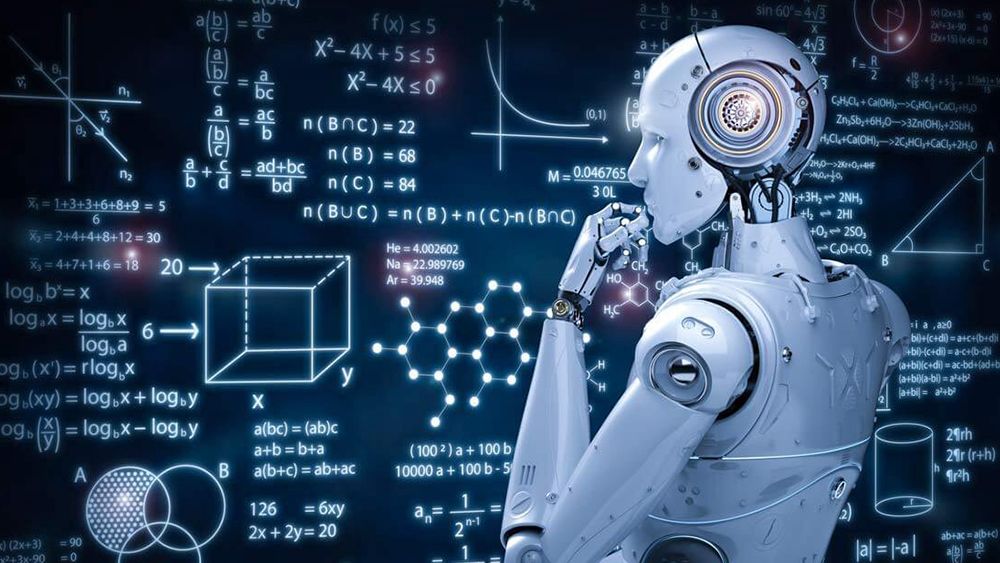
Machine learning and what it may teach us about reality…
Our latest paradigmatic technology, machine learning, may be revealing the everyday world as more accidental than rule-governed. If so, it will be because machine learning gains its epistemological power from its freedom from the sort of generalisations that we humans can understand or apply.
The opacity of machine learning systems raises serious concerns about their trustworthiness and their tendency towards bias. But the brute fact that they work could be bringing us to a new understanding and experience of what the world is and our role in it…
The world is a black box full of extreme specificity: it might be predictable but that doesn’t mean it is understandable: “Learn from Machine Learning,” by David Weinberger (@dweinberger) in @aeonmag.
(image above: source)
* Douglas Adams, The Restaurant at the End of the Universe
###
As ruminate on the real, we might send carefully-computed birthday greetings to Grace Brewster Murray Hopper. A seminal computer scientist and Rear Admiral in the U.S. Navy, “Amazing Grace” (as she was known to many in her field) was one of the first programmers of the Harvard Mark I computer (in 1944), invented the first compiler for a computer programming language, and was one of the leaders in popularizing the concept of machine-independent programming languages– which led to the development of COBOL, one of the first high-level programming languages.
Hopper also found and documented the first computer “bug” (in 1947).
She has both a ship (the guided-missile destroyer USS Hopper) and a super-computer (the Cray XE6 “Hopper” at NERSC) named in her honor.

“Must it be? It must be.”*…
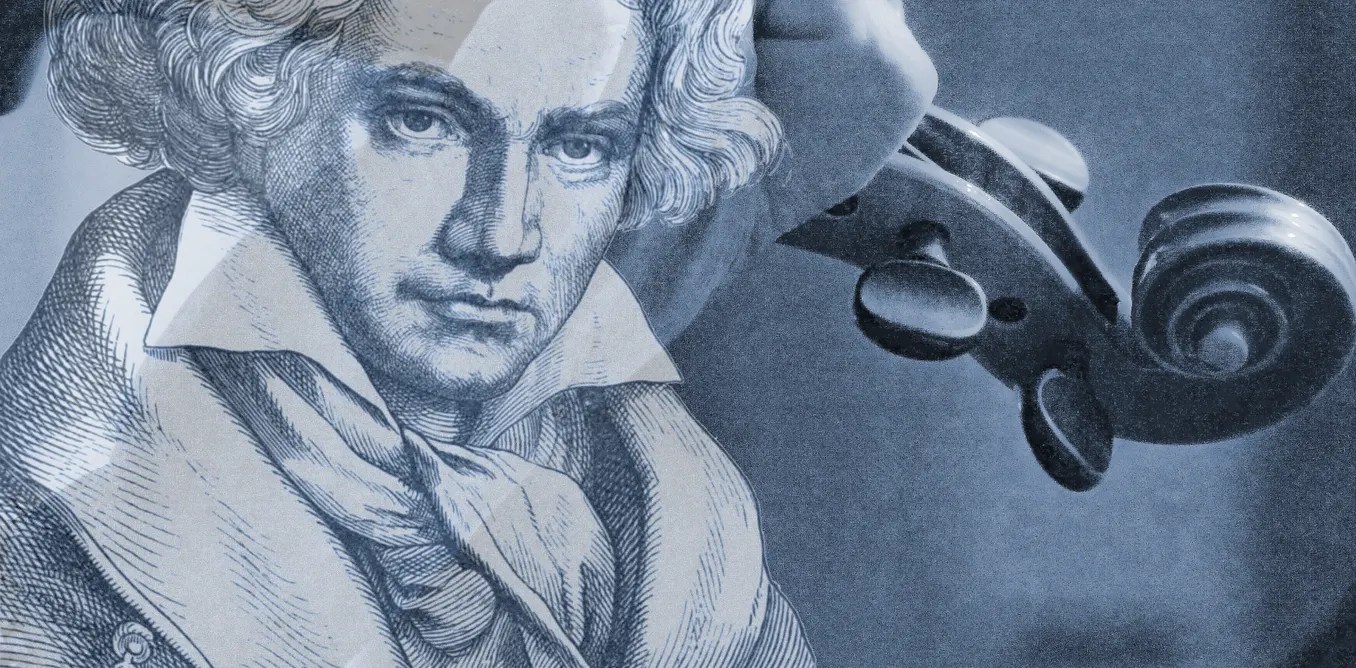
A long lost work, found… sort of…
When Ludwig van Beethoven died in 1827, he was three years removed from the completion of his Ninth Symphony, a work heralded by many as his magnum opus. He had started work on his 10th Symphony but, due to deteriorating health, wasn’t able to make much headway: All he left behind were some musical sketches.
Ever since then, Beethoven fans and musicologists have puzzled and lamented over what could have been. His notes teased at some magnificent reward, albeit one that seemed forever out of reach.
Now, thanks to the work of a team of music historians, musicologists, composers and computer scientists, Beethoven’s vision will come to life…
A full recording of Beethoven’s 10th Symphony is set to be released on Oct. 9, 2021, the same day as the world premiere performance scheduled to take place in Bonn, Germany – the culmination of a two-year-plus effort…
“How a team of musicologists and computer scientists completed Beethoven’s unfinished 10th Symphony,” replete with a sample of the “finished” work.
* Ludwig van Beethoven
###
As we size up simulacra, we might recall that it was on this date in 1964 that Teressa Bellissimo, at the Anchor Bar in Buffalo, New York, created Buffalo Hot Wings as a snack for her son and several of his college friends. Her “invention”– an unbreaded chicken wing section (flat or drumette), generally deep-fried then coated or dipped in a sauce consisting of a vinegar-based cayenne pepper hot sauce and melted butter, and served with with celery and carrot sticks and with blue cheese dressing or ranch dressing for dipping– has become a barroom and fast food staple… and has inspired a plethora of “Buffalo” dishes (other fried foods with dipping sauces).

“I’m a little tea pot / Short and stout”*…

The fascinating story of the “Utah teapot,” the ur-object in the development of computer graphics…
This unassuming object—the “Utah teapot,” as it’s affectionately known—has had an enormous influence on the history of computing, dating back to 1974, when computer scientist Martin Newell was a Ph.D. student at the University of Utah.
The U of U was a powerhouse of computer graphics research then, and Newell had some novel ideas for algorithms that could realistically display 3D shapes—rendering complex effects like shadows, reflective textures, or rotations that reveal obscured surfaces. But, to his chagrin, he struggled to find a digitized object worthy of his methods. Objects that were typically used for simulating reflections, like a chess pawn, a donut, and an urn, were too simple.
One day over tea, Newell told his wife Sandra that he needed more interesting models. Sandra suggested that he digitize the shapes of the tea service they were using, a simple Melitta set from a local department store. It was an auspicious choice: The curves, handle, lid, and spout of the teapot all conspired to make it an ideal object for graphical experiment. Unlike other objects, the teapot could, for instance, cast a shadow on itself in several places. Newell grabbed some graph paper and a pencil, and sketched it.

Back in his lab, he entered the sketched coordinates—called Bézier control points, first used in the design of automobile bodies—on a Tektronix storage tube, an early text and graphics computer terminal. The result was a lovely virtual teapot, more versatile (and probably cuter) than any 3D model to date.
The new model was particularly appealing to Newell’s colleague, Jim Blinn [of whom Ivan Sutherland, the head of the program at Utah and a computer graphics pioneer said, “There are about a dozen great computer graphics people and Jim Blinn is six of them”]. One day, demonstrating how his software could adjust an object’s height, Blinn flattened the teapot a bit, and decided he liked the look of that version better. The distinctive Utah teapot was born.
The computer model proved useful for Newell’s own research, featuring prominently in his next few publications. But he and Blinn also took the important step of sharing their model publicly. As it turned out, other researchers were also starved for interesting 3D models, and the digital teapot was exactly the experimental test bed they needed. At the same time, the shape was simple enough for Newell to input and for computers to process. (Rumor has it some researchers even had the data points memorized!) And unlike many household items, like furniture or fruit-in-a-bowl, the teapot’s simulated surface looked realistic without superimposing an artificial, textured pattern.
The teapot quickly became a beloved staple of the graphics community. Teapot after teapot graced the pages and covers of computer graphics journals. “Anyone with a new idea about rendering and lighting would announce it by first trying it out on a teapot,” writes animator Tom Sito in Moving Innovation...
These days, the Utah teapot has achieved legendary status. It’s a built-in shape in many 3D graphics software packages used for testing, benchmarking, and demonstration. Graphics geeks like to sneak it into scenes and games as an in-joke, an homage to their countless hours of rendering teapots; hence its appearances in Windows, Toy Story, and The Simpsons…
Over the past few years, the teapot has been 3D printed back into the physical world, both as a trinket and as actual china. Pixar even made its own music video in honor of the teapot, titled “This Teapot’s Made for Walking,” and a teapot wind-up toy as a promotion for its Renderman software.
Newell has jokingly lamented that, despite all his algorithmic innovations, he’ll be remembered primarily for “that damned teapot.” But as much as computer scientists try to prove their chops by inventing clever algorithms, test beds for experimentation often leave a bigger mark. Newell essentially designed the model organism of computer graphics: to graphics researchers as lab mice are to biologists.
For the rest of us the humble teapot serves as a reminder that, in the right hands, something simple can become an icon of creativity and hidden potential…
How a humble serving piece shaped a technological domain: “The Most Important Object In Computer Graphics History Is This Teapot,” from Jesse Dunietz (@jdunietz)
* from “I’m a Little Tea Pot,” a 1939 novelty song by George Harold Sanders and Clarence Z. Kelley
###
As we muse on models, we might send foundational birthday greetings to Michael Faraday; he was born on this date in 1791. One of the great experimental scientists of all time, Faraday made huge contributions to the study of electromagnetism and electrochemistry.
Although Faraday received little formal education, he was one of the most influential scientists in history. It was by his research on the magnetic field around a conductor carrying a direct current that Faraday established the basis for the concept of the electromagnetic field in physics. Faraday also established that magnetism could affect rays of light and that there was an underlying relationship between the two phenomena. He similarly discovered the principles of electromagnetic induction and diamagnetism, and the laws of electrolysis. His inventions of electromagnetic rotary devices formed the foundation of electric motor technology, and it was largely due to his efforts that electricity became practical for use in technology [including, of course, computing and computer graphics].
As a chemist, Faraday discovered benzene, investigated the clathrate hydrate of chlorine, invented an early form of the Bunsen burner and the system of oxidation numbers, and popularised terminology such as “anode“, “cathode“, “electrode” and “ion“. Faraday ultimately became the first and foremost Fullerian Professor of Chemistry at the Royal Institution, a lifetime position.
Faraday was an excellent experimentalist who conveyed his ideas in clear and simple language; his mathematical abilities, however, did not extend as far as trigonometry and were limited to the simplest algebra. James Clerk Maxwell took the work of Faraday and others and summarized it in a set of equations which is accepted as the basis of all modern theories of electromagnetic phenomena. On Faraday’s uses of lines of force, Maxwell wrote that they show Faraday “to have been in reality a mathematician of a very high order – one from whom the mathematicians of the future may derive valuable and fertile methods.”…
Albert Einstein kept a picture of Faraday on his study wall, alongside pictures of Arthur Schopenhauer and James Clerk Maxwell. Physicist Ernest Rutherford stated, “When we consider the magnitude and extent of his discoveries and their influence on the progress of science and of industry, there is no honour too great to pay to the memory of Faraday, one of the greatest scientific discoverers of all time.”
Wikipedia

“Please cut off a nanosecond and send it over to me”*…
 “Amazing Grace” Hopper, seminal computer scientist and Rear Admiral in the U.S. Navy, explains a “nanosecond”…
* Grace Hopper
“Amazing Grace” Hopper, seminal computer scientist and Rear Admiral in the U.S. Navy, explains a “nanosecond”…
* Grace Hopper
###
As we celebrate clarity, we might recall that it was on this date in 1961 that Robert Noyce (then at Fairchild Semiconductor) was issued patent number 2981877 for his “semiconductor device-and-lead structure,” the first patent for what would come to be known as the integrated circuit. In fact another engineer, Jack Kilby, had separately and essentially simultaneously developed the same technology (Kilby’s design was rooted in germanium; Noyce’s in silicon) and had filed a few months earlier than Noyce… a fact that was recognized in 2000 when Kilby was Awarded the Nobel Prize– in which Noyce, who had died in 1990, did not share.
Noyce (left) and Kilby (right)
“Knowledge speaks, but wisdom listens”*…

You might think that digital technologies, often considered a product of ‘the West,’ would hasten the divergence of Eastern and Western philosophies. But within the study of Vedanta, an ancient Indian school of thought, I see the opposite effect at work. Thanks to our growing familiarity with computing, virtual reality (VR) and artificial intelligence (AI), ‘modern’ societies are now better placed than ever to grasp the insights of this tradition.
Vedanta summarises the metaphysics of the Upanishads, a clutch of Sanskrit religious texts, likely written between 800 and 500 BCE. They form the basis for the many philosophical, spiritual and mystical traditions of the Indian sub-continent. The Upanishads were also a source of inspiration for some modern scientists, including Albert Einstein, Erwin Schrödinger and Werner Heisenberg, as they struggled to comprehend quantum physics of the 20th century…
Philosopher and Vaishnava Hindu theologian Akhandadhi Das. a member of the Science and Philosophy Initiative, explains how “Modern technology is akin to the metaphysics of Vedanta.”
* Jimi Hendrix
###
As we muse on metaphor, we might send carefully-constructed birthday greetings to Donald Knuth; he was born on this date in 1938. A computer scientist, mathematician, and professor emeritus at Stanford, he made numerous substantive contributions to computer science, both practically and theoretically. But he is probably best known as the author of the multi-volume work The Art of Computer Programming, which he began in 1962, began to publish in 1968… and has (via multiple revisions/additions) still not finished. Called by the New York Times “the profession’s defining treatise,” it won Knuth the Turing Award in 1974.
That said, it’s surely worth noting Knuth’s other major contribution to our modern zeitgeist: his “Potrzebie System of Weights and Measures,” published in Issue 33 of Mad Magazine when he was 19 years old.

.jpg)
You must be logged in to post a comment.