Posts Tagged ‘civil discourse’
“The more wonderful the means of communication, the more trivial, tawdry, or depressing its contents seemed to be”*…

… a little harsh, perhaps– but, as Mane Kara-Yakoubian reports, all-too-consonant with the results of a major new study of news participation around the world…
A massive cross-cultural study reported a 12% decline in overall news participation—including liking, sharing, and commenting on social media, and discussing news offline—a trend spanning 46 countries between 2015 to 2022. This research was published in New Media & Society.
“I was interested in news participation because in recent years many have expressed concerns about dark forms of participation, such as the sharing of ‘fake news’. Yet, what we see on social media isn’t a representative sample of reality,” said Sacha Altay (@Sacha_Altay), a postdoctoral researcher at the University of Zürich in the department of political science. “For instance, we know that a small group of very active and vocal internet users drive most forms of dark participation online. I wanted to understand general trends in participation beyond these potentially unusual and unrepresentative cases.”
The research team used data from the Digital News Report surveys conducted by YouGov and its partners, which encompassed responses from 577,859 individuals across 46 countries over an eight-year period. These surveys were designed to be nationally representative, with quotas for age, gender, region, and, in some cases, education and political orientation…
“The main takeaway is that in many countries, news participation is declining,” explained Altay. “For example, people report sharing, commenting, or liking news on social media less. This decline is not only confined to online spaces: people also report talking less about the news in face-to-face interactions with their friends or colleagues. The only form of participation that has increased is news sharing via private messaging applications such as WhatsApp.”
Specifically, sharing news on social media dropped by 29%, commenting decreased by 26%, and offline discussions fell by 24%. Conversely, sharing news through private messaging apps increased by 20%, suggesting a preference for private communication channels.
Participants with higher education levels, younger individuals, women, and those with a keen interest in news were more likely to participate in news activities. However, over time, the decline in participation was more pronounced among women, those without a bachelor’s degree, and individuals with low trust in news. This shift resulted in men eventually participating more than women, a reversal of the trend observed in 2015. Further, political polarization within countries was linked to lower levels of news participation, suggesting that increasing societal divides may discourage news engagement…
“The decline in news participation that we document is likely a symptom of growing negative perceptions of the news: in the last seven years, trust in news has slowly but steadily declined, news avoidance has grown, and interest in news has fallen sharply,” Altay told PsyPost. “I see these trends as worrying given the role that the news plays in informing people and, among other things, holding politicians accountable.”…
If true, it’s worrying news to anyone concerned for healthy civil discourse: “Massive cross-cultural study finds participation with news is declining,” from @ManeYakoubian in @PsyPost.
The open access paper: “News participation is declining: Evidence from 46 countries between 2015 and 2022”, by Sacha Altay, Richard Fletcher, and Rasmus Kleis Nielsen.
* Arthur C. Clarke, 2001: A Space Odyssey
###
As we investigate engagement, we might spare a thought for a journalist from a brighter time for the field and a champion of an educated, informed populace, Norman MacKenzie; he died on this date in 2013. After graduating for the LSE, MacKenzie worked for two decades at the New Statesman magazine. But in 1962, Asa Briggs recruited him to teach sociology at the University of Sussex (where he also set up the Centre for Educational Technology). In the mid-1960s he worked with Richmond Postgate of the BBC and the then education minister Jennie Lee on ideas for getting more people into university. He subsequently instrumental in creating the Open University.

“Look on every exit as being an entrance somewhere else”*…

It’s all too clear that the fourth estate in the U.S. is in trouble. Indeed, the wrenching contraction of the field has become one of journalism’s most covered stories. Here, for example, Alex Weprin on the sorry state of things…
It wasn’t all that long ago that a billionaire buying a storied news publication was a sign of hope and optimism. After all, they had money to lose, and they earned their fortunes by creating something new. Maybe they could figure out how to make media work?
And what about private equity? It’s an industry premised on turnarounds: acquiring underperforming companies, reimagining them and making them succeed.
Or the classic family-owned publication: Keeping a business in the family with no goal of excessive profits, just a certain amount of stability to keep the legacy alive.
Unfortunately, it seems, no category of owner appears able to salvage a media business in decline, with business models still stuck in the past (programmatic, anyone?) and editorial models built for a world before Facebook, TikTok and artificial intelligence.
The media sector is facing a crisis unlike anything seen since the 2008 financial mess, with layoffs and cost-cutting at every turn. The cuts have all occurred in the backdrop of declining web readership at many major publishers over the past year, as tech giants like Meta (Instagram, Facebook) and Google try to keep consumers on their own platforms while old standby referrers like Twitter/X no longer deliver as many readers and the social media landscape fractures.
The Washington Post, Los Angeles Times, Time, Condé Nast, Sports Illustrated, Business Insider, New York Daily News, National Geographic and The Baltimore Sun have all been in the news just this month for layoffs, cost-cutting, labor walkouts or bleak prognosticating…
“The Media Is Melting Down, and Neither Billionaires Nor Journalists Can Seem to Stop It” Hollywood Reporter
There are other– so many other– examples of this kind of grim survey I might have cited, e.g. here or here…
But as Monika Bauerlein, CEO of Mother Jones + Reveal, explains, news– like democracy– can be saved. After recounting several of the same examples, she stipulates to the issue, and then offers a way forward:
… What is—to use a word smart men love to toss out—the gamechanger for the news business?
There isn’t one. Period. End of story.
That’s not a doom prediction. It’s just a reality check. Because the news “business” is over. Dead. No smart guy or better mousetrap is going to get us to a world where quality journalism makes enough money to survive as a for-profit business.
And the truth is, it never did. There was a period when publishers and broadcasters raked in the dough because they were the only ones who could get ads in front of eyeballs. But even then, what made the money was not the shoeleather accountability work. It was the sports section, the real estate supplement, the bar ads.
That model did start creaking in the late 20th century. And then, sometime later, it stopped creaking. Because it was dead.
Sure, there are zombies walking around: hedge fund–owned newspapers, digital startups trying to party like it’s 2009, magazines run by Anna Wintour. But they are getting shakier with each year, sometimes each week. The Messenger, which launched last year with a promise to assemble a giant audience with viral stories and softball Donald Trump interviews, was still publishing when I started writing this column. By the time I found a closing sentence eight hours later it was gone, having set on fire $50 million in startup capital—enough to run Mother Jones well into 2026.
Some news companies have managed to avoid zombification, most notably the New York Times. But that’s because the Times found a business model as a lifestyle brand for the literate, cosmopolitan, and somewhat liberal. How many news-based lifestyle brands can there be?
No doubt there will be a handful of other commercial news organizations that thrive as for-profit companies. But a handful is nowhere near enough. We need thousands of robust newsrooms to serve the many different audiences that make up our democracy. And to get there, we need to stop pretending journalism can make anyone rich, and instead try like hell to serve the public interest… while breaking even.
That’s it. No fancy mousetrap, no shiny object for investors or funders. No billionaire owners who might push out the editor-in-chief because they’re upset with coverage of their friend’s dog. No faux centrist news from conservative heavyweights. Just a hard slog of putting together the money, one dollar at a time, to give people the information they need to change the world, one heart and mind at a time.
That’s what Mother Jones has been trying to do for the past (nearly) half-century. It’s the toughest model to make work. Except for all the others.
Here’s a proposition to all those funders, donors, and investors looking for the Next Big Thing. It’s not quite “one weird trick,” as the internet used to say, but there is a pretty simple formula for survival in the news business. The Next Big Thing, it turns out, might be the Big Thing That Was There All Along:
- Create solid journalism that earns the trust of a community—geographic, identity-based, or interest-based (for example, Mother Jones’ community is one of people who want to see the world change for the better).
- Give folks a chance to support that journalism with their money, attention, and input
- To that foundation of trust and support, add an honest, smart business operation that brings in whatever other forms of revenue are available so long as they don’t undermine #1.
That’s it! No white papers, no pitch decks, no BS…
“It’s Not Just the End for Journalism. It’s a Beginning.” from @MonikaBauerlein and @MotherJones. Eminently worth reading in full (and supporting MJ‘s important work).
* Tom Stoppard, Rosencrantz and Guildenstern Are Dead
###
As we contribute to clear-sighted civil discourse, we might recall that it was on this date in 1981 that Walter Cronkite, who had anchored the CBS Evening News for 19 years, signed off for the final time. A journalist since 1935, Cronkite had joined CBS in 1950 (though he’d been offered, but refused a chance to join the “Murrow Boys” team of war correspondents in 1943). He did reportage, anchored political convention coverage, hosted You Are There and CBS’s Morning Show (its answer to NBC’s Today), and was the lead broadcaster of the network’s coverage of the 1960 Winter Olympics, the first-ever time such an event was televised in the United States (replacing Jim McKay, who had suffered a mental breakdown).
Then, on April 16, 1962, Cronkite succeeded Douglas Edwards as anchorman of the CBS’s nightly feature newscast; in September of 1963, that 15 minute show was expanded to a half hour. Cronkite also hosted the network’s special coverage– perhaps most notably, of the Kennedy assassination and of NASA missions. He became “the most trusted man in America” and received numerous honors including two Peabody Awards, a George Polk Award, an Emmy Award, and in 1981 was awarded the Presidential Medal of Freedom by President Jimmy Carter.
Except on nights when he closed with opinion (as, famously, his observations on the Vietnam War), he ended every newscast with the words “… and that’s the way it is,” followed by the date of the broadcast.

“Only in our speaking with one another does the world, as that about which we speak, emerge in its objectivity and visibility from all sides”*…

Blake Smith on trail-blazing publisher Michael Denneny and his embodiment of his mentor’s– Hannah Arendt‘s– thought…
Michael Denneny, the recently deceased co-founder and co-editor of the pioneering gay magazine Christopher Street , gay newspaper New York Native , and the gay publishing line at St. Martin’s Press, Stonewall Inn Editions, began his recently published collection of essays On Christopher Street with a quotation from his mentor, Hannah Arendt:
Only in our speaking with one another does the world, as that about which we speak, emerge in its objectivity and visibility from all sides. Living in a real world and speaking with one another about it are basically one and the same.
Denneny’s career as a gay cultural activist was a way of putting into practice Arendt’s thought as condensed in this citation…
…
Arendt argued throughout her work, although with critically shifting emphases, that the possibility of political freedom for society as whole depends on particular groups within it being able to constitute distinct “worlds” in which their members can exchange perspectives, debate their common interests, and face the wider “world” composed of other groups. That is, a healthy society is diverse in the sense of being made up of individual units like economic classes and religious and ethnic minorities (represented by associations, trade unions, churches etc.), which are themselves characterized by internal diversity and lively debate.
Diversity and debate prevent, in a logic familiar from Montesquieu and Madison, the emergence of a single all-powerful leader or stifling consensus. In such accounts, which form the basis for American political common sense today, we imagine minorities as homogenous interest groups, which, in the play of their rival ambitions, keep each other in check, through a kind of balance of power akin to that at work in international relations. Politicized minorities, each pursuing its collective interests, can, if their debates and rivalries are properly channeled, be a force for good in politics.
Arendt’s argument is substantively different. In her account, minorities are important not insofar as they are internally unified groups engaged in the play of countervailing interests and powers, but rather insofar as they are internally heterogeneous groups whose very diversity offers a sort of school in which citizens learn how to have judgment: the capacity to express and exchange ideas without appeal to fixed rules. Differences within “our own groups”—our everyday experiences of debates with other people “like us” in the spaces of our associational life (synagogues, union halls, gay bars, etc.) prepare us for the still more challenging experiences of disagreement in our wider political life, where we cannot necessarily trust that our interlocutors share our identities, experiences, and goals.
Indeed, the experience of uncertainty is constitutive of politics, as Arendt saw it. Politics is one of a number of domains, she argued, in which we cannot call upon, in the course of our mutual questioning about what is to be done, anything like a logical principle (2+2=4) that all rational beings might recognize or a universally agreed-upon norm that all, or nearly all, members of our community do recognize. In these domains we are obligated to, as she often says, “woo” each other, to practice the arts of rhetorical seduction—which does not mean in her account, that we are in debates over politics merely practicing sophistry.
Rather, we are—as we find ourselves constantly doing in our most quotidian, non-political conversations—appealing to each other to share perspectives (Look!, we say, don’t you see?), on the assumption that each of us is positioned differently, because of our experiences, knowledge, interests, etc., in relation to a field of objects to which we all refer. We assume, in other words, that our divergent perspectives are perspectives on something, on the same things, and that we can by discussing them, inviting our interlocutors into our position by rendering it in speech, and projecting ourselves through our imaginations into their own positions, come closer to a true picture of the situation…
…
…there is a danger that we may [Arendt argued], in the very exchange of perspectives, be speaking not at all to each other, that is, to specific interlocutors whose perspectives—and ultimately whose agreement—we desire (and thus whose disagreement we must tolerate), but rather to an abstract universal media pseudo-conversation, to the empty signifier of an invisible authority [and] one must admit that this peril characterizes our idle chatter on Twitter no less than the talk at cocktail parties and banal book reviews Arendt lamented in her day. In that sense it is not necessarily such a disaster if, for the moment, the possibility of a “national conversation” in media and politics seems to be suspended. Indeed, the whole point of Arendt and Denneny’s insight is to remind us that if we are to learn again how to speak to each other (and not merely speak in each other’s—perhaps merely virtual—presence), then participation in the life of real, concrete, internally diverse groups will be our classrooms…
Hannah Arendt, Michael Denneny, and the real value of diversity: “Living in Arendt’s World.”
* Hannah Arendt
###
As we explore empathy, we might recall that it was on this date in 2015 that Cecilia Bleasdale sent her daughter Grace photo of a dress she intended to wear to Grace’s wedding. Celia thought that the dress, blue with black lace, would be perfect; but her daughter saw a white dress with gold lace. Grace posted the photo to Facebook, and the debate– blue/black or white/gold– broadened.
Then a friend uploaded it to Tumblr… and the argument went global. That post saw up to 840,000 views per minute. The next day, the retailer, Roman Originals (which confirmed that the dress was, in fact, blue and black), sold out of the model within 30 minutes.
It spread further. Celebrities posted and reposted, tweeted and retweeted (e.g., Taylor Swift, who saw blue and black and said she was “confused and scared,” was retweeted 111,134 times and liked 154,188 times); morning news shows covered the controversy…
Science has yet adequately to explain the phenomenon.

“In America, everyone is entitled to an opinion, and it is certainly useful to have a few when a pollster shows up”*…

In the last couple of decades, opinion polling in the U.S. has exploded; the number of national pollsters has more than doubled. Over the same period, American lifestyles have changed in ways that have challenged pollsters– and led them to innovate in a quest for accuracy. Indeed, after the embarrassment of the election of 2016, 61% of national pollsters have changed their methods…
The pollsters at The Pew Research Center— arguably the best of bunch– have polled the pollsters…
The 2016 and 2020 presidential elections left many Americans wondering whether polling was broken and what, if anything, pollsters might do about it. A new Pew Research Center study finds that most national pollsters have changed their approach since 2016, and in some cases dramatically. Most (61%) of the pollsters who conducted and publicly released national surveys in both 2016 and 2022 used methods in 2022 that differed from what they used in 2016. The study also finds the use of multiple methods increasing. Last year 17% of national pollsters used at least three different methods to sample or interview people (sometimes in the same survey), up from 2% in 2016.
This study captures what changes were made and approximately when. While it does not capture why the changes were made, public commentary by pollsters suggests a mix of factors – with some adjusting their methods in response to the profession’s recent election-related errors and others reacting to separate industry trends. The cost and feasibility of various methods are likely to have influenced decisions.
This study represents a new effort to measure the nature and degree of change in how national public polls are conducted. Rather than leaning on anecdotal accounts, the study tracked the methods used by 78 organizations that sponsor national polls and publicly release the results. The organizations analyzed represent or collaborated with nearly all the country’s best-known national pollsters. In this study, “national poll” refers to a survey reporting on the views of U.S. adults, registered voters or likely voters. It is not restricted to election vote choice (or “horserace”) polling, as the public opinion field is much broader. The analysis stretches back to 2000, making it possible to distinguish between trends emerging before 2016 (e.g., migration to online methods) and those emerging more recently (e.g., reaching respondents by text message)…
Fascinating– and important: “How Public Polling Has Changed in the 21st Century,” from @pewresearch (via friend PH).
* Neil Postman, Amusing Ourselves to Death
###
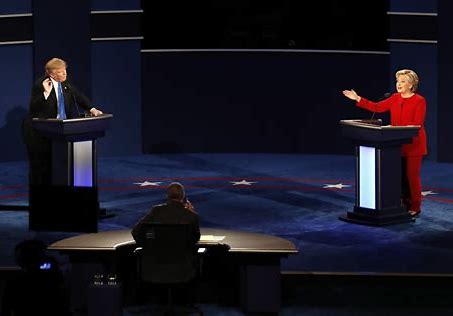
As we consider our answers, we might recall that it was on this date in 2016 that Pew Research Center published the results of a poll on voter satisfaction with U.S. Presidential candidates:
Voter satisfaction with the choice of presidential candidates, already at a two-decade low, has declined even further. A new survey finds that just a third of registered voters say they are very or fairly satisfied with the choices, while 63% say they are not too or not at all satisfied. That represents a 7-percentage-point drop since June in the share of voters expressing satisfaction with their candidate choices…
Already-low voter satisfaction with choice of candidates falls even further

“A cigarette is a pinch of tobacco rolled in paper with fire at one end and a fool at the other”*…

Any number of social and culture issues that one might have thought resolved, have come unraveled over the last decade or so; issues thought resolved are again open. Max Read suggests (in a not altogether tongue-in-cheek way) that smoking might be next…
One way of thinking about this newsletter (Read Max) is as equities analysis for the discursive marketplace, answering important questions for the armchair take trader: What discourses have peaked? What concepts should you short? How are you balancing your take portfolio?
My longtime professional and personal experience as a poster has left me adept at seeing the hidden structures that lurk behind the peaks and valleys of “the discourse”; paid subscribers in particular are well-positioned to profit from the insight offered by Read Max’s sophisticated and proprietary models.
For a while now, Read Max analysts have been intrigued by what is often called on Twitter “smoking discourse,” as in “cigarettes.” Now, following certain recent events on Twitter, we’re prepared to advise clients that we believe strong “pro-smoking” positions grounded in socio-political identities are poised to have a “moment” soon. Our analysis indicates that certain structural factors are in place to encourage arguments like “smoking is good for society, actually” and “anti-smoking laws are bad science/policy” to move past “trolling” and be adopted as common sense by a loose confederation of IDW [“intellectual dark web”] Substackers, trad nutritionists, and downtown cool kids, building on the ties formed between these groups around the COVID-19 pandemic…
Read on for a too-plausible take on the future of public debate: “The coming pro-smoking discourse,” from @readmaxread.
* George Bernard Shaw
###
As we brush away the ashes, we might recall that it was on this date in 1962 that recently-appointed Surgeon General Luther L. Terry announced that he would convene a committee of experts to conduct a comprehensive review of the scientific literature on the smoking question. In June 1961, the American Cancer Society, the American Heart Association, the National Tuberculosis Association, and the American Public Health Association had addressed a letter to President John F. Kennedy, in which they called for a national commission on smoking, dedicated to “seeking a solution to this health problem that would interfere least with the freedom of industry or the happiness of individuals.” The Kennedy administration responded the following year (after prompting from a widely circulated critical study on cigarette smoking by the Royal College of Physicians of London).
Terry issued the commission’s report– highlighting the deleterious health consequences of tobacco use– on January 11, 1964, choosing a Saturday to minimize the effect on the stock market and to maximize coverage in the Sunday papers. As Terry remembered the event, two decades later, the report “hit the country like a bombshell. It was front page news and a lead story on every radio and television station in the United States and many abroad.”

You must be logged in to post a comment.