Posts Tagged ‘Chicago’
“Two things are infinite: the universe and human stupidity; and I’m not sure about the universe.”*…
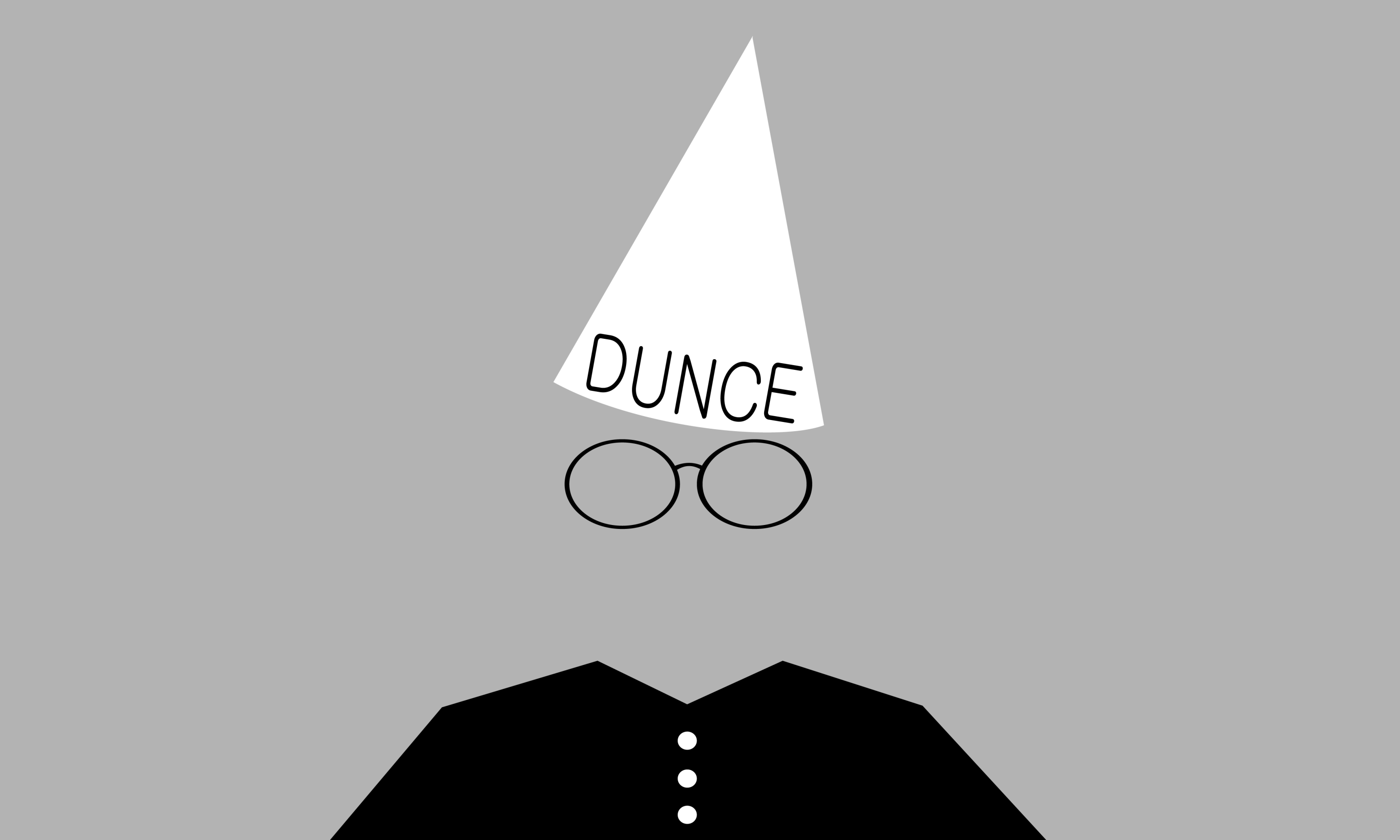
David Krakauer (President of the Sante Fe Institute and Professor of Complex Systems there) argues that it takes intelligence to get things spectacularly wrong…
I have never heard a rock described as stupid. And the same would be true of a river, a hurricane, and even a thermostat. Stupidity seems to be a sophisticated form of behavior despite its ignominious associations.
Human beings can land autonomous rovers on Mars, sequence a genome in hours, and engineer nanometer circuits. And yet conspiracy theories, anti-scientific political movements, and institutional hatred proliferate on a scale that might embarrass the meager success record of a medieval alchemist.
One might say that stupidity implies a capacity for getting things right before it can get them spectacularly wrong. Stupidity is not the opposite of intelligence but its evil twin, the dissimulating Cain to a cerebral Abel. And perhaps surprisingly, the degree of stupidity available to any system scales directly with the intelligence that system possesses—more intelligence begets greater feats of stupidity. It would be a stretch to call a bacterium stupid, and we know that cats and dogs achieve modest feats of it. But human beings, equipped with language, abstraction, technology, institutions, and ideology, can be stupid on a truly civilizational scale. This is not a joke; it is close to a law of nature. A law that might very well be our undoing.
We have thousands of research programs on intelligence, and not all of them are intelligent, including studies of IQ, AI, animal cognition, and collective problem-solving. These take place in celebrated departments and are published in prestigious journals devoted to understanding how minds make hard problems easy. These days we cannot take a step without crashing into another article on intelligence and AI. Researchers from all fields without any knowledge of intelligence research and its history have become self-declared “thought leaders” in natural and artificial intelligence.
Yet stupidity gets almost no attention at all. It is treated as a mere absence, as if once we subtract intelligence what remains is stupidity. It is likened to a form of psychological darkness experienced after you have switched off the lights of deliberation. But this is a mistaken belief. Darkness does not do anything pernicious in the way that stupidity does. Stupidity takes an easy problem and, with great effort and misdirected ingenuity, makes it hard. That effort is the key to grasping stupidity, in that you need sophisticated machinery to be genuinely, consequentially stupid.
Here is how I like to think about this from a scientific perspective. If intelligence means making a problem of difficulty X easier, by deploying tools, using mathematics, and adopting strategies that reduce its cost, then stupidity means making a problem of difficulty X harder. And contrary to expectations, the most reliable way to make an easy problem hard is to bring to bear an impressive apparatus of complicated theories, elaborate beliefs, and sophisticated algorithms that sound tremendously convincing but perform worse than doing nothing. A person who does not know the answer to a question is merely ignorant. A person who constructs an ingenious hundred-page argument for the wrong answer is stupid. As great writers, artists, and philosophers throughout time have understood, such constructions require intelligence of a high order…
[Krakauer explores a variety of types of human stupidity, then turns to AI and draws his conclusion…]
… Artificial intelligence is by design the most powerful cognitive artifact ever created. It is engineered to minimize user effort by performing tasks that humans would otherwise find time consuming or impossible. The problem of course is that the better the tool gets the less the user needs to think for themselves. And in a vicious spiral, the less the user thinks the more dependent they become on their tools. That is until the tool disappears and the whole system collapses.
If intelligence is a necessary precondition for stupidity, and intelligence and stupidity scale together such that it takes real intelligence to be spectacularly stupid, then super-intelligence will be the opening act to an era of super-stupidity.
AI hallucination might be the first evidence of this dynamic. Large language models produce fluent, confident, detailed text that is, with some regularity, factually wrong. And this is not a simple bug but a structural feature of systems that optimize for appeal and plausibility rather than truth. And the danger is not that the AI will be wrong, after all, humans are wrong all the time, but knowing this, humans have invented means to detect and correct errors. We call this the scientific method.
The danger is that an AI will be wrong in ways humans can no longer detect because the very capacities that would catch the error have been outsourced to the machine or exceed the capacities of human minds. We face the prospect of a stupidity so sophisticated that it becomes indistinguishable, to its beneficiaries, from intelligence. This is the parable of Douglas Adams’ The Hitchhiker’s Guide to the Galaxy, where the answer to the ultimate question, the meaning of life, the universe, and everything, is 42.
I would like to make a modest proposal and suggest that we need a science of stupidity as rigorous as our emerging sciences of intelligence. This will not require billions of dollars of investment. It would involve inquiries into the mechanisms by which intelligent systems produce stupid outcomes. It would include studying the evolutionary dynamics that maintain stupidity despite its selective costs. It would promote the development of design principles that distinguish tools which enhance cognition from tools which replace it. And it would include surveying the institutional conditions under which collective intelligence degrades into collective stupidity.
Stupidity is not what remains when intelligence is subtracted, it is an active mechanism with its own logic, its own dynamics, and a capacity for unbounded growth parasitic on ingenuity. In a world obsessed with ever more powerful cognitive technologies, understanding stupidity is not merely an academic exercise, it might prove to be the most intelligent thing we do…
An essay on our undoing: “What Makes Humans Stupid,” from @sfiscience.bsky.social and @nautil.us.
Apposite: “How we meet the future” (“If we couldn’t make generalisations, we would be paralysed by the world’s complexity. Does that ever excuse stereotyping?”)
* Albert Einstein
###
As we investigate imbecility, we might recall that it was on this date in 2008 that the Trump International Hotel and Tower in Chicago “topped out“; construction was completed over the next few months. Donald Trump had announced in 2001 that the skyscraper would become the tallest building in the world, but after the September 11 attacks that same year, the architects scaled back the building’s plans, and its design underwent several revisions. When opened in 2009, it became the second-tallest building in the U.S. It surpassed the city’s John Hancock Center as the building with the highest residence (apartment or condo) in the world and briefly held that title until the completion of the Burj Khalifa several months later. The property has been beset by problems from its opening; they continue to this day.

“Give me the liberty to know, to utter, and to argue freely according to conscience, above all liberties”*…

Today we have Substack and social media and blogs. In the old days, we “spoke” in person…
Speaker’s Corner, in Hyde Park in London, is a fabled site of on-going, open public speeches and debate. As Amelia Soth reminds us, that tradition also has a long history in the U.S…
There is nothing in American civic life today like Chicago’s old “Bughouse Square.” From the 1890s to the mid-1960s, it was a hotspot for soapbox speakers: radicals, evangelists, cranks, poets, philosophers, and eccentrics. Anyone with a perspective outside the mainstream gathered there nightly to declaim from their improvised podiums. The ethos, as one newspaper put it, was “free speech and the louder the better.” People actually came to listen, too, in crowds.
Bughouse Square (properly named Washington Square Park) might be the most famous free-speech center, but the practice of soapboxing stretched from sea to shining sea. New York City had its own crew of “peripatetic philosophers.” Hubert Harrison, known as the “Black Socrates,” delivered his critiques of capital right in front of the New York Stock Exchange. Then there was Portia Willis, the “suffrage beauty,” who drew in crowds with her looks and kept them with her wits.
As Mary Anne Trasciatti writes in “Athens or Anarchy? Soapbox Oratory and the Early Twentieth-Century American City,” the soapbox was a particularly democratic mode of public address. Even if you couldn’t get your cause into a meeting hall or a newspaper column, you could still hop on a box, lift your head a few inches above the crowd, and start talking. But that doesn’t mean just anyone could be a successful soapboxer. You had to be a good speaker to keep the crowds listening.
People tried all kinds of tricks to get attention. One soapboxer (wonderfully named Lowlife McCormick) would perform a Houdini-like escape from a straitjacket, which he would then declare to be a metaphor for the bonds of wage labor. Another would catch the crowd’s attention by shouting “I’ve been robbed! I’ve been robbed!” Once he had their ears, he’d finish up with “…by the capitalist system!” A really good soapboxer could draw in so many listeners as to render the streets impassable. One photo shows anarchist Alexander Berkman completely surrounded by a sea of hats.
But the attention soapboxing attracted wasn’t always positive. The 1910s saw a series of vicious “free speech fights” kick off in cities like Spokane, San Diego, and Fresno. Grace L. Miller lays out the history of perhaps the most violent of these struggles in “The I.W.W. Free Speech Fight: San Diego, 1912.” Things started to heat up when a deputy sheriff drove his car into a crowd of people listening to a socialist speaker. One listener reacted by slashing the sheriff’s tire. Within two days, the city passed an ordinance banning street speaking.
In response, the I.W.W. (the Industrial Workers of the World, or the “Wobblies”) urged supporters to ride the rails to San Diego and fight for their right to soapbox:
Come on the cushions; ride up on top;
stick to the brake beams; let nothing stop.
Come in great numbers; this we beseech;
Help San Diego to win free speech.Soapboxers descended on the town en masse. Each would step up on the box, say a word or two, and then get yanked off by the police and carried to jail. There’s even an old Wobbly joke about a speaker who starts his speech with the traditional salutation—“Fellow friends and workers”—and then, when he realizes no one’s coming to arrest him, panics and shouts “Where are the cops?!”
The Wobblies’ goal was to overwhelm the court system with free-speech cases until the city was forced to give up prosecuting soapboxers. Soon the jail was overflowing. But instead of following the legal process, the city discharged the arrestees right into the waiting arms of a vigilante gang, who drove the Wobblies to the county line and viciously beat them with axe handles.
It’s not exactly clear who the vigilantes were, but the gang may have been composed of some of the city’s most prominent citizens. A newspaper editor who was run out of town for his sympathy to the free-speechers wrote of them (as quoted by Miller): “The chamber of commerce and the real estate board are well represented. The press and public utility corporations, as well as members of the Grand Jury are known to belong.”
Yet the vigilantes went too far, and labor organizations called on the state government to intervene. The commissioner sent to investigate declared that the abuses he saw weren’t taking place in Tsarist Russia. At great personal cost, the Wobblies had put the concept of free speech to the test, and won…
When public oratory was a defining feature of civic life: “The Golden Age of the American Soapbox,” from @amelia-soth.bsky.social in @jstordaily.bsky.social.
* John Milton, Areopagitica: A Speech for the Liberty of Unlicens’d Printing, to the Parliament of England
###
As we speak up, we might ponder another Chicago-related phenomenon, recalling that it was on this date in 1986 that Geraldo Rivera made a “shocking discovery”:
Notorious and “most wanted” gangster, Al Capone, began his life of crime in Chicago in 1919 and had his headquarters set up at the Lexington Hotel until his arrest in 1931.
Years later, renovations were being made at the hotel when a team of workers discovered a shooting-range and series of connected tunnels that led to taverns and brothels making for an easy escape should there be a police raid. Rumors were spread that Capone had a secret vault hidden under the hotel as well.
In 1985, news reporter Geraldo Rivera had been fired from ABC after he criticized the network for canceling his report made about an alleged relationship between John F. Kennedy and Marilyn Monroe. It seemed like a good time for Rivera to scoop a new story to repair his reputation.
It was on this day [that] a live, two-hour, syndicated TV special, The Mystery of Al Capone’s Vault aired. After lots of backstory, the time finally came to reveal what was in that vault. It turned out to be empty. After the show, Rivera was quoted as saying “Seems like we struck out.”
– source

“If your determination is fixed, I do not counsel you to despair. Few things are impossible to diligence and skill. Great works are performed not by strength, but perseverance.”*…

The estimable Arthur Goldhammer on the flavor of our moment… a moment (for many of us, anyway) in which, even as we strive to stave off despair, hope is hard to find…
There is a saying, well-known in French, counseling resolve in the face of hopelessness: “Il n’est pas besoin d’espérer pour entreprendre, ni de réussir pour persévérer.” (Freely translated: Hope is not necessary to endeavor, nor is success necessary to persevere.”) The thought, with minor modification, has been variously attributed to both Charles the Bold and William of Orange and quoted by writers as different as Marguerite Yourcenar and Jean-Paul Sartre. It’s a good motto for bleak times in general and for these times in particular.
For the first time in a long while, though, I’ve begun to feel the first stirrings of hope, and even if Charles and William are right that hope is something one can do without, I think they would agree that it’s easier to get going if you think the winds might be shifting in a more favorable direction.
Certainly, the election results of a few weeks ago offered a modicum of encouragement. To that Republican electoral debacle have now been added signs that the MAGA movement is neither as unified nor as indomitable as it once appeared. For example, Trump has been forced to rescind tariffs on certain food items because of cries of pain from below. He has been embarrassed by the leak of derogatory items from the so-called Epstein files, challenged from within by erstwhile epigones such as Marjorie Taylor Greene, and forced to back off opposition to release of the files by the growing belief that he must have a great deal to hide.
Worse still for a would-be tyrant, he has been made to look ridiculous by repeatedly changing his tune: at first, the Epstein files were going to lay bare the perfidy of the Democrats; then, through his mouthpiece Pam Bondi, he asserted that there was nothing in them and everyone should just move on; still later, he ordered the same Bondi to use this supposedly non-existent evidence to go after his enemies Bill Clinton, Larry Summers, et al.
In a Times column published [November 17], Michelle Goldberg evoked these various fissures in the MAGA edifice, to which she added the noteworthy observation that even stalwarts of the movement such as Mike Cernovich, who helped spread the “Pizzagate” conspiracy theory, were appalled by the magnitude of MAGA corruption. And how could one not be appalled, with the Trump family profiting so handsomely from presidential decisions on matters ranging from cryptocurrency to defense contracts to brokering pardons to wheeling and dealing in the Middle East, Asia, and beyond? Although the shamelessness of it all is breathtaking, until now none of it seemed to have been noticed by Trump’s “base.”
What has changed? Perhaps no more than my mood. I hope I’m not allowing the wish to become father to the thought. But it’s just possible that the “audience” of Trump’s slickly produced reality show has begun to notice that things aren’t going according to script. The war in Ukraine, which was to have been settled on Day One, rages on. Meanwhile, after expending a great deal of firepower to dispatch a few small motorboats to Kingdom Come, a great armada has been assembled for the apparent purpose of bringing Venezuela to its knees. Venezuela! In the heyday of American imperialism, a gunboat or two would have sufficed, but our self-designated Secretary of War has chosen to deploy our “largest and most lethal aircraft carrier,” as ABC’s Martha Raddatz describes it, along with a B52 redeemed from mothballs presumably because it cut a more impressive figure for the cameras than one of the smaller jets arrayed on the deck of the carrier below.
At the same time, heavily armed and masked ICE brigades have been unleashed on city after city, while Homeland Security officials boasted of the arrest of ”81 illegals this weekend, our biggest haul to date.” It may have dawned on television audiences that 81 is a small number compared with the 12 or 20 or 30 million “illegals” (the number keeps rising) said to be in the country. Symbolic shows of force wear thin after a while.
At the same time, doubts about Trump’s management of the economy are growing. The tariff policy is an incoherent mess. Its justification in the name of national emergency has been questioned in the federal courts. There is suspicion that the job market stagnated while statistics were not being collected owing to the federal shutdown. Investors have begun to pull back from the stock market for fear that the AI-driven bubble is about to burst, and without the winds of AI driving it forward, the economy could soon find itself dead in the water.
The Trump Show has always depended on illusion, like the professional wrestling shows that inspired it [see here]. Is it too much to hope that viewers are beginning to tire? I’m not sure, but il n’est pas besoin d’espérer pour entreprendre...
[Image above: source]
###
As keep on, we might recall that it was on this date in 1987 that the television signals of two stations (WGN and WTTW) in Chicago were hijacked: a pirate broadcast of an unidentified person wearing a Max Headroom mask and costume was broadcast to thousands of home viewers. The culprit(s) have yet to be identified.

See one of the intrusions here.
“The truth is rarely pure and never simple”*…

For a century, the idea of truth has been deflated, becoming terrain from which philosophers fled. Crispin Sartwell argues that they must return – urgently…
It is often said, rather casually, that truth is dissolving, that we live in the ‘post-truth era’. But truth is one of our central concepts – perhaps our most central concept – and I don’t think we can do without it. To believe that masks prevent the spread of COVID-19 is to take it to be true that they do. To assert it is to claim that it is true. Truth is, plausibly, central to thought and communication in every case. And, of course, it’s often at stake in practical political debates and policy decisions, with regard to climate change or vaccines, for example, or who really won the election, or whom we should listen to about what.
One might have hoped to turn to philosophy for a clarification of the nature of truth, and maybe even a celebration of it. But philosophy of pragmatist, analytic and continental varieties lurched into the post-truth era a century ago. If truth is a problem now for everyone, if the idea seems empty or useless in ‘the era of social media’, ‘science denialism’, ‘conspiracy theories’ and suchlike, maybe that just means that ‘everyone’ has caught up to where philosophy was in 1922…
[Sartwell sketches the last 100 years of philosophy, and it’s undermining of the very idea of truth.]
I don’t think, despite all the attacks on the notion by all sorts of philosophers for a good century, that we’re going to be able to do without truth. In a way, I don’t think all those attacks touched truth at all, which (we’re finding) is necessary, still the only possible cure…
As a first step… we might broaden the focus from the philosophical question of what makes a sentence or proposition true or false to focus on some of the rich ways the concept of truth functions in our discourse. That love is true does not mean that it is a representation that matches up to reality. It does not mean that the love hangs together with all the rest of the lover or lovee’s belief system. It doesn’t mean that the hypothesis that my love is true helps us resolve our problems (it might introduce more problems). It means that the love is intense and authentic, or, as I’d like to put it, that it is actual, real. That my aim is true does not indicate that my aim accurately pictures the external world, but that it thumps the actual world right in the centre, as it were.
Perhaps what is true or false isn’t only, or even primarily, propositions, but loves and aims, and the world itself. That is, I would like to start out by thinking of ‘true’ as a semi-synonym of ‘real’. If I were formulating in parallel to Aristotle, I might say that ‘What is, is true.’ And perhaps there’s something to be said for Heidegger’s ‘comportment’ after all: to know and speak the real requires a certain sort of commitment: a commitment to face reality. Failures of truth are, often, failures to face up. Now, I’m not sure how much that will help with mathematics, but maths needs to understand that it is only one among the many forms of human knowledge. We, or at any rate I, might hope that an account that addresses the traditional questions about propositional truth might emerge from this broader structure of understanding. That is speculative, I admit.
Truth may not be the eternal unchanging Form that Plato thought it was, but that doesn’t mean it can be destroyed by a few malevolent politicians, tech moguls or linguistic philosophers, though the tech moguls and some of the philosophers (David Chalmers, for instance) might be trying to undermine or invent reality, as well. Until they manage it, the question of truth is as urgent, or more urgent, than ever, and I would say that despite the difficulties, philosophers need to take another crack. Perhaps not at aletheia as a joy forever, but at truth as we find it, and need it, now…
On why philosophy needs to return of the question of truth: “Truth Is Real,” from @CrispinSartwell in @aeonmag.
Source of the image above, also relevant: “The difference between ‘Truth’ and ‘truth’.”
* Oscar Wilde
###
As we wrestle with reality, we might recall that it was on this date in 1986 that Geraldo Rivera opened “Al Capone’s Vault”…
Notorious and “most wanted” gangster, Al Capone, began his life of crime in Chicago in 1919 and had his headquarters set up at the Lexington Hotel until his arrest in 1931. Years later, renovations were being made at the hotel when a team of workers discovered a shooting-range and series of connected tunnels that led to taverns and brothels making for an easy escape should there be a police raid. Rumors were spread that Capone had a secret vault hidden under the hotel as well. In 1985, news reporter Geraldo Rivera had been fired from ABC after he criticized the network for canceling his report made about an alleged relationship between John F. Kennedy and Marilyn Monroe. It seemed like a good time for Rivera to scoop a new story to repair his reputation. It was on this day in 1986 that his live, two-hour, syndicated TV special, The Mystery of Al Capone’s Vault aired. After lots of backstory, the time finally came to reveal what was in that vault. It turned out to be empty. After the show, Rivera was quoted as saying “Seems like we struck out.”
source

“An ordinary life isn’t ordinary when you put a frame around a moment”*…

Joel Meyerowitz is a pioneer of street photography. He started in the early 1960s in New York City, using color film when most other photographers were shooting in black-and-white. He’s had exhibitions of his work all over the world, and has published more than 30 books. A retrospective of his work is scheduled to be shown in Berlin later this year, and he’s working on a new project of self-portraits. At age 82, he’s continuing to explore the medium of photography every day…

An interview with Meyerowitz, including his thoughts on street photography in the time of coronavirus (with memories of 9/11): “Ready for Surprise.”
* Joel Meyerowitz
###
As we capture the moment, we might spare a thought for another extraordinary street photographer, Vivian Dorothy Maier; she died on this date in 2009. A nanny, mostly in Chicago’s North Shore, she took more than 150,000 photographs during her lifetime, primarily of the people and architecture of Chicago, New York City, and Los Angeles– photographs that weren’t recognized until after her death.
A Chicago collector, John Maloof, acquired some of Maier’s photos in 2007, while two other Chicago-based collectors, Ron Slattery and Randy Prow, also found some of Maier’s prints and negatives in her boxes and suitcases around the same time. Maier’s photographs were first published by Slattery on the Internet in July 2008; but the work received little response. In October 2009, Maloof linked his blog to a selection of Maier’s photographs on Flickr [now collected on this site], and the results went viral, with thousands of people expressing interest. Maier’s work subsequently attracted critical acclaim, and since then, has been exhibited around the world. Her life and work have been the subject of books and documentary films, including the Academy Award-nominated Finding Vivian Maier.


Self-portrait
You must be logged in to post a comment.