Author Archive
“In the beginning there is the stem cell; it is the origin of an organism’s life”*…

C.H. Waddington’s powerful image of embryonic stem cells specializing on a rolling landscape has captivated biologists since the 1950s. As Philip Ball reports, experimental data is finally confirming– and complicating– his visionary ideas…
By the middle of the 20th century, it had begun to seem that biology was almost solved. Charles Darwin’s theory of evolution by natural selection explained how organisms change and adapt. The modern science of genetics showed how it works at the molecular scale. Genes governing the traits of organisms get passed down from parent to offspring, and random mutations create the variations from which natural selection picks the “fittest.” Natural selection and genetics fitted together in what the biologist Julian Huxley christened “the modern synthesis” in his 1942 book). Once it was shown in 1953 that the genes are encoded by DNA, the rest of biology looked like little more than piecing together details.
But not everyone was satisfied. The British biologist Conrad Hal Waddington), known to his friends and colleagues as Wad, thought this focus on genes was all very well. But it wasn’t clear to him, or anyone else, exactly how genes shape the forms and features of organisms — how they reliably generate all the different tissues of the body, in all the right places, during embryonic development. Around the same time that Huxley unveiled the modern synthesis, Waddington presented a novel picture of how this might unfold.
He visualized the developmental process as a landscape with hills and valleys that split every so often like those in a river network. At the very top of the highest hill he imagined a ball, which represented a population of cells in their earliest embryonic form — what we now call stem or pluripotent cells, which have the potential to become any cell type. The progression of the cells towards their fates — to become, say, skin cells, muscle cells, or nerve cells — is like the ball rolling downhill through the landscape.
When the ball reaches a branching point (bifurcation), the model’s “gravity” pulls it to one track or the other: In scientific terms, it must differentiate. Through a particular sequence of such branching decisions, Waddington argued, cells specialize into their mature types, or fates, each expressing a particular set of genes. The cells are restricted to a small number of well-defined states because they are “canalized,” in Waddington’s lexicon: trapped and channeled by the sides of the valley. In this way, a limited number of cell types reliably arise from the activity of an army of genes.
Waddington’s landscape has been “remarkably useful as a conceptual scaffold,” said James Briscoe, a developmental biologist at the Francis Crick Institute in London. “The core ideas — that development is progressive, that cell states are distinct, that bifurcations represent [cell] fate decisions, that canalization implies robustness — all survive.”
“There’s so much richness to some of the concepts Waddington was trying to share,” said Susanne Rafelski, a biochemist at the Institute for Stem Cell and Regenerative Medicine in Seattle.
But the concept was more of a visual metaphor than a representation of an actual biological process. Or so it seemed. In the past several years, researchers have mapped out the real topography of cell-state spaces — in effect, Waddington’s landscapes — from experimental data collected from many thousands of cells over the course of embryonic development. Those analyses are revealing that development is not a mere readout of a genetic program, but rather a dynamic process in which communities of cells build themselves, and the very landscape they navigate, by mutual negotiation and interaction, into an organism.
This cartography of development is now helping researchers understand how identical cells in the early embryo develop into the distinct tissues and cell types of a complex organism. This matters enormously for regenerative medicine and stem-cell engineering, Briscoe said: “If you understand the landscape topology and know where the bifurcations lie, you can in principle design methods that steer cell populations to desired states with precision, rather than by trial and error.”
Waddington’s metaphor, then, could be the key to understanding and reshaping possibilities for what cells, tissues, and embryos can be…
Read on: “How Does Life Unfold? A Landscape Metaphor Comes Into Its Own.” from @philipcball.bsky.social in @quantamagazine.org.
###
As we appreciate adaptability, we might send healing birthday greetings to Robert Peter Gale; he was born on this date in 1945. A physician and medical researcher, he conducted important research into leukemia and other bone marrow disorders (e.g., aplastic anemia). Gale was a a pioneer in bone marrow transplantation and co-founded the International Bone Marrow Registry. But he is perhaps most widely known for his assistance to foreign governments in treating radiation victims – to the Soviet Union (1986) after the Chernobyl disaster and to Brazil (1987) following an accident in Goiania. As a specialist in bone marrow transplants, he volunteered to treat Chernobyl victims and was invited by Mikhail Gorbachev to travel with a group to Moscow immediately after the April 1986 accident. He performed bone marrow transplants on 13 Chernobyl victims (though many of the highly exposed Chernobyl survivors have since died from latent radiation effects).

“In nature, as in work of art, the isolation of an object tends to invest it with absoluteness, to endow it with that more-than-symbolic meaning which is identical with being”*…
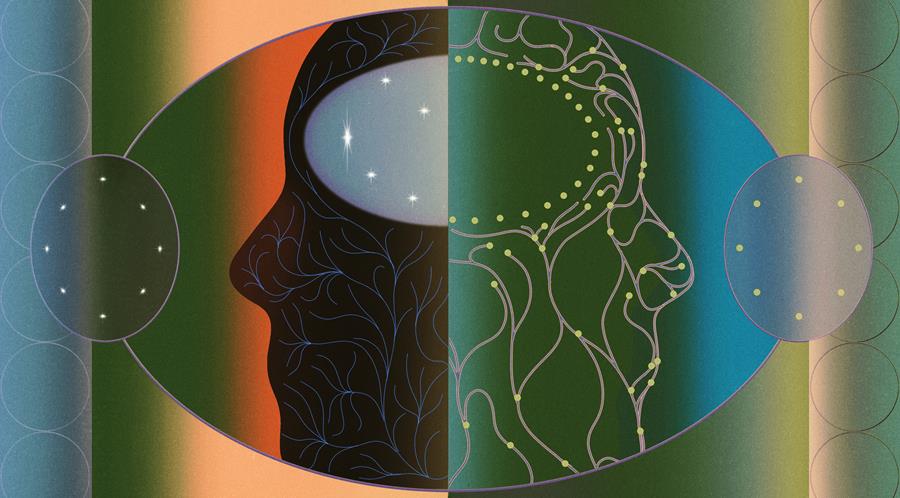
Does AI threaten our humanity? Nathan Gardels, the editor-in-chief of Noema Magazine, suggests that the horse has already left the barn…
From Silicon Valley to the Vatican, across kitchen tables and in the halls of power, the world is astir over the question of whether humans will be able to control the AIs we’ve created. But that begs the question: What does it mean to be “human”?
One place to start sorting this all out is what Confucian philosophy calls “rectification” — naming things for what they actually are.
To N. Katherine Hayles [here], author of Bacteria to AI: Human Futures with our Non-human Symbionts [here], we are already “post-human.”
As she explained to Claire Webb in a recent Futurology podcast, the concept of “human” is culturally and historically contingent. These days, she says, there is still the dominant view that arose with the Enlightenment of the human as an autonomous, singular entity with “rational free will.”
For Hayles, that has never been true because humans have never existed as an entity apart but have always been “woven in the web” of a surrounding environment, or “Umwelt.” It is the symbiotic interactions within that interdependence which determine the signs we sense, the meaningful interpretation of the information we process, the decisions we make, and the actions we take that define who we are.
The most obvious example of our relational interdependence with non-human life is the gut bacteria within us, the biological functions of which we’d perish without.
The false notion of self-enclosed human autonomy is even less true today, she argues, because “we are already in a deeply symbiotic relationship with computational media — chips, routers, devices, microwaves, etc. They have become the controllers, processors and disseminators of a flow of information” in which we are inextricably enmeshed — and, in advanced societies, without which we couldn’t survive. If it all crashed, we couldn’t transport food, fly airplanes or operate the stock market. We’d quite literally live in the dark.
As Hayles describes it, this condition amounts to “distributed cognition and distributed decision-making” between human and non-human participants. She calls these “cognitive assemblages” or “networked intelligence.”
In short, we are “post-human” because we are inseparably joined in an “integrated cognitive framework” with computational media.
This post-human condition would seem to place us some distance along the continuum toward Singularity, the full fusion of humans and intelligent machines. By definition, this symbiosis blurs the line of who or what is in control.
In a related Futurology podcast, Kevin Kelly [here] tells Nils Gilman that “we are already in the Singularity.” From his northern California perch, Kelly has been surfing the waves of technological innovation and cultural transformation for decades, going back to his time as co-founder of The Whole Earth Catalog with Stewart Brand and then Wired magazine.
What Kelly means by “already in” is that human/machine fusion is a presently ongoing process that doesn’t suddenly cross some rapturous threshold, but incrementally unfolds with the accelerated deepening of the “integrated cognitive framework” Hayles talks about.
We can’t clearly see the massive change taking place now in its pixelated form, but will only be able to recognize the fuller picture of what has taken place from a future retrospective standpoint. Our perspective is clouded, says Kelly, by the fact that “we are living inside the event horizon.”
For Kelly, the Singularity is not a closed process with a fixed endpoint, but perpetually open to the emergence of new creative forms and unexpected symbiotic combinations, what the complexity scientist Stuart Kauffman calls the “adjacent possible” that can’t be foretold. “The Singularity is always near,” as Kelly puts it, but forever remains on the elusive horizon.
Hayles departs from the transhumanist vision of Singularity where human consciousness one day is uploaded to an inorganic substrate other than the biological body.
She makes the point, as do many others, that artificial intelligences on their own cannot attain consciousness.
This is because they lack the “natural intelligence” that can only emerge from the extraordinary complexity of the millennia-long evolution of embodied humans adapting to their environment to survive and thrive. No matter how powerful the large language models may be, language which inherently infers that distinctly human experience, cannot be meaningfully transferred to an inorganic substrate lacking the commensurate context.
AIs cannot know the “ground truth” of embodied intelligence, which, at bottom, is the homeostatic quest for survival that neuroscientist Antonio Damasio argues is the root of emotion and self-awareness.
AIs may use chain-of-reasoning logic to achieve objectives by stringing together the language they’ve been trained on, but the meaning is not the same. Precisely the danger of AIs is that they become empowered as actors through “recursive self-improvement” ungrounded in lived experience.
As such, they lack the ingrained primal training that informs moral reasoning. In Pope Leo XIV’s words, “So-called artificial intelligences do not undergo experiences, do not possess a body, do not feel joy or pain, do not mature through relationships and do not know from within what love, work, friendship or responsibility mean.”
Though AI models may “imitate language” and “simulate empathy and understanding,” he says, “they do not understand what they produce.”
What humans invaluably bring to the table of an “integrated cognitive framework” is, in the parlance of the pontiff, the “integral” nature of the human as a “whole person” in the full set of relations with others and nature that constitute him or her. “The person,” he says, “is not a system of algorithms: he or she is a creature, relationship, mystery.”
In this sense, retaining “human control” of AIs means purposefully and insistently instantiating the integral element drawn from lived human experience into our entwinement with intelligent machines.
The challenge is not just about “disarming” the capacity of AI agents to act on their own, as the Pope has called for, but also about “arming” the integral conception of the human within the integrated cognitive framework in which we already dwell…
From an integrated to an integral cognitive framework: “We Are Already Post-Human,” from @noemamag.com.
* Aldous Huxley, The Doors of Perception
###
As we contemplate connection, we might recall that it was on this date in 1973 that a US Federal Judge signed his decision, following a lengthy trial, declaring the ENIAC patent invalid and belatedly credited physicist John Atanasoff with developing the first electronic digital computer, the Atanasoff- Berry Computer (or simply, “the ABC”). Built in 1937-42 at Iowa State University (then Iowa State College) by Atanasoff and a graduate student, Clifford Berry, it introduced the ideas of binary arithmetic, regenerative memory, and logic circuits.
As it happened, these ideas were communicated from Atanasoff to John Mauchly, who used them in the design of the better-known ENIAC built and patented several years later.

“In our world of big names, curiously, our true heroes tend to be anonymous”*…

Your correspondent is headed off-line for a few days, so (R)D will be off until Monday, October 19, when (airline performance permitting) regular service should resume…
Billions of computers and phones run on code looked after by a handful of mostly-volunteer people. On his lovely site sheets.works, Akash Wadhwani introduces us to some of those generous souls…
People post [the comic above] whenever something breaks. The tower is labelled “all modern digital infrastructure” and it stands on one small block, “a project some random person in Nebraska has been thanklessly maintaining since 2003”.
We wanted to know how close to true it is. We downloaded the full history of 23 pieces of software that phones, browsers and servers depend on, and counted everyone who made ten or more changes to each one between October 2025 and October 2026. Then we listed what is actually installed on an Android phone, an iPhone and a Windows PC…
Wadhwani opens with the story of Paul Eggert…
Your alarm, a boarding pass, a meeting in another country, the day your salary lands: anything on your phone that shows a time has to know where you are. Underneath sit every Android phone, every iPhone and most of the servers on the internet.
They all get local time from one text file, the time zone database, which holds every clock rule a government has ever announced. Paul Eggert, a lecturer at UCLA, keeps that file up to date in his spare time [and has since 2012].
4,000,000,000 Android phones and iPhones use his file. We didn’t count servers, Macs or laptops, which would push the number higher.
On 29 September Paul put out version 2026e of the file. The first line of its notes says that Manitoba moves to permanent -05 on 31 October, which tells phones in Winnipeg not to set their clocks back on 1 November, and it was typed in by two volunteers a month ahead…
Read on for 22 other tales of extraordinary generosity: “The people holding up the internet.”
* Daniel J. Boorstin, The Image: A Guide to Pseudo-events in America
###
As we give thanks, we might spare a thought for a man who, if not un-sung, has been at least under-sung: Walter M. Elsasser; he died on this date in 1991. A physicist, he contributed to science across several disciplines. In atomic physics, he interpreted electron scattering. In geophysics, during the 1940’s, he provided insight into radiative heat transfer in the Earth’s atmosphere, and developed the currently-accepted dynamo theory to explain the origin and properties of the Earth’s magnetic field. And he pioneered study of the magnetic orientation of minerals in rocks to reveal the Earth’s history of its magnetic field.
The last fifty years of his life were in large measure spent on biology, more particularly on Systems Biology: Elsasser worked toward a theory of organisms (an effort to establish the distinction between living and inanimate matter). His thinking is still at play in both Complex Systems Biology and Relational Biology.

“‘Scenius’ stands for the intelligence and the intuition of a whole cultural scene. It is the communal form of the concept of the genius.”*…

Zachary Hastings Hooper on Mark Wilkerson‘s Pub Rock, an appreciation of a now largely forgotten legacy…
The history of popular music is one of continual evolution, with one generation inspired by and then replaced by the next. Think the Beatles and Rolling Stones usurping their idols Buddy Holly and Muddy Waters. In the U.K., conventional wisdom holds that the pretension and precision of early 1970s prog rock acts like Yes and Genesis were smashed by the intentional amateurism and outrage of later-decade punk rockers such as the Sex Pistols and the Clash. This is perhaps best represented by the image of Johnny Rotten’s “I Hate Pink Floyd” t-shirt.
Pub Rock (Bloomsbury), a new book by Mark Wilkerson, biographer of Pete Townshend and Thunderclap Newman, shines some light on the overlooked genre of pub rock that catalyzed the shift from prog to punk. Wilkerson traces the genre’s birth in London pubs in the early seventies and its gestation of the world-shattering punk and New Wave scenes that followed.
I’m the audience for this book. As a teenager honing his musical tastes in the late eighties, I was introduced, by MTV and college radio, to the sounds of angry young men like Elvis Costello, Nick Lowe, and Graham Parker. Digging into their back catalogs, I discovered that Lowe especially was deeply intertwined with something called pub rock; his old band, Brinsley Schwarz, had been a major player in that scene. At the same time, I realized that Stiff Records—home to Lowe, Costello, and Parker, as well as the Damned and Madness—was run by two pub rock managers [see here]. In a sense, I’ve been waiting for this book for decades. And now that it’s here, I’m happy to dust off some old records while cueing up some new (to me) selections.
Wilkerson characterizes pub rock as “simply music that was played in pubs. A diverse mix was represented there: Roots rock, country, R&B, soul and rock’n’roll—both the good-time variety and the harder-edged stuff.” Unlike the sounds dominating airwaves and filling stadiums, pub rock was unadorned and earnest. It was neither glam nor grandiose.
While sonically similar to more mainstream rock and roll, pub rock had a slyly subversive allure. These seemingly square guys (yes, they are all guys) were about to birth punk. Every budding music snob tries to earn their bona fides with obscure knowledge. So learning that the dude behind “Cruel to Be Kind” had a previous professional life and that “(What’s So Funny ’Bout) Peace Love and Understanding” was a cover gave me an undeserved sense of superiority.
Pub Rock is part of the 33 ⅓ Genre series of primers on musical subgenres. It hews to the imprint’s mission, offering a quick, accessible entry point to a genre with little or no knowledge required, just curiosity. Like any good synopsis of a genre or musical scene, it sends the reader off to their favorite streamer or record store in search of a new listen or three.
In the age of the algorithm, we’re accustomed to being told, “If you like X, you’ll like Y.” However, snapshots like Wilkerson’s go beyond the “what” to tell you why you should add Dr. Feelgood or Brinsley Schwarz to your playlist.
As the book’s title indicates, the scene grew around a series of pubs in London. Groups like the Rolling Stones, the Yardbirds, and the Band strongly influenced the nascent pub rock bands, but as Wilkerson notes, pub rock arose as big-name British acts were increasingly focused on selling out stadiums in America, and economic pressures were closing the venues that sustained the sixties scenes. Pubs, which had historically featured jazz acts, gave new bands opportunities to hone their skills and build followings. Wilkerson posits that intimate venues forced bands to up their game: proximity to Carlsberg-swilling audiences meant that you had to play your instruments and entertain the crowd without hiding behind light shows and heavy amplification.
The pub rock movement yielded a couple of minor hits, notably Ace’s “How Long,” now a staple of yacht rock radio. But many of its key figures became leaders in the punk and New Wave era. Ian Dury from Kilburn and the High Roads became the iconic leader of the Blockheads, while John Mellor from the 101ers became the even more iconic Joe Strummer of the Clash. Ace’s Paul Carrack had chart-topping success with both Squeeze and Mike + the Mechanics. The aforementioned Lowe went on to chart success as a solo artist, producer, and songwriter. Parker and Dave Edmunds enjoyed long careers. And pub rock’s DIY ethos—finding new places to play, hauling your own gear, building audiences from scratch—directly inspired the punk and New Wave scenes that followed.
It’s been said the Velvet Underground and the Ramones only sold a few copies of their debut albums but everyone who bought them started a band. It could be suggested that, similarly, everyone who encountered Eggs Over Easy or Brinsley Schwarz at the Tally Ho did the same. Artists as diverse as the Sex Pistols, Costello, Madness, and the Stranglers trace their roots to pub rock shows…
“Punk’s Pub Crawl,” from @ctrrelpol-washu.bsky.social.
For more, and videos of exemplary pub rock performances, see “Raising the bar: the chaotic story of pub rock.”
And for more listening suggestions, see “A beginner’s guide to pub rock in five essential albums.”
###
As we give credit where credit is due, we might recall that it was on this date in 1976 the one of the core pub rock bands, Dr. Feelgood, scored their only No.1 UK album when their live LP Stupidity went to the top of the charts– the first ever live album to go to No.1 in the UK chart in its first week of release.
Hear it here.

“You can deny, if you like, nearly all abstractions: justice, beauty, truth, goodness, mind, God. You can deny seriousness, but not play”*…
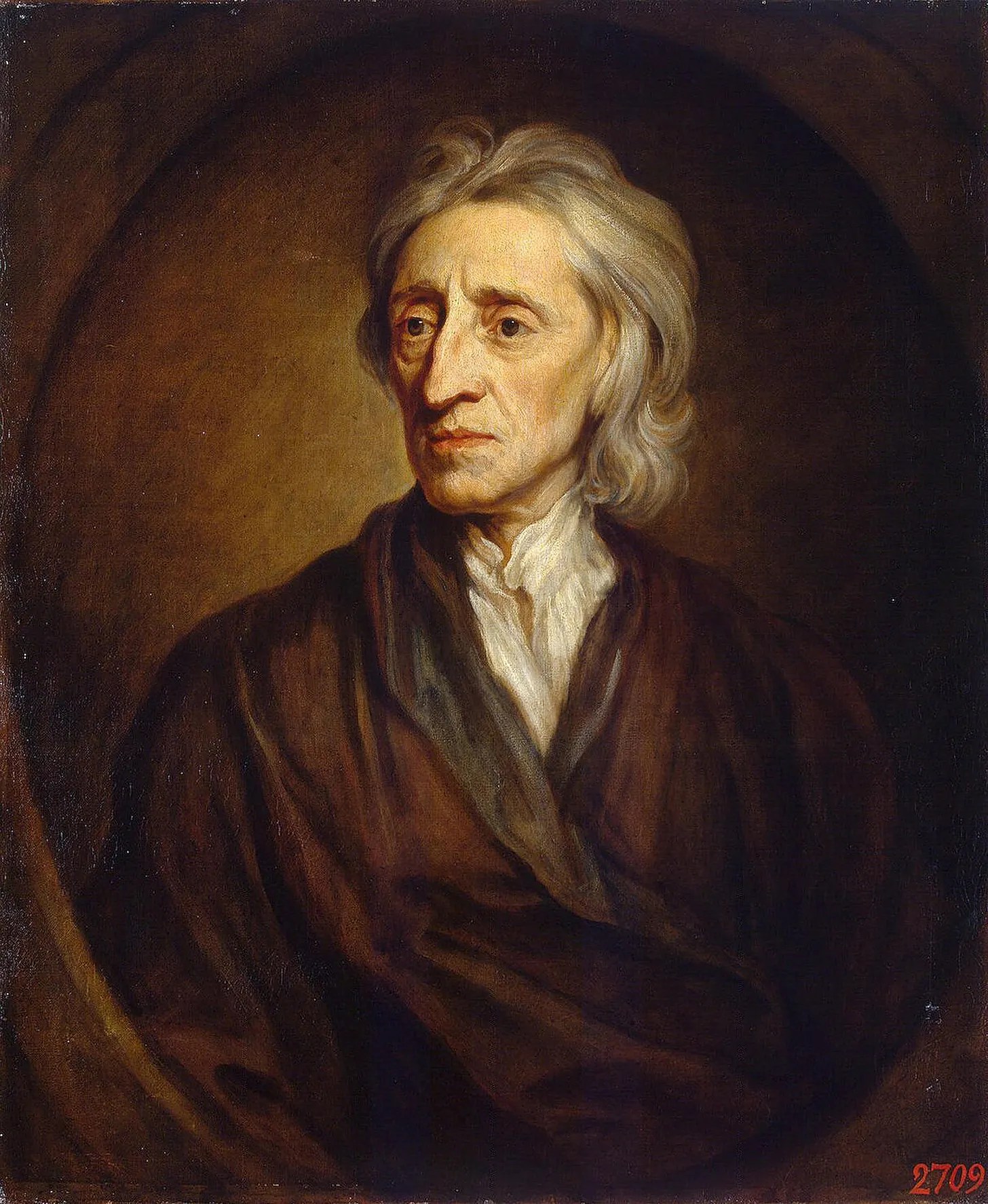
Henry Oliver on John Locke as an exemplar of the importance of play…
One day, when my son was three years old, he stuck his finger into a candle. We were sitting at the table before dinner and he touched the flame without warning. When his sister asked him why he had done it, he told her he just wanted to know what the flame was like. I remembered this when I was reading Locke’s Essay Concerning Human Understanding, in the section when Locke discusses how certainly we can know the world beyond ourselves, and he writes: “he that sees a candle burning, and hath experimented the force of its flame by putting his finger in it, will little doubt that this is something existing without him.” (IV.xi.8) This is how the love of philosophy begins: in a curiosity of the world and a willingness not just to question it, but to test it directly. It illustrates Locke’s larger point about man’s capacity to reason without the use of formal logic. “God has not been so sparing to men to make them barely two-legged creatures, and left it to Aristotle to make them rational.” (IV.xvii.4) We become philosophical as we become interested in knowing the qualities and limits of the world and ourselves. And that begins in childhood.
For the modern, empirical, skeptical mind, Locke’s finger-in-the-flame is akin to the philosopher leaving Plato’s cave. In that experiment, my son became a novice of philosophy. What he learned, he could not communicate. He did not have the language he needed. He was, essentially, at play when he touched that flame. To philosophise, then, requires some play. To be rational requires us to do “irrational” things, like touching a flame.
Play is formal. It might follow the rules of a game, the conventions of the theatre, or the tropes of impersonation—but play is a form of something else. In this way, language is a form of play for our experiences, not the things themselves, but a means of presenting them. Play can be a means of acquiring knowledge that we can express in language, but to begin with it is a means of acquiring impressions, ideas, concepts, feelings, and sensations.
Free play is informal. It is unfamiliar. In its freedom, it is play, just as in their rules the other modes of play are play. Free play might be random (like when children slap paint on paper) or it might be stylized (like free-style swimming) or it might be simply open-ended (as when an invented game keeps changing its content, rules, methods). This is why some play seems both formal and informal, such as when we “play around” with something—an instrument, some materials, an idea—and we are both working at the margin of the known rules and forms and being informal and open-ended.
Over time, play can become practice. The more predictable play becomes, the less playful it is. Children get bored with their imaginary games and begin to expand them: new characters, scenarios, scenes; the old ways of playing are either formalized or discarded. Practice is inherently more boring; it is a form of work. To maintain a good practice, we must, at intervals, allow for some play to revive, reinvent, or reinvigorate the practice. So, the athlete or chess player must know the patterns of their games and must be able to play creatively. So, the thinker or professional must know the accepted knowledge and forms of their discipline and be able to think creatively.
Many modes of life—education, occupations—have to be both work and play, the dynamic development of practices. In ‘Nature: A Fragment’, Goethe says, “we live within her, yet are foreign to her.” So it is with children at play, with students at study. Play is part of the quest for knowledge: we must play both in the sense of removing limits and of pretending. As with children, we must be able to say “this is in the game”, without compromising our sense of the game not being the same as “real life.”
When my son touched that flame, he was playing. When he told his sister that he merely wished to know what the flame was like, that was a similar way of thinking about the world as when they both tell me that something is “in the game.” Occasionally, I hear them saying things that are extraordinary, rude, or that sound like they need help—or that are just downright weird. In response to my puzzlement or offers of help, they explain, off-handedly, “Dad! It’s in the game!” Play is, without them intending it to be, a way of conducting thought experiments with their accumulating knowledge of the world. Touching the candle was a more traditional physical experiment. It was a means of playing that confirmed to my son the existence of the flame, in a way that words and ideas alone never could.
Philosophical play can become abstruse, distant from reality. Locke is hardly a “playful” philosopher, in the colloquial sense. But the plain and clear nature of his prose makes him intellectually exciting because he is always at play, always in the dynamic development of practices and conclusions. He is searching for truth. His insistence on the “plain and clear deductions of words” (IV.viii.11) and his opposition to general and trifling propositions (IV.viii.9) make him substantively and rhetorically compelling. It also brings a repetitive but playful structure to his arguments…
[Oliver considers Locke’s thinking, concluding…]
… Just as my son touched the flame to know the world (and thus to acquire the materials to begin to reason about it), Locke remembered the water and the colours on the bubble (materials he had long ago acquired). The “play” of this way of thinking is all the interplay between mind and reality, idea and experience. What starts as a game of child’s play becomes a practice of reasoning, but in Locke’s hands, the practice is always being played with, always being dynamically tested, refined. New things are always allowed to be “in the game” so long as they enable the pursuit of truth. Locke is not overly formal, following the “rules of philosophy”, but allows the rules of his method to be determined by their ability to enhance his pursuit of truth. Of the metaphysical philosophers who make “trifling” general propositions, he writes:
one may make demonstrations and undoubted propositions in words, and yet thereby advance not one jot in the knowledge of the truth of things: v.g. he that having learnt these following words, with their ordinary mutual relative acceptations annexed to them: v.g. substance, man, animal, form, soul, vegetative, sensitive, rational, may make several undoubted propositions about the soul, without knowing at all what the soul really is: and of this sort, a man may find an infinite number of propositions, reasonings, and conclusions, in books of metaphysics, school-divinity, and some sort of natural philosophy: and, after all, know as little of God, spirits, or bodies, as he did before he set out (IV.viii.9)
This “trifling” is all abstracted play, not based on any experience: it does not base the game on the world. The player is not required to have touched a flame.
Philosophy, as Locke practices it, requires play because there is so little we really know. There are no substances which do not have something in them that “baffles our understandings”, to see ideas and their connections, and to know the proofs of these, requires “single and slow steps, and long poring in the dark”. Our knowledge comes not only short of reality “but even of the extent of our own ideas.” (IV.iii.6) He constantly emphasises that the world cannot be entirely known to us through reason.
…how vain, I say, it is to expect demonstration and certainty in things not capable of it; and refuse assent to very rational propositions, and act contrary to very plain and clear truths, because they cannot be made out so evident, as to surmount every the least (I will not say reason, but) pretence of doubting. He that, in the ordinary affairs of life, would admit of nothing but direct plain demonstration, would be sure of nothing in this world, but of perishing quickly (IV.xi.10)
We must feel the world. We know things through our sensations. To those sensations we must apply reason. We must accept as revealed certain aspects of life and make ourselves more precise in how we discuss those aspects. That is: we find the world through play, and we find the language to describe the world through play, and that play becomes the practice of reasoning.
Some games are high-spirited and dramatic; some are slow and tense; some are hard to see as games, such as when a child sits quietly on the beach and moves the sand around, or re-arranges the pebbles. Locke’s reasoning is often over-determined, persnickety, and can feel like he is attempting to separate out each grain of sand, but in this, as much as in anything else, he has the playful quality of a child who simply wishes to know what it is like to touch the flame, to satisfy himself that the flame does not only exist within the confines of “in the game.”
Frolic is fundamental: “John Locke: The Playful Philosopher.”
Apposite: Richard Feynman (e,g., “Richard Feynman, Spinning Plates and Serious Play“) and Claude Shannon (e.g., “We know the past but cannot control it. We control the future but cannot know it.”)
* Johan Huizinga, in his remarkable Homo Ludens: A Study of the Play Element in Culture (And as for the kinds of games we might play, see James Carse‘s Finite and Infinite Games.)
###
As we celebrate coltish curiosity, we might send lighthearted birthday greetings to Art Clokey; he was born on this date in 1921. An animator, director, producer, screenwriter, and voice actor, he was a pioneer in the popularization of stop-motion clay animation, best known as the creator of the character Gumby (and as the original voice of Gumby’s sidekick, Pokey).

You must be logged in to post a comment.