Posts Tagged ‘video’
“If you can’t spot the sucker in the first half hour… then you are the sucker”*…

Patrick Redford in the always-enlightening (and entertaining) Defector, on ESPN’s pivot to wagering…
Like an anglerfish lighting its lure, ESPN is attempting to use the shiny bauble of its broadcast rights and import within the sports media world to tempt people onto its gambling platform. The Worldwide Leader signed a 10-year, $2 billion deal with Penn Entertainment one year ago, on the theory that a fusion of ESPN’s brand with Penn’s sportsbook would make for a serious player in the sports gambling world. That theory, which has borne dubious results thus far, depends upon ESPN transforming itself into a gushing firehose of gambling sludge.
To that end, the company broadcast its gambling show ESPN Bet on regular ESPN for the first time this week, shuffling it over from lesser auxiliary ESPNs onto the main channel for the purpose of shoving the words ESPN Bet—also the name of the company’s sportsbook—in front of as many people as possible before football season. I watched both of this week’s episodes, curious what sort of impression the company would try to make. What strategies would it use to turn parlays into paydays? What I saw was an hour-long advertisement that made thin, watery attempts to justify itself as programming, which it is not. The point of ESPN Bet, italicized, is not to make you smarter about sports or give you good picks, but to divert the nascent gambler away from the two biggest sportsbooks in the country and onto ESPN Bet, plain text.
The show is hosted by Tyler Fulghum and Joe Fortenbaugh. It adheres to a very simple pattern: Here is something you can bet on (e.g.: NFL Comeback Player of the Year, the Cincinnati Reds, Israel Adesanya); here are the odds; here is an affirmative or negative case for why to bet or not bet on or against those odds. There are various gimmicky setups that don’t so much disguise this basic loop as they merely vary its cadence…
…
… Something as abstract as LSU and Miami’s making the College Football Playoff four months from now is already banal talk-show fodder on its own; ESPN Bet‘s outlook is even more refracted. The topic is not whether one or both of those teams make the CFP, but rather how correctly those teams’ respective chances of making the CFP are calibrated on this gambling app. The drama, to the extent there is any, is located not in anything that happens on the field or court, but essentially in arbitrage. ESPN Bet is SportsCenter, but about a number instead of a game.
The ostensible point is to make you, the viewer, a more informed gambler so you can make money. There are a number of lies being told here. The most obvious one concerns the topline nature of the operation: Casinos exist to separate you from your money, not to help you take theirs. No matter how spiffy Fortenbaugh’s mustache is—personally, I think he looks cool; Ray Ratto says he looks like “Ronald Colman in a 1953 black-and-white movie” and clearly means this as a bad thing—and how convincing he is about the solidity of the Orioles money line, anyone who is thinking about this rationally has to know there is no algorithmic way to beat the computers. Rather, if there is, it will not be broadcast in public by the very entity that stands to lose money off anybody learning it. There are sharps and there is everyone else, a dissonance that makes ESPN Bet‘s false performance of gambling knowledge all the more icky.
If you are serious about any of this, you know you’re being sold something. The show knows it’s selling you something, and while this is occasionally acknowledged—Fortenbaugh mentioned on Monday where the sharp money was going, which should prompt any viewer to ask what that makes them—the predatory artifice of ESPN Bet is only barely subtext. The specifics are interesting to the extent that they’re pushing a ton of football futures bullshit, as football is the most gambled upon sport in the U.S. But really, all that matters is that Fulghum and Fortenbaugh look you in the eye and say the words “ESPN Bet.” The show is straightforwardly an ad for the app, which ESPN executives have openly talked about on earnings calls.
The incentives are obvious. DraftKings and FanDuel have roughly equal shares of a combined 74.5 percent of the U.S. gambling market. ESPN Bet, meanwhile, controls a paltry 3.2 percent as of the second quarter of the fiscal year, which is down from 4.7 percent in the first quarter. They are getting crushed. ESPN Bet’s competitors are an order of magnitude larger because of first mover advantage, and the only strategic fulcrum ESPN has to utilize is its essentiality as a broadcaster. ESPN’s value proposition is that unlike DraftKings or FanDuel, it operates a vast media apparatus, one that can set itself on a gentle slope, sliding its audience inexorably toward gambling on their phones. An example of that approach’s noxiousness in practice, as Kathryn Xu wrote earlier this year, is the win probability graphic ESPN slaps on baseball broadcasts. But don’t just take our word for it. Here’s Penn CTO Aaron LaBerge on his company’s earnings call last week:
For example, when we have account linking in November, if you place a parlay on ESPN Bet, it’s going to appear in the ESPN app. You have to do no work. It’s going to be seamless. If anyone here has placed a parlay of more than two or three legs, you know that’s a struggle. And so, it’s just going to be like magic for you to actually consume that within ESPN. (source)
“Magic” is offensively lofty rhetoric to use about “consum[ing] that” when the sum total of “that” is losing $15 on a Jalen Williams-centric parlay without having to leave the ESPN appsphere. In the case of something like the Tigers’ birdbrained same game parlays, there is at least baseball (albeit Detroit Tigers baseball) at the core of the experience. Gambling content that is attached, remora-like, to the side of a sports-watching experience is annoying but ultimately ignorable. ESPN Bet is the gambling content shorn of the sports, like if your spam folder was a TV show.
Consider the question of what sort of audience ESPN Bet is even for. Anyone sharp and dedicated enough to actually make money on sports gambling is not getting their picks from two energetic guys on the TV. A viewer rational enough to know this is a sucker’s game will find ESPN Bet equally useless if not outright reprehensible. A viewer who wants to learn something about sports or have fun will find far better options.
What is actually sinister about this show isn’t its adjacency to gambling, but its nihilism. At best this is a show for nobody. Background music hums along behind the hosts throughout the broadcast, an obvious sign that this is intended less as programming you are meant to pay any actual attention to and more as something engineered to run in the background while you wait out an oil change or a connecting flight, a dog whistle audible to the most abject of marks. It is scarcely distinguishable from the commercials that break up its runtime, as it is itself a commercial. The show walks backward, away from the viewer, hoping to draw them into the void…
“‘ESPN Bet’ Is A Black Hole” (gift article) from @redford in @DefectorMedia.
See also: “Sports Betting Is Legal, and Sportswriting Might Never Recover.”
And for a different (and equally astounding/depressing) example of the outsized impact of money on sports see “Ex-Pac-12 Teams Will Face Some of The Worst Travel Distances in Power-Conference History,” from @Neil_Paine.
* Mike McDermott (Matt Damon) in Rounders
###
As we look for the line, we might recall that it was on this date in 1991 that the World Wide Web was introduced to the world at large.
In 1989, Tim Berners-Lee (now Sir Tim) proposed the system to his colleagues at CERN. He got a working system implemented by the end of 1990, including a browser called WorldWideWeb (which became the name of the project and of the network) and an HTTP server running at CERN. As part of that development, he defined the first version of the HTTP protocol, the basic URL syntax, and implicitly made HTML the primary document format.
The technology was released outside CERN to other research institutions starting in January 1991, and then– with the publication of this (likely the first public) web page— to the whole Internet 32 years ago today. Within the next two years, there were 50 websites created. (Today, while it is understood that the number of active sites fluctuates, the total is estimated at over 1.5 billion… more than a handful, gambling sites.)
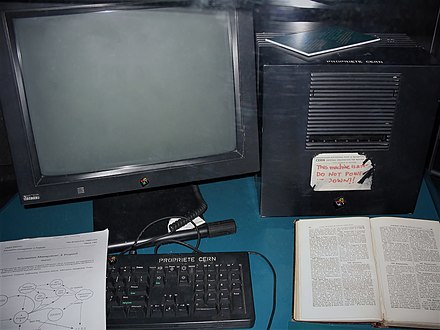
“If you are not paying for it, you’re not the customer; you’re the product being sold.”*…

Julia Barton on a question that haunts us still…
After yet another day reading about audio industry layoffs and show cancellations, or listening to podcasts about layoffs and show cancellations, I sometimes wonder, “With all this great audio being given away for free, who did we think was supposed to pay for it all?”
I find some consolation in the fact that that question is more than a century old. In the spring of 1924, Radio Broadcast posed it in a contest called “Who is to Pay for Broadcasting and How?”The monthly trade magazine offered a prize of $500 (more than $9,000 in today’s dollars) for “a workable plan which shall take into account the problems in present radio broadcasting and propose a practical solution.”
The need for such a contest more than 100 years ago is revealing enough, but the reaction of the judges to the prize-winning plan turned out to be even more so — and it says a lot about why business models for audio production and broadcast remain a struggle.
Back in the mid-1920s, radio was just starting to catch on in America. For a couple of decades, the medium had been used mostly for logistics, to help ships communicate with each other and the shore. But after World War I, new technology allowed Americans to send and receive the sounds of music, lectures, and live events over “the ether.”
By all accounts, Americans — whiplashed by war, a flu pandemic, and massive social changes like Prohibition — went crazy to hear what the ether could deliver to the privacy of their homes. They started buying or building their own radio receivers at a pace that shocked observers. In his book This Fascinating Radio Business, Robert Landry recalls curious customers lining up behind velvet ropes to see and place orders for the latest receivers. “The size, cost, gloss and make of one’s radio was, with the family car and the family icebox, an index of social swank.”
Many stations at the time were run by department stores that wanted to demonstrate the miracle of the expensive radio sets they sold. One of the first broadcast radio stations in the country, WOR sat in the furniture department at Bamberger’s in Newark, and its first announcers were also the employees selling furniture. But as the consumer market started to be saturated, those early stations were either bleeding money or shutting down entirely. The equipment needed constant updating, the workers expected salaries, and the performers who’d once been persuaded to fill airtime “for exposure” now demanded payment.
To make things more complicated, the government required so-called “clear channel” stations (high-powered, with signals that reached far and wide) to be on the air live for 18 hours a day, forbidding the use of “mechanically reproduced” music (as in, phonograph records) to fill the time. All this made broadcasting a very expensive proposition by 1924.
I first read about the “Who Is To Pay” contest in the 1994 book Selling Radio by Susan Smulyan, who starts off noting that from the beginning, “no one knew how to make money from broadcasting.” What about advertising, the solution that seems most obvious in hindsight? The man in charge of regulating radio, then-Secretary of Commerce Herbert Hoover, hated the idea.
“I don’t think there is anything the people would take more offense at than the attempt to sell goods over radio advertising,” Hoover declared, as part of a full-page spread in The New York Times on May 18, 1924, the same month that Radio Broadcast first announced its contest.
The Secretary had been speaking out against advertising for a few years by this point. Indirect advertising (or sponsorship, as it would soon be called) was acceptable in his mind — and via some math that’s hard to figure out, he guessed sponsorship could support about 150 stations nationwide.
Consumers in the 1920s were used to paying for telephone calls and telegrams, and there were other experiments to get listeners to pay for radio. One, dubbed “wired wireless,” licensed special devices to subscribers on Staten Island, who then got programs delivered via their power lines — a proto-version of cable TV that didn’t last long…
… Radio Broadcast received close to a thousand entries to its contest. They proposed everything from a 30-day fundraising drive to the sale of copyrighted radio programming bulletins. The winner, announced in the March 1925 issue, proposed a $2 federal tax on vacuum tubes, at the time the cutting-edge technology for radio reception. The prizewinner, HD Kellogg Jr. of Haverford, Pennsylvania, reasoned that vacuum tubes were the best index of high-quality gear — the better the gear, the more radio a household could consume. Kellogg also argued that only the federal government, which already regulated radio, could collect and administer such a tax. His idea was basically a less regressive version of the licensing fee the British government already levied U.K. households to fund the BBC.
Though the contest’s judges awarded Kellogg’s proposal their prize, they were ambivalent about, if not downright hostile to, his plan. One can only imagine young Kellogg’s feelings as he read the many dismissals of his idea in later issues of Radio Broadcast. “A Government tax would be obnoxious,” wrote Paul Klugh, executive chairman of the National Association of Broadcasters. “I do not believe your prize-winning plan is feasible under conditions as they exist in this country,” wrote Secretary Hoover.
America’s radio brain trust would go on to denounce almost any federal funds for broadcasting, fearing such a model could lead to censorship. Some of that aversion makes historical sense, given that Americans could still vividly remember the ugly and heavy-handed wartime censorship of Wilson-era U.S. postmaster Albert Sidney Burleson. As Adam Hochshild writes in his chilling history American Midnight, Burleson — until he left Washington with his boss Woodrow Wilson in 1921 — used his office to seize socialist and foreign-language publications, and revoke the postal privilege of other publications that reported on the war. So when broadcasting advocates in the 1920s talked about government “censorship,” the term was not abstract — it was a recent fact.
But rather than try to figure out a smarter way to fund public-minded, high-quality broadcasting, the men behind the Radio Broadcast contest decided the real winner should be: Nothing. “For the present, I think it is better to let things ride along as they are,” wrote columnist Zeh Brouck in May 1925.
Things did ride along, straight to direct advertising. Within a few years, huge swathes of the airwaves were the province of Lucky Strikes and Jergen’s Lotion, racial minstrelsy and unbelievable quackery…
… For many happy decades of the 20th century, advertising did make commercial broadcasters a ton of money. But as historians from Robert McChesney to Susan Douglas to Michele Hilmes have pointed out, the “American system” is uniquely unstable, and it leaves public-interest programming — or, at times, any programming at all — hard to sustain.
While researching this piece, I learned I’m not the first writer to notice an anniversary of Radio Broadcast’s contest. Back in 1995, Todd Lappin explored it in Wired. He marveled at how much the nascent Web was following the same chaotic business arc of radio. But he held out hope that things might turn out better. “Perhaps radio wasn’t the right technology. But the Web and the Net may well be,” Lappin wrote. “Our job is to make sure that glorious potential doesn’t get stuffed into yet another tired, old media box.”
In retrospect, that’s a depressing read. But there is something irresistible about the original contest, and the era when all ideas were still up for debate. We’ve had a century of letting things “ride along.” It seems like a good time to open the contest again…
An all-too-timely read: “In 1924, a magazine ran a contest: “Who is to pay for broadcasting and how?” A century later, we’re still asking the same question,” from @bartona104 in @NiemanLab.
* Digg commenter blue_beetle (Anthony Lewis)– now a meme.
###
As we contemplate culture, we might recall that it was on this date in 2007 that two local television helicopters covering a police chase in Phoenix, Arizona collided in air. Pilot Craig Smith and photographer Rick Krolak from KNXV-TV, and pilot Scott Bowerbank and photographer Jim Cox from KTVK were killed; there were no reported casualties on the ground.

“The test of a first-rate intelligence is the ability to hold two opposed ideas in the mind at the same time, and still retain the ability to function”*…
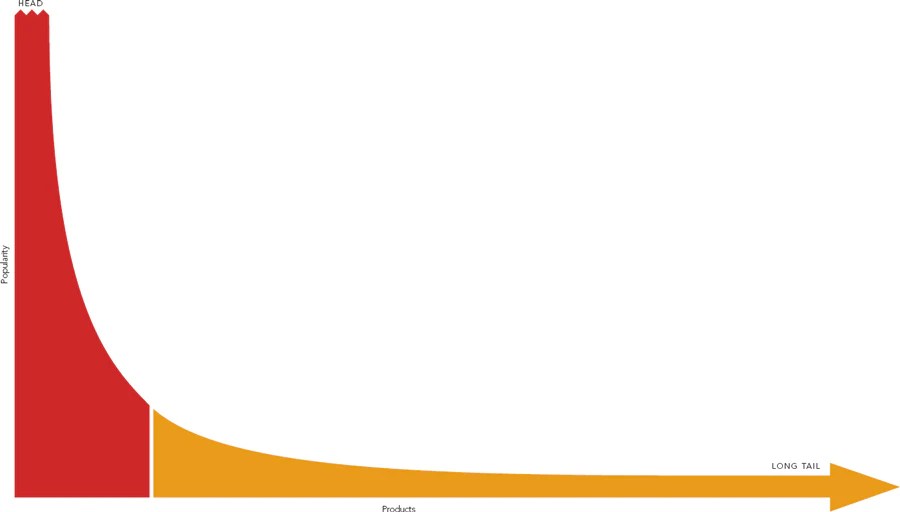
One the one hand: Ted Gioia suggests that, while ‘The Long Tail’ was supposed to boost alternative voices in music, movies, and books, the exact opposite has happened…
When I first heard people predict the rise of the Long Tail, I was amused. Not only did it seem wrong-headed, but it ran counter to everything I saw happening around me.
It pains me to say this—because the Long Tail was sold to us as an economic law that not only predicted a more inclusive era of prosperity, but would especially help creative people. According to its proponents, the Long Tail would revitalize our culture by expanding the scope of the arts and giving a boost to visionaries on the fringes of society.
Alternative voices would be nurtured and flourish. Music would get cooler and more surprising. Books would become more diverse and interesting. Indie films would reach larger audiences. Etc. etc. etc.
Hey, what’s not to like?
But it never happened. More to the point, it was never going to happen because the story was a fairy tale. I knew it back then because I had been hired on a number of occasions to analyze the Long Tail myself. But the flaws in the reasoning are far more obvious today, even to me.
Nonetheless many believed it—and many still do. So it’s worth digging into the story of the Long Tail, and examining exactly why it never delivered its promise.
And maybe we can find some alternative pathway to that lost cultural renaissance by seeing how this one went off the rails.
…
On the other hand: Cal Newport suggest that Kevin Kelly‘s fourteen-year-old prediction that an artist could make a living online with a thousand true fans is (finally) coming true…
In his “1,000 True Fans” essay, Kelly explains that he wasn’t as excited about this new economic model as others seemed to be. “The long tail is famously good news for two classes of people: a few lucky aggregators, such as Amazon and Netflix, and 6 billion consumers,” he writes. “But the long tail is a decidedly mixed blessing for creators.” If your work lives in the long tail, the introduction of Internet-based markets might mean that you go from selling zero units of your creations to selling a handful of units a month, but this makes little difference to your livelihood. “The long tail offers no path out of the quiet doldrums of minuscule sales,” Kelly writes. “Other than aim for a blockbuster hit, what can an artists do to escape the long tail?”
This question might seem fatalistic, but Kelly had a solution. If your creative work exists in the long tail, generating a small but consistent number of sales, then it’s probably sufficiently good to support a small but serious fan base, assuming you’re willing to put in the work required to cultivate this community. In an earlier age, a creative professional might be limited to fans who lived nearby. But by using the tools of the Internet, Kelly argued, it was now possible for creative types to both find and interact with supporters all around the world…
A shining example of the 1,000 True Fans model is the podcasting boom. There are more than eight hundred and fifty thousand active podcasts available right now. Although most of these shows are small and don’t generate much money, the number of people making a full-time living off original audio content is substantial. The key to a financially viable podcast is to cultivate a group of True Fans eager to listen to every episode. The value of each such fan, willing to stream hours and hours of a creator’s content, is surprisingly large; if sufficiently committed, even a modest-sized audience can generate significant income for a creator. According to an advertising agency I consulted, for example, a weekly podcast that generates thirty thousand downloads per episode should be able to reach Kelly’s target of generating a hundred thousand dollars a year in income. Earning a middle-class salary by talking through a digital microphone to a fiercely loyal band of supporters around the world, who are connected by the magic of the Internet, is about as pure a distillation of Kelly’s vision as you’re likely to find…
The real breakthroughs that enabled the revival of the 1,000 True Fans model are better understood as cultural. The rise in both online news paywalls and subscription video-streaming services trained users to be more comfortable paying à la carte for content. When you already shell out regular subscription fees for newyorker.com, Netflix, Peacock, and Disney+, why not also pay for “Breaking Points,” or throw a monthly donation toward Maria Popova? In 2008, when Kelly published the original “1,000 True Fans” essay, it was widely assumed that it would be hard to ever persuade people to pay money for most digital content. (This likely explains why so many of Kelly’s examples focus on selling tangible goods, such as DVDs or custom prints.) This is no longer true. Opening up these marketplaces to purely digital artifacts—text, audio, video, online classes—significantly lowered the barriers to entry for creative professionals looking to make a living online…
But can this last? Is it destined to fall prey to the forces that Gioia catalogues?
The recent history of the Internet, however, warns that we shouldn’t necessarily expect the endearingly homegrown nature of these 1,000 True Fans communities to persist. When viable new economic niches emerge online, venture-backed businesses, looking to extract their cut, are typically not far behind. Services such as Patreon and Kickstarter are jostling for a dominant position in this direct-to-consumer creative marketplace. A prominent recent example of such attempts to centralize the True Fan economy is Substack, which eliminates friction for writers who want to launch paid e-mail newsletters. Substack now has more than a million subscribers who pay for access to newsletters, and is currently valued at around six hundred and fifty million dollars. With this type of money at stake, it’s easy to imagine a future in which a small number of similarly optimized platforms dominate most of the mechanisms by which creative professionals interact with their 1,000 True Fans. In the optimistic scenario, this competition will lead to continued streamlining of the process of serving supporters, increasing the number of people who are able to make a good living off of their creative work: an apotheosis of sorts of Kelly’s original vision. A more pessimistic prediction is that the current True Fan revolution will eventually go the way of the original Web 2.0 revolution, with creators increasingly ground in the gears of monetization. The Substack of today makes it easy for a writer to charge fans for a newsletter. The Substack of tomorrow might move toward a flat-fee subscription model, driving users toward an algorithmically optimized collection of newsletter content, concentrating rewards within a small number of hyper-popular producers, and in turn eliminating the ability for any number of niche writers to make a living…
The future of the creative economy: “Where Did the Long Tail Go?,” from @tedgioia and “The Rise of the Internet’s Creative Middle Class,” from Cal Newport on @kevin2kelly in @NewYorker.
* F. Scott Fitzgerald (“The Crack-Up,” Esquire, February, 1936)
###
As we contemplate culture and commerce, we might recall that it was on this date in 1894 (after 30 states had already enshrined the occasion) that Labor Day became a federal holiday in the United States.

“I like boring things”*…
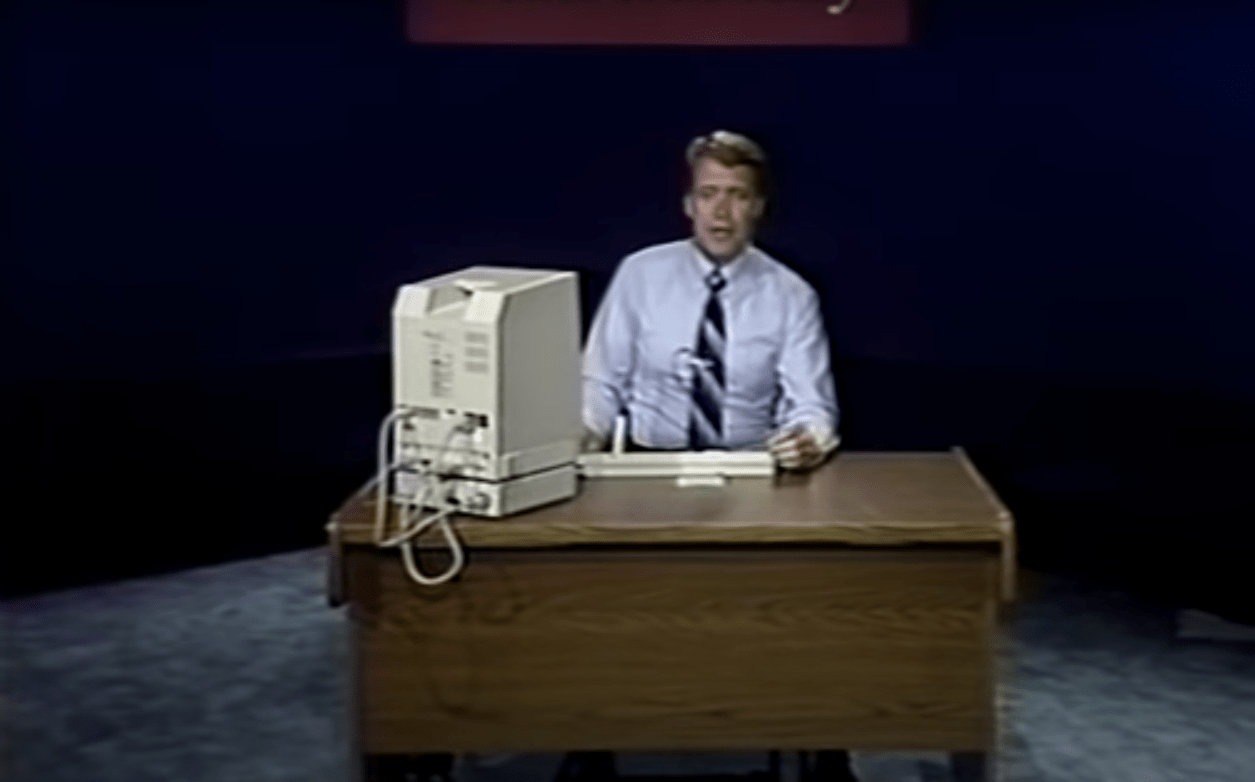
What’s not to like?…
A Youtube video titled “THE MOST BORING VIDEO EVER MADE (Microsoft Word tutorial, 1989) has accrued over 1.5 million views despite its self-proclaimed boringness. The video, an hour and forty-seven-minute computer tutorial, appears to have been recorded in one long take. It’s a time capsule to the early days of home computers and despite the monotonous, sleep-inducing narration, the instructions are quite thorough. In the video’s comments, viewers point out the mind-blowing drama at minute 59 and the charming quote “no ‘command m’ for ‘miracle.'”
“1989 Microsoft Word tutorial is ‘the most boring video ever made’,” from Annie Rauwerda @BoingBoing
Pair with this 1984 video of Stanley Kubrick discussing his favorite software manuals:
* Andy Warhol
###
As we take on tedium, we might send qualified birthday greetings to Edward William Bok; he was born on this date in 1863. An editor and Pulitzer Prize-winning author, he is best remembered for his 30-year stewardship of the Ladies’ Home Journal.
Bok’s overall concern was to promote his socially conservative vision of the ideal American household, with the wife as homemaker and child-rearer. At the Ladies Home Journal, Bok authored more than twenty articles opposed to women’s suffrage, women working outside the home, woman’s clubs, and education for women. He wrote that feminism would lead women to divorce, ill health, and even death. Bok viewed suffragists as traitors to their sex, saying “there is no greater enemy of woman than woman herself.”
(See here for a glimpse at his ambitions and impact.)

“Better than YouTube”*…

EXP TV is a live tv channel broadcasting an endless stream of obscure media and video ephemera.
EXP TV’s daytime block is “Video Breaks”–a video collage series featuring wild, rare, unpredictable, and ever-changing archival clips touching on every subject imaginable. The nighttime block starts at 10pm and features specialty themed video mixes and deep dives.
In an age where we all waste so much time figuring out what to watch online, EXP TV airs 24/7 and there’s always something cool on…
There are certain things you don’t know you’re missing in life until you’re exposed to them: EXP TV.
[TotH to to the ever-enlightening Dangerous Minds, also the source of the image above]
On a somewhat tonier note, see also Everest Pipkin‘s “Lacework.”
* Some guy, Beyond Fest
###
As we stay tuned, we might recall that it was on this date in 1947 that Roswell [New Mexico] Army Air Field public information officer Walter Haut issued a press release confirming what had been rumored in the area for weeks: that personnel from the field’s 509th Operations Group had recovered a “flying disc,” which had crashed on a ranch near Roswell. Haut’s report identified the find as the debris of a fallen weather balloon. While the military now suggests that their not-altogether-credible explanation at the time was an attempt to conceal the true purpose of the crashed device– nuclear test monitoring– UFO enthusiasts persist in believing otherwise.

You must be logged in to post a comment.