Posts Tagged ‘horror’
“All that we see or seem is but a dream within a dream”*…
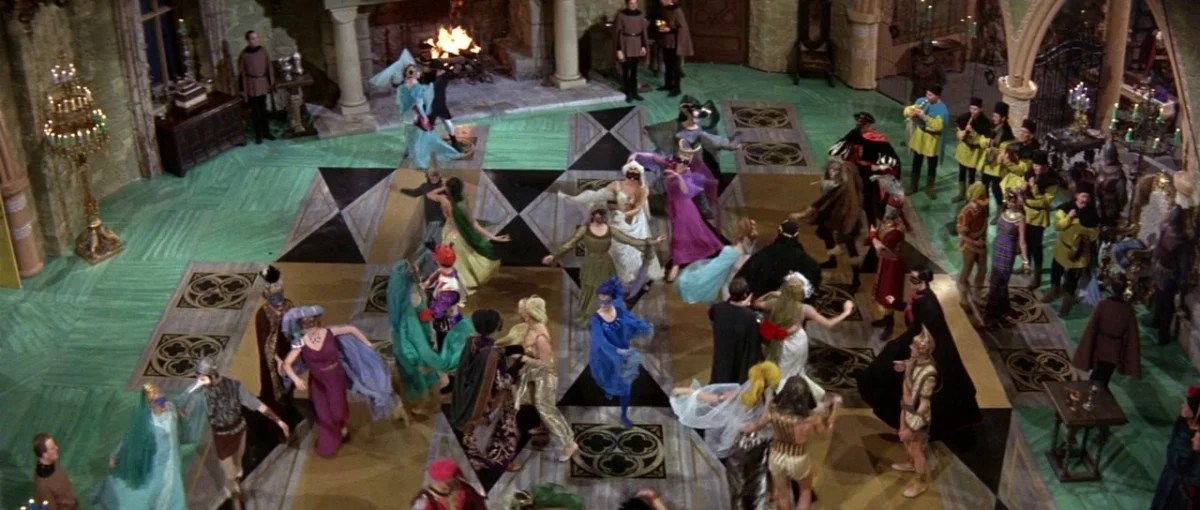
As All Saint’s Eve approaches, Karina Wilson weighs in (on her lovely blog, Horror Film History) on the remarkable series of films created by Roger Corman from the works of seasonal “hero” Edgar Allan Poe…
Corman was fond of literary adaptations, especially if the original was in the public domain. He mined Edgar Allan Poe’s short stories for some of his most memorable work between 1960 and 1964…
… In 1960 AIP execs Arkoff and Nicholson asked Roger Corman to make yet another pair of low-budget black and white horror films. He told them he had a better idea, a movie adaptation of Edgar Allan Poe’s The Fall of the House of Usher. Nicholson and Arkoff initially balked at the concept, which differed wildly from their then-staple trade in monster B-pics aimed at drive-in adolescent audiences. “Where’s the monster?” asked Arkoff.
Corman reassured them the house was the monster (“The house lives. The house breathes”). He was becoming more and more interested in Freudian theory and wanted the adaptation to reference psychoanalytic theory. To Corman, the dark corridors and gaping portals of the decaying mansion were unmistakably female spaces. He was fascinated by the concept that buildings (or at least movie sets) can reflect the ego and the id. Daily activities happen as normal in the sunlit upper rooms of a mansion while shapeless terrors ooze within the gloom of the basement .
If a yonicentric set wasn’t enough to draw the crowds (at least subconsciously), Corman insisted Poe stories had built-in teen appeal thanks to the efforts of English Literature teachers everywhere (“He’s read in every high school”). Corman wanted to tap into widespread familiarity with the tales and the ongoing love affair with gothic horror fuelled by television reruns of Universal movies from the 1930s. He also wanted to make more lavish movies instead of perpetually budgeting on a shoestring. Always mindful of the market, he believed a classic literary adaptation could give AIP productions more mainstream (and adult) appeal and compete with the technicolor horror films being produced by Hammer in the United Kingdom and as part of the nascent Giallo movement in Italy. Arkoff and Nicholson, fully aware of Corman’s proven ability to deliver low budget quality in a timely fashion, agreed to the experiment.
For House of Usher (1960), Corman teamed up with actor Vincent Price, whose sonorous cod-Shakespearean vowels became synonymous with the storybook theater narration that would become emblematic of this cycle. Price had supposedly sworn off making horror movies after The Fly (1958) because he claimed he couldn’t keep a straight face on set. Corman lured him back to the genre with the prospect of playing Roderick Usher, a meaty, actorly role – and the rest is history. Corman tapped screenwriter Richard Matheson, (who was doggedly building his reputation as a master of the genre) for the script, which stuck quite closely to the original, adding a romance between Philip and Madeline. House of Usher was Corman’s first foray into color movies and cost a luxurious $270,000 ($50,000 of which reportedly went to Price). The production schedule was still tight (15 days) and Corman made the most of his expensive star by framing him against production designer Daniel Haller’s skilfully scavenged yet sumptuous looking sets. The result was a commercial and critical hit, grossing $2 million that summer and elevating American International Pictures’ aesthetic beyond Poverty Row. Arkoff and Nicholson, naturally, wanted more of the same.
Between the House of Usher (1960) and The Tomb of Ligeia (1964), Corman made seven Poe-related movies for AIP. Premature Burial in 1962 featured Ray Milland in the lead role but all the others starred Vincent Price (who would go on to make The Oblong Box in 1969, for AIP but without Corman). Matheson supplied scripts for The Pit and the Pendulum (1961), Tales of Terror (1962), The Raven (1963), while his friend Charles Beaumont wrote The Premature Burial, The Haunted Palace (1963), and The Masque of the Red Death (1964). Future Academy Award winner Robert Towne (Chinatown) penned the final entry, Tomb of Ligeia.
While he relied heavily on tried-and-trusted AIP personnel, Corman tried to switch things around tonally with each movie. This ensured a different experience for the audience each time rather than simply replicating what had gone before. Tales of Terror is quite cynical, even humorous in tone and The Raven is outright comedy-horror [and noteworthy as a rung on Jack Nicholson’s climb to stardom]. The Haunted Palace isn’t even based on a Poe story – it’s actually an adaptation of H. P. Lovecraft’s The Case of Charles Dexter Ward. AIP wanted to market it as part of the cycle, so they gave it the title of one of Poe’s poems, and bookended the action with narrated lines…
Read on… “Roger Corman’s Poe Cycle (1960-1964)” from @karinalw.bsky.social.
* Edgar Allan Poe, “A Dream Within a Dream“
###
As we scream, we might recall that it was on this date in 1988 that Lair of the White Worm was released in the U.S. A “supernatural comedy horror film” loosely based on the 1911 Bram Stoker novel of the same name, it was written, produced, and directed by the remarkable Ken Russell, and starred Amanda Donohoe, Hugh Grant, Catherine Oxenberg, and Peter Capaldi; it follows the residents in and around a rural English manor that are tormented by an ancient priestess after the skull of a serpent that she worships is unearthed by an archaeologist.

“Never trust people who promise to make you rich in a day. They are generally crazy swindlers”*…

Scheduling note: as a consequence of visitors and attendant obligations, (R)D will be off tomorrow and Sunday. Regular service will resume on Monday.
Last month we lost Om Malick. The journalist, investor, and blogger who chronicled Silicon Valley was a collector of fine pens. In one of his final posts, he mused on one of his last acquisitions and on its inspiration…
I have always wanted to own a Montblanc Writers Edition dedicated to Carlo Collodi, the Italian author whose real name was Carlo Lorenzini. He took his pen name from the Tuscan village where his mother was born, and then spent his career writing under a false name about a character who could not sustain one. I grew up reading the tales of Pinocchio, but only read the non-Disneyfied version as a grown-up. The book left an indelible impression on me. It is a great parable for modern times.
In case you were wondering, I did get the pen. It is one of the most beautiful and underrated pens in the Montblanc Writers Series. I have been mildly obsessed with it for a long time.It is not overwhelming, gaudy, or over the top. It tells the full story, not just of the pen but the story behind it. And it starts with the clip, that subtly hints at Pinocchio’s nose.
The cap is where Montblanc’s craftsmen did their most serious work. It is cylindrical, dark resin, topped by the Montblanc snowflake, wrapped in a silver and platinum skeletal overlay, a filigree of characters and scenes from the story, the dark resin visible beneath through the cutouts. The effect is like looking at a shadow puppet theater contained in your hand. The barrel is restrained by comparison, dark resin with horizontal platinum ring banding, letting the cap hold the eye. The nib carries its own engraving tied to the story.
Holding it in my hands recently, I found myself thinking about the story of Pinocchio, and how it throws the names that dominate our headlines into sharp relief — the ones who shape our zeitgeist of half-truths…
… The Adventures of Pinocchio was published in serial form in 1881, aimed at Italian children in the way the 19th century aimed things at children, full of suffering, consequence, and moral instruction delivered through catastrophe. The puppet is hanged. He is swallowed by a giant fish. He watches companions degrade into beasts of burden. The world he moves through is predatory at every level, and the institutions that should protect him are either absent, corrupted, or actively hostile to his interests.
I can only imagine the outrage and horror over this story should it have been published today. I am old enough to have been smacked for my stupid mistakes as a kid. So this was actually not a bad story to read. Still, I can understand how much anxiety it might cause today’s parents.
Most people remember Pinocchio as a story about lying. The nose grows. You get caught. Lesson learned. But that reading misses almost everything Collodi was actually doing. The book is a close study of a society where deception has gone ambient, woven into every institution, every transaction. Courts punish victims. Authority figures perform competence without exercising it. Experts are decorative. Society holds together through spectacle and habit rather than accountability. Into this environment, a naive creature is released, constitutionally unable to resist a good story about easy reward.
The nose is the least interesting lie in the book. The interesting lies are the ones that work.
The Fox and the Cat are the novel’s most modern characters. They persuade Pinocchio to bury his coins in the Field of Miracles on the promise that they will multiply overnight. Exploit impatience, exploit greed, frame skepticism as a failure of imagination, and dismiss skeptics as lacking vision. Remind you of someone? Space Cowboy for example?
That structure is so familiar I barely need to name it. But let me name it anyway.
Everyone from Jensen Huang to Sam Altman to Elon Musk spent a decade accumulating what I have called symbolic capital, the reputation, the prestige, the weight of being seen as someone who understands the future better than the rest of us. Now each of them seems to be running some version of the Field of Miracles, with promises that keep not arriving, timelines that dissolve, products that exist primarily as announcements, and platforms run as machines for generating more reputation regardless of what they actually do. They don’t need to be right. They need to be believed. Velocity is the new authority, and no one has weaponized that more effectively.
We are living, as I wrote years ago, in the golden age of half-truths.
Your average influencer flogging a supplement, a course, a skin cream, or a crypto token on TikTok and Instagram is running the same operation, just cheaper. The confidence is the product. The audience wants to believe. The Field of Miracles is open for business everywhere you look.
Collodi in 1881 was writing about all this at a point of major societal inflection. So perhaps now you understand why I am drawn to this story. Pinocchio is a story about a society organized around deception.
The Land of Toys is the sequence that haunts me most, especially now. Children abandon school and responsibility for a place of permanent amusement. They play. And then, gradually, they begin to change. They grow ears. They grow tails. They become donkeys, beasts of labor and exploitation, stripped of language, used until they break.
This is a parable of who we have become, a BNPL-fueled spectacle in itself.
Collodi was writing during rapid industrialization and the early emergence of mass entertainment. He understood, earlier than most, that distraction offered as pleasure can be a leash. The children who choose the Land of Toys over school are not liberated. They are owned more completely than any schoolroom could manage.
The algorithmic feed is the Land of Toys. It is built to keep you there past the point of nourishment, past the point where you are even enjoying it. Outrage travels faster than understanding. Spectacle beats judgment. The algorithm doesn’t care whether something is true. It cares whether it moves. And it keeps you scrolling, reacting, and returning in ways that benefit the platform, not you.
The political system has learned the same lesson. Governance is slow and grinding and unsatisfying. Performance is fast and shareable. We have built media and political economies that reward entertainers over administrators, and the clean story over the complicated truth.
Collodi refuses to assign blame only upward. That is what keeps the novel from collapsing into moralism. Pinocchio is deceived because he wants to be deceived. He chooses shortcuts over work, belonging over truth, spectacle over judgment, every time, until the costs become too steep to ignore. The Fox and the Cat succeed because he hands them what they need. His credulity is not innocent. It is participation.
The grifters and the hucksters and the influencers selling impossible things succeed because audiences reward certainty and punish doubt. They honor confidence and resist complication. A clean story about a genius who will fix everything travels faster than a difficult story about tradeoffs. The Field of Miracles stays open because people keep wanting to bury their coins there.
The Fox and the Cat is how the whole thing works.
Pinocchio becomes real, becomes human, only after he accepts obligation. Collodi is saying that it is important to have self-governance. It is necessary to choose the difficult truth over the easy satisfying one. That doesn’t jibe with everything the attention economy is selling, dopamine hits delivered so frequently that it becomes hard to distinguish stimulation from autonomy.
There is an obvious irony in a luxury pen commemorating a story about the seductions of wanting things you have not earned. The Montblanc Collodi is made to be admired, displayed, collected. And it honors a puppet who had to lose everything, friends, coins, his own body, before he understood what was actually worth having.
I am not sure Collodi would find that irony disqualifying. A beautiful object that makes you think seriously about the spectacle we are living in. It makes you think about what is the cost of being real. It is a more interesting pen to own than one that simply confirms your taste.
The clip is shaped like Pinocchio’s nose because the nose is the one honest thing in a world built on performance. It grows because the body keeps the score even when the mouth doesn’t.
When I hold this pen, I try to remember what that means…
A story for our times: “We Are Living in Pinocchio’s World.”
* Carlo Collodi, The Adventures of Pinocchio
###
As we know that the nose knows, we might remark that today Rhys Frake-Waterfield‘s horror film reimagining of Collodi’s tale, Pinocchio: Unstrung— featuring Robert “Freddy Krueger” Englund as the voice of “Cricket” (Jiminy!)– opens in theaters around the U.S.
The trailer is here.

“There is virtue in work and there is virtue in rest. Use both and overlook neither.”*…
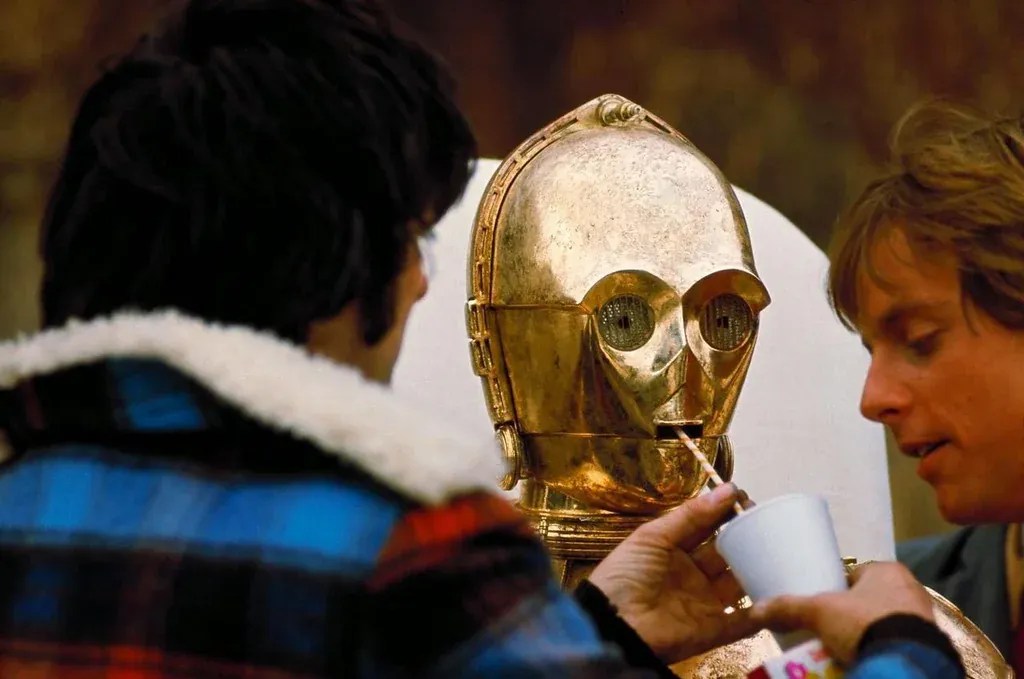
As we unwind into the weekend, sci-fi art curator Adam Rowe, with a collection of photos of famed sci-fi characters (and monsters) taking a break…


More at: “Break Time,” from @AdamRRowe.
* Alan Cohen
###
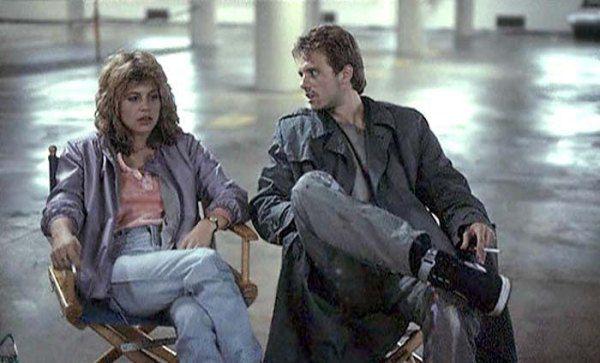
As we give it a rest, we might recall that it was on this date in 1984 that The Terminator was released. Directed by James Cameron and produced by Gale Anne Hurd, it starred Arnold Schwarzenegger as the Terminator, a cybernetic assassin sent back in time from 2029 to 1984 to kill Sarah Connor (Linda Hamilton), whose unborn son will one day save mankind from extinction by Skynet, a hostile artificial intelligence in a post-apocalyptic future. Kyle Reese (Michael Biehn) played a soldier sent back in time to protect Sarah. The screenplay was credited to Cameron and Hurd, while co-writer William Wisher Jr. received an “additional dialogue” credit.
Defying low pre-release expectations, The Terminator topped the United States box office for two weeks, eventually grossing $78.3 million against a modest $6.4 million budget. It is credited with launching Cameron’s film career and solidifying Schwarzenegger’s status as a leading man. The film’s success led to a franchise consisting of several sequels, a television series, comic books, novels and video games. In 2008, The Terminator was selected by the Library of Congress for preservation in the United States National Film Registry.
“Take a good book to bed with you—books do not snore”*…

From Greg Ross, a helpful vocabulary lesson for those of us who would talk about people’s relationships with books…
rarissima
n. extremely rare books, manuscripts, or printsIn The Book Hunter (1863), John Hill Burton identifies five types of “persons who meddle with books”:
- “A bibliognoste, from the Greek, is one knowing in title-pages and colophons, and in editions; the place and year when printed; the presses whence issued; and all the minutiae of a book.”
- “A bibliographe is a describer of books and other literary arrangements.”
- “A bibliomane is an indiscriminate accumulator, who blunders faster than he buys, cock-brained and purse-heavy.”
- “A bibliophile, the lover of books, is the only one in the class who appears to read them for his own pleasure.”
- “A bibliotaphe buries his books, by keeping them under lock, or framing them in glass cases.”
These groups seem to have been proposed by French librarian Jean Joseph Rive. Bibliographer Gabriel Peignot added four more:
- bibliolyte, a destroyer of books
- bibliologue, one who discourses about books
- bibliotacte, a classifier of books
- bibliopée, “‘l’art d’écrire ou de composer des livres,’ or, as the unlearned would say, the function of an author.”…
For the bibliophiles among us: “In a Word,” from Futility Closet.
(Image above: source)
* Thea Dorn
###
As we love our labels, we might send eerie birthday greetings to Howard Phillips Lovecraft; he was born on this date in 1890. The creator of the Cthulhu Mythos, he was a pioneer of weird, science, fantasy, and horror fiction. H.P. Lovecraft was almost unknown in his lifetime, but has become one of the most influential writers of the Twentieth Century– Jorge Luis Borges, Joyce Carol Oates, and Stephen King, among many other writers, comic artists, and filmmakers, have all proclaimed their indebtedness.

“The horror! The horror!”

Tis the season, thus time for seasonal specials. Indeed, since 1990, those fabulous folks behind The Simpsons have given us annual installments of what’s become a beloved Halloween tradition: The Treehouse of Horror, a collection of wonderful riffs on horror and sci-fi films/shows/tropes that never fails to delight.
Enthusiasts have created beaucoup “best of” lists (see here and here, for a couple of examples). Now, just in time (this year’s installment airs tonight), Bo McCready has created a terrific resource: a comprehensive run-down of the source/inspiration of each Treehouse of Horror segment– in infographic form. A small excerpt:

See it all at “Treehouse of Horror: 100+ Simpsons Halloween Stories!” from @boknowsdata.
Apposite: “Run for your life, Charlie Brown.”
* Joseph Conrad, Heart of Darkness
###
As we trick and treat, we might recall that it was on this date in 1938 that the Mercury Theater broadcast the Halloween episode of its weekly series on the WABC Radio Network, Orson Welle’s adaptation of H.G. Wells’ War of the Worlds. The first two-thirds of the show (which was uninterrupted by ads) was composed of simulated news bulletins… which suggested to many listeners that a real Martian invasion was underway. (While headlines like the one below suggest that there was widespread panic, research reveals that the fright was more subdued. Still there was an out-cry against the “phoney-news” format… and Welles was launched into the notoriety that would characterize his career ever after.)

You must be logged in to post a comment.