Posts Tagged ‘temperance’
“One must still have chaos in oneself to be able to give birth to a dancing star”*…
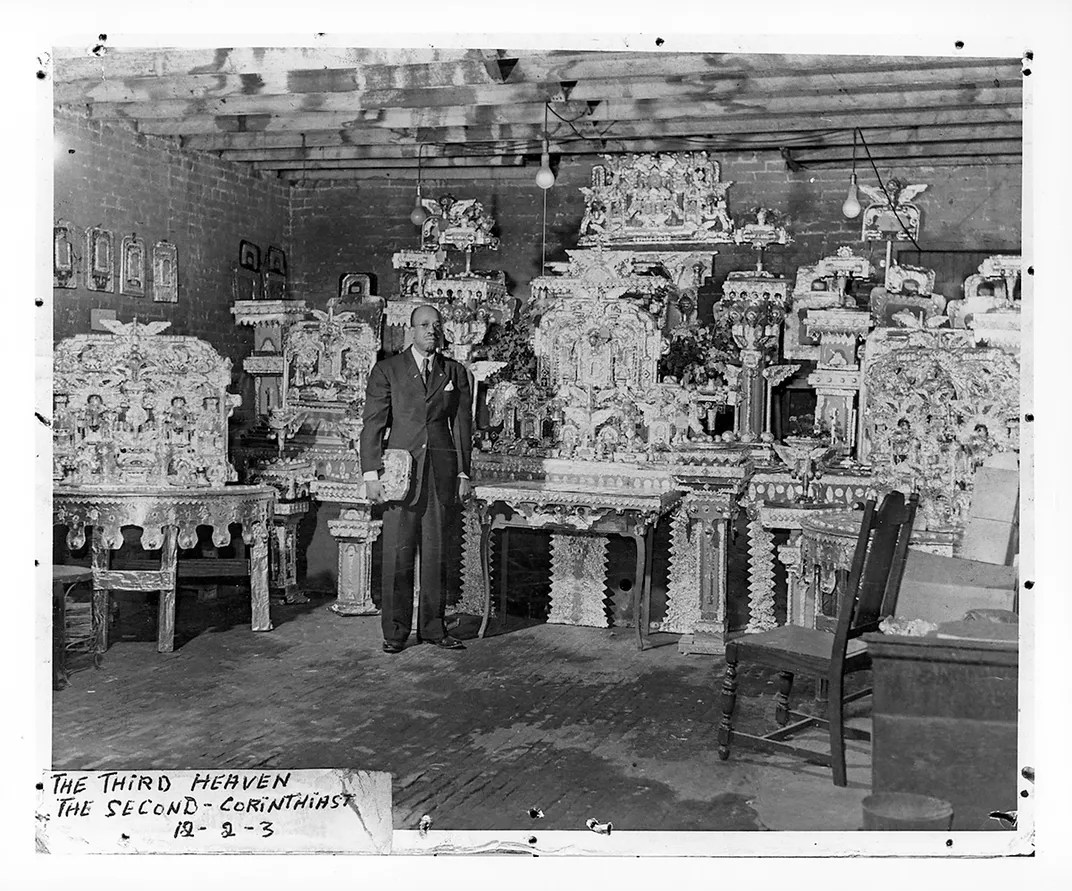
Long-time readers will know of your correspondent’s fascination with– and affection for– outsider art. We’ve looked at Henry Darger, Ron Gittins, Grandma Moses, and others– so many of whom have been fueled by fervent faith. From Jeff MacGregor, another wonderful example…
For some 14 years he labored in solitude. Lovingly. Obsessively. Every night after work, in a rented garage on 7th Street NW in Washington, D.C., James Hampton, a World War II veteran and janitor for the General Services Administration with no artistic training, methodically built what he came to call The Throne of the Third Heaven of the Nations’ Millennium General Assembly. Hampton prepared the throne to receive Jesus, flanked by a dozen angels, at the time of the Second Coming.
Born in 1909 to a South Carolina preacher, Hampton, who may have lived with schizophrenia, had his first religious vision at the age of 22—a visitation from the patriarch Moses. He later said Adam and the Virgin Mary had come to him as well. Why he began the Throne in 1950, no one can say. Passion. Devotion. Divine inspiration. But it came to comprise a handmade masterpiece of 180 or so separate components, each crafted from found and scavenged parts. Hampton embellished discarded furniture and light bulbs, tin cans and jelly jars with gold and silver foils and wrapping paper—materials reflecting light and inspiring something like awe at the prospect of an apocalyptic end to this world and the peace and glory to come in the next. Leslie Umberger, a curator at the Smithsonian American Art Museum, describes the part of the sculpture on display as the “central section of a spiritually driven, pulpit-style array” that Hampton created “as a sacred space for sharing his faith.” The “third heaven” is a reference to God’s home, an exalted heaven-within-a-heaven; the Throne, Hampton is reported to have said, “is my life. I’ll finish it before I die.”
Hampton’s materials were an inventory of junked 1950s office supplies: inks and desk blotters, construction paper and sheets of transparent plastic. The chairs and altars and offering tables are made of what he carted home from used furniture sellers, often cut in two. Each half of the assembly is beautifully symmetrical with the other. It is a miracle of craft and art and carpentry, of architecture and engineering, ingenuity and loneliness and holy madness. With a million featherlight hammer taps, Hampton built batches of trim molding and sawtooth decoration. Wings upon wings upon wings. Above the throne, Hampton placed these words of reassurance from Revelation 1:17: “Fear not.”
The Throne’s story has since hardened into legend. Hampton died of cancer at a Veterans’ Administration hospital in 1964. The work was unfinished. But then his landlord, Myer Wertlieb, came to the garage to collect the overdue rent, not knowing Hampton had died. Instead, he found the Throne. For months, Wertlieb searched without much success to find someone, anyone, who might want it. Then Harry Lowe got involved.
“It was like opening Tut’s tomb,” Lowe, head of exhibitions and design at what was then the National Collection of Fine Arts, told the Washington Post about entering that garage for the first time. Lowe paid the landlord Hampton’s back rent and arranged the purchase of the entire assembly for the museum. A selection from the center section was first exhibited in 1971. The illustrious art critic Robert Hughes wrote in Time magazine that the Throne “may well be the finest work of visionary religious art produced by an American.” Just as often, though, critics marginalized it as “outsider” art…
How deep faith created one of the loveliest—and most curious—sacred objects in the Smithsonian collections: “In His Garage, an Untrained Artist Created a Work of Sublime Divinity,” from @Jeff__MacGregor in @SmithsonianMag… where you’ll find more of the story and more wonderful photos.
* Friedrich Nietzsche
###
As we appreciate art, we might recall that it was on this date in 1866 that Charles Elmer Hires created a faith-inspired addition to the culinary (well, gustatory) arts: he formulated his eponymous “root beer.” Hires was inspired by root tea, but thought that “beer” would be a more attractive name to “the working class”– for whom Hires, a supporter of temperance, saw it as an alternative to alcohol. While he failed in weaning the working man from his suds, his concoction was a hit that helped establish the “soft drink” category and attracted numerous competitors.

“When I read about the evils of drinking, I gave up reading”*…

As we’ve seen before, Prohibition spawned a number of creative work-arounds, some more legal than others. Most of them faded away with the 21st Amendment; but as Olivia White explains, one is still going strong…
Just off the coast of Winsconsin, in the frigid depths of Lake Michigan, sits Washington Island, a tiny island home to just over 700 people. Despite the small, three-digit population, Washington Island outsells every other town in the world when it comes to the amount of Angostura bitters consumed per capita. What could possibly be driving such impressive sales in such a small, remote place? Turns out the answer points back to one bar — Nelsen’s Hall — and it’s not because they’re dishing out thousands of Old Fashioneds.
Rather than garnering the title of largest Angostura purveyor by using the ingredient in an abundance of cocktails, Nelsen’s is famous for kick-starting the bizarre tradition of taking shots of Angostura. Not shots containing various spirits and a dash or two of Angostura, but 1.5-ounce servings of straight-up bitters.
First opened as a dance hall in 1899, Nelsen’s Hall was founded by Tom Nelsen, who expanded the space into a bar three years later. Less than two decades later, when Prohibition threatened the security of his bar, Nelsen was forced to get crafty in coming up with ways to remain open. Instead of operating with an alcohol license — which had for obvious reasons been stripped away — Nelsen acquired a pharmaceutical license as a sneaky way to legally sell the shots.
As Angostura bitters are only intended to be used a few drops at a time, at the time of Prohibition, they were classified as a “stomach tonic for medicinal purposes,” despite the fact that they contain 44.7 percent alcohol by volume. As such, Nelsen acquired a pharmaceutical license that allowed him to legally distribute Angostura as a medical tincture…
Today, the Angostura shot remains one of the most popular menu items at Nelsen’s Hall, which is known to go through three cases of bitters on busier weekends. Annually, the bar sells upwards of 10,000 Angostura shots; every person who chooses to partake earns a spot in the “Bitters Club” and receives a card certifying that they have “taken ‘the Cure’ by consuming the prescribed measure of bitters and as such [are] a fully initiated member of the Bitters Club.” Upon signing their own name in a decades-old book, shot-takers are “considered a full-fledged Islander and entitled to mingle, dance, etc. with all the other islanders.”
The vestigial remains of long-dead regulation: “Wisconsinites Drink an Ungodly Amount of Angostura — Blame It on a Prohibition Loophole,” from @VinePair.
* Henny Youngman
###
As we contemplate unintended consequences, we might send dry birthday greetings to Alphonso Alvah Hopkins; he was born on this date in 1843. A teacher, author, journalist, editor, publisher, and politician, he is best remembered as one of the leading Temperance activists of his time. Hopkins ran as the Temperance Party’s candidate for New York State’s Secretary of State, member of Congress, and Governor; he published several books, including two temperance novels entitled His Prison Bars, and Sinner and Saint, and Wealth and Waste, a treatise which applies the principle of political economy to the problems of labor, law, and the liquor traffic; and throughout, he taught at the American Temperance University.

“Now I luxuriously thrust for noble pickle”*…
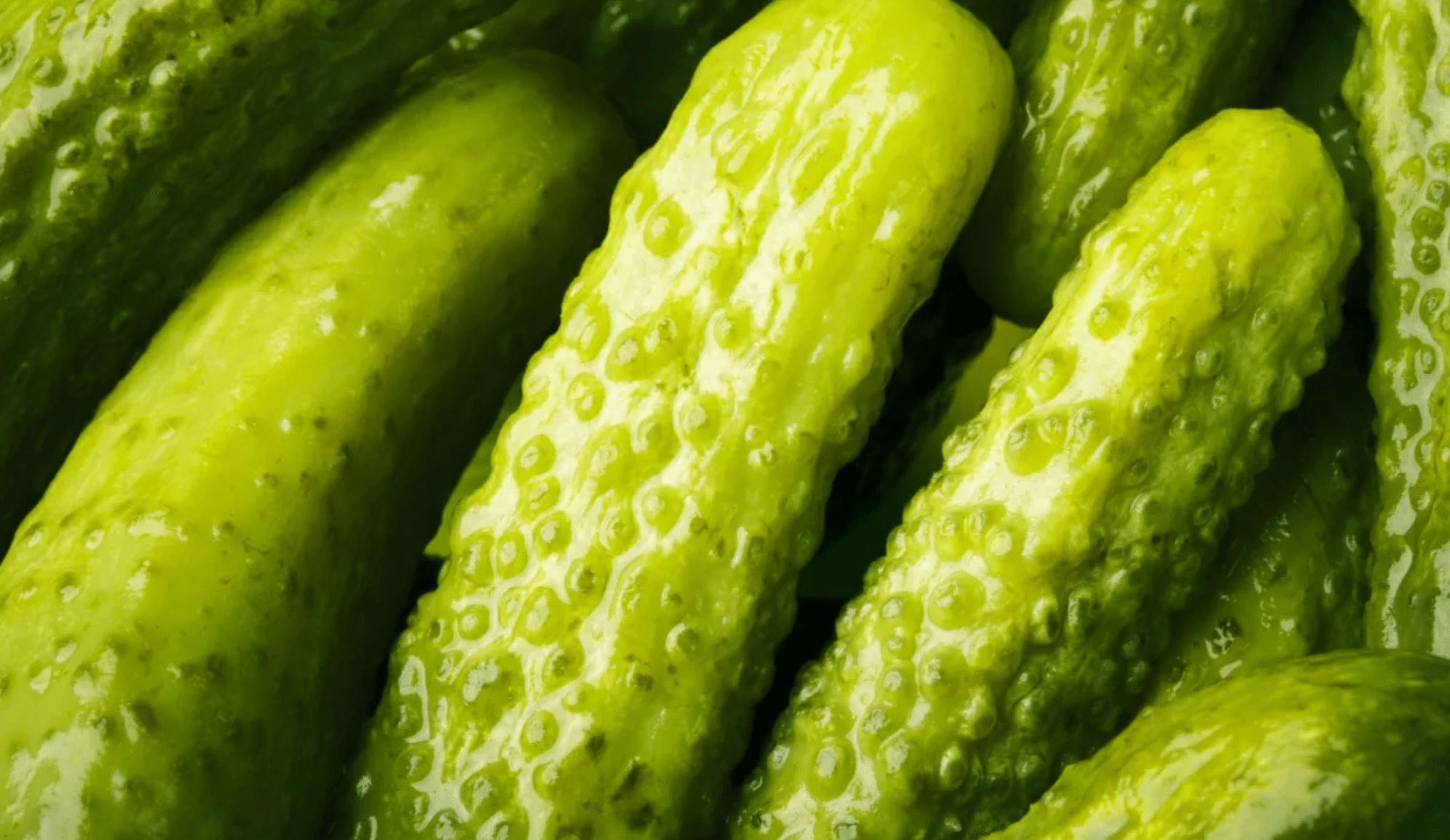
The delicacy that delights…
Amerigo Vespucci didn’t discover the Americas, contrary to what the map-makers who named the continents believed, but his given name did end up lending itself to the so-called “new world.” And Ralph Waldo Emerson once called Vespucci “the pickle-dealer at Seville,” a derisive label that may have stretched the truth a bit, but pointed towards a very real part of the itinerant Italian’s biography.
Before traveling to the New World himself, Vespucci worked as a ship chandler—someone who sold supplies to seafaring merchants and explorers. These supplies included foods like meat, fish, and vegetables that had been pickled, which meant they would stay preserved beneath a ship’s deck for months. Without pickling, expeditions had to rely on dried foods and ingredients with naturally long shelf lives for sustenance. Much of the time, this limited diet wasn’t enough to provide crewmembers the nutrition they needed for the journey ahead. This made pickle sellers like Vespucci indispensable during the golden age of exploration. Vespucci even supplied Christopher Columbus’s later voyages across the Atlantic with his briny goods. So while he wasn’t the world’s most important explorer, Vespucci’s pickles may have changed history by preventing untold bouts of scurvy.
And pickles weren’t just enjoyed by 15th century sailors. From ancient Mesopotamia to New York deli counters, they’ve played a vital role in the global culinary scene. But where do pickles come from? How did the cucumber become the standard-issue pickling vegetable in the States? And what exactly is a pickle, anyway?…
The story of a humble but crucial comestible: “A Brief History of Pickles.”
* Martial
###
As we dig in, we might spare a thought for Sylvester Graham; he died on this date in 1851. A Presbyterian minister, he preached primarily of the benefits of vegetarianism (and temperance). He urged the use only of whole, coarse grains– inspiring a host of graham flour, graham bread, and graham cracker products.

“Once, during Prohibition, I was forced to live for days on nothing but food and water”*…

Americans tend to have a pretty jaundiced view of Prohibition…
… driven by extremists, the country was pushed into an extreme experiment — to ban the sale, production, and transportation of alcohol in the US in 1919 through a constitutional amendment, the 18th. The policy was a political failure, leading to its repeal in 1933 through the 21st Amendment.
There’s also a widespread belief that Prohibition failed at even reducing drinking and led to an increase in violence as criminal groups took advantage of a large black market for booze.
“‘Everyone knows’ that Prohibition failed because Americans did not stop drinking,” historian Jack Blocker wrote in the American Journal of Public Health. He summarized what’s now the conventional wisdom: “Liquor’s illegal status furnished the soil in which organized crime flourished.”
But there’s a lot wrong with these present-day assumptions about Prohibition.
People like [Carry] Nation, as extreme as they were, were driven by real problems caused by excessive drinking, including alcohol-induced domestic violence and crime as well as liver cirrhosis and other health issues. This was perceived as a widespread problem, at least in popular media: George Cruikshank’s 1847 series of drawings, The Bottle, portrayed a father spending all his family’s money drinking and, eventually, killing his wife by attacking her with a bottle. And as historian David Courtwright documented in The Age of Addiction, per capita alcohol consumption increased by nearly a third from 1900 to 1913, largely due to advancements in brewing that helped make beer much cheaper.
Contrary to the conventional wisdom, the evidence also suggests Prohibition really did reduce drinking. Despite all the other problems associated with Prohibition, newer research even indicates banning the sale of alcohol may not have, on balance, led to an increase in violence and crime.
It’s time to reconsider whether America’s “noble experiment” was really such a failure after all…
America’s anti-alcohol experiment cut down on drinking and drinking-related deaths– and it may have reduced crime and violence overall. Vox takes a sober look at the an episode in American history clouded in received ideas that may not be altogether accurate, making the case that: “Prohibition worked better than you think.”
* W.C. Fields
###
As we muse on moderation, we might recall that it was on this date in 1894 (after 30 states had already enshrined the occasion) that Labor Day became a federal holiday in the United States.

The country’s first Labor Day parade in New York City on Sept. 5, 1882. This sketch appeared in Frank Leslie’s Illustrated Newspaper.
source (and source of more on the history of Labor Day)
“Life is a highway”*…

62 years ago, there was no Interstate Highway System. Now, the system covers nearly 50,000 miles in the US. The growth of the US interstate is stunning to behold when you chart it through time…
A quick and fascinating history at “The Evolution Of The US Interstate Through Time, Mapped“; explore Geotab‘s interactive timeline here.
###
As we hit the road, we might send healthy birthday greetings to Sylvester Graham; he was born on this date in 1794. A presbyterian minister, he is better remembered as a dietary reformer who preached vegetarianism, supported the temperance movement, and emphasized eating whole-grain bread. Though he neither invented nor profited from his legacy, his sermons inspired his followers to create graham flour, graham bread and the graham cracker.

You must be logged in to post a comment.