Posts Tagged ‘vegetarianism’
“In my experience, clever food is not appreciated at Christmas. It makes the little ones cry and the old ones nervous.”*…

With this post– and with all best wishes for the Holidays!– (Roughly) Daily heads into its annual seasonal hiatus. Regular service will resume in the new year.
Tis the season when thoughts turn to festive feasts… featuring, for many, turkey; but for others, a range of alternate “mains.” Adam Shprintzen shares the history– and his personal experience– of a real outlier– but one that played an important role in the development of American food culture…
… Meat substitutes marked a turn for the vegetarian movement at the start of the 20th century, one that led to a depoliticization for a whole generation of vegetarians. Protose—the name mashes together the word protein and the suffix -ose, or full of—was the most popular and enduring meat substitute crafted in the experimental kitchen at the Battle Creek Sanitarium (or San), the Michigan health resort operated by John Harvey Kellogg from 1876 to 1943. Promoted as a versatile meat alternative, Protose could be eaten as an entrée like a beef steak, on a sandwich for a light lunch, or as a roast to be carved ceremonially. The product was served to San visitors, marketed via mail order, and available at local grocers. The marketing of fake meats in early-20th-century America represented a transformation from vegetarianism’s radical, 19th-century political past into a community of individualistic consumers looking to produce healthy, economically productive bodies and minds…
… Research based on product descriptions led me to an approximation of the product: wheat gluten, cereal, and peanut butter. I used a wooden mixing spoon to work the ingredients together, which increased in resistance as the peanut butter activated the gluten proteins. The ingredients combined into a meatish paste with the consistency of raw, ground beef.
To turn the basic recipe into a real meal, I followed a 1913 recipe for Protose cutlets from Lenna Frances Cooper, the San’s head dietician. The recipe called for Protose to be mixed with corn flakes, milk, eggs, and salt. The mixture was slow-roasted in an oven and filled our apartment with a smell that can best be described as vaguely chicken-adjacent. The result was texturally satisfying, though admittedly a little bland….
… The experience [helped] me understand why this was a culinary step forward for vegetarians, both fulfilling a desire to have more food choices and to present vegetarianism as socially acceptable by emulating meat. Smelling, tasting, and touching this fake meat helped me appreciate the sensory power of food as a historical force. And as a vegetarian of 16 years, the process also helped me appreciate and understand that my own food choices were and are very much shaped by the fake meats of the past…
The emergence of fake meat: “Protose Cutlets,” from @veghistory.bsky.social and @historians.org.
###
As we size up surrogates, we might consider an alternative to eggnog: today is National Sangria Day. The name derives from the Spanish word for bloodletting and refers to the red wine that was used as a base for the wine, fruit, and fruit juice punch.
While it’s typically associated with summer, one notes that Sangria’s red color makes it a perfect celebratory libation for the Holidays.

“Now I luxuriously thrust for noble pickle”*…
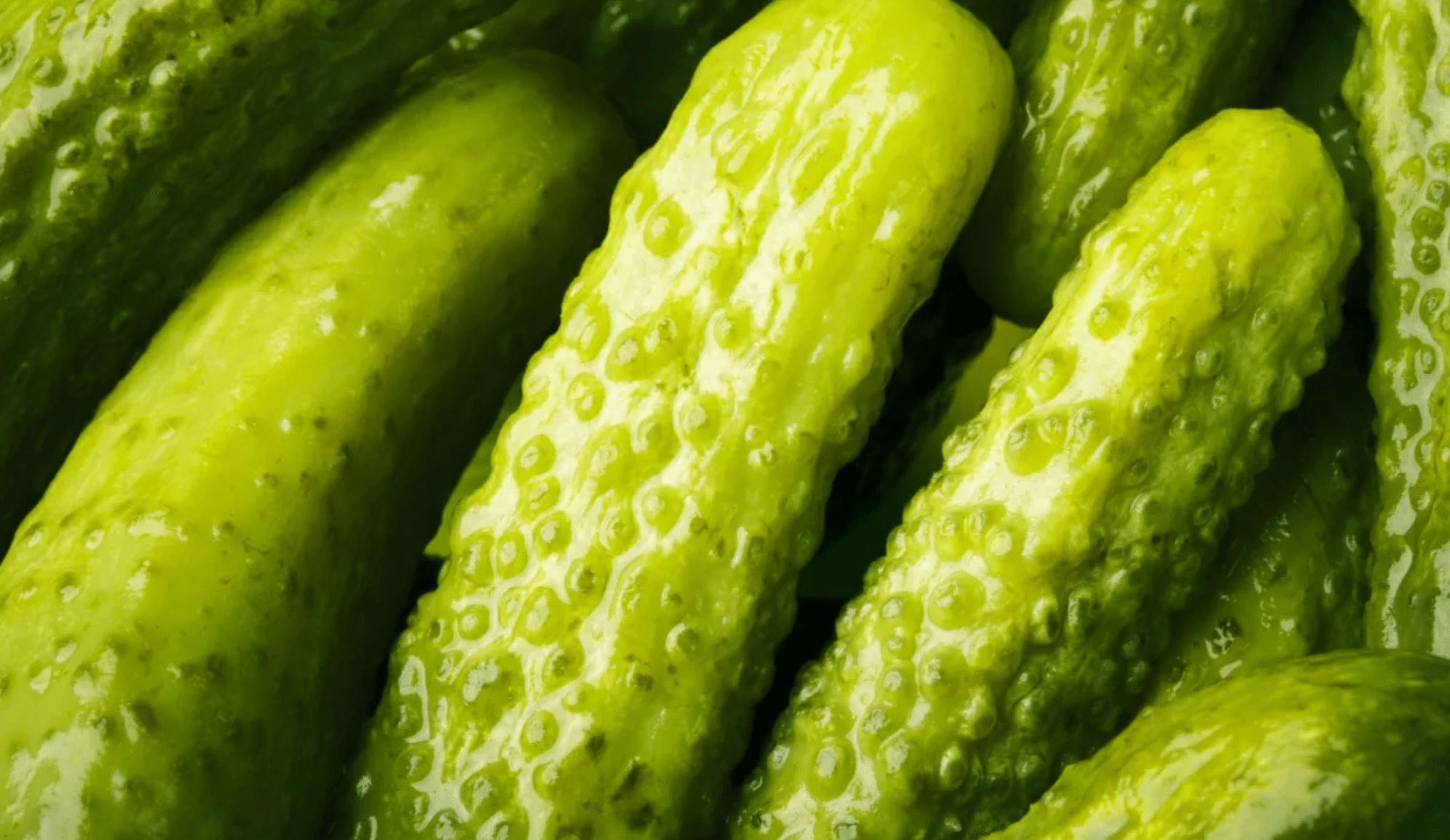
The delicacy that delights…
Amerigo Vespucci didn’t discover the Americas, contrary to what the map-makers who named the continents believed, but his given name did end up lending itself to the so-called “new world.” And Ralph Waldo Emerson once called Vespucci “the pickle-dealer at Seville,” a derisive label that may have stretched the truth a bit, but pointed towards a very real part of the itinerant Italian’s biography.
Before traveling to the New World himself, Vespucci worked as a ship chandler—someone who sold supplies to seafaring merchants and explorers. These supplies included foods like meat, fish, and vegetables that had been pickled, which meant they would stay preserved beneath a ship’s deck for months. Without pickling, expeditions had to rely on dried foods and ingredients with naturally long shelf lives for sustenance. Much of the time, this limited diet wasn’t enough to provide crewmembers the nutrition they needed for the journey ahead. This made pickle sellers like Vespucci indispensable during the golden age of exploration. Vespucci even supplied Christopher Columbus’s later voyages across the Atlantic with his briny goods. So while he wasn’t the world’s most important explorer, Vespucci’s pickles may have changed history by preventing untold bouts of scurvy.
And pickles weren’t just enjoyed by 15th century sailors. From ancient Mesopotamia to New York deli counters, they’ve played a vital role in the global culinary scene. But where do pickles come from? How did the cucumber become the standard-issue pickling vegetable in the States? And what exactly is a pickle, anyway?…
The story of a humble but crucial comestible: “A Brief History of Pickles.”
* Martial
###
As we dig in, we might spare a thought for Sylvester Graham; he died on this date in 1851. A Presbyterian minister, he preached primarily of the benefits of vegetarianism (and temperance). He urged the use only of whole, coarse grains– inspiring a host of graham flour, graham bread, and graham cracker products.

“Life is a highway”*…

62 years ago, there was no Interstate Highway System. Now, the system covers nearly 50,000 miles in the US. The growth of the US interstate is stunning to behold when you chart it through time…
A quick and fascinating history at “The Evolution Of The US Interstate Through Time, Mapped“; explore Geotab‘s interactive timeline here.
###
As we hit the road, we might send healthy birthday greetings to Sylvester Graham; he was born on this date in 1794. A presbyterian minister, he is better remembered as a dietary reformer who preached vegetarianism, supported the temperance movement, and emphasized eating whole-grain bread. Though he neither invented nor profited from his legacy, his sermons inspired his followers to create graham flour, graham bread and the graham cracker.

“The thought of two thousand people crunching celery at the same time horrified me”*…

Eliminating meat from our diets would bring a bounty of benefits to the planet’s health and to our own – but, a quick transition would not be without its costs: it could harm millions of people…
People become vegetarians for a variety of reasons. Some do it to alleviate animal suffering, others because they want to pursue a healthier lifestyle. Still others are fans of sustainability or wish to reduce greenhouse gas emissions.
No matter how much their carnivorous friends might deny it, vegetarians have a point: cutting out meat delivers multiple benefits. And the more who make the switch, the more those perks would manifest on a global scale.
But if everyone became a committed vegetarian, there would be serious drawbacks for millions, if not billions, of people.
“It’s a tale of two worlds, really,” says Andrew Jarvis of Colombia’s International Centre for Tropical Agriculture. “In developed countries, vegetarianism would bring all sorts of environmental and health benefits. But in developing countries there would be negative effects in terms of poverty.”…
More at “What would happen if the world suddenly went vegetarian?”
* George Bernard Shaw (vegetarian)
###
As we opt for the vegiburger, we might recall that, for all our sins, to day is National Sausage Pizza Day. While pizza dates back (at least) to the ancient Greek custom of covering bread with oils, herbs and cheese (in Byzantine Greek, the dish was spelled πίτα (pita), meaning “pie”), pizza-as-we-know-it seems to have been born in modern Italy as Neapolitan flatbread. An estimated 3 billion pizzas are sold in the U.S. every year, an average of 350 per second; 17% of all restaurants in the U.S. are pizzerias, more than 10% of which are in New York City. [source]

You must be logged in to post a comment.