Posts Tagged ‘rock’
“The function of small corner shops in maintaining cities as viable social institutions does not appear in the Washington consensus. The possibility that corner shops may do better at safeguarding social cohesion than mass imprisonment is considered outlandish – if it is considered at all.”*…

For decades, globalist neoliberalism (and here) has driven the policies and practices and political, commercial, and financial leaders and institutions across the developed– and given development policy, the developing– world. Rana Foroohar argues that its time may be up; geography is retaking the upper hand…
For most of the last 40 years, U.S. policymakers acted as if the world were flat. Steeped in the dominant strain of neoliberal economic thinking, they assumed that capital, goods, and people would go wherever they would be the most productive for everyone. If companies created jobs overseas, where it was cheapest to do so, domestic employment losses would be outweighed by consumer benefits. And if governments lowered trade barriers and deregulated capital markets, money would flow where it was needed most. Policymakers didn’t have to take geography into account, since the invisible hand was at work everywhere. Place, in other words, didn’t matter.
U.S. administrations from both parties have until quite recently pursued policies based on these broad assumptions—deregulating global finance, striking trade deals such as the North American Free Trade Agreement, welcoming China into the World Trade Organization (WTO), and not only allowing but encouraging American manufacturers to move much of their production overseas. Free-market globalism was of course pushed in large part by the powerful multinational companies best positioned to exploit it (companies that, of course, donated equally to politicians from both major U.S. parties to ensure that they would see the virtues of neoliberalism). It became a kind of crusade to spread this new American creed around the globe, delivering the thrill of fast fashion and ever-cheaper electronic gadgets to consumers everywhere. American goods, in effect, would represent American goodness. They would advertise American philosophical values, the liberalism tucked inside neoliberalism. The idea was that other countries, delighted by the fruits of American-style capitalism, would be moved to become “free” like the United States.
By some measures, the results of these policies were tremendously beneficial: American consumers in particular enjoyed the fruits of cheap foreign manufacturing while billions of people were lifted out of poverty, especially in developing countries. As emerging markets joined the free-market system, global inequality declined, and a new global middle class was born. How free it was politically, of course, depended on the country.
But neoliberal policies also created immense inequalities within countries and led to sometimes destabilizing capital flows between them. Money can move much faster than goods or people, which invites risky financial speculation. (The number of financial crises has grown substantially since the 1980s.) What is more, neoliberal policies caused the global economy to become dangerously untethered from national politics. Through much of the 1990s, these tectonic shifts were partly obscured in the United States by falling prices, increased consumer debt, and low interest rates. By the year 2000, however, the regional inequalities wrought by neoliberalism had become impossible to ignore. While coastal U.S. cities prospered, many parts of the Midwest, the Northeast, and the South were experiencing catastrophic job losses. Average incomes among U.S. states began to diverge, having converged throughout the 1990s…
Since the beginning of the neoliberal era, a handful of economists had pushed back against the received wisdom of the field. Karl Polanyi, an Austro-Hungarian economic historian, critiqued classical economic views as early as 1944, arguing that totally free markets were a utopian myth. Scholars of the postwar period, including Joseph Stiglitz, Dani Rodrik, Raghuram Rajan, Simon Johnson, and Daron Acemoglu, also understood that place mattered. As Stiglitz, who grew up in the Rust Belt, once told me, “It was obvious if you were raised in a place like Gary, Indiana, that markets aren’t always efficient.”
This view, that location plays a role in determining economic outcomes, is only just beginning to land in policy circles, but a growing body of research supports it. From the work of Thomas Piketty, Emmanuel Saez, and Gabriel Zucman to that of Raj Chetty and Thomas Philippon, there is now a consensus among scholars that geographically specific factors such as the quality of public health, education, and drinking water have important economic implications. That might seem intuitive or even obvious to most people, but it has only recently gained broad acceptance among mainstream economists. As Peter Orszag, who served as President Barack Obama’s budget director, told me, “If you ask a normal human being, ‘Does it matter where you are?’ they would start from the presumption that ‘Yes, where you live and where you work and who you’re surrounded by matters a ton.’ It’s like Econ 101 has just gone off the path for the last 40 to 50 years, and we’re all little islands atomized into perfectly rational calculating machines. And policy has just drifted along with this thinking.” He added, “The Economics 101 approach, which is place-agnostic, has clearly failed.”
The importance of place has become even more evident since the start of the COVID-19 pandemic, the economic decoupling of the United States and China, and Russia’s war in Ukraine. Globalization has crested and begun to recede. In its place, a more regionalized and even localized world is taking shape. Faced with rising political discontent at home and geopolitical tensions abroad, governments and businesses alike are increasingly focused on resilience in addition to efficiency. In the coming post-neoliberal world, production and consumption will be more closely connected within countries and regions, labor will gain power relative to capital, and politics will have a greater impact on economic outcomes than it has for half a century. If all politics is local, the same could soon be true for economics…
All economics is local: “After Neoliberalism,” from @RanaForoohar in @ForeignAffairs. Eminently worth reading in full (and contemplating the consequences of this all-too-plausible shift for addressing global issues like change change and the migration it is sure to drive).
###
As we re-scope, we might recall that it was on this date in 1975 that prescient objectors, the Sex Pistols, made their live debut at St Martin’s School Of Art in central London, supporting a band called Bazooka Joe, which included Stuart Goddard (the future Adam Ant). The Pistols’ performance lasted 10 minutes.

“Instant karma’s gonna get you, gonna knock you right on the head”*…

What goes round…
Bored Panda collected a schadenfreude-filled list of “50 Times Justice Was Served To People Who Totally Deserved It.”


… comes round: “Excellent examples of people getting exactly what they deserve,” from @pesco in @BoingBoing. All of them, here.
* John Lennon
###
As we ponder predestined propriety, we might recall that it was on this date in 1988 that Def Leppard‘s “Love Bites” hit #1 on the Billboard Hot 100. The follow-up single (from the #1 album Hysteria, which won a string of industry awards and racked up global sales totaling over 25 million) to “Pour Some Sugar on Me,” the power ballad is considered a classic of the glam metal genre.
“If you want to change the culture, you will have to start by changing the organization”*…

That’s perhaps especially true of cultural organizations. As Ian Leslie explains, while rock bands are known for drink, drugs, and dust-ups, they have something to teach us: beyond the debauchery lie four models for how to run a business…
… The notion that bands should make music for the love of it was always romantic and now seems positively quaint. Rock groups are mini-corporations (some of them not so mini). Bands such as Coldplay or Kings of Leon operate sophisticated corporate machines that are responsible for multiple revenue streams; at a recent conference, Metallica’s drummer spoke about the importance of using the right customer-engagement software. Yet the music machine ultimately depends on a small group of talented individuals working closely together to create something magical. Once members of a group decide that they can’t stand to be in the same room as each other, the magic stops and the money dries up.
If rock groups are businesses, businesses are getting more like rock bands. Workplaces are far more informal than they used to be, with less emphasis on protocol, rank and authority. Many firms try to cultivate the creativity that can come from close collaboration. Employers attempt to engineer personal chemistry, hiring coaches to fine-tune team dynamics and sending staff on team-building exercises. Employees are encouraged to share lunch, play table tennis and generally hang out. As the founder of Hubble, a London office-space company, put it, “We hope that our team will become friends first, and colleagues second.”…
Successful startups have to make a difficult transition from being a gang of friends working on a cool idea to being managers of a complex enterprise with multiple stakeholders. It’s a problem familiar to rock groups, which can go quickly from being local heroes to global brands, and from being responsible only for themselves to having hundreds of people rely on them for income. In both cases, people who made choices by instinct and on their own terms acquire new, often onerous responsibilities with barely any preparation. Staff who were hired because they were friends or family have their limitations exposed under pressure, and the original gang can have its solidarity tested to destruction. A study from Harvard Business School found that 65% of startups fail because of “co-founder conflict”. For every Coldplay, there are thousands of talented bands now forgotten because they never survived contact with success.
The history of rock groups can be viewed as a vast experimental laboratory for studying the core problems of any business: how to make a group of talented people add up to more than the sum of its parts. And, once you’ve done that, how to keep the band together…
The Beatles, Tom Petty and the Heartbreakers, REM, and the Rolling Stones– four bands, four models for business success: “A rocker’s guide to management,” from @mrianleslie in @1843mag.
###
As we learn from the loudest, we might recall that it was on this date in 1968 that The Beatles (one of the four cases discussed in the piece linked above) performed “Hey Jude,” the #1 song in both the U.S. and the U.K. at the time, on the television show Frost on Sunday on BBC-TV.
“Heavy Metal is the most conservative of all loud music. Let’s face it, not even a gym teacher could get as many people to dress alike.”*…

Jeremy Swist on heavy metal’s fascination with Roman emperors…
Roman emperors have enjoyed a prolific reception in metal music around the world—Caligula and Nero most of all, with not only hundreds of individual songs but also entire concept albums dedicated to them, such as the Belgian band Paragon Impure’s 2005 album To Gaius! (For the Delivery of Agrippina) and the Russian band Neron Kaisar’s 2013 album Madness of the Tyrant. The year 2021 saw the release of two separate records about Nero: the UK band Acid Age’s Semper Pessimus and the Canadian band Ex Deo’s The Thirteen Years of Nero. The extent of certain emperors’ popularity can even be quantified, thanks to the online database Encyclopaedia Metallum. Entering each emperor’s name into the advanced search for their appearance in lyrics and song titles, and after eliminating duplicates and false positives (e.g., nero being Italian for “black”), led me to create the following bar graph, which went semi-viral on Twitter in April 2021:

Nero with 139 songs, followed by Caligula with 110, tops a sizable catalogue of 444 songs. Yet this data set consists only of mentions by name in songs with available lyrics in the Encyclopaedia Metallum and excludes untold numbers of tracks about emperors that do not name them, such as “Incitatus,” an old-school death metal ode to Caligula’s horse and would-be consul from 2019 by the Brazilian band Orthostat, or the American band Graves of Valor’s 2009 song “Locusta,” named after the woman Nero praises as the poisoner of not only his predecessor Claudius but also his stepbrother Britannicus and his mother Agrippina.
The numbers speak for themselves: emperors are metal. But why?…
Find out: “Enjoy My Flames,” from @MetalClassicist in @laphamsquart— an illuminating (and entertaining) look at (what is, in the end) a fascinating sub-genre of historical fiction, and what it tells us about our times.
###
As we ponder head-banging, we might recall that on this date in 2003 Metallica’s St. Anger (the heavy metal band’s eighth studio album) was released– and went to #1 on the Billboard album chart (holding off a strong entry at #2 by Jewel, who’d moved on from her folkier roots to dance pop with 0304).

“Well, I was born in a small town”*…

… which is, new federal designations now dictate, definitely not an urban area…
Hundreds of urban areas in the U.S. are becoming rural, but it’s not because people are leaving.
It’s just that the U.S. Census Bureau is changing the definition of an urban area. Under the new criteria, more than 1,300 small cities, towns and villages designated urban a decade ago would be considered rural.
That matters because urban and rural areas qualify for different types of federal funding. Some communities worry the change could affect health clinics in rural areas as well as transportation and education funding from federal programs…
Groups like the American Hospital Association say the changes, which are the biggest being made to the definitions in decades, could cause problems for people who need medical care in rural areas…
Different federal programs use different definitions of urban and rural, and some communities qualify for rural funding for some programs and not others. But any changes “will have significant implications for many groups and communities,” said Kenneth Johnson, a senior demographer at the University of New Hampshire who studies rural issues.
“Another likely concern for many rural communities is that if many existing urban areas are redefined as rural, competition for the limited rural funds will increase,” Johnson said…
The difference a designation can make: “100s of US urban areas will become rural with new criteria,” from @AP.
[image above: source]
* John Mellencamp, “Small Town”
###
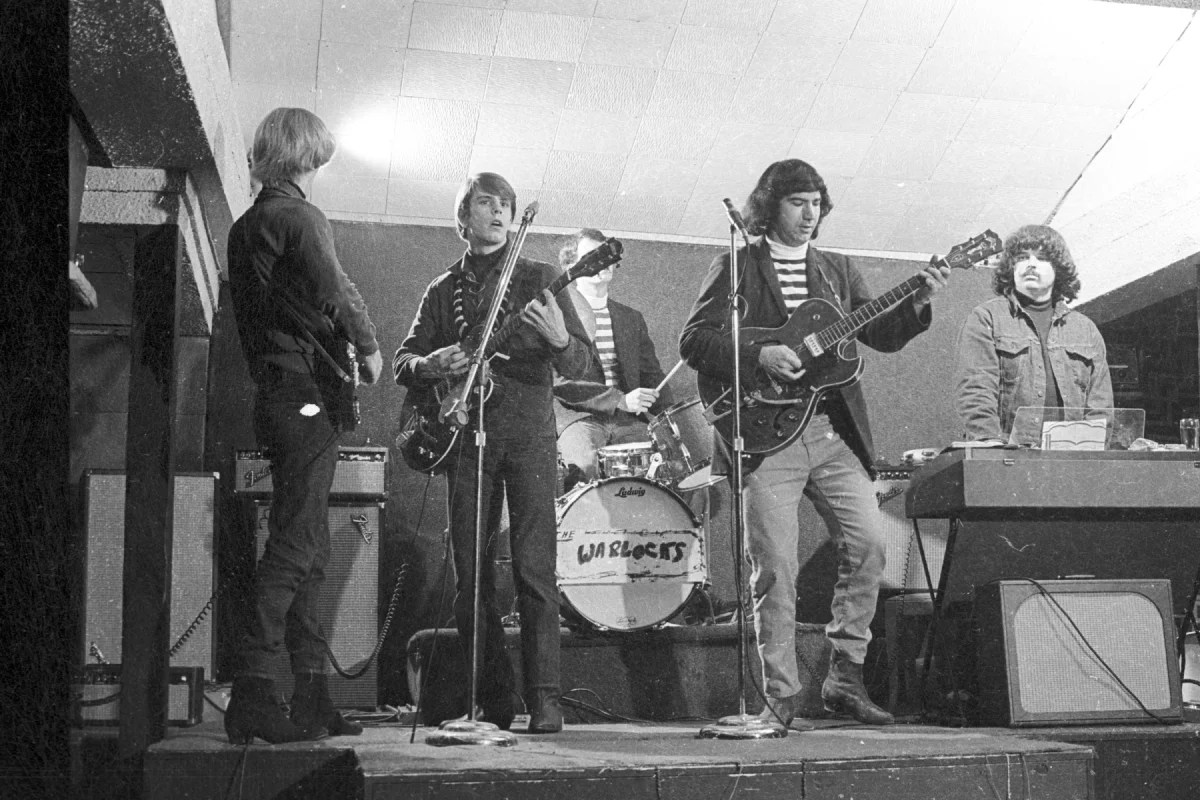
As we contemplate categories and their consequences, we might recall that it was on this date in 1965, at Magoo’s Pizza in (the then small town of) Menlo Park, CA, that Phil Lesh attended a performance of a band then known as The Warlocks. High on acid, he enjoyed it so much that he danced by himself in front of the bandstand. The Warlock’s leader, Jerry Garcia, cornered him and announced, “Hey, man-you’re going to be the bass player in this band”… and so the fundamental line-up of what became The Grateful Dead was set.
You must be logged in to post a comment.