Posts Tagged ‘religion’
“Those who believe that politics and religion do not mix, understand neither”*…

Authoritarian leaders who play the religious card are not mere hypocrites, Suzanne Schneider suggests; there’s something far more troubling going on…
Viktor Orbán reportedly does not attend church. Benjamin Netanyahu eats at non-kosher restaurants. New York libertine Donald Trump lacks all manner of evident religious virtue.
Yet it is a fact that today’s crop of aspiring authoritarians invoke religious themes and symbols, despite not being strict adherents to their respective traditions. Of course, there is nothing new about the opportunistic use of religion by politicians. The scholars Garret Martin and Carolyn Gallaher have remarked that ‘Orbán’s use of religion is no different from Ronald Reagan’s embrace of Christian evangelicals in the late 1970s.’ According to these explanations, such figures cynically appeal to religion, despite not being true believers. Given this purported sincerity deficit, a conversation in this register toggles between accusations of hypocrisy and instrumentalism. How can such obviously corrupted figures claim to speak on behalf of a Christian or Jewish nation? And how can voters who claim to be animated by religious values be so blind?
Tempting as it is, the hypocrisy diagnosis does not quite map onto the emerging social landscape. There is instead a deeper and more interesting shift occurring in the world toward a new post-liberal or illiberal order of religion and politics. Understanding the nature of this transformation enables critics to break out of the cycle of allegations of hypocrisy or inconsistency, and to grasp an emergent worldview that is both coherent and deeply troubling…
Read on for her (troubling) explication: “An unholy alliance,” from @suzy_schneider in @aeonmag.
For the Washington Post‘s examination of the global tilt toward authoritarian nationalism: “Leaders of democracies increasingly echo Putin in authoritarian tilt” (gift article, so no paywall).
Apposite: “When the Hindu Right Came for Bollywood” (“The industry used to honor India’s secular ideals—but, since the rise of Narendra Modi, it’s been flooded with stock Hindu heroes and Muslim villains…”)

* Albert Einstein (also attributed to Gandhi)
###
As we take the measure of the metamorphosis, we might recall that it was on this date in 1789 that John Jay was sworn in as the first Chief Justice of the U.S. Supreme Court. A founding father (co-author of The Federalist Papers with Hamilton and Madison, and President of the second Continental Congress), he had previously served as the young nation’s Secretary of Foreign Affairs (in which position he helped negotiate the Treaty of Paris), as the first Secretary of State, then as Governor of New York.
Jay was an ally of Hamilton, a proponent of a strong national government. While Governor of New York, he presided over a state constitutional convention in which religious tolerance was enshrined… within limits: he succeeded in adding special provisions for Catholics to the constitution’s article on the naturalization of foreigners. Under Jay’s amendment, aliens were required to take an oath of allegiance to the state that included renunciation of all allegiance and subjection to “all and every foreign king, prince potentate and state, in all matters ecclesiastical as well as civil.” Scholars suggest that the persecution of Jay’s Huguenot ancestors by the Catholic Church and his adherence to traditional Whig views identifying Protestantism with liberty and Catholicism with oppression, foreign influence, and sedition motivated his actions.

“In the sphere of thought, absurdity and perversity remain the masters of this world, and their dominion is suspended only for brief periods”*…

From a (somewhat sarcastic) 1896 essay (“The Art of Controversy”) by that gloomiest of philosophers, Arthur Schopenhauer, advice that (sadly) feels as appropriate today as it surely was then…
1. Carry your opponent’s proposition beyond its natural limits; exaggerate it. The more general your opponent’s statement becomes, the more objections you can find against it. The more restricted and narrow his or her propositions remain, the easier they are to defend by him or her.
2. Use different meanings of your opponent’s words to refute his or her argument.
3. Ignore your opponent’s proposition, which was intended to refer to a particular thing. Rather, understand it in some quite different sense, and then refute it. Attack something different than that which was asserted.
…
The first three of “Schopenhauer’s 38 Stratagems, or 38 Ways to Win an Argument.” Via @TheBrowser.
[Image above: source]
* Arthur Schopenhauer, “The Art of Controversy“
###
As we celebrate sophistry, we might recall that it was on this date (or near; scholars disagree) in 325 that Roman Emperor Constantine I convened a gathering in which all of Scopenhauer’s tricks were surely employed: the First Council of Nicaea. An ecumenical council, it was the first effort to attain consensus in the church through an assembly representing all Christendom. Its main accomplishments were settlement of the Christological issue of the divine nature of God the Son and his relationship to God the Father, the construction of the first part of the Nicene Creed, mandating uniform observance of the date of Easter, and the promulgation of early canon law.

“All ancient books which have once been called sacred by man will have their lasting place in the history of mankind”*…

In 1999, Santa Cruz, California software engineer John Bruno Hare founded what he hoped would become “a quiet place in cyberspace”…
Welcome to the largest freely available archive of online books about religion, mythology, folklore, and the esoteric on the Internet… Texts are presented in English translation and, where possible, in the original language…
This site has no particular agenda other than promoting religious tolerance and scholarship. Views expressed at this site are solely those of specific authors, and are not endorsed by sacred-texts. Sacred-texts is not sponsored by any religious group or organzation.
This site strives to produce the best possible transcriptions of public domain texts on the subject of religion, mythology, folklore and the esoteric. The texts are posted for free access on the Internet. This site is like a public library: it is accessible to anyone, contains unfiltered information, and does not advocate any particular point of view. However, nobody is going to shush you if you make too much noise while using this site…
Sacred texts is one of the top 20,000 sites on the web based on site traffic, consistently one of the top 10,000 sites in Australia, the US and India, and is one of the top 5 most visited general religion sites (source: Alexa.com)…
Spirituality in all of its shapes: The Internet Scared Text Archive.
* “All ancient books which have once been called sacred by man will have their lasting place in the history of mankind; and those who possess the courage, the perseverance, and the self-denial of the true miner, and of the true scholar, will find even in the darkest and dustiest shafts what they are seeking for–real nuggets of thought, and precious jewels of faith and hope.” – Max Müller, Introduction to the Upanishads Vol. II
###
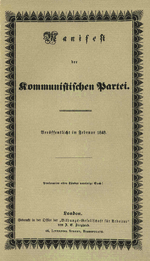
As we delve into the devotional, we might recall that it was on this date in 1848 that a document that isn’t in the Sacred Text Archive, but that is arguably apposite, was published– a political pamphlet by the German philosophers Karl Marx and Friedrich Engels, The Communist Manifesto. Commissioned by the Communist League and written in German, it appeared as the Revolutions of 1848 began to erupt. Subsequently, of course, Marx elaborated on his argument (with Engel’s help, after Marx’s death) in Das Kapital.
“May all beings have happy minds”*…
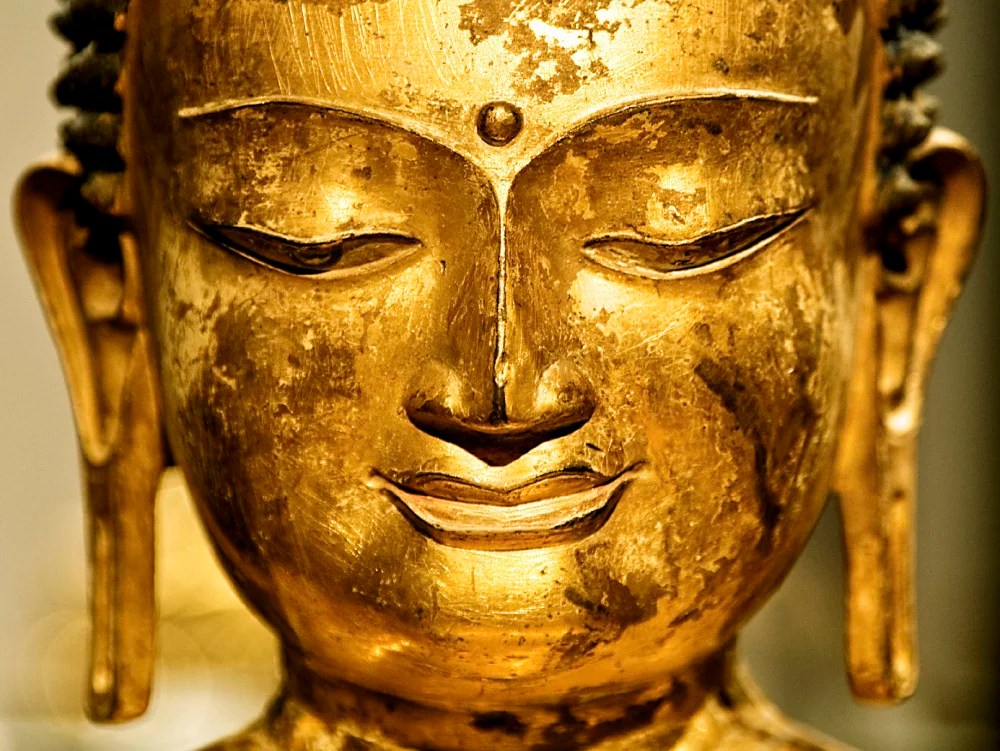
But then it’s important to be careful as to how we look for that happiness…
– Games where players either remove pieces from a pile or add pieces to it, with the loser being the one who causes the heap to shake (similar to the modern game pick-up sticks)
– Games of throwing dice
– Ball games
– Guessing a friend’s thoughts
Just a few of the entries in “List of games that Buddha would not play,” from the T. W. Rhys Davids‘ translation of the Brahmajāla Sutta (though the list is duplicated in a number of other early Buddhist texts, including the Vinaya Pitaka).
(TotH to Scott Alexander; image above: source)
* the Buddha
###
As we endeavor for enlightenment, we might recall that it was on this date in 2001 that Wikipedia was born. A free online encyclopedia that is collaboratively edited by volunteers, it has grown to be the world’s largest reference website, attracting 1.7 billion unique-device visitors monthly as of November 2021. As of January 9, 2022, it has more than fifty-eight million articles in more than 300 languages, including 6,436,030 articles in English (serving 42,848,899 active users of English Wikipedia), with 118,074 active contributors in the past month.

“Nobody expects the Spanish Inquisition”*…

On the long-term effects of suppression and persecution…
From Imperial Rome to the Crusades, to modern North Korea or the treatment of Rohingya in Myanmar, religious persecution has been a tool of state control for millennia.
While its immediate violence and human consequences are obvious, less obvious is whether it leaves scars centuries after it ends.
In a new study we have attempted to examine the present day consequences of one of the longest-running and most meticulously documented persecutions of them all – the trials of the Spanish Inquisition between 1478 to 1834…
Details at “Extraordinarily, the effects of the Spanish Inquisition linger to this day.”
###
As we tolerate, we might recall that it was on this date in 1492 that Catholic monarchs, King Ferdinand II of Aragon and Isabella I of Castile took control of the Emirate of Grenada (1238-1492), the last Moorish stronghold in Spain. King Boabdil surrendered to Spanish forces in the Alhambra palace, surrendering the key to the city– an event Christopher Columbus witnessed as he received the support of the monarchy to sail to the Indies.
Pursuant to the Inquisition, Ferdinand and Isabella had targeted Muslims and Sephardic Jews (also called the Megorashim), forcing them either to convert to Christianity or to leave Spain within four months without any possessions. Failure to leave resulted in torture and/or death.

You must be logged in to post a comment.