Posts Tagged ‘philosophy of science’
“An architect should live as little in cities as a painter. Send him to our hills, and let him study there what nature understands by a buttress, and what by a dome.”*…

We’ve misunderstood an important part of the history of urbanism– jungle cities. Patrick Roberts suggests that they have much to teach us…
Visions of “lost cities” in the jungle have consumed western imaginations since Europeans first visited the tropics of Asia, Africa and the Americas. From the Lost City of Z to El Dorado, a thirst for finding ancient civilisations and their treasures in perilous tropical forest settings has driven innumerable ill-fated expeditions. This obsession has seeped into western societies’ popular ideas of tropical forest cities, with overgrown ruins acting as the backdrop for fear, discovery and life-threatening challenges in countless films, novels and video games.
Throughout these depictions runs the idea that all ancient cities and states in tropical forests were doomed to fail. That the most resilient occupants of tropical forests are small villages of poison dart-blowing hunter-gatherers. And that vicious vines and towering trees – or, in the case of The Jungle Book, a boisterous army of monkeys – will inevitably claw any significant human achievement back into the suffocating green whence it came. This idea has been boosted by books and films that focus on the collapse of particularly enigmatic societies such as the Classic Maya. The decaying stone walls, the empty grand structures and the deserted streets of these tropical urban leftovers act as a tragic warning that our own way of life is not as secure as we would like to assume.
For a long time, western scholars took a similar view of the potential of tropical forests to sustain ancient cities. On the one hand, intensive agriculture, seen as necessary to fuel the growth of cities and powerful social elites, has been considered impossible on the wet, acidic, nutrient-poor soils of tropical forests. On the other, where the rubble of cities cannot be denied, in the drier tropics of North and Central America, south Asia and south-east Asia, ecological catastrophe has been seen as inevitable. Deforestation to make way for massive buildings and growing populations, an expansion of agriculture across marginal soils, as well as natural disasters such as mudslides, flooding and drought, must have made tropical cities a big challenge at best, and a fool’s gambit at worst.
Overhauling these stereotypes has been difficult. For one thing, the kind of large, multiyear field explorations usually undertaken on the sites of ancient cities are especially hard in tropical forests. Dense vegetation, mosquito-borne disease, poisonous plants and animals and torrential rain have made it arduous to find and excavate past urban centres. Where organic materials, rather than stone, might have been used as a construction material, the task becomes even more taxing. As a result, research into past tropical urbanism has lagged behind similar research in Mesopotamia and Egypt and the sweeping river valleys of east Asia.
Yet many tropical forest societies found immensely successful methods of food production, in even the most challenging of circumstances, which could sustain impressively large populations and social structures. The past two decades of archaeological exploration, applying the latest science from the land and the air, have stripped away canopies to provide new, more favourable assessments.
Not only did societies such as the Classic Maya and the Khmer empire of Cambodia flourish, but pre-colonial tropical cities were actually some of the most extensive urban landscapes anywhere in the pre-industrial world – far outstripping ancient Rome, Constantinople/Istanbul and the ancient cities of China.
Ancient tropical cities could be remarkably resilient, sometimes surviving many centuries longer than colonial- and industrial-period urban networks in similar environments. Although they could face immense obstacles, and often had to reinvent themselves to beat changing climates and their own exploitation of the surrounding landscape, they also developed completely new forms of what a city could be, and perhaps should be.
Extensive, interspersed with nature and combining food production with social and political function, these ancient cities are now catching the eyes of 21st-century urban planners trying to come to grips with tropical forests as sites of some of the fastest-growing human populations around the world today…
They may be vine-smothered ruins today, but the lost cities of the ancient tropics still have a lot to teach us about how to live alongside nature. Dr. Roberts (@palaeotropics) explains: “The real urban jungle: how ancient societies reimagined what cities could be,” adapted from his new book, Jungle: How Tropical Forests Shaped the World – and Us.
* John Ruskin
###
As we acclimate, we might send thoughtful birthday greetings to Sir Karl Raimund Popper; he was born on this date in 1902. One of the greatest philosophers of science of the 20th century, Popper is best known for his rejection of the classical inductivist views on the scientific method, in favor of empirical falsification: a theory in the empirical sciences can never be proven, but it can be falsified, meaning that it can and should be scrutinized by decisive experiments. (Or more simply put, whereas classical inductive approaches considered hypotheses false until proven true, Popper reversed the logic: conclusions drawn from an empirical finding are true until proven false.)
Popper was also a powerful critic of historicism in political thought, and (in books like The Open Society and Its Enemies and The Poverty of Historicism) an enemy of authoritarianism and totalitarianism (in which role he was a mentor to George Soros).

“People seemed to believe that technology had stripped hurricanes of their power to kill. No hurricane expert endorsed this view.”*…
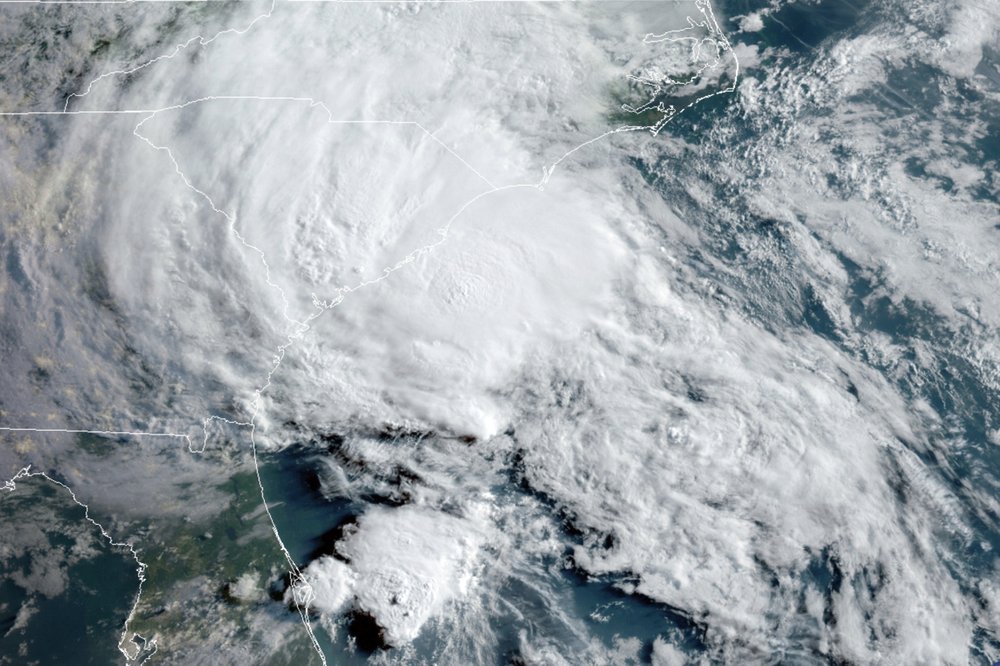
For six straight years, Atlantic storms have been named in May, before [hurricane] season even begins. During the past nine Atlantic hurricane seasons, seven tropical storms have formed between May 15 and the official June 1 start date. Those have killed at least 20 people, causing about $200 million in damage, according to the WMO.
Last year, the hurricane center issued 36 “special” tropical weather outlooks before June 1, according to center spokesman Dennis Feltgen. Tropical Storms Arthur and Bertha both formed before June 1 near the Carolinas.
torms seem to be forming earlier because climate change is making the ocean warmer, University of Miami hurricane researcher Brian McNoldy said. Storms need warm water as fuel — at least 79 degrees (26 degrees Celsius). Also, better technology and monitoring are identifying and naming weaker storms that may not have been spotted in years past, Feltgen said…
With named storms coming earlier and more often in warmer waters, the Atlantic hurricane season is going through some changes with meteorologists ditching the Greek alphabet during busy years…
A special World Meteorological Organization committee Wednesday ended the use of Greek letters when the Atlantic runs out of the 21 names for the year, saying the practice was confusing and put too much focus on the Greek letter and not on the dangerous storm it represented. Also, in 2020 with Zeta, Eta and Theta, they sounded so similar it caused problems.
The Greek alphabet had only been used twice in 2005 and nine times last year in a record-shattering hurricane season.
Starting this year, if there are more than 21 Atlantic storms, the next storms will come from a new supplemental list headed by Adria, Braylen, Caridad and Deshawn and ending with Will. There’s a new back-up list for the Eastern Pacific that runs from Aidan and Bruna to Zoe.
Meanwhile, the National Oceanic Atmospheric Administration is recalculating just what constitutes an average hurricane season… But the Atlantic hurricane season will start this year on June 1 as traditionally scheduled, despite meteorologists discussing the idea of moving it to May 15…
With so much activity, MIT’s [Kerry] Emanuel said the current warnings are too storm-centric, and he wants them more oriented to where people live, warning of specific risks such as floods and wind. That includes changing or ditching the nearly 50-year-old Saffir Simpson scale of rating hurricanes Category 1 to 5.
That wind-based scale is “about a storm, it’s not about you. I want to make it about you, where you are,” he said. “It is about risk. In the end, we are trying to save lives and property”… Differentiating between tropical storms, hurricanes and extratropical cyclones can be a messaging problem when a system actually has a cold core, because these weaker storms can kill with water surges rather than wind… For example, some people and officials underestimated 2012’s Sandy because it wasn’t a hurricane and lost its tropical characteristic…
Rethinking hurricanes in a time of climate change: “Bye Alpha, Eta: Greek alphabet ditched for hurricane names.”
* Erik Larson, Isaac’s Storm: A Man, a Time, and the Deadliest Hurricane in History
###
As we accommodate climate change, we might spare a thought for George Alfred Leon Sarton; he died on this date in 1956. A chemist by training, his primary interest lay in the past practices and precepts of his field…an interest that led him to found the discipline of the history of science as an independent field of study. His most influential work was the Introduction to the History of Science (three volumes totaling 4,296 pages). Sarton ultimately aimed to achieve an integrated philosophy of science that connected the sciences and the humanities– what he called “the new humanism.” His name is honored with the prestigious George Sarton Medal, awarded by the History of Science Society.

“Do not worry about your difficulties in Mathematics. I can assure you mine are still greater.”*…
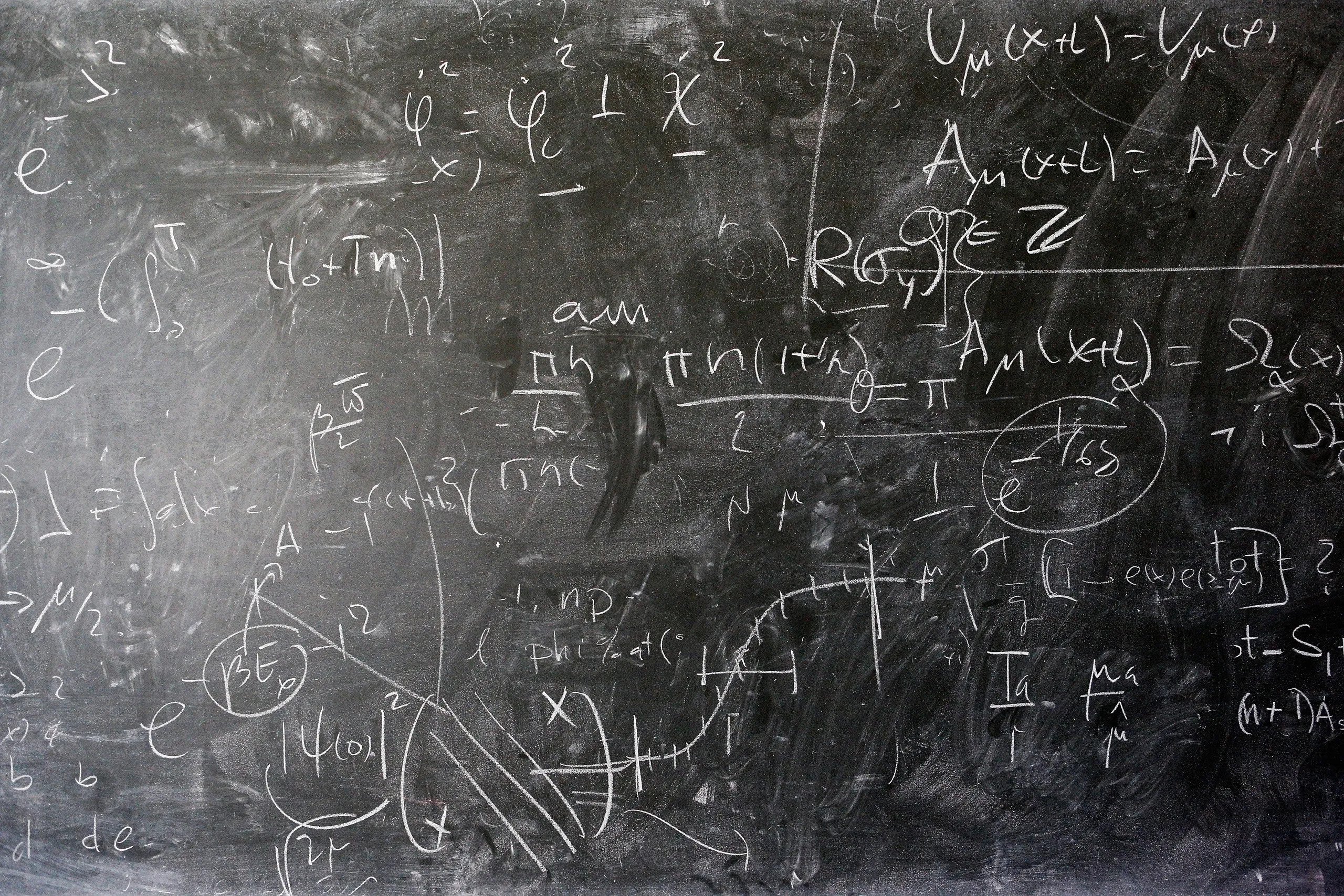
No scripture is as old as mathematics is. All the other sciences are younger, most by thousands of years. More than history, mathematics is the record that humanity is keeping of itself. History can be revised or manipulated or erased or lost. Mathematics is permanent. A² + B² = C² was true before Pythagoras had his name attached to it, and will be true when the sun goes out and no one is left to think of it. It is true for any alien life that might think of it, and true whether they think of it or not. It cannot be changed. So long as there is a world with a horizontal and a vertical axis, a sky and a horizon, it is inviolable and as true as anything that can be thought.
…
As precise as mathematics is, it is also the most explicit language we have for the description of mysteries. Being the language of physics, it describes actual mysteries—things we can’t see clearly in the natural world but suspect are true and later confirm—and imaginary mysteries, things that exist only in the minds of mathematicians. A question is where these abstract mysteries exist, what their home range is. Some people would say that they reside in the human mind, that only the human mind has the capacity to conceive of what are called mathematical objects, meaning numbers and equations and formulas and so on—the whole glossary and apparatus of mathematics—and to bring these into being, and that such things arrive as they do because of the way our minds are structured. We are led to examine the world in a way that agrees with the tools that we have for examining it. (We see colors as we do, for example, because of how our brains are structured to receive the reflection of light from surfaces.) This is a minority view, held mainly by neuroscientists and a certain number of mathematicians disinclined toward speculation. The more widely held view is that no one knows where math resides. There is no mathematician/naturalist who can point somewhere and say, “That is where math comes from” or “Mathematics lives over there,” say, while maybe gesturing toward magnetic north and the Arctic, which I think would suit such a contrary and coldly specifying discipline.
The belief that mathematics exists somewhere else than within us, that it is discovered more than created, is called Platonism, after Plato’s belief in a non-spatiotemporal realm that is the region of the perfect forms of which the objects on earth are imperfect reproductions. By definition, the non-spatiotemporal realm is outside time and space. It is not the creation of any deity; it simply is. To say that it is eternal or that it has always existed is to make a temporal remark, which does not apply. It is the timeless nowhere that never has and never will exist anywhere but that nevertheless is. The physical world is temporal and declines; the non-spatiotemporal one is ideal and doesn’t.
A third point of view, historically and presently, for a small but not inconsequential number of mathematicians, is that the home of mathematics is in the mind of a higher being and that mathematicians are somehow engaged with Their thoughts. Georg Cantor, the creator of set theory—which in my childhood was taught as a part of the “new math”—said, “The highest perfection of God lies in the ability to create an infinite set, and its immense goodness leads Him to create it.” And the wildly inventive and self-taught mathematician Srinivasa Ramanujan, about whom the movie “The Man Who Knew Infinity” was made, in 2015, said, “An equation for me has no meaning unless it expresses a thought of God.”
In Book 7 of the Republic, Plato has Socrates say that mathematicians are people who dream that they are awake. I partly understand this, and I partly don’t.
Mathematics has been variously described as an ideal reality, a formal game, and the poetry of logical ideas… an excerpt from “What is Mathematics?” from Alec Wilkinson— eminently worthy of reading in full.
* Albert Einstein
###
As we sum it up, we might send carefull-calcuated birthday greetings to Georgiy Antonovich Gamov; he was born on this date in 1904. Better known by the name he adopted on immigrating to the U.S., George Gamow, he was a physicist and cosmologist whose early work was instrumental in developing the Big Bang theory of the universe; he also developed the first mathematical model of the atomic nucleus.
But mid-career Gamow began to shift his energy to teaching and to writing popular books on science… one of which, One Two Three… Infinity, inspired legions of young scientists-to-be and kindled a life-long interest in science in an even larger number of other youngsters (like your correspondent).

“In so far as a scientific statement speaks about reality, it must be falsifiable: and in so far as it is not falsifiable, it does not speak about reality.”*…

If you ask philosophically minded researchers – in the Anglophone world at least – why it is that science works, they will almost always point to the philosopher Karl Popper (1902-94) for vindication. Science, they explain, doesn’t presume to provide the final answer to any question, but contents itself with trying to disprove things. Science, so the Popperians claim, is an implacable machine for destroying falsehoods.
Popper spent his youth in Vienna, among the liberal intelligentsia. His father was a lawyer and bibliophile, and an intimate of Sigmund Freud’s sister Rosa Graf. Popper’s early vocations draw him to music, cabinet making and educational philosophy, but he earned his doctorate in psychology from the University of Vienna in 1928. Realising that an academic post abroad offered escape from an increasingly antisemitic Austria (Popper’s grandparents were all Jewish, though he himself had been baptised into Lutheranism), he scrambled to write his first book. This was published as Logik der Forschung (1935), or The Logic of Scientific Discovery, and in it he put forward his method of falsification. The process of science, wrote Popper, was to conjecture a hypothesis and then attempt to falsify it. You must set up an experiment to try to prove your hypothesis wrong. If it is disproved, you must renounce it. Herein, said Popper, lies the great distinction between science and pseudoscience: the latter will try to protect itself from disproof by massaging its theory. But in science it is all or nothing, do or die.
Popper warned scientists that, while experimental testing might get you nearer and nearer to the truth of your hypothesis via corroboration, you cannot and must not ever proclaim yourself correct. The logic of induction means that you’ll never collect the infinite mass of evidence necessary to be certain in all possible cases, so it’s better to consider the body of scientific knowledge not so much true as not-yet-disproved, or provisionally true. With his book in hand, Popper obtained a university position in New Zealand. From afar, he watched the fall of Austria to Nazism, and commenced work on a more political book, The Open Society and its Enemies (1945). Shortly after the war, he moved to the UK, where he remained for the rest of his life.
For all its appealing simplicity, falsification was quickly demolished by philosophers, who showed that it was an untenable way of looking at science. In any real experimental set-up, they pointed out, it’s impossible to isolate a single hypothetical element for disproof. Yet for decades, Popperianism has nonetheless remained popular among scientists themselves, in spite of its potentially harmful side-effects. Why should this be?
…
The notion that science is all about falsification has done incalculable damage not just to science but to human wellbeing. It has normalised distrust as the default condition for knowledge-making, while setting an unreachable and unrealistic standard for the scientific enterprise. Climate sceptics demand precise predictions of an impossible kind, yet seize upon a single anomalous piece of data to claim to have disproved the entire edifice of combined research; anti-vaxxers exploit the impossibility of any ultimate proof of safety to fuel their destructive activism. In this sense, Popperianism has a great deal to answer for.
When the constructive becomes “deconstructive”– Charlotte Sleigh (@KentCHOTS) explains how a powerful cadre of scientists and economists sold Karl Popper’s “falsification” idea to the world… and why they have much to answer for: “The abuses of Popper.”
See also: “Why ‘Trusting the Science’ Is Complicated.”
* Karl Popper, The Logic of Scientific Discovery
###
As we re-engage with epistemology, we might recall that it was on this date in 1997 that Ian Wilmut, Keith Campbell, and their colleagues at the Roslin Institute (part of the University of Edinburgh, Scotland) announced that they had successfully cloned a sheep, Dolly, who had been born on July 5, 1996. Dolly lived her entire life at the Institute, where (bred with a Welsh mountain ram) she gave birth to six lambs. She died in February, 2003.

“Oh how wrong we were to think immortality meant never dying”*…

Quantum simulation (Verresen et al., Nature Physics, 2019)
Further (in a fashion) to yesterday’s post…
Nothing lasts forever. Humans, planets, stars, galaxies, maybe even the Universe itself, everything has an expiration date. But things in the quantum realm don’t always follow the rules. Scientists have found that quasiparticles in quantum systems could be effectively immortal.
That doesn’t mean they don’t decay, which is reassuring. But once these quasiparticles have decayed, they are able to reorganise themselves back into existence, possibly ad infinitum.
This seemingly flies right in the face of the second law of thermodynamics, which asserts that entropy in an isolated system can only move in an increasing direction: things can only break down, not build back up again.
Of course, quantum physics can get weird with the rules; but even quantum scientists didn’t know quasiparticles were weird in this particular manner…
Maybe some things are forever. More at “Scientists Find Evidence a Strange Group of Quantum Particles Are Basically Immortal.”
Read the underlying Nature Physics article, by physicist Ruben Verresen and his team at the Technical University of Munich and the Max Planck Institute for the Physics of Complex Systems, here.
###
As we ponder perpetuity, we might send carefully-deduced birthday greetings to Richard Bevan Braithwaite; he was born on this date in 1900. A Cambridge don who specialized in the philosophy of science, he focused on the logical features common to all sciences. Braithwaite was concerned with the impact of science on our beliefs about the world and the appropriate responses to that impact. He was especially interested in probability (and its applications in decision theory and games theory) and in the statistical sciences. He was president of the Aristotelian Society from 1946 to 1947, and was a Fellow of the British Academy.
It was Braithwaite’s poker that Ludwig Wittgenstein reportedly brandished at Karl Popper during their confrontation at a Moral Sciences Club meeting in Braithwaite’s rooms in King’s College. The implement subsequently disappeared. (See here.)

You must be logged in to post a comment.