Posts Tagged ‘movies’
“It is not great wealth in a few individuals that proves a country is prosperous, but great general wealth evenly distributed among the people”*…
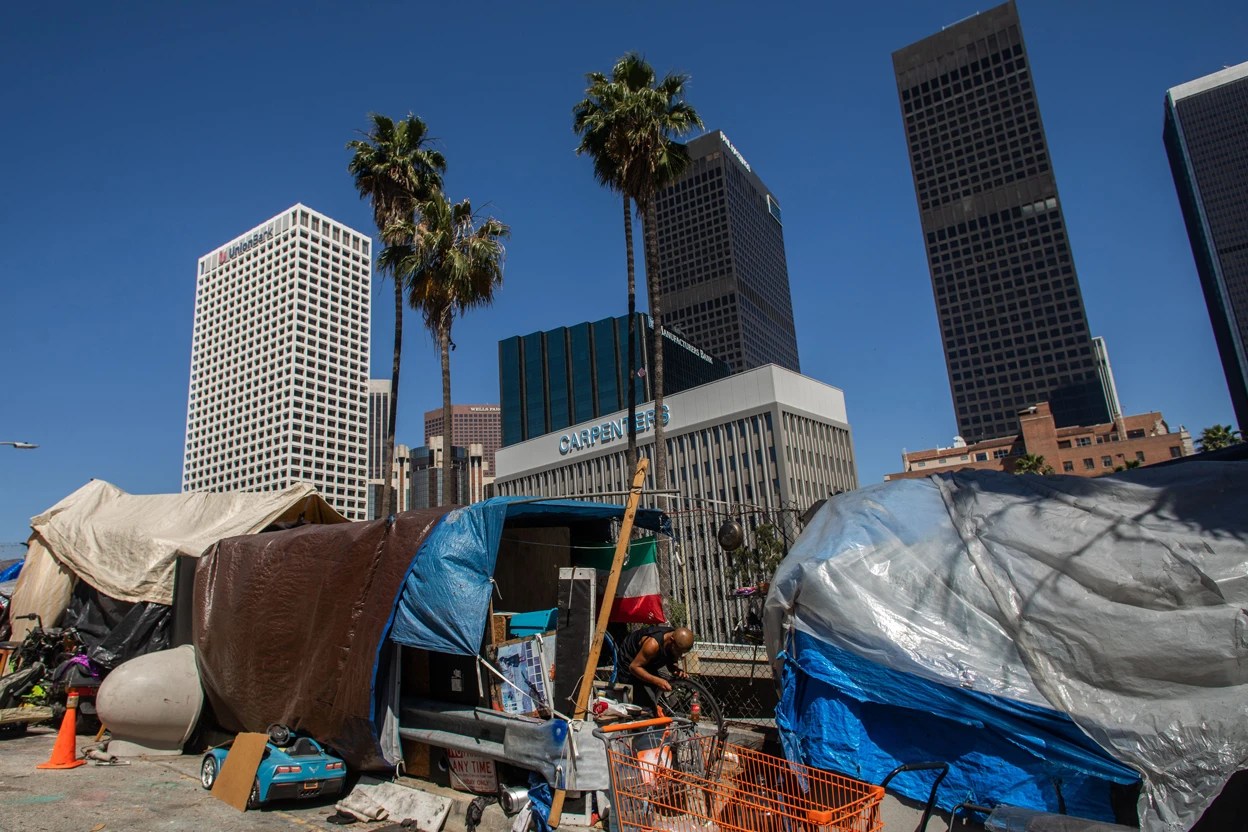
Richard Wilkinson and Kate Pickett on the research that suggest that greater equality is essential for sustainability, both natural and social. The science, they argue, is clear: people in more-equal societies are more trusting, cooperative, and more likely to protect the environment than are those in unequal, consumer-driven ones…
As environmental, social and humanitarian crises escalate, the world can no longer afford two things: first, the costs of economic inequality; and second, the rich. Between 2020 and 2022, the world’s most affluent 1% of people captured nearly twice as much of the new global wealth created as did the other 99% of individuals put together, and in 2019 they emitted as much carbon dioxide as the poorest two-thirds of humanity. In the decade to 2022, the world’s billionaires more than doubled their wealth, to almost US$12 trillion.
The evidence gathered by social epidemiologists, including us, shows that large differences in income are a powerful social stressor that is increasingly rendering societies dysfunctional. For example, bigger gaps between rich and poor are accompanied by higher rates of homicide and imprisonment. They also correspond to more infant mortality, obesity, drug abuse and COVID-19 deaths, as well as higher rates of teenage pregnancy and lower levels of child well-being, social mobility and public trust. The homicide rate in the United States — the most unequal Western democracy — is more than 11 times that in Norway (see go.nature.com/49fuujr). Imprisonment rates are ten times as high, and infant mortality and obesity rates twice as high.
These problems don’t just hit the poorest individuals, although the poorest are most badly affected. Even affluent people would enjoy a better quality of life if they lived in a country with a more equal distribution of wealth, similar to a Scandinavian nation. They might see improvements in their mental health and have a reduced chance of becoming victims of violence; their children might do better at school and be less likely to take dangerous drugs.
The costs of inequality are also excruciatingly high for governments. For example, the Equality Trust, a charity based in London (of which we are patrons and co-founders), estimated that the United Kingdom alone could save more than £100 billion ($126 billion) per year if it reduced its inequalities to the average of those in the five countries in the Organisation for Economic Co-operation and Development (OECD) that have the smallest income differentials — Denmark, Finland, Belgium, Norway and the Netherlands. And that is considering just four areas: greater number of years lived in full health, better mental health, reduced homicide rates and lower imprisonment rates.
Many commentators have drawn attention to the environmental need to limit economic growth and instead prioritize sustainability and well-being. Here we argue that tackling inequality is the foremost task of that transformation. Greater equality will reduce unhealthy and excess consumption, and will increase the solidarity and cohesion that are needed to make societies more adaptable in the face of climate and other emergencies…
Eminently worth reading in full: “Why the world cannot afford the rich,” from @ProfRGWilkinson and @ProfKEPickett in @Nature.
* Victoria Woodhull, the first woman to run for President of the United States, 1872
###
As we find balance, we might recall that it was on this date in 1914 that Charlie Chaplin first appeared as (what became is signature character) “The Tramp” in Mack Sennet’s Mabel’s Strange Predicament.

“Words are sacred. They deserve respect. If you get the right ones, in the right order, you can nudge the world a little.”*…

And as Gail Sherman observes, that principle operates at a pretty basic level…
There is a Royal Order of Adjectives, and you follow it without knowing what it is—a particular sequence to use when more than one adjective precedes a noun. There are exceptions, of course, because English is three languages in a trenchcoat. According to the Cambridge Dictionary, in general, the proper order is:
Opinion
Size
Physical quality
Shape
Age
Color
Origin
Material
Type
PurposeMost people couldn’t tell you this rule, but everyone follows it. If you use the wrong order, it just sounds weird. If you have a fancy new blue metal lunchbox but call it a metal new fancy blue lunchbox, people might be worried you are having a stroke…
“There is a Royal Order of Adjectives, and you follow it without knowing what it is,” from @CambridgeWords via @BoingBoing.
* Tom Stoppard
###
As we parse, we might send powerfully-phrased birthday greetings to a spare but graceful user of adjectives, Seymour Wilson “Budd” Schulberg; he was born on this date in 1914. A screenwriter, television producer, novelist, and sportswriter, Schulberg is best remembered for his novels What Makes Sammy Run? (1941) and The Harder They Fall (1947), as well as his screenplays for On the Waterfront (1954, for which he received an Academy Award) and A Face in the Crowd (1957).
As a sportswriter, Schulberg was most famously chief boxing correspondent for Sports Illustrated. He wrote some well-received books on boxing, including Sparring with Hemingway and was inducted into the International Boxing Hall of Fame (in 2002).
The son of B. P. Schulberg, head of Paramount Studios in its golden age, Budd wrote Moving Pictures: Memoirs of a Hollywood Prince, an autobiography covering his youth in Hollywood, growing up in the 1920s and 1930s among the famous.

“It is difficult to predict, especially the future”*…

An amusing attempt to take the long view…
W. Cade Gall’s delightful “Future Dictates of Fashion” — published in the June 1893 issue of The Strand magazine — is built on the premise that a book from a hundred years in the future (published in 1993) called The Past Dictates of Fashion has been inexplicably found in a library. The piece proceeds to divulge this mysterious book’s contents — namely, a look back at the last century of fashion, which, of course, for the reader in 1893, would be looking forward across the next hundred years. In this imagined future, fashion has become a much respected science (studied in University from the 1950s onwards) and is seen to be “governed by immutable laws”.
The designs themselves have a somewhat unaccountable leaning toward the medieval, or as John Ptak astutely notes, “a weird alien/Buck Rogers/Dr. Seuss/Wizard of Oz quality”. If indeed this was a genuine attempt by the author Gall to imagine what the future of fashion might look like, it’s fascinating to see how far off the mark he was (excluding perhaps the 60s and 70s), proving yet again how difficult it is to predict future aesthetics. It is also fascinating to see how little Gall imagines clothes changing across the decades (e.g. 1970 doesn’t seem so different to 1920) and to see which aspects of his present he was unable to see beyond (e.g. the long length of women’s skirts and the seemingly ubiquitous frill). As is often the case when we come into contact with historic attempts to predict a future which for us is now past, it is as if glimpsing into another possible world, a parallel universe that could have been (or which, perhaps, did indeed play out “somewhere”)…
More at: “Sartorial Foresight: Future Dictates of Fashion (1893)” in @PublicDomainRev.
Browse the original on the Internet Archive.
* Niels Bohr (after a Danish proverb)
###
As we ponder the problem of prognostication, we might recall that it was on this date in 1934 that producer Samuel Goldwyn bought the film rights to L. Frank Baum’s book, The Wonderful Wizard of Oz, which had been a hit since its publication in 1900 but had until then been considered both inappropriate (as it was a “children’s book”) and too hard to film. Goldwyn was banking on the drawing power of his child star Shirley Temple, the original choice for Dorothy; but (as everyone knows) the role went to Judy Garland who won a special “Best Juvenile Performer” Oscar and made the award-winning song, “Somewhere Over the Rainbow” a huge hit.
The film was only a modest box-office success on release… but has of course become a beloved classic.


“It is the same in love as in war; a fortress that parleys is half taken”*…

Further to yesterday’s post on historic battlements, Zach Mortice on a modern fortress that’s become a go-to location for film and television thrillers…
When it was completed in Lower Manhattan in 1974, 33 Thomas Street, formerly known as the AT&T Long Lines Building, was intended as the world’s largest facility for connecting long-distance telephone calls. Standing 532 feet — roughly equivalent to a 45-story building — it’s a mugshot for Brutalism, windowless and nearly featureless. Its only apertures are a series of ventilation hoods meant to hide microwave-satellite arrays, which communicate with ground-based relay stations and satellites in space. One of several long lines buildings designed by John Carl Warnecke for the New York Telephone Company, a subsidiary of AT&T, 33 Thomas Street is perhaps the most visually striking project in the architect’s long and influential career. Embodying postwar American economic and military hegemony, the tower broadcasts inscrutability and imperviousness. It was conceived, according to the architect, to be a “skyscraper inhabited by machines.”
“No windows or unprotected openings in its radiation-proof skin can be permitted,” reads a project brief prepared by Warnecke’s office; the building’s form and dimensions were shaped not by human needs for light and air, but by the logics of ventilation, cooling, and (not least) protection from atomic blast. “As such, the design project becomes the search for a 20th-century fortress, with spears and arrows replaced by protons and neutrons laying quiet siege to an army of machines within.” The purple prose of the project brief was perhaps inspired by the client. AT&T in the 1970s still held its telecom monopoly, and was an exuberant player in the Cold War military-industrial complex. Until 2009, 33 Thomas Street was a Verizon data center. And in 2016, The Intercept revealed that the building was functioning as a hub for the National Security Administration, which has bestowed upon it the Bond-film-esque moniker Titanpointe.
Computers at Titanpointe have monitored international phone calls, faxes and voice calls routed over the internet, and more, hoovering up data from the International Monetary Fund, the World Bank, and U.S. allies including France, Germany, and Japan. 33 Thomas Street, it turns out, is exactly what it looks like: an apocalypse-proof above-ground bunker intended not only to symbolize but to guarantee national security. For those overseeing fortress operations at the time of construction, objects of fear were nuclear-armed Communists abroad and a restive youth population at home, who couldn’t be trusted to obey the diktats of a culture that had raised up some in previously inconceivable affluence; an affluence built on the exploitation and disenfranchisement of people near and far.
By the time the NSA took over, targets were likely to be insurgents rejecting liberal democracy and American hegemony, from Islamic fundamentalists to world-market competitors in China, alongside a smattering of Black Lives Matter activists. For those outside the fortress, in the Nixon era as in the present, the fearful issue was an entrenched and unaccountable fusion of corporate and governmental capability, a power that flipped the switches connecting the world. At the same time, popular culture had begun, in the 1970s, to register a paranoia that has only intensified — the fear that people no longer call the shots. In its monumental implacability, Titanpointe seems to herald a posthuman regime, run by algorithm for the sole purpose of perpetuating its own system.
It is, in other words, a building tailor made for spy movies.
John Carl Warnecke did not realize, of course, that he was storyboarding a movie set…

How (and why) a windowless telecommunications hub in New York City embodying an architecture of surveillance and paranoia became an ideal location for conspiracy thrillers: “Apocalypse-Proof,” from @zachmortice in @PlacesJournal. Fascinating.
###
As we ponder impenetrability, we might recall that it was on this date in 1780, during the American Revolutionary War, that Benedict Arnold, commander of the American fort at West Point, passed plans of the bastion to the British.

“The best way to destroy the capitalist system is to debauch the currency”*…

… the capitalist system or for that matter, just about any economic system. So the keepers of those systems, the 169 authorities that issue money around the world, take that threat very seriously. About half of them depend on one company, De La Rue. As Samanth Subramanian explains, the pandemic has been a roller coaster ride for cash– and thus for De La Rue…
… De La Rue… is in the high-stakes business of authentication. It designs and prints national passports, as well as the silver foil labels that mark cigarette packs and alcohol bottles as genuine. Most crucially, it works with roughly half of the world’s central banks on their currency notes: designing them, developing security features to protect them from counterfeiting, and printing them. From its presses in Asia and Europe, De La Rue turns out up to 6 billion banknotes a year, making it the world’s largest commercial printer of currency.
That number is only a fraction of all the notes printed worldwide annually. The biggest central banks—such as those of the US, China, India, and Brazil—tend to have their own presses. Still, many smaller countries outsource their production of money. De La Rue prints British pounds, Fijian and Barbadian dollars, Qatari riyals, Sri Lankan rupees, and dozens more currencies…
[There follows a fascinating history of the company…]
… A major issuer like the Bank of England will place a currency order annually; smaller banks can order once every few years. But the past is not always a reliable guide. During times of inflation, for instance, the demand for notes grows. De La Rue is one of the few companies for which inflation—or, for that matter, regime change—is a good thing. The fall of Saddam Hussein warranted new notes; so did the creation of South Sudan.
Most countries are better prepared for more predictable cycles of cash use. Around the Middle East, central banks arrange to have more currency on hand before Eid al-Fitr, when it’s customary not only to spend money on festivities but also to hand out gifts of crisp new notes. The same goes for the Chinese New Year and Christmas.
The pandemic proved to be unexpectedly disruptive. A casual observer may have expected cash use to plunge in 2020, as people stayed home during lockdowns and worried about catching the virus from banknotes. In fact, disasters tend to drive people toward cash, as a physical store of safety and wealth. As a result, in most countries, the average value of notes drawn from ATMs went up by about 25-30%. Central banks also wanted new, cleaner notes, and larger stocks of notes in general, so they ordered more.
Across the US and Eurozone, total currency in circulation in September 2020 was more than 10% higher than the previous year. In the US, the number of notes circulating usually tends to rise by an annual 1-2 billion. In 2020, that figure surged to 6 billion.
De La Rue welcomed the bonanza. It had suffered a setback in 2019, when it failed to win a £490 million contract to print the new, post-Brexit British passport. (Ironically, the job went to an EU company). But after the pandemic glut of orders for new notes, demand sank to lower-than-normal levels between 2021 and 2022. The currency division’s revenues fell 2.1%, to £280.9 million. The chair of De La Rue’s board resigned in April 2023 after the company put out a profit warning—its third in a year (a new chair was appointed in May). For De La Rue, the hangover from the pandemic has been more challenging than the pandemic itself…
The world’s largest money printer made bank during the pandemic: “De La Rue: Currency printer to the world,” from @samanth_s in @qz.
* Vladimir Lenin
###
As we muse on money, we might recall that it was on this date in 1939 that The Wizard of Oz was first shown to the public in Dennis, MA, one of three test screenings ahead of the official release. Fearing the film would be unpopular, MGM executives opted to gauge audience reaction. The film was of course well received, and the studio proceeded with the star-studded Hollywood premier at Grauman’s Chinese Theater (on August 15).
And on the subject of currency, it’s worth noting that many view Dorothy’s trek to the Emerald City to be a lightly-veiled critique of the Gold Standard…

You must be logged in to post a comment.