Posts Tagged ‘money’
“Count my own money, see the paper cut fingers?”*…

A fascinating look, from The Pudding, at who’s on those banknotes…
If you open your wallet right now, who do you see there? You’re probably looking at people who made history in your country. Without even noticing, you’re always carrying around reminders of prominent people in your wallet, but have you ever wondered, who gets to be on banknotes?
In many places, paper money still fails to represent a portion of the population it serves, with many countries preferring to showcase people (usually men) in positions of power or of national acclaim on their banknotes. However, money can also be a platform to uplift the unsung leaders who deserve our gratitude for making our countries what they are. We decided to investigate this imbalance. We gathered data about the people who appear on banknotes around the world, to see what we could learn about them and their countries.
We wanted this analysis to be as international as possible so we inquired into 38 countries from all 22 sub and sub-subregions of the world, based on the United Nations’ Statistics Department geoscheme. Our dataset represents [236 unique banknotes and 241 unique individuals].
The majority of the individuals depicted on banknotes are male [79%].
We looked at their professions and accomplishments, among other characteristics, to understand who is featured on the banknotes of the world, and what it took to get there…
A visual essay about the famous figures who represent today’s currencies around the world: “Who’s in Your Wallet?,” from @puddingviz.
* Drake
###
As we count ’em, we might recall that it was on this date in 1863 that Congress passed the Coinage Act of 1864, which changed the composition of the one-cent coin and authorized the minting of the two-cent coin– the first piece of U.S. currency to bear (as a result of this legislation) the legend “In God We Trust.”

“Monetary policy is one of the most difficult topics in economics. But also, I believe, a topic of absolutely crucial importance for our prosperity.”*…

What can we learn from a twentieth century economist who was a critic of Keynes and a staunch advocate of the Gold Standard? Samuel Gregg considers the career of Jacques Rueff…
Money, it is often said, makes the world go round. The inverse of that axiom is that monetary disorder brings chaos in its wake. As we learned from the hyperinflation that wreaked havoc in 1920s Germany and the stagflation which hobbled Western economies throughout the 1970s, the effects of such disorder go far beyond the economy. Further complicating the problem is that restoring monetary stability is invariably a painful exercise, often bringing unemployment, recession and lasting social damage in its wake.
As a rule, monetary theory and monetary policy are dry affairs, dominated by highly technical discussions concerning topics such as the nature of capital or the likely impact of interest-rates set by central banks. One thinker who did not conform to this mould was the French monetary theorist Jacques Rueff (1896-1978). Arguably France’s most important twentieth-century economist, Rueff played a major role in shaping the Third Republic’s response to the Great Depression in the 1930s, designed the market liberalisation programme that saved France from economic collapse in 1958, and emerged in the 1960s as the leading critic of the US dollar’s role in the global economy and a prominent advocate of a return to the classic gold standard.
Rueff was, however, much more than an economist. A graduate of the École Polytechnique, he was among that small elite of civil servants trained in administration, engineering, mathematics, the natural sciences, foreign languages, and political economy whose role was to inject stability into the perpetual political pandemonium of the Third Republic. But even among that highly-educated cohort, Rueff stood out for the breadth and depth of his knowledge and his willingness to integrate it into his economic reflections. For Rueff, the significance of monetary order went beyond issues such as economic growth or employment, as important as they were. Ultimately, it was about whether Western civilisation flourished or embraced self-delusion…
Gregg recounts Rueff’s career, his championing of “real rights” (e.g., property rights) vs. “false rights” (which involve the state declaring something such as unemployment benefits to be a right and then trying to realize it through means that destroy real rights), and his advocacy of a return to the Gold Standard (part of his critique of the use of the U.S. dollar as a unit of reserve)… all positions with which reasonable people (including your correspondent) might disagree. But Gregg reminds us that Rueff’s most fundamental goal– a healthy society– surely remains desirable, and that his fear of the chaos that monetary meltdowns can cause is only too justified…
Monetary order wasn’t everything for Rueff. His writings reflect deep awareness of the ways in which culture, religion, philosophy, music and literature influenced civilisational development. Nonetheless Rueff insisted the threats posed by monetary disorder were more than economic. For him, civilisational growth was impossible without monetary order…
Let us not allow means with which we disagree to obscure important ends.
After examining the economic chaos of the early twentieth century, monetary theorist Jacques Rueff argued that without monetary order, civilizational growth is impossible: “Jacques Rueff’s quest for monetary order,” from @DrSamuelGregg in @EngelsbergIdeas.
* Maxime Bernier
###
As we remember that neither should we allow ends with which we disagree to obscure important means, we might spare a thought for Leonid Kantorovich; he died on this date in 1986. An economist and mathematician best known for his theory and development of techniques for the optimal allocation of resources, he is regarded as the founder of linear programming— for which he received the Nobel Memorial Prize in Economic Sciences in 1975.

“Inequality is as dear to the American heart as liberty itself”*…

And indeed, what was true a century ago seem still to hold. Everyone seems to hate/fear inflation, but it has radically different impacts on different groups within our society…
Inflation is widening America’s wealth gap.
• Prices have risen across the nation, and so have wages across all income levels.
• The lowest-earning households gained an average of $500 in earnings last year. But their expenses grew by almost $2,000.
• Meanwhile, the upper half of earners pulled further ahead as their incomes outgrew expenses significantly.
“Whom does inflation hurt the most?” from Scott Galloway (@profgalloway)
###
As we ferret out unfairness, we might cautious birthday greetings to James Mill; he was born (James Milne) on this date in 1773. A historian, economist, political theorist, and philosopher (a close ally of Utilitarian thinker Jeremy Bentham), he is counted among the founders of the Ricardian school of economics (and so, among other things, a father of monetarism, the theory that excess currency leads to inflation).
His son, John Stuart Mill, studied with both Bentham and his father, then became one of most influential thinkers in the history of classical liberalism (perhaps especially his definition of liberty as justifying the freedom of the individual in opposition to unlimited state and social control). JSM also followed his father in justifying colonialism on Utilitarian lines, and served as a colonial administrator at the East India Company.

“Anyone who lives within their means suffers from a lack of imagination”*…
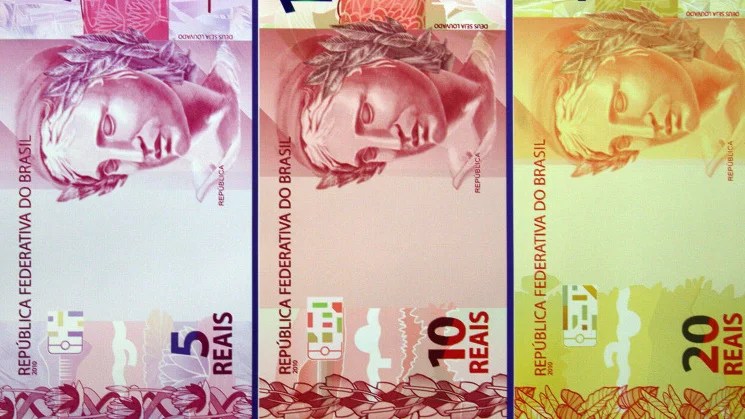
A remarkable true tale from the always-illuminating folks at Planet Money…
This is a story about how an economist and his buddies tricked the people of Brazil into saving the country from rampant inflation. They had a crazy, unlikely plan, and it worked.
Twenty years ago, Brazil’s inflation rate hit 80 percent per month. At that rate, if eggs cost $1 one day, they’ll cost $2 a month later. If it keeps up for a year, they’ll cost $1,000…
“How Fake Money Saved Brazil,” from @planetmoney and @NPR.
For an even more complete telling, listen to the podcast: “How Four Drinking Buddies Saved Brazil.”
* Oscar Wilde
###
As we follow the money, we might recall that it was on this date in 1941, in his State of the Union Address, the president Franklin D. Roosevelt outlined the Four Freedoms— the fundamental values of democracy: freedom of speech, freedom of worship, freedom from want, freedom from fear. These precepts were furthered by Eleanor Roosevelt, who incorporated them into the Preamble to the United Nations Universal Declaration of Human Rights.

“The only function of economic forecasting is to make astrology look respectable”*…

The pandemic economy has been strange and unpredictable from the get-go.
Throughout the past 14 months, the twists and turns have been surprising: The housing market boomed, the stock market soared, people got into day trading, everyone hoarded toilet paper, and lumber became a must-have. There’s been widespread disagreement about how much support from the government was needed, whether the country was doing too much or not enough, or whether help would come at all. We won’t know whether the country overshot or undershot the response for years, and there’s still uncertainty about what’s happening in the labor market, prices, and other areas. And the prevailing theme has been one that has nothing to do with the economy directly: As long as Covid-19 isn’t under control, the economy isn’t either.
“Having been a forecaster for 10 years, we were surprised all the time, because nobody has a crystal ball and particularly if you just pull out one data series, one month, there’s just no way,” said Claudia Sahm, a former Federal Reserve economist and now a senior fellow at the Jain Family Institute. “It’s going to be a wild ride; the data through the end of this year, they’re going to be tough.”
The country and the world are staring into a black box of uncertainty on the economy. It’s frustrating, but it’s also inevitable. Anyone who says they know exactly what is going on in the economy right now is lying. The same goes for anyone who says they know what’s going to happen next.
“Because of the unique nature of this crisis, there are going to be some swings,” said Mike Konczal, director of macroeconomic analysis at the Roosevelt Institute. “In a year, they’re going to be trivia questions, but right now we’re obsessing about them.”
Few people will probably remember two years from now that the price of used cars and trucks went up by 10 percent in April.
We know that the economy is different now than it was a year ago and that it will be different a year from now. What’s not clear is exactly how. And what we need now — including economists, experts, and policymakers — is the intellectual humility to recognize that’s the case.
“At this point, most things should be presumed temporary until proven permanent,” said Jed Kolko, chief economist at the jobs website Indeed.
It’s unnerving to admit what we don’t know, and the pandemic has been a real exercise in that. But after so long of staring into the abyss, maybe it’s time we embrace it…
Anyone who says they know exactly what’s happening in the economy is lying. Emily Stewart (@EmilyStewartM) explores that uncertainty and what it might mean: “The black box economy.”
* John Kenneth Galbraith
###
As we consult the stars, we might note that today is National Be a Millionaire Day. While many sources confirm this celebratory fact, there’s no real information on its origin. The term “millionaire” was coined in France around 1719 to describe speculators in the Mississippi Bubble who earned millions of livres in weeks before the bubble burst; it seems first to have appeared in the U.S. in 1786, when Thomas Jefferson wrote about the French… so the “holiday” surely dates from sometime after that.

You must be logged in to post a comment.