Posts Tagged ‘Drama’
“Comedy too can sometimes discern what is right”*…

What’s old is new again…
When Cardi B and Megan Thee Stallion released ‘WAP’ in August 2020, ‘conservative’ commentators such as Tucker Carlson expressed outrage that the song might corrupt ‘your granddaughters’; Alyssa Rosenberg in the Washington Post celebrated it as an ‘ode to female sexual pleasure’. The video featured the two long-lashed goddesses twerking their way through a gilded McMansion in fabulous candy-coloured outfits, like bethonged Disney princesses. The lyrics create a cluster of ambiguities: are the speakers supposed to be sex workers struggling to pay their college tuition and running in fear from ‘the cops’, or wealthy A-list celebrities? Or are they, as Black women in a white man’s world, both? Do they really want anyone but each other? Do they own the house through which they strut? The song mocks its listeners and viewers for yearning for these superior beings in their state of limitless desire. At the same time, its sly laughter invites us to feel, for a couple of minutes, part of their glittering, multicoloured world.
The song’s genius lies in its inventiveness: its mastery of rhythm, and its innovative abundance of metaphors for the ‘wet-ass pussy’ of its title. You come for the nasty, but you stay for the poetry. The two artists celebrate the power of their bodies to express desire and joy, but more fundamentally, they celebrate their gushing waterfalls of linguistic ‘flow’. The joke of the title hinges on the fact that language is both literal and metaphorical: one body part is used as a linguistic modifier for another. The most memorable lines contain no words that would be unsuitable for a nursery school sing-along, but provide brilliantly funny images: ‘Swipe your nose like a credit card’, ‘Get a bucket and a mop’, or – climactically – ‘Macaroni in a pot’. It’s wild and down to earth at the same time, and for ever changes the way you think about cooking spaghetti.
Ancient Athenian comedy of the fifth century BCE – mostly known to us through the work of Aristophanes – can be usefully compared to a number of different modern genres. Like traditional TV sitcoms, it featured typical or stereotypical characters, and showcased their ridiculous lust, avarice, stupidity and ambition. Like modern stand-up comedians or late-night TV hosts, comic poets included speeches in their plays in which they railed at the audience about the state of society and their personal grievances. Like Saturday Night Live, comedy in fifth-century Athens included caricatures of people who might well have been in the audience – such as Socrates, Euripides or the politician Cleon. Like The Simpsons or 30 Rock, the dialogue had a high rate of jokes per minute, and catered to multiple different audience sensibilities, including a taste for lavatory humour. As in Broadway musicals or on the Disney Channel, characters in lavish costumes were liable to burst into song and dance at any moment – although, unlike on Hannah Montana, the male characters wore large strap-on phalluses. Old Comedy anticipated modern sci-fi, and shows like The Good Place, in its willingness to carry out fantastical thought experiments (talking frogs, a city of birds, a singing chorus of metaphysically inclined clouds, or, weirdest of all, women with real political power), and considered their social and political repercussions. Like pantomime or Punch and Judy, it included formulaic riffs on falling over, violence and cross-dressing.
But the lush comic hip-hop of Megan Thee Stallion and Cardi B is one of the most useful modern analogues, because it illustrates the core element of Old Comedy that is most often obscured in contemporary Anglophone translations – the flow. Aristophanes, like the creators of ‘WAP’, was a musician, songwriter, choreographer and poet, and his linguistic effects depend, like theirs, on the artful manipulation of rhythm and sound in words and imagery. The poetic affinity between rap and Old Comedy is explored in Spike Lee’s film Chi-Raq, a hip-hop adaptation of Lysistrata set on the South Side of Chicago…
Aristophanes and rap: “Punishment By Radish,” from Emily Wilson (@EmilyRCWilson), the translator of a wonderful edition of The Odyssey.
* Aristophanes
###
As we LOL, we might we might send dramatic birthday greetings to Nathan Field; he was born on this date in 1587. A contemporary and colleague of Shakespeare, Field was– like the Bard– both a dramatist and an actor.
As an author, Field wrote alone (e.g., the comedy A Woman Is a Weathercock), and in collaboration with John Fletcher and Philip Massinger (e.g., the tragicomedy The Knight of Malta). As an actor he ended his career in the Kings Men, working alongside Shakespeare, where he appeared in Shakespeare’s plays and in Ben Jonson‘s Volpone and The Alchemist, among other productions.

“Playing bop is like playing Scrabble with all the vowels missing”*…
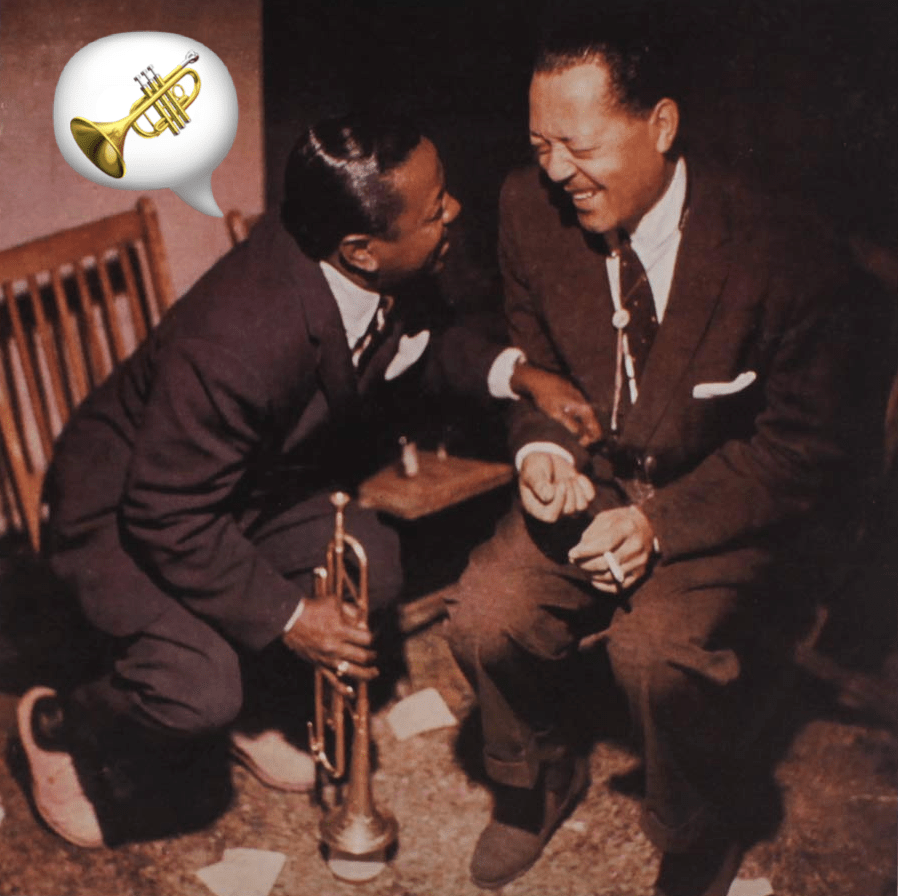
Jazz as a form of wit…
Jazz, like wit, can be broadly defined as surprising creativity. So does it follow that jazz musicians are a witty bunch?
I’ve wondered about this for longer than Kenny G has held an E-flat (45 minutes, for the record) but lacked a way to prove it.
There was some promising neuroscience research on the subject back in 2014 that linked conversation to trading fours. Both jawing and jamming involve “an exchange of ideas that is unpredictable, collaborative, and emergent,” the paper hypothesized. In other words, a riff is a riff.
That said, all the actual data was pretty flat. The researchers brought the musicians into the lab, wired them up, and let them noodle around while they watched the blood slosh through their brains via a functional MRI machine. It went to the same spots it would go in a conversation, they found, which was interesting as far as it went but didn’t go all that far.
So when I came across the book Jazz Anecdotes at Sellers & Newel, I knew this was what I was looking for. I immediately flipped my fMRI machine on Kijiji and grabbed a copy.
Jazz anecdotes, like jazz itself, aren’t usually transcribed. In the words of drummer Shelley Manne, “We never play anything the same way once.”
But bassist, writer, and editor Bill Crow combed through hundreds of interviews and biographies to pick just the juiciest bits, and the best display a virtuosic level of verbal dexterity. The book really slaps, as they say. There’s a whole chapter on pranks, and in said chapter there’s a whole section on Limburger cheese. (You can flip through a digitized version over at the invaluable archive.org here.)
Start with the nicknames, which alone are worth the price of admission. Fats, Shorty, and Slim were all physical descriptors. Cannonball Adderley was originally called Cannibal because of his voracious appetite — but one problem took care of the other as he rounded out.
William Randolph Cole was known as Colesy, which evolved into Cozy. Cozy, in turn, couldn’t remember names so he called everyone “Face” if they looked familiar, and then added the name of the instrument they played for Bass Face, Sax Face, and so on. Bassist George Mraz was called Bounce because he was a baaaad Czech. And bassist John Simmons got a rise out of trumpeter Oran “Hot Lips” Page by announcing at the bandstand, “Lady there at the door sent this letter to Mr. Warm Jaws.”
The greats get a chapter each, and they’re at their best when they’re playing off one another. Once John Coltrane started playing a solo, he’d just play and play —which irritated those who shared the bandstand. “I get involved in this thing and I don’t know how to stop,” he told Miles Davis, to which Davis suggested, “Try taking the saxophone out of your mouth.” Why did he play so long, Davis asked? “It took that long to get it all in.”
The pianist Errol Garner had a similar issue at a recording session in 1969. The red light in the booth flickered off, but he kept right on playing. “I couldn’t stop,” he said. “I wanted to find out how it would come out.”
The difference between live wit and recorded repartee is like the difference between fresh squeezed orange juice and the frozen concentrate. So leave the last words to Louis Armstrong, who refused to describe exactly what he did so well.
How did he define jazz, exactly? “Jazz is what I play for a living.”
Would you describe it as folk music? “Man, all music is folk music. You ain’t ever heard no horse sing a song, have you?”
Making it along as you go up: “The wit of jazz, and vice versa,” from Benjamin Errett (@benjaminerrett)
* Duke Ellington
###
As we improvise, we might recall that it was on this date in 1899 that Sarah Bernhardt became the first woman to portray Hamlet on film…
The French actress was certainly a force to be reckoned with. In 1899, she took over the Théâtre de Ville in Paris and renamed it the Théâtre Sarah-Bernhardt, which is, as one Lit Hub editor once put it, “basically cell phone providers in the early ’00s levels of confidence.” That same year, she premiered a new production of Hamlet, with herself in the title role—a production that she would eventually also take on tour. Critics were divided—not only was she a woman, but she was a woman in her mid-fifties!—but audiences were largely enthralled, and if nothing else, the performance is now legendary.
Bernhardt may not have been the first female Hamlet—that was probably 18th-century actor Charlotte Charke—but she was the very first to play the Prince of Denmark (a bro who didn’t even like sex, mind you) on screen. On October 1, 1900, the audience of the Paris Exposition (also known as the Exposition Universelle) was treated to Le Duel d’Hamlet, the very first known film adaptation of Hamlet—albeit one that is only a minute and a half long, comprising a single scene: the Act V duel between Hamlet and Laertes. The short was filmed only a year after Bernhardt first played the role; in it, she is 56. “She’s somber, quick, natural—easily expert with her sword and clearly used to dueling,” Robert Gottlieb wrote in a biography of the actress. “There’s nothing campy or feminine about her; she’s manly and she’s coolly resolved. This isn’t an exhibition of virtuoso acting—it’s modest, in fact. But it’s certainly a vindication of her right to perform the greatest of male roles, and a welcome clue as to how she pulled it off.” Indeed. Luckily, we have even more female Hamlets in our future.
LitHub
“There are five kinds of actresses: bad actresses, fair actresses, good actresses, great actresses, and Sarah Bernhardt.” – Mark Twain
“All poets write bad poetry. Bad poets publish them, good poets burn them.”*…

Thunderstorm with the Death of Amelia, by William Williams, 1784. Photograph © Tate (CC-BY-NC-ND 3.0).
Readers may recall an earlier nod to William Topaz McGonagall, widely considered to be the worst published poet in British history. McGonagall, best known for his widely-excoriated verse recounting of “The Tay Bridge Disaster,” distributed his poems, often about momentous events, on handbills and performed them publicly (often, it is reported, to cat calls and thrown food). And he collected his verse into volumes including Poetic Gems, More Poetic Gems, Still More Poetic Gems, Further Poetic Gems, and Yet Further Poetic Gems. Imagine your correspondent’s surprise and delight to find a learned appreciation of McGonagall’s place in poetic history:
Not unjustly, McGonagall is rarely mentioned without an epithet: some version of “the worst poet in the English language.” And by any reasonable account, any judgment based on the most universally shared values of poetics, prosody, and taste, there is little to admire in McGonagall. The rest of his corpus shares—replicates, really—the faults of “The Tay Bridge Disaster”: its lapses into bathos, its involuted syntactical structures, its rhymes so slanted as to be more or less horizontal.
There have been worse poets, of course, and as such it would be more accurate to describe McGonagall as the worst famous poet in the English language, a testament in part to the man’s powers of self-promotion and the caprices of literary history. But McGonagall’s notoriety still owes much to the singularly strange power of his own badness. There’s something, I think, in poems like “The Tay Bridge Disaster”—as well as McGonagall’s many poems on his great themes of death and destruction—that is worth examining; something that might redeem him, ever so slightly, from the annals of amusing semi-obscurity; something unsettling about his ostensibly blinkered artistic vision that might help to account for why he lingers as the patron saint of misbegotten verse…
On William Topaz McGonagall, the worst famous poet in the English language: “The Disaster Poet.”
(Readers will find a selection of McGonagall’s poems here.)
* Umberto Eco
###
As we bathe in bathos, we might spare a thought for the decidedly more-accomplished poet (and playwright, artist, biologist, theoretical physicist, and philosopher) Johann Wolfgang von Goethe; he died on this date in 1832. Probably best remembered these days for Faust, he was “the master spirit of the German people,” and, after Napoleon, the leading figure of his age.

“The fool doth think he is wise, but the wise man knows himself to be a fool”*…

Naeem Hayat as Hamlet, with the Shakespeare’s Globe company, performs to migrants in the Jungle refugee camp on 3 February 2016 in Calais, France
William Shakespeare lived in an age of uncertainty. His society was traversing a number of unpredictable challenges that spun from the succession of the heirless queen Elizabeth to the ascent of a new class of merchants. But the biggest issue had to do with religious conflicts. In the premodern world, religion provided absolute certainty: whatever we knew was implanted in our mind by God. We didn’t have to look any further. Once that system of beliefs started to collapse, Europe was left with a yawning gap. Religion no longer seemed capable to explain the world. René Descartes and Shakespeare, who were contemporaries, gave opposite answers to the sceptical challenge: Descartes believed that our quest for knowledge could be rebuilt and founded on indubitable certainties. Shakespeare, on the other hand, made uncertainty a leitmotiv of all his works, and harnessed its creative power…
Lorenzo Zucca considers the poet as a philosopher: “Much ado about uncertainty: how Shakespeare navigates doubt.”
Of possible parallel interest: an informative review of Scott Newstok’s How to Think Like Shakespeare: Lessons from a Renaissance Education.
* Shakespeare, As You Like It, Act 5, Scene 1
###
As we back the Bard, we might recall that it was on this date in 1600 that four plays, three by Shakespeare– Much Ago About Nothing, Henry V, and the source of today’s title quote, As You Like It— plus Ben Jonson’s Every Man in His Humour were officially entered into the Stationers’ Registry. Readers will recall that the copyright regimen was strict in Elizabeth’s time, as is now. But back then, copyright was literally that, the right to make a (first) copy: the Queen, concerned with sedition and determined to keep a tight rein on any and all published material in her realm, had decreed that no work could be printed in England without a license from the Stationer. In this particular instance all four plays were “stayed”–meaning that they were specifically noted in the registry as works not to be printed. The stay didn’t hold for long; within a few years, three of the four were published. Only one held out: for reasons scholars still debate, As You Like It didn’t appear in print until the famed First Folio edition of 1623.

“Children are not deceived by fairy-tales; they are often and gravely deceived by school-stories. Adults are not deceived by science-fiction ; they can be deceived by the stories in the women’s magazines.”*…

In the 1890s, empire building was in the air in New York, and magazine editors succumbed to the craze. As President Theodore Roosevelt sent troops to Cuba and the Philippines, the magazine men—they were nearly all men—had quieter plans to extend their influence. They used their brands to sell model homes, universities, and other offerings of middle-class life. It was, after all, the Progressive Era, when technological innovations and post-Victorian values were supposed to hasten the arrival of a more enlightened, egalitarian social order. Before the concept of branding even existed, these new magazine ventures represented an exercise in branding. But woven into this phenomenon lay a stealth traditionalism, a new way of packaging the often conservative, sometimes quixotic visions of a few titans of the press.
Editors Edward Bok (Ladies’ Home Journal), John Brisben Walker (Cosmopolitan), and S.S. McClure (McClure’s) saw a way to directly shape their readers’ class aspirations. In 1895 Ladies’ Home Journal began to offer unfrilly, family-friendly architectural plans in its pages. They were mainly colonial, Craftsman, or modern ranch-style houses, and many still stand today. The Cosmopolitan, as it was then known, advertised the Cosmopolitan University, a custom-designed college degree—for free!—by correspondence course. McClure’s magazine, the juggernaut of investigative journalism—home to Ida Tarbell’s landmark investigation of Standard Oil, among many other muckraking articles of the Gilded Age—began to plot an array of ventures, including a model town called McClure’s Ideal Settlement.
Cannily noting the trend for smaller, servantless suburban homes, Journal editor Bok [the grandfather of Harvard President Derek Bok] was selling more than home design. Every house should be occupied by a female homemaker, he decided, and every family should aspire to a simpler, more frugal way of life. The campaign rapidly succeeded. By 1916 the editors of the Journal claimed that thirty thousand of their homes had been built. Part of this was due to the Journal’s wide circulation—it was the first American magazine to surpass a million subscribers. Its sister publication, the weekly Saturday Evening Post, was a fixture of nearly every household…

“A Fireproof House for $5,000,” illustration by Frank Lloyd Wright in Ladies’ Home Journal, 1907
When the (male) proprietors of women’s magazines believed that their publications could change lives on a grand scale: “Editorial Visions.”
* C.S. Lewis
###
As we shape society, we might recall that it was on this date in 1914 that George Bernard Shaw’s Pygmalion premiered in London, featuring Mrs Patrick Campbell (for whom Shaw had written the role) as Eliza Doolittle.
The Greek myth of Pygmalion, who fell in love with one of his sculptures, was a popular subject for Victorian English playwrights, including one of Shaw’s influences, W. S. Gilbert, who had written a successful play based on the story, Pygmalion and Galatea, that was first presented in 1871. Shaw’s play in turn has been adapted numerous times, most notably as the musical My Fair Lady and its film version.

A Sketch Magazine illustration of Mrs. Patrick Campbell as Eliza Doolittle from April, 1914
You must be logged in to post a comment.