Posts Tagged ‘classical music’
“A phenomenon like Mozart remains an inexplicable thing”*…

And now there’s more of that extraordinary phenomenon to appreciate. Sonja Anderson, with big news…
A 12-minute piece of music composed by Wolfgang Amadeus Mozart has been discovered in a library in Germany. Researchers think the composer wrote the previously unknown piece—called Serenade in C—when he was a young teenager.
The composition was hidden in the holdings of Germany’s Leipzig Municipal Libraries—some 280 miles north of Salzburg, Austria, where Mozart was born in 1756. By the age of 5, he was a child prodigy who toured Europe performing for royals and aristocrats. As a teenager, he built a reputation as a composer, spending a few years in Salzburg and Vienna before moving to Italy in 1769.
Mozart probably wrote the recently discovered composition in the mid- to late-1760s, according to a statement from the Leipzig Municipal Libraries. Library researchers were compiling an edition of the Köchel catalog, a comprehensive archive of Mozart’s work, when they stumbled across a mysterious bound manuscript containing a handwritten composition in brown ink [pictured above].
The composition is attributed to “Wo[l]fgang Mozart.” The handwriting, however, is not Mozart’s, suggesting that the manuscript is a copy of the original composition. Researchers think it was made around 1780.
Serenade in C consists of seven miniature movements for a string trio (two violins and a bass), according to a statement from the International Mozarteum Foundation, a Salzburg-based nonprofit dedicated to Mozart’s life and work. The attribution to “Wo[l]fgang Mozart” indicates that the piece is from the composer’s youth, as he started regularly adding “Amadeo” to his name around 1769…
… In his early years… Mozart wrote many chamber works like Serenade in C, which his father recorded on a list of his son’s compositions. Many of these works were thought to have been lost to history, as Leisinger says in the statement. Fortunately, this particular piece was saved—thanks to the composer’s sister.
“It looks as if—thanks to a series of favorable circumstances—a complete string trio has survived in Leipzig,” Leisinger adds. “The source was evidently Mozart’s sister, and so it is tempting to think that she preserved the work as a memento of her brother. Perhaps he wrote the trio specially for her.”…
… The newly discovered Serenade in C has been renamed Ganz kleine Nachtmusik in the Köchel catalog (presumably in reference to Mozart’s famous serenade Eine kleine Nachtmusik)…
More than 250 years after a teenage Mozart wrote “Serenade in C,” a copy of the piece has surfaced: “This Lost Mozart Composition Hasn’t Been Heard for Centuries. Now, You Can Listen to It,” from @SmithsonianMag.
* Johann Wolfgang von Goethe
###
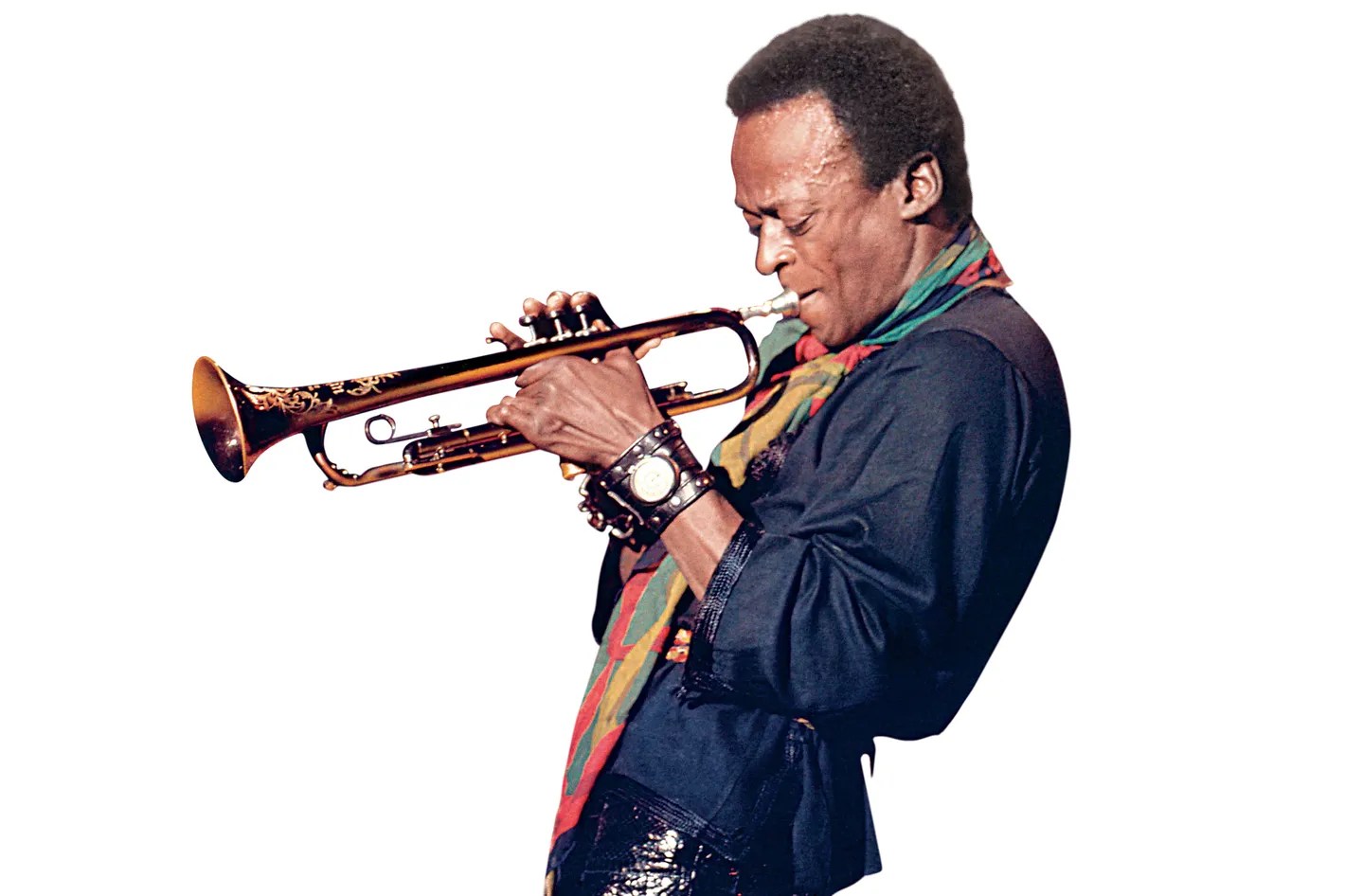
As we listen, we might spare a thought for Miles Davis; he died on this date in 1991. Rolling Stone described him as “the most revered jazz trumpeter of all time, not to mention one of the most important musicians of the 20th century.” Over a five-decade career (which began when he dropped out of Juilliard), Davis played bebop with Charlie Parker, paved the way for cool jazz with Birth of the Cool, pioneered hard bop, assembled a quintet (that included saxophonist John Coltrane and bassist Paul Chambers) and yielded ‘Round About Midnight, led a jazz orchestra (that recorded Kind of Blue among other albums), worked with bassist Ron Carter, pianist Herbie Hancock, drummer Tony Williams, and saxophonist Wayne Shorter to create the post-bop genre, and created jazz fusion with Bitches Brew.
In discussing Birth of the Cool, jazz great Azar Lawrence said of Davis what countless others have said of Davis and his other contributions: “It was such a phenomenal expression of artistry. It was like something created by Picasso or Bach or Mozart, or somebody of that stature of expression. It’s a foundational work and a musical landmark.”
“My spirit will arise from my grave”*…
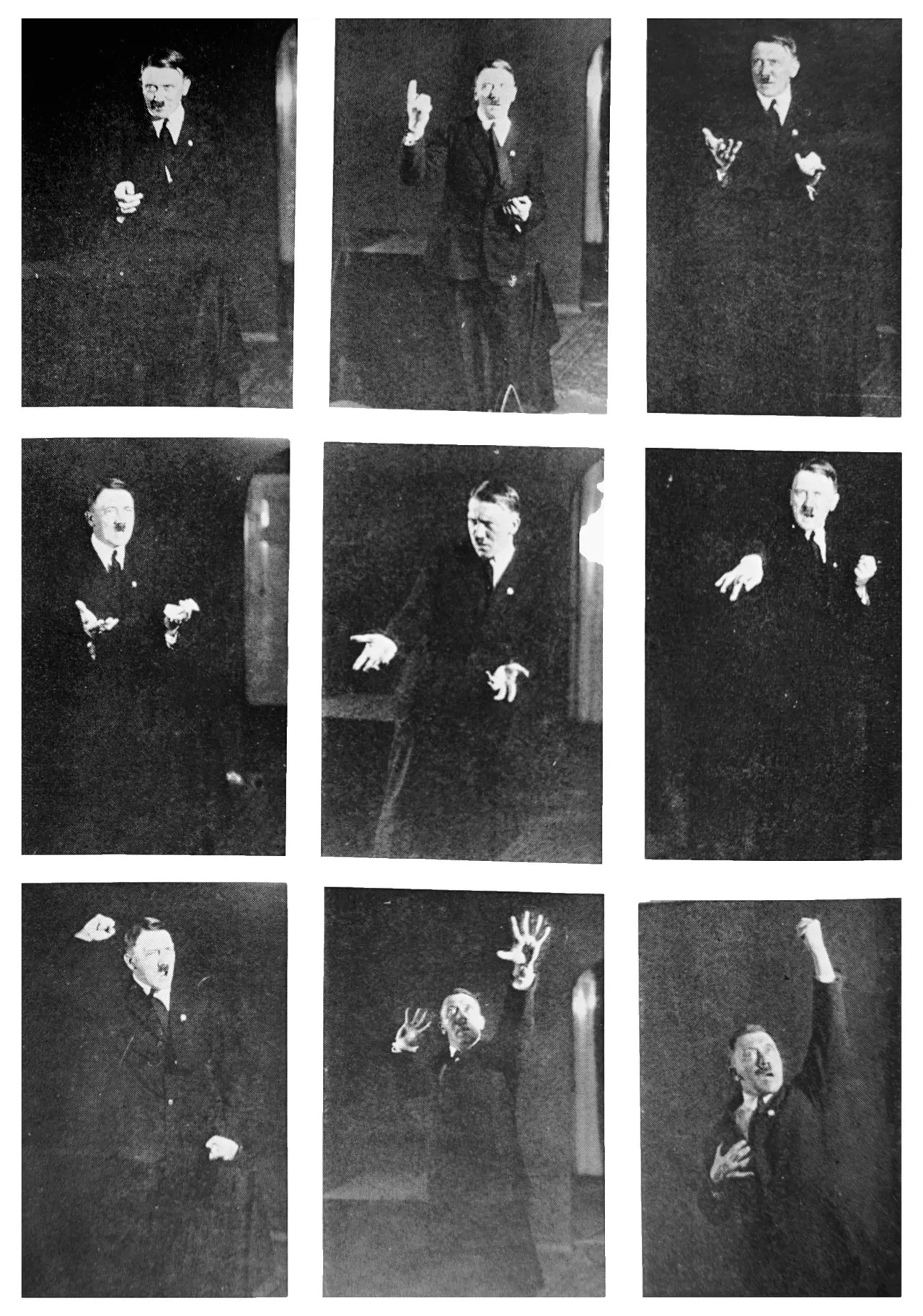
Hitler didn’t seize power; he was given it. As Adam Gopnik reports in a review of Tim Ryback‘s important new book, media lords thought that they could control him; political schemers thought that they could outwit him. The mainstream left had become a gerontocracy. And all of them failed to recognize his immunity to shame…
Hitler is so fully imagined a subject—so obsessively present on our televisions and in our bookstores—that to reimagine him seems pointless. As with the Hollywood fascination with Charles Manson, speculative curiosity gives retrospective glamour to evil. Hitler created a world in which women were transported with their children for days in closed train cars and then had to watch those children die alongside them, naked, gasping for breath in a gas chamber. To ask whether the man responsible for this was motivated by reading Oswald Spengler or merely by meeting him seems to attribute too much complexity of purpose to him, not to mention posthumous dignity. Yet allowing the specifics of his ascent to be clouded by disdain is not much better than allowing his memory to be ennobled by mystery.
So the historian Timothy W. Ryback’s choice to make his new book, “Takeover: Hitler’s Final Rise to Power” (Knopf), an aggressively specific chronicle of a single year, 1932, seems a wise, even an inspired one. Ryback details, week by week, day by day, and sometimes hour by hour, how a country with a functional, if flawed, democratic machinery handed absolute power over to someone who could never claim a majority in an actual election and whom the entire conservative political class regarded as a chaotic clown with a violent following. Ryback shows how major players thought they could find some ulterior advantage in managing him. Each was sure that, after the passing of a brief storm cloud, so obviously overloaded that it had to expend itself, they would emerge in possession of power. The corporate bosses thought that, if you looked past the strutting and the performative antisemitism, you had someone who would protect your money. Communist ideologues thought that, if you peered deeply enough into the strutting and the performative antisemitism, you could spy the pattern of a popular revolution. The decent right thought that he was too obviously deranged to remain in power long, and the decent left, tempered by earlier fights against different enemies, thought that, if they forcibly stuck to the rule of law, then the law would somehow by itself entrap a lawless leader. In a now familiar paradox, the rational forces stuck to magical thinking, while the irrational ones were more logical, parsing the brute equations of power. And so the storm never passed. In a way, it still has not…
Both the review and the book on which it focuses are eminently worth reading in full: “The Forgotten History of Hitler’s Establishment Enablers” (possible paywall; in which case, archived copy here), from @adamgopnik in @NewYorker.
* Hitler, as quoted in a letter from von Ribbentrop (to Churchill and Atlee) sent just before von Ribbentrop was captured at the end of the war
###
As we hear the echo, we might spare a thought for Ludwig van Beethoven; he died on this date in 1827. A crucial figure in the transition between the Classical and Romantic eras in Western music, he remains one of the most famous and influential of all composers. His best-known compositions include 9 symphonies, 5 concertos for piano, 32 piano sonatas, and 16 string quartets. He also composed other chamber music, choral works (including the celebrated Missa Solemnis), a single opera (Fidelio), and numerous songs.
Relevantly to the piece above…
Beethoven admired the ideals of the French Revolution, so he dedicated his third symphony to Napoleon Bonaparte… until Napoleon declared himself emperor. Beethoven then sprung into a rage, ripped the front page from his manuscript and scrubbed out Napoleon’s name. Some modern reproductions of the original title page have scrubbed out Napoleon’s name to create a hole for authenticity’s sake!
Beethoven’s temper and Symphony No. 3 ‘Eroica’
But, of course, it was too late…

“Now there is music from which a man can learn something”*…
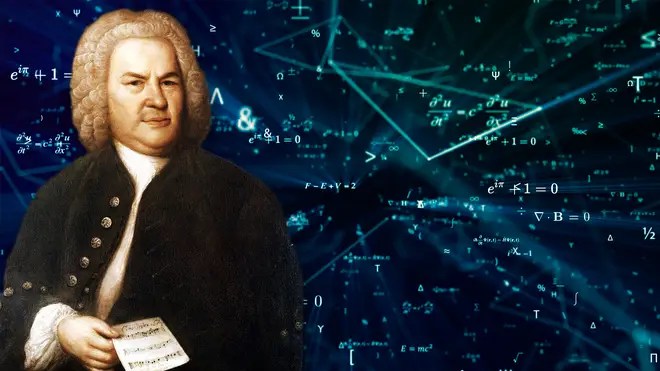
As Sienna Linton reports, mathematicians have analysed hundreds of Bach’s works, from toccatas to preludes, cantatas and chorales, and discovered his music may be even more impressive than we realized…
It’s no secret that J.S. Bach is one of the greatest composers of all time. Father of the fugue and organ music master, he was an immensely prolific musician, writing more than 1100 pieces in his lifetime.
Bach’s intricate and detailed approach to melody and harmony inspired generations of composers that followed. His compositional technique continues to form the musical foundation for budding musicians around the world, of all genres.
The composer himself had an intensely mathematical brain. He would sign his name in music, and would even hide little references to the numbers 14 and 41, which acted as his numerical signature, in his works.
Now, a mathematical study has revealed that Bach’s music may be even more intricate than we thought.
Researchers from the University of Pennsylvania have analysed hundreds of pieces of Bach’s music to investigate how well these works can convey information – and the results are fascinating for both the mathematically and musically inclined…
Fascinating: “Bach’s true mathematical genius has been revealed in new study,” from @ClassicFM.
See also: “Is Bach best?” and of course, Gödel, Escher, Bach.
* W. A. Mozart, on hearing Bach motets in Leipzig
###
As we glorify the GOAT, we might send him transcendent birthday greetings: Johann Sebastian Bach was born on this date in 1685 (at least according to the O.S. calendar by which he lived; his birthday is May 31 according to our calendar). Where to start? Well, there’s his orchestral music such as the Brandenburg Concertos; solo instrumental works such as the cello suites and sonatas and partitas for solo violin; keyboard works such as the Goldberg Variations and The Well-Tempered Clavier; organ works such as the Schubler Chorales and the Toccata and Fugue in D minor; and choral works such as the St Matthew Passion and the Mass in B minor.
Here’s the Netherlands Bach Society for All of Bach. As their name implies, there’s much more where this comes from…
“The real art of conducting consists in transitions”*…
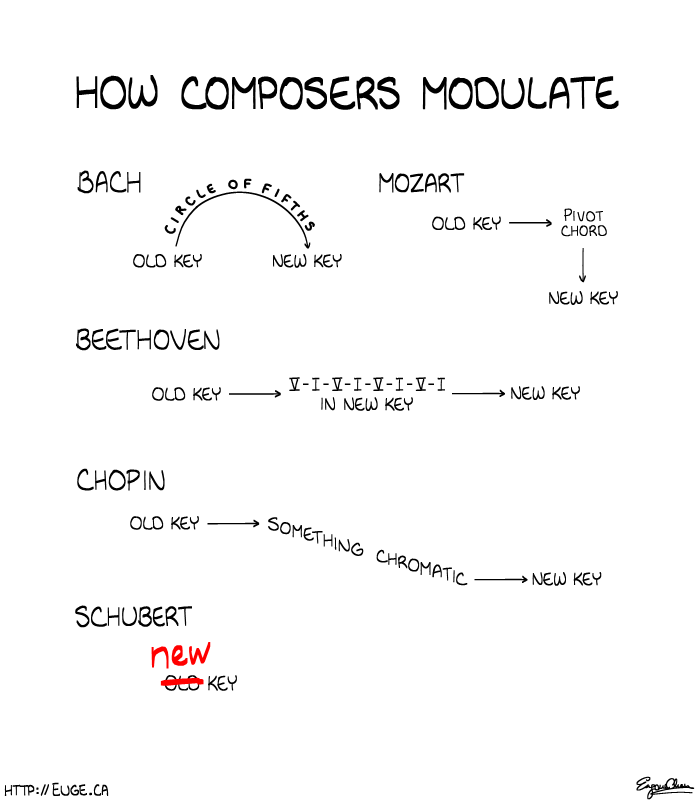

More in Eugene Chan‘s wonderful series Don’t Shoot the Piano Player. [TotH to friend SS.]
* Gustav Mahler
###
As we marvel at music, we might send well-composed birthday greetings to Henry Lawes; he was born on this date in 1596. The leading English songwriter of the mid-17th century (and brother of composer William Lawes), Henry worked both for Charles I and (roundhead) John Milton (for whom he composed Arcades and arranged for Milton to write the masque Comus). At the Restoration Lawes was reinstated in his old positions in the King’s Musick; he was buried in the cloisters of Westminster Abbey after his death in 1662.
“I was obliged to be industrious”*…

There’s an old joke that goes something like this: Mozart, on dying too young, finds himself in Heaven. He’s approached by God, who suggests that Mozart might become the conductor of Heaven’s orchestra. Mozart, taken aback, exclaims, “I’m flattered Lord, but surely Kapellmeister Bach is here and would be a more appropriate choice.” to which God responds, “I am Bach.”
Tyler Cowan with an argument that the joke isn’t so far off…
I’ve been reading and rereading biographies of Bach lately (for some podcast prep), and it strikes me he might count as the greatest achiever of all time. That is distinct from say regarding him as your favorite composer or artist of all time. I would include the following metrics as relevant for that designation:
1. Quality of work.
2. How much better he was than his contemporaries.
3. How much he stayed the very best in subsequent centuries.
4. Quantity of work.
5. Peaks.
6. Consistency of work and achievement.
I see Bach as ranking very, very high in all these categories. Who else might even be a contender for greatest achiever of all time? Shakespeare? Maybe, but Bach seems to beat him for relentlessness and quantity (at a very high quality level). Beethoven would be high on the list, but he doesn’t seem to quite match up to Bach in all of these categories. Homer seems relevant, but we are not even sure who or what he was. Archimedes? Plato or Aristotle? Who else?…
In any case, a reminder that we should all be listening to more Bach: “Is Bach the greatest achiever of all time?“, from @tylercowen.
* Johann Sebastian Bach
###
As we muse on magnificence, we might send melodic birthday greetings to Girolamo Frescobaldi; he was born on this date in 1583. A composer and keyboard virtuoso, he created some of the most influential music of the 17th century. His work influenced Bach, Johann Pachelbel, Henry Purcell, and other major composers.
Indeed, Bach is known to have owned a number of Frescobaldi’s works, including a manuscript copy of Frescobaldi’s Fiori musicali (Venice, 1635), which Bach signed and dated 1714 and performed in Weimar the same year.

,_engraving_by_Claude_Mellan_(1619).jpg)
You must be logged in to post a comment.