Posts Tagged ‘Bob Dylan’
“Here’s the church, here’s the steeple, open the doors, and see all the people”*…

It’s Sunday, and war is raging (again) in the Middle East. This time around, the strains of fundamentalist Christian thought are hard to miss in the justifications of the role of the U.S. in the conflict. The widely-circulated reports of troops being briefed that the war in Iran is meant to hasten the Biblical End Times may or may not be true. But it seems clear that the millennial contingent in Trump’s movement is all in on an apocalypse. (And here.) As the right-wing site Media Matters reports, “Christian media figures have claimed that the Iran war could signal ‘the second coming’ or the ‘End Times’ and said ‘we are watching incredible prophecy in this time come to pass’.”
Tal Lavin has reached back to the work he did for his book Wild Faith to help us understand…
As chaos and violence break out across the Middle East in a war led by the US with Israel as junior partner, I wanted to revisit my research on Christian apocalyptic prophecy… about the evangelical Christians eagerly looking forward to the end of the world—and influencing foreign policy to bring it closer. It’s difficult to conceive of willful courting of disaster for religious reasons, but decades of modern Christian prophecy eagerly foresee mass bloodshed in the Middle East as a prelude to Christ’s triumphant return. Evangelicals of this stripe form a crucial part of Trump’s base and governing coalition…
Eminently worth reading in full: “Yearning for the Apocalypse,” from @swordsjew.bsky.social.
And lest we think that this inveighling is in any way unprecedented, Matthew Avery Sutton, reminds us that there’s a long history of politics using religion (and vice versa). In an excerpt from his new book, Chosen Land: How Christianity Made America and Americans Remade Christianity, he tells the story of Reconstuction, during which churches were mobilized on both sides of the divide-that-never-went-away…
… In the aftermath of the Civil War, federal leaders sought help from Christian groups… as they sought to reassert their power across the entire United States. The US Army had won on the battlefields, and now governing authorities and their protestant collaborators sought to secure the peace. They aimed to reconstruct the nation, to rebuild Americans’ shattered sense of their nation’s exceptional history and manifest destiny, and to reinvigorate their commitment to the United States’ Christian mission. But to succeed, policymakers knew they needed to limit dissent—including religious dissent.
Christian activists played key roles in every part of postwar reconstruction. In the South, Black ministers and White missionaries welcomed the formerly enslaved into the faith and worked with them to establish independent social and political lives. Defeated Southern Whites launched a multi-generation effort to defend their treason by reimagining the causes of the Civil War and God’s role in it. In the West, a series of Indian wars led to the US government’s creation of a comprehensive reservation system, where government-sponsored missionaries sought to Christianize tribes and “civilize” their children. In Utah Territory the US government cracked down on the Church of Jesus Christ of Latter-day Saints and its impressive theocracy, seeking to quell religious dissent.
Across the nation, Reconstruction policies provided new opportunities for church leaders in collaboration with the government to impose their ideas and values on the land and its peoples. Protestant activists believed that they alone had the tools and expertise to integrate Black and Native peoples, former Confederates, and religious dissenters into the body politic, while bringing healing and reconciliation to all Americans on their terms. Rocked by the split over slavery and then the war, they worked to build unity by identifying common threats and enemies and organizing Christians against them. Their actions demonstrated that after the conflict, just as before, the free exercise clause did not apply to all equally. But minority groups constantly challenged the power of mainstream Christian leaders…
… Only about one-third of enslaved Americans considered themselves Christian at the start of the Civil War. But in the Reconstruction era Black church going skyrocketed. And just about all of those who converted chose to attend Black-led churches. The days of Southern Black Christians submitting to second-class treatment in the house of the Lord had ended. In urban areas, African Americans could usually join churches that Black activists had founded before the war. In rural areas, they had fewer options. They sometimes had to settle for makeshift meetings in vacant buildings or arrange outdoor services until they could build rudimentary houses of worship.
Black clergy became some of the strongest advocates for full equality and rights in the postwar South. Seeing Jesus as a liberator, they aimed to make the egalitarianism of the gospel and the Declaration’s line that “all men are created equal” the reality in the United States. Many engaged directly in politics, understanding that while slavery might have ended, securing political equality required vigilance…
… Black ministers’ political engagement made them targets of violence. Members of the Ku Klux Klan, a [Protestant-led] terrorist organization founded by Southern Whites shortly after the war, burned down churches and threatened Black activists. A journalist testified to the US Senate about his interview with a minister. While “he had been preaching on the circuit,” Klansmen dragged the preacher from bed in the middle of the night and “beat him severely.” They “told him that if he returned to the county he would suffer for it.” This was one example of many. As racial violence escalated in the South, serving as a minister proved dangerous…
… Historian, sociologist, and Black activist W.E.B. Du Bois summarized in 1903 the role that churches played in Black life, especially in the postwar South. “The Negro church of today is the social centre of Negro life in the United States,” he wrote, “and the most characteristic expression of African character.” Postwar Black churches, as Du Bois understood, represented the heart of Black efforts to secure social, political, and religious equality. Church leaders had engineered the Christian faith into a tool of liberation, which made them a threat to the White Christians of the South and much of the rest of the United States.
In addition to working to suppress Black political and religious power, many Southern Whites launched a quasi-religious campaign to reshape the memory of the Civil War. Rather than acknowledge their deep investment in slavery, they recast the conflict as a tragic clash between two honorable forces—the North fighting to preserve the Union, and the South struggling to defend local autonomy and states’ rights. The authors of this revisionist account reduced slavery to a secondary issue, incidental to the “real” causes of the war. As a result, by war’s end, many White Southerners felt they had no reason to repent, no moral reckoning to face, and no obligation to embrace Black equality or suffrage. For them, the war had simply preserved the Union and, almost as an afterthought, ended slavery. Nothing more.
Christianity became central to this new Southern narrative. In defeat, White Southerners cast themselves in the role of Christ, imagining their suffering as redemptive. They claimed they had sacrificed for the greater good of the nation, their values—chivalric protection of White women, paternalistic care for those they enslaved, and Christian devotion—positioned them as the rightful moral leaders of the country. In their view, God had chosen them to guide the nation toward righteousness, but first he had humbled and purified them through the bloodshed of war…
Also eminently worth reading in full: How Christianity Was Used By the Powerful and the Marginalized to Shape Post-Civil War America,” from @literaryhub.bsky.social.
We are reminded why our founding fathers– so many of them, Deists— so wisely insisted on freedom of religion and separation of church and state.
Apposite: “The ‘Straight White American Jesus’ podcast covers the history, philosophy, theology, and politics of Christian nationalism” (from Boing Boing)
Also, (under the general heading “things aren’t always what they seem”): “The Iran War’s Most Precious Commodity Isn’t Oil,” (gift article from Bloomberg)
And finally: only vaguely related, but fascinating: “Preached Whales“– (landlocked) Central European pulpits shaped like fish, whales, and boats.
* classic children’s fingerplay rhyme
###
As we celebrate separation, we might recall that it was on this date in 1965 that “Subterranean Homesick Blues” by Bob Dylan was released.
Johnny’s in the basement, mixin’ up the medicine / I’m on the pavement, thinkin’ about the government…
The opening sequence of D. A. Pennebaker‘s Dont Look Back (the apostrophe is absent in the title… and yes, that’s Allen Ginsberg in the background)
“Power tends to corrupt, and absolute power corrupts absolutely”*…
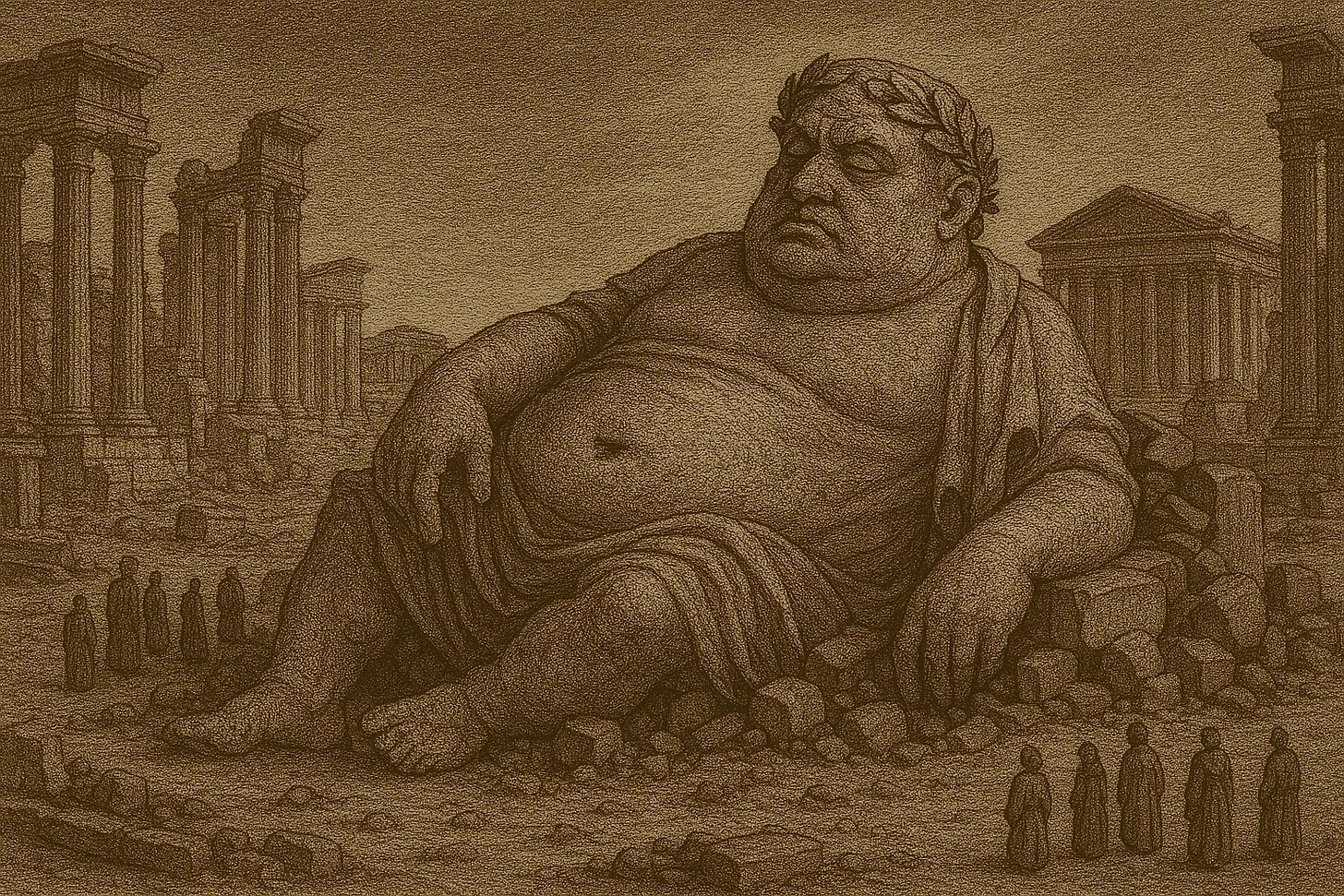
The estimable Henry Farrell has re-posted a (slightly revised) piece that was sub-linked in an early (R)D– a compelling argument that “we need, right at the moment, to think very clearly about how power is won or lost”…
… The current U.S. president is looking to seize power that he clearly is not entitled to under the law and the constitution, and that will usher through some kind of regime change if he succeeds. Many people are trying to resist. What are Trump’s strengths and weaknesses? What are the strengths and weaknesses of those who want to oppose him?
There’s a simple account of power that I think is useful here. It is developed in this paper by the late Russell Hardin, but really descends from David Hume’s understanding of politics.
The fundamental argument is this: that power in modern societies depends on social coordination. That is just as true of aspiring authoritarians like Trump as of the people who want to mobilize against him. As Hume says (quoted in Hardin):
No man would have any reason to fear the fury of a tyrant, if he had no authority over any but from fear; since, as a single man, his bodily force can reach but a small way, and all the farther power he possesses must be founded either on our own opinion, or on the presumed opinion of others.
Those who want to win power can only do so by persuading others. All tyrants must worry that their grip on power rests on such opinion. Hardin:
As a contemporary lawyer puts this argument: “No state could possibly compel people to obey all these rules at gunpoint; there would not be enough soldiers and policemen to hold the guns (a sort of Orwellian vision of society), they would have to sleep sooner or later, and then anarchy might break out.”
Equally, even if the people might overwhelm the tyrant if they ever joined together, it is very hard for them to organize against him, especially in a fully developed authoritarian state.
That is why authoritarian rulers devote a lot of time to preventing unrest from breaking out. Their best strategy for survival is to actually be popular. But that is hard to keep up. Acceptable substitutes include preventing people from discovering how unpopular the regime is, controlling media (to prevent coordination), and deploying the threat of physical violence to intimidate.
The problem with all of these strategies is that the ruler can do none of it on their own. Even the threat of violence, when looked at closely, requires some degree of willing coordination among the soldiers and policemen. That is why dictators are so careful about how they treat their armed forces. Authoritarians need to worry about the masses, but even more about their own coalitions.
More generally: struggles for power are struggles over the means of coordination. Who is capable of coordinating better, wins. And want-to-be authoritarians and mass publics face different coordination problems.
If you are an aspiring authoritarian, your strategy is to persuade others that they need to be part of your coalition. Hardin (this time on Adam Smith):
In a competitive world of pastoralists, one benefits best from association with the most powerful tribe. Hence, if someone rises to capable leadership with [sic] a tribe, others will be attracted to join with it. The result eventually will be remarkable power in the control of the leader of the tribe. Combination for the sake of survival then makes it possible not merely to survive but to thrive and even to plunder.
In more modern circumstances, your best strategy as an aspiring tyrant is likely to convince others (a) that they do live in a society of competing groups, and (b) that the smart money will always be on joining the dominant group, and not being one of the dominated ones.
Hardin continues:
This is essentially an argument from coordination. We coalesce because it is individually in our interest to do so as long as others do so as well. What we need to guide is in coalescing with others is merely the evidence of sufficient leadership and sufficient members to make our joining them clearly beneficial.
That, however, isn’t quite right. The authoritarian who wants to build a ruling coalition needs not only to make her success seem like a fait accompli. She also needs to persuade others that they will prosper rather than suffer from joining. The aspiring authoritarian needs to persuade allies that she (and they) will predate on outgroups, and that she will not predate on the allies themselves.
That process of persuasion becomes more difficult, the more unbounded the ambitions of the wannabe authoritarian are (I lay out a version of this argument here, in a paper that began from a conversation with Hardin and Margaret Levi a quarter of a century ago). The more powerful and unruly the authoritarian becomes, the more readily they can make promises or threats. Equally, the less credible those promises or threats become, both to allies and to enemies.
Absolute power implies absolute impunity: if I enjoy such power, I have no incentive to behave trustworthily to anyone. For just the same reason, no-one has any incentive to trust me. You will not believe my promises, and you may fear that if you give in to my threats, you will only open yourself to further abuse. Thus – as I, as an aspiring authoritarian move closer to unbounded control, I need to artfully balance the benefits that my power can bring to my allies with the fear those allies may reasonably have over what happens should that power be turned against them.
The problem faced by mass publics is different. For all the language about the ‘tyranny of the masses,’ they find it difficult to coordinate on rewarding friends and punishing enemies. That makes them less likely to go bad, at least in the way that tyrants can go bad. But it also makes it more difficult for them to coordinate against incipient tyranny, even when they know that everyone would be better off if they did.
On the one hand, under some circumstances, the costs of action may be quite low. If protest is cheap, then protestors are playing a nearly pure coordination game, where everyone will resist if they reasonably assume that everyone else will resist too. Hardin:
coordination may so greatly reduce costs that the latter are almost negligible, so that the slightest moral commitment may tip the scales toward action. Just as it would be odd for many Americans in communities in which voting is easy to balk at the minor cost in inconvenience, so it might seem odd for many workers or soldiers or others to balk at joining a crowd to march on the palace or the Bastille. This is not identical to a multiple coordination problem, such as that in the driving convention, in which one simply wants to go with the majority. In the revolutionary coordination, one has an active preference between the outcome of full attack and that of no attack. Still, one prefers to attack if enough others do and not to attack if enough others do not.
On the other, rulers and aspiring rulers can recognize this risk and counter-attack.
It was perhaps the startling ease with which spontaneous revolutions took control in cities that led the French under Thiers to put down the Paris Commune with such thoroughgoing brutality as to make it seem more nearly like murder than warfare. The answer to the coordination explanation of revolutionary action is draconian force. This lesson of the Commune has been learned well by many later regimes and leaders in various places, such as the Nazis in Czechoslovakia, Stalin in the Soviet Union, Pinochet in Chile, and Videla in Argentina, with their harsh, blanket suppression of dissenters and potential dissenters. They raise the likely costs of revolutionary activity enough to change its structure. … If the old state raises the costs enough to individuals for revolutionary activity, it overcomes the power of coordination to reduce the costs of revolutionary activity. It forces potential revolutionaries to see their problem overwhelmingly as a prisoner’s dilemma in which free-riding is in the individuals’ interest.
This helps explain some of the actions of Trump and those around him. Their approach to both universities and law firms has been to make simple coordination seem like a prisoner’s dilemma, by picking off opponents, one by one, and by trying to create a common understanding that collective resistance is useless, since your potential allies are likely to defect. The early decision of one extremely prominent law firm, Paul Weiss, to defect, shaped common expectations so that several others rushed immediately to defect too, for fear that they would be stranded amidst the dominated group, rather than joining the dominating coalition in a subordinated role.
To bring the different strands of the argument together, Trump’s strategy has been much less effective than it might have been. Trump has shown he is unwilling to stick by deals. Law firms that have submitted find that they are on the hook for far more than they bargained for. Columbia University, after making humiliating and profound concessions, finds that it is expected to make far greater ones, with no guarantee that even these will satisfy the Trump administration’s demands
As a whole body of research on “tying the king’s hands” argues, independent actors will prefer to flee monarchs who refuse to be bound rather than to cooperate with them, because they know that such monarchs can’t be trusted. Any deal that they make can later be un-made, and probably will be, if unmaking it is to the king’s advantage. The best option may be not to submit, especially if you believe that others are similarly unwilling to comply. This may, in effect, turn what was a prisoner’s dilemma (in which everyone’s best strategy is to defect) back into a nearly pure coordination game again, allowing easier collective resistance.
Or, it may not. If people don’t have reason to believe that others will stand up, then they still are unlikely to stand up themselves.
This then, gives us a simplified but useful understanding of where we are right now. The good news is that the Trump administration is playing its hand very badly. If Trump had been more willing to accept defectors into his camp, by sticking to deals that gave them something worth having, he would be in a much stronger situation than he is at the moment. Furthermore, and somewhat less obviously, this may also disrupt his own existing coalition. Wall Street, for example, may worry that it is next for the chopping block. Silicon Valley the same.
The bad news is that the opposition is much more disorganized than it ought to be. Coordination is bolstered by shared knowledge that others will coordinate too. We don’t have that, in part because of lack of leadership, in part because of a media landscape that makes it difficult to generate such shared knowledge. Remember Hume’s phrase about the “presumed opinion of others.” Our presumptions about what other people think can play an extraordinarily powerful role in shaping how we ourselves think, and what we are prepared to do. And in a country where such presumptions can be grossly skewed, it can be very hard to generate coordinated action. Finally, exactly because the opposition is disorganized, and because humans are human, it faces its own collective version of Trump’s temptation to humiliate and subjugate defectors from the other side, rather than welcoming them in.
The strategic implications for what to do are not surprising. Leadership is crucial. It is really, really hard to make a coalition cohere if the plausible leaders abdicate. More generally, figure out how to generate common knowledge that will enable coordination. Protests – especially if they are widespread, and especially if they happen in unusual places, or involve surprising coalitions can help generate information cascades. But getting media coverage and broader conversation is important.
Welcome in the strayed sheep, and work on widening the cracks in the other coalition. Leopard-face-eating memes may feel personally satisfying, but they usually do not ease the process of converting disillusioned opponents into active allies. As Adam Przeworski says, the Polish coalition to push back against the populists only succeeded when people who were ferociously divided over a moral issue agreed to make common cause.
Crucially, the parties forming the alliance agreed not to confront the major issue that divided them: abortion. They agreed that defending democracy was more important than whatever values divided them, and that conflicts over abortion would be managed once victory over PiS was secured. Hence, both the opponents and the supporters of the freedom of choice could promise their respective electorates that they would promote their values if democracy was restored, while claiming that the immediate task was to restore it.
If power involves coordination, coordinate! Help build your coalition as far as it can go. Do everything you can to minimize defections from it, and to maximize defections from the other side. Take advantage of the opposition’s vulnerabilities and mistakes – especially the trust problems that are likely to flourish in a coalition around an actor who aspires to untrammeled power and is deeply untrustworthy.. Assume that the other side is trying to attack your own vulnerabilities, and mitigate as much as possible. And do what you can now; things are likely to get much harder, very quickly, if the opposition’s victory becomes a self-confirming expectation…
The respective vulnerabilities of tyrants and crowds: “Absolute power can be a terrible weakness,” from @himself.bsky.social.
Pair with: “Power always reveals.”
And apposite: “Two scholars ask whether democracy can survive if AI does all the jobs,” gift article from The Economist.
###
As we get it together, we might recall that it was on this date in 1962 that Bob Dylan appeared for the first time at Carnegie Hall in New York City as part of a hootenanny which included his first public performance of “A Hard Rain’s a-Gonna Fall.”
“The best way out is always through”*…

Adam Mastroianni (and here) with a diagnosis of the malaise (“Borg vibes,” as he calls them) that so many of us feel– and a remedy (or, at least, a constructive response)…
Everyone I know has given up. That’s how it feels, at least. There’s a creeping sense that the jig is up, the fix is in, and the party’s over. The Earth is burning, democracies are backsliding, AI is advancing, cities are crumbling—somehow everything sucks and it’s more expensive than it was last year. It’s the worst kind of armageddon, the kind that doesn’t even lower the rent.
We had the chance to prevent or solve these problems, the thinking goes, but we missed it. Now we’re past the point of no return. The world’s gonna end in fascists and ashes, and the only people still smiling are the ones trying to sell you something. It feels like we’re living through the Book of Revelation, but instead of the Seven Seals and the apocalyptic trumpeters, we have New York Times push notifications.
On the one hand, it’s totally understandable that these crises would make us want to curl up and die. If the world was withering for lack of hot takes, I’d assemble a daredevil crew and we’d be there in an instant. But if history is heading more in the warlords ‘n’ water wars direction, I’m out.
On other hand, this reaction is totally bonkers. If our backs are against the wall, shouldn’t we put up our dukes? For people supposedly facing the breakdown of our society, our response is less fight-or-flight and more freeze-and-unease, frown-and-lie-down, and despair-and-stay-there.
Maybe humanity has finally met its match, but even though people talk like that’s the case, the way they act is weirdly…normal. Every conversation has a dead-man-walking flavor to it, and yet the dead men keep on walking. “Yeah, so everything’s doomed and we’re all gonna die. Anyway, talk to ya later, I gotta put the lasagna in the oven.” If things are just about to go kaput, why is everyone still working 60 hours a week?
Something strange is going on here, and I’d like to offer an explanation in two parts: a wide circle, and a bullet with a foot in it…
Eminently worth the read: “Use this magic bullet to shoot yourself in the foot,” from @mastroianni.bsky.social.
Pair with: “Apocalypse 24/7” (an excerpt from Roy Scranton‘s Impasse: Climate Change and the Limits of Progress)… a deeper, darker– but sadly, all-too-credible– dive into the context that Mastrioanni sketches… while (as your correspondent reads it, anyway) it doesn’t contradict Mastroianni’s prescription (“pick up a sponge and start washing”), it reminds us just how much grime there is to get through… all the more reason to get started…
* Robert Frost
###
As we grapple, we might recall that it was on this date in 1965 that Bob Dylan’s “Positively 4th Street” was released. Dropping between Highway 61 Revisited and Blonde on Blonde, as the follow-up to Dylan’s hit single “Like a Rolling Stone“, it was not included on either album. But it reached No. 1 on Canada’s RPM chart, No. 7 on the U.S. Billboard Hot 100, and No. 8 on the UK Singles Chart, and has been ranked by Rolling Stone No. 203 in their 500 Greatest Songs of All Time list.

“Look out kid / It’s somethin’ you did / God knows when / But you’re doin’ it again”*…

Feeling for ferment, as we are in fraught times like these, we might wonder if something is brewing… and we might cast our eyes back to a somewhat analogous time…
Ben Arthur revisits a transformative moment in American culture through the lens of J. Hoberman’s Everything Is Now: The 1960s New York Avant-Garde—Primal Happenings, Underground Movies, Radical Pop….
… A few months before “Subterranean Homesick Blues” was released, Allen Ginsberg and Ed Sanders of the Fugs formed LeMar, short for Legalize Marijuana. The organization formed to push for the active use of marijuana, as well as to combat police oversight. On July 29, 1965, the New York Police Department took in two LeMar members (Jack William Martin III and Dale Wilbourne), but the man they really wanted was Ginsberg. When offered a lighter sentence in exchange for information on the poet, Martin declined to rat. His bail jumped from $5,000 to $100,000.
On August 11, LeMar had planned a benefit for their two fallen comrades at the Broadway Central, a sprawling hotel between the East and West Village. On the program was Jack Smith’s glamorous, experimental drag film Normal Love, and Barbara Rubin’s Allen for Allen,a tribute to her muse/lover. The Fugs were to play, along with the Falling Spikes, a garage rock band featuring John Cale, Lou Reed, and at one point Tony Conrad. Allen Ginsberg had poems to read, along with William S. Burroughs, Piero Heliczer, and Andrei Voznesensky.
The event never took place: the Great Bust finally happened. Dylan was a few months off, but who’s keeping track anyways? Heliczer, the benefit’s emcee, had just begun introducing the night’s proceedings when a group of plainclothes officers stormed in. They weren’t wearing trench coats, and they weren’t wearing coonskin caps; they wore Hawaiian shirts that Smith likened to the “moldy 1940’s saloon-rioting waterfront scum of Flatulandia.” Five cops lunged toward Martin, their former detainee, and dragged him out of the room. All hell broke loose. Cops shoved, punched, and kicked. The attendees returned the aggression, making it an all-out brawl. Outside, people were thrown into police cars, only to escape and keep fighting. Smith sucker punched an officer from behind. He was slammed onto the sidewalk and tossed into a cop car. The entire group, now outside on the street, turned into a so-called “mob,” refusing to let the NYPD leave. Once the officers took off, a full detail flanking them, they beat Smith and threw him in the Manhattan House of Detention, colloquially known as “the Tombs.” Just a few nights later, the narcotics division raided Ed Sanders’s apartment, searching for drugs. Instead, they took two of his films, Amphetamine Head: A Study of Power in America and Mongolian Cluster Fuck.
These raids were all too common in Manhattan’s underground: bookstores, studios, offices, apartments, theaters, churches, and gallery spaces were all targeted. Locally, the NYPD would press charges of obscenity, distribution of pornography, or drug possession, flying in blatant opposition to artists’ civil liberties. It seems that nearly everyone in an alternative scene was targeted. Nationally, FBI surveillance zeroed in on Bob Dylan, his manager John Hammond, and Broadside, a magazine that published Dylan’s lyrics alongside political satire. Cranking a cheap mimeograph machine, they published early Dylan protest songs, like “Talking John Birch,” a Guthrie-esque satire of communism. The jokey song, published in 1962, was a far cry from the deep, interwoven “Subterranean Homesick Blues” of 1965, which captures an intense surrealism that defined the decade.
In 1966, less than a year after the Broadway Central melee, the Falling Spikes were performing under a new name. Now under the guidance of the enigmatic Andy Warhol, the band morphed into the Velvet Underground. At the corner of Park and 59th stood the Hotel Delmonico, where the Velvets were attempting to attack the senses and minds of the New York Society for Clinical Psychiatry. This incarnation was called “The Chic Mystique of Andy Warhol,” and it combined the films of Warhol, the drone rock of the Velvets, and the transgressive interrogations of filmmakers Barbara Rubin and Jonas Mekas. Apparently, the event was a chance for the shrinks to understand the inner workings of the “creative mind.”
Cocktail hour began with two Warhol films: the first being 1964’s Harlot, in which Jack Smith’s prima donna Mario Montez sensually eats a banana. Next, the group was subjected to Henry Geldzahler, a 97-minute silent film in which the former curator of the Met smokes a cigar, becoming increasingly uncomfortable with the camera placed before him. One could connect this film, with Geldzahler’s literati status, to this group of psychiatrists: growing ever more disconcerted and fearful of the sights before them.
After nearly two hours of films, dinner was served, and the Velvets took the stage, accompanied by poet Gerard Malanga and superstars Edie Sedgwick, Mary Woronov, and Ingrid Superstar all fervently whip-dancing to the music. As these unsettling disturbances occurred on stage, Rubin and Mekas catechized the black-tied psychiatrists: “What does her vagina feel like?” “Is his penis big enough?” Shoving disorienting lights into the shrinks’ faces, Rubin insisted they would be stars in an upcoming Factory film. Grace Glueck, in a New York Times article the next day, documented the reactions of the doctors attending, who, of course, psychoanalyzed the night’s proceedings: “‘I suppose you could call this gathering a spontaneous eruption of the id,’ said Dr. Alfred Lilienthal. ‘Warhol’s message is one of super-reality.’ said another. […] “You want to do something for mental health?” asked another psychiatrist. “Kill the story.”
Over time, the one-off event morphed into something of a regular institution. At first, it was called “Andy Warhol, Up-tight,” but it would later become the “Exploding Plastic Inevitable,” an anti-hippie version of Ken Kesey’s Acid Tests with the Grateful Dead. “The auditorium, every aspect of it—singers, light throwers, strobe operators, dancers—at all times are screaming with screeching, piercing personality pain,” Mekas wrote in The Village Voice. “I say pain; it could also be called desperation. In any case, it is the last stand of the ego, before it either breaks down or goes to the other side.”…
So very much more at “Delicate and Dirty” from @lareviewofbooks.bsky.social.
* Bob Dylan, “Subterranean Homesick Blues” (and here, the “offical video” of the song, whihc was filmed by D. A. Pennebaker for the documentary Dont Look Back)
###
As we remember that, while history doesn’t repeat, it can rhyme, we might recall that it was on this date in 1977 that South Park premiered on Comedy Central– where it runs to this day. The animated saga of Stan, Kyle, Eric, and Kenny and their exploits in their (titular) Colorado hometown has won five Emmys and a Peabody Award. A theatrical film, South Park: Bigger, Longer & Uncut, was released in June, 1999 to commercial and critical success, and scored an Academy Award nomination.
The show’s 27th season recently launched– with a bang.

“Time is the one thing that is given to everyone in equal measure”*…

We may all received time uniformly, but we tend to experience it wildly differently. Jonny Thaw had an issue with the way that we commonly refer to years-in-history, more specifically to the use of BC and AD (or BCE and CE) as a demarcation…
2025 AD? Wah?
I know that I live in 18 AiP (after iPhone)(as of 43 AL (after laptop)) and that makes it much easier because its talking about things that I KNOW
I don’t know an anno domini, i dont know a christ, let alone trying to comprehend what came before them??
So he did somethng about it: he created Improved Relative Time, which lets one create a categorical suffix appropriate to one’s own interests/experience.
For example, this year is 2025 AD (or CE)… but it is also 5000 AA (After Astrolabe) or 2400 AADRM (After Animal-Driven Rotary Drill) or 26 AG (After Google) or 3800 AOL (After the Origin of Language) or 585 APP (After the Printing Press) or 7500 AS (After Sailing) or 2500 ATS (After Toe Stirrup) or 123 AVC (After Vacuum Cleaner) or 2400 AW (After Wheelbarrow) or 133 AZ (After Zipper).
Dozens more examples (with links to sources), in what amounts to an amusingly formatted timeline, at Improved Relative Time.
* Seneca the Younger
###
As we articulate the arc of history, we might recall that it was on ths date in 1965 that Bob Dylan entered the UK pop chart for the first time with “The Times They Are a-Changin’,” which peaked at #9 three weeks later.
You must be logged in to post a comment.