Posts Tagged ‘mental health’
“But man is a part of nature, and his war against nature is inevitably a war against himself.”*…

Nathan Gardels argues that health is not personal, but environmental…
If it weren’t for his dogmatic anti-science views on vaccines and pandemics, U.S. Health and Human Services Secretary Robert Kennedy Jr.’s Make America Healthy Again movement would mark a transformative shift in our understanding of health care. At its core, MAHA grasps that placing the onus for being healthy solely on the individual in a sickening environment and a food supply chain contaminated by industrial chemicals is a misplaced responsibility.
How can we be healthy in a sick environment? That is the right question. But answering it entails not a rejection of scientific authority in the name of libertarian politics, but an embrace of science as the path to deeper discovery of how to heal the environment and mend a planet in distress, which are the affective conditions of human health.
This is a perspective laid out in Noema by Nils Gilman, Paul Kortba, Alex Marashian and others. “What if the most salient factors shaping health today lie not within the atomized individual or even their immediate social milieu, but in the fractured, volatile relationship between our species and the Earth system itself?” they ask.
For the authors, the science of salutogenesis, which focuses on the origins of health instead of the origins of disease (pathogenesis), should in our day and age be expanded to the planetary scale.
“Adding the idea of the planetary to salutogenesis isn’t just an effort to insert an ‘environmental’ layer into existing health models,” they write. “It requires a radical revision of how we understand what constitutes collective human health.
“Today’s dominant medical paradigm treats individual personal health as the primary object of concern and relegates the environment to the status of an external variable to be managed or mitigated. Planetary salutogenesis proposes a reversal: that planetary health is the fundamental condition, the enabling context, out of which durable human health, both individual and collective, emerges.”
In this, they follow the thinking of the philosopher Ivan Illich. In his book, “Medical Nemesis,” Illich spoke of “iatrogenic illness” — illness that results from mistreatment by a bureaucracy of physicians who abandoned the ancient idea of health as “balance” within the environment in which a person lived.
As he colorfully related to me in one conversation some years ago at his rustic compound in central Mexico, such a healthy balance could not be achieved by treating the person as a “detached immune system,” apart from their environment and the wholeness of their being, to be managed “from sperm to worm” by the “Brave New Biocracy” of modern medicine.
“An approach to health that is confined to the individual while ignoring this broader context,” the authors write in Noema, “is like carefully tending a wilting flower while ignoring the poisoned soil, acid rain and encroaching desert around it.”
Planetary salutogenesis explicitly acknowledges “the planetary scale of our interconnectedness and predicament. It reframes our approach to health and well-being by contrasting it with the assumptions of individual pathogenesis.”
“Human health,” the authors point out, “is inseparable from the planetary systems we inhabit and constitute. We are not self-contained biological units interacting with a passive external ‘environment.’ Rather, as biologist Scott Gilbert has described, we are holobionts in a vast, interconnected, living web that encompasses microbial, atmospheric, oceanic and terrestrial ecosystems.
“Concepts like the ‘eco-holobiont’ capture this reality of the human organism itself as a complex ecosystem, intrinsically linked to and shaped by its surrounding ecological matrix. Our internal environments mirror our external ones. Soil influences the human gut; fresh air and sunshine impact our physiological functioning; biodiversity affects our immune system and mental health.”
What planetary salutogenesis means in practice is an emphasis on proactively supporting well-being instead of focusing entirely on eliminating disease. As such, it shifts our approach from treatment to prevention, emphasizing the need to confront upstream drivers of ill health — industrial agriculture, fossil fuel dependence, inequitable economic models and anthropocentric worldviews. It also understands that health is relational and emergent, arising from mutualistic, regenerative relationships between humans and the more-than-human world. In short, this perspective is eco-centric, recognizing we are embedded inhabitants in a biodiverse world.
Planetary salutogenesis shifts the focus from genome to exposome,highlighting the critical importance of the totality of environmental exposures (chemical, biological, social, physical) from conception onward — in shaping health trajectories. And finally, in practice this would mean abandoning an economic paradigm obsessed with perpetual growth in favor of an ecological economics that emphasizes the need for balance and recognizes biophysical limits.
These new understandings put personal lifestyle changes as the path to health in perspective. While they may retain ethical and symbolic importance, the authors note that “a planetary lens reveals that true leverage lies in transforming the macro-systems that drive the crisis: energy grids, industrial agriculture, transportation networks, financial markets and consumption patterns. It illuminates the actual scale at which resources — financial, technological, political, social, ecological — must be mobilized and demands met.”
The Make America Healthy Again movement has opened a path toward salutogenesis as a new direction for health care. But just as health care is more environmental than personal, so too is the health of nations a function of the health of the planetary system. Making the Planet Healthy Again is an objective that serves all living beings…
The future of health will be planetary or there will be no future health: “Make The Planet Healthy Again,” from @noemamag.com.
See also the article to which Gardels refers: “The Future Of Health On A Damaged Planet.”
And as a reminder (as if one was needed), what Gardels, Gilman, et al. are advocating is something very differerent from the program of RFK, Jr… whose fantastic (in the most literal of senses) enthusiasms are, as they are being pressed into policy, already having an impact…
* Rachel Carson, Silent Spring
###
As we reframe for resiliance, we might recall that on this date in 1935 the Dust Bowl heat wave reached its peak, sending temperatures to 109 °F in Chicago and 104 °F in Milwaukee. While the period is mostly remembered for its dramatic dust storms and for the displacement of about 3.5 million people from the Plains states from 1930-40, it also had severe health consequences: increased hospitalization for respiratory disorders, increased infant and overall mortality, and increased incidence of measles. (Recent scientific studies have demonstrated that dust transmits measles virus, influenza virus, and coccidioides immitis, and that mortality in the United States increases following dust storms with 2-3-day lag periods.) There were also severe mental health consequences.

“The worst part about having a mental illness is people expect you to behave as if you don’t”*…

Trends across all causes and risks of disease/disability show that there have been substantial declines in infectious diseases, malnutrition, cardiovascular diseases, and several cancers. But even as we make strides in addressing physical health, mental health challenges are on the rise. In sharp contrast, mental health disorders and alcohol-related disability adjusted life years (DALYS) have increased sharply over the last few decades, especially among people aged 25 to 74.
The WHO found that the two most common mental disorders, anxiety and depression, cost global GDP
$1 trillion in 2010. Lost output for the same time period attributed to mental, neurological, and substance
abuse disorders – which often intersect – was estimated between $2.5-$8.5 trillion. This is expected to double by 2030.
A report from the Aspen Institute and Dalberg explores the global rise of mental illness through economics, lived experiences, and expert insights…
According to the World Health Organization (WHO), 450 million people suffer from some form of mental illness over the course of their lives. So, it’s no surprise that many of us have experienced, or know some-one who has experienced, severe struggles with mental health. This is a full-blown crisis exacerbated by a lack of infrastructure, lack of funding, and a lack of health equity. This is despite the fact that mental health issues are the leading cause of disability globally. Also, according to the WHO, mental health conditions are the primary cause of suicide. And suicide is the second leading cause of death for people age 15to 29. This is a crisis of our time.
In this report, we offer a snapshot into both the magnitude and the scope of the mental health crisis facing humanity. In addition to briefly framing the issues, we share summaries of dozens of interviews we held with both “expert practitioners” working both in the public and private sectors and individuals with a “lived experience” touched by mental health struggles.
In the course of our work, we looked for recurring themes that could promote a dialogue about seeking sustainable, scalable solutions to the crisis. Among those themes are the challenges of building an infrastructure for access to quality mental healthcare, the continued lack of parity between the provision of services for mental health versus physical health, and the pervasiveness of stigma associated with diseases of the mind.
Further, although most of us do not think of mental health as related to investing, and if we do, we might find the notion distasteful, there are indeed a growing number of developing technologies and treatment modalities that hold promise for expanding access to mental health services and offering innovative practices. We highlight a handful of examples. The individuals who generously shared their personal struggles also shared the resources and practices that they found most helpful.
We acknowledge the global nature of the crisis and the role that both the pandemic and other contextual factors have played in substantial increases in anxiety disorders and other mental health issues. Further, we are seeing increases in specific demographics, such as poorer mental health among women, with one in five women experience a more common mental disorder (such as anxiety or depression), compared with one in eight men. No demographic is immune.
Given the crisis at hand, it is our hope that offering greater transparency to the world of mental health will stimulate a search for solutions…
Bracing– but important– reading: “A Crisis of Our Time.”
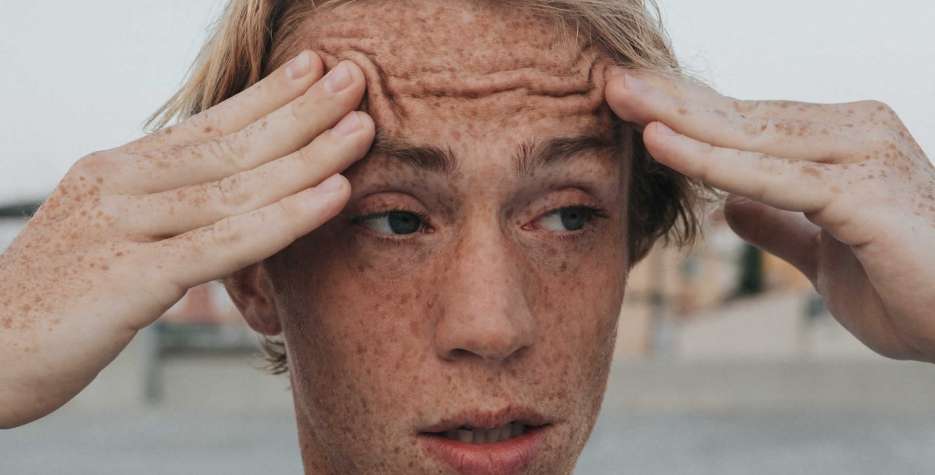
(Image above from a series of photos illustrating mental illness, from Christian Sampson.)
* from the notebook of Arthur Fleck (AKA, The Joker), via Todd Phillips 2019 film Joker
###
As we care about care, we might recall that it was on this date in 2019 that the first presentation print of Todd Phillip’s film Joker was shipped to Italy, where it premiered at the Venice International Film Festival and won the Golden Lion, the fest’s top prize. The film went on to box office success and set records for an October release. It grossed over $1 billion; the first R-rated to do so. It received numerous accolades, including two Academy Award wins at the 92nd Academy Awards for Best Actor (Joaquin Phoenix) & Best Original Score (Hildur Guðnadóttir) out of 11 nominations including Best Picture, first DC film to score.

“By temporarily disrupting the order of the brain, a new order forms. And that order may have incredible value at either the level of mental health and psychology or the level of creativity.”*…

But, Zoe Cormier warns, if the means of that constructive disruption are industrialized and turned into aggressively-marketed products, we could be in for trouble…
Welcome to the strange new world of “psychedelic capitalism,” where dozens of start-ups have already raised millions (and in some cases billions) of dollars to commercialize psilocybin (the psychedelic ingredient in magic mushrooms), DMT (found in the Amazonian brew ayahuasca), mescaline (peyote’s active component), and LSD—despite the fact that all of these “classic psychedelics” are still ranked as Schedule I drugs under the federal Controlled Substances Act. Manufacturing any of these drugs without a license can still land you a long prison sentence. But marketing one, even though they all remain illegal and none have passed all the clinical trials required for approval? That can make you a millionaire…
The days when mind-bending psychedelics were seen as appealing only to drug dealers, nut jobs, and hippies are over. Today, serious-minded people interested in randomized controlled trials and stock valuations are leading the charge.
The “psychedelic renaissance” we’ve awaited for half a century—the promised era when acid, shrooms, and peyote would be brought back into legitimate research and legal access—is finally here. But will it turn out to be worth the wait? Or the hype?
Because it’s not like we ever stopped enjoying them: In the West, hippies, scientists, “healers,” and others have used psychedelics continuously for seven decades. And before we got our hands on them, Indigenous cultures used psychedelics for thousands of years as ritual sacraments. Now dozens of start-ups want to standardize, commercialize, alter, patent, and market these ancient compounds—and they stand to make a fortune doing so.
Will old-school profit-centered tactics bring down decades of dogged work by activists, scientists, and reformers to have these drugs reassessed for their virtues? Will we experience another nasty, research-smothering backlash?…
The profiteers have arrived; get ready for Psychedelics Inc.: “The Brave New World of Legalized Psychedelics Is Already Here,” from @zoecormier @thenation.
* Michael Pollan, in conversation with Tim Ferriss on Ferriss’ blog
###
As we tune in, we might spare a thought for Ellen Swallow Richards; she died on this date in 1911. The first female student admitted to MIT, she became its first female faculty member. A chemist, she did pioneering work in sanitary engineering, but is best remembered for her experimental research in domestic science, which laid the foundation for the new science of home economics, of which she is considered founder. She was one of the first ecofeminists, believing that women’s work within the home was not just vital to the economy, but also a critical aspect of our relationship to the earth.

“Friendship is the hardest thing in the world to explain”*…

You may not have heard of Robin Dunbar. But you will, perhaps, know of his work. Dunbar, now emeritus professor of evolutionary psychology at Oxford University, is the man who first suggested that there may be a cognitive limit to the number of people with whom you can comfortably maintain stable social relationships – or, as Stephen Fry put it on the TV show QI, the number of people “you would not hesitate to go and sit with if you happened to see them at 3am in the departure lounge at Hong Kong airport”. Human beings, Dunbar found when he conducted his research in the 1990s, typically have 150 friends in general (people who know us on sight, and with whom we have a history), of whom just five can usually be described as intimate.
In his new book, Dunbar revisits and unpicks this number, by which he stands; and he brings together several decades of other research in the area of friendship, some of it his own, some that of anthropologists, geneticists and neuroscientists with whom he has worked. It can’t be definitive: the possibilities in this field are surely limitless. But for the reader, it sometimes feels like it is. Why do most women have a best friend? Why do many men struggle to share confidences? Why is it so painful when we fall out with our friends? Above all, what effect do friends (or a lack of them) have on our mental and physical health? Think of any question you might have and you’ll find some kind of an answer to it here. What you may feel in your gut, it will back with science. Its central message, however, may be summed up in a sentence. In essence, the number and quality of our friendships may have a bigger influence on our happiness, health and mortality risk than anything else in life save for giving up smoking.
Dunbar could not have known that his book would be published in a time of such loneliness, and some readers may find what he has to say, in this context, reassuring…
Dunbar’s Number, a (confirmatory) reconsideration of the value– and limitations– of friendship: “How important are your pals?
* Muhammad Ali
###
As we contemplate companionship, we might humbly note that today is Everything You Think Is Wrong Day, a celebration fo imperfection created to remind one that one is not always right.
You must be logged in to post a comment.