Posts Tagged ‘planning’
“Function reforms form, perpetually”*…

Over the years I have given away many, many copies of many books in the hope that they might be of interest/use to the recipient. The book of which I’ve gifted the most copies is How Buildings Learn- What Happens After They’re Built, published in 1995 by my GBN partner and Long Now colleague Stewart Brand. While it has certainly earned its plaudits as a work of architectural criticism, I’ve handed it out because it’s the most thoughtful and evocative book on strategy I’ve come across; it’s p-o-v and principles, rooted in (often literally) concrete examples, amount to the best manifesto I’ve found for thinking and planning for the long term.
In 1997, The BBC released a six-part series based on the book (with music by GBN and Long Now colleague and friend Brian Eno). As Open Culture reports, Stewart has created a YouTube channel to make the series available to us all…
Stewart Brand came onto the cultural scene during the 1960s, helping to stage the Acid Tests made famous by Ken Kesey and the Merry Pranksters, and later launching the influential Whole Earth Catalog (something Steve Jobs described as “Google in paperback form, 35 years before Google came along”). He also vigorously campaigned in 1966 to have NASA release a photograph showing the entirety of Earth from space—something we take for granted now, but fired humanity’s imagination back then.
During the 1970s and beyond, Brand founded CoEvolution Quarterly, a successor to the Whole Earth Catalog; the WELL (“Whole Earth ‘Lectronic Link”), “a prototypical, wide-ranging online community for intelligent, informed participants the world over;” and eventually The Long Now Foundation, whose work we’ve highlighted here before. When not creating new institutions, he has poured his creative energies into books and films…
… Based on [the book, How Buildings Learn], the TV series offers a critique of modernist approaches to architecture (think Buckminster Fuller, Frank Gehry, and Le Corbusier) and instead argues for “an organic kind of building, based on four walls, which is easy to change and expand and grow as the ideal form of building.”
Brand made the series available on his YouTube channel, with these words: “Anybody is welcome to use anything from this series in any way they like… Hack away. Do credit the BBC, who put considerable time and talent into the project.” And he added the noteworthy footnote: “this was one of the first television productions made entirely in digital—shot digital, edited digital.”…
A wonderful series on architecture– and more broadly, on planning for the long term: “Watch Stewart Brand’s 6‑Part Series How Buildings Learn, With Music by Brian Eno,” from @openculture.bsky.social.
Watch the series here.
Further to yesterday’s post (and thanks to friend MK) an obituary of Don Michael, another GBN friend, and author of another book– Learning to Plan and Planning to Learn: The Social Psychology of Changing Toward Future-Responsive Societal Learning— that I’ve given away many, many times.
* Stewart Brand, How Buildings Learn: What Happens After They’re Built
###
As we take the long view, we might recall that it was on this date in 1914 that Frank Lloyd Wright’s self-designed home in Wisconsin, Taliesin, was the site of mass murder and arson. Julian Carlton, a servant of Wright, set fire to the home and brutally attacked the people there during lunch. He ultimately killed seven, including Wright’s partner, “Mamah” Borthwick.
Wright was among the architects that Brand criticized in How Buildings Learn. Brand argued that Wright designed rigid, static “magazine architecture” that prioritized photogenic style and artistic ego over practical function, durability, and the way buildings must adapt to weather and human use over time. That said, Stewart never even thought of reaching for the matches nor a hatchet.

“The unpredictable and the predetermined unfold together to make everything the way it is.”*…
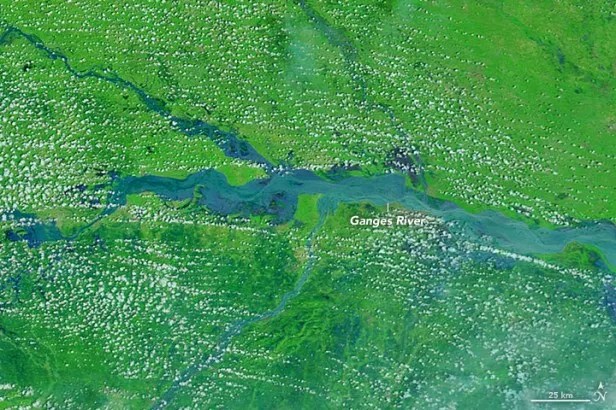
Thinking– worrying– about the future occupies more and more of our mindshare. How do we ready ourselves for the impacts of the playing out of the myriad uncertainties we face? Your correspondent’s approach-of-choice has been scenario planning (see, e.g., here and here), a method of thinking through and making sense of those unknowns. But as we do that, we have to think against the backdrop of “pre-determined elements”– forces that are going to accrue no matter how the uncertainties resolve, no matter which scenario unfolds.
Old friend and colleague Art Kleiner has dropped a thoughtful– and provocative– reminder of just how important understanding pre-determined elements is…
Pierre Wack, the scenario pioneer who built Royal Dutch Shell’s celebrated foresight practice, sometimes explained his methods by talking about the Ganges river in northern India. If there are heavy monsoon rains over the Himalayan headwaters, you can tell with certainty that there will be a flood five days later at Allahabad, which is 650 miles downstream. Five days after that, he said, the floods would reach Benares.
“Now the people down here in Benares don’t know that this flood is on its way,” he said, “but I do. Because I’ve seen it! This is not fortune telling. This is not crystal-ball gazing. This is merely describing future implications of something that has already happened.”…
… Most of us, peering ahead, fix on anxieties and uncertainties that may or may not happen: elections, technologies, and potential crises. We imagine what might happen, and get into the habit of thinking that our fate depends on this contingency. For instance, we pin our hopes on a particular candidate getting into office.
An alternative [your correspondent would suggest: “a critical complement”] is to look at the predetermined elements in our world as the playing field. When we recognize the true certainties, we can leap ahead to framing our choices and modulating our expectations. For example: We know it will take a long time to mitigate the effects of the climate crisis, so we invest accordingly in renewable energy. We also know our efforts to manage artificial intelligence need to happen practically overnight, so we work to rapidly build the necessary skills.
There are two kinds of predetermined elements. The first-order trends are basic and happening now. They follow directly from events that already took place — children already born, tons of carbon already in the air, debts already incurred. The second-order ones arise from the combination of first-order forces. Their effects are less predictable, but we can’t avoid the pressures they will place on us.
Taken together, they tell us the world of the 2030s will be markedly different from today and from most predictions being made today. For system leaders, a good list of predetermined elements gives you a start on developing scenarios that help you move to a creative orientation: creating the future you want.
I do a lot of work with scenarios, particularly at New York University’s Interactive Telecommunications Program, where I teach a graduate-level course on the future of media and technology. Here is my list of predetermined elements facing us today…
[Art shares a meaty– and bracing– list of both first- and second-order “pre-determineds.” He concludes…]
… The persistence of the ordinary. Against all the above sits the most underrated predetermined element of all: most people, most days, will live recognizable lives. The school, the clinic, the shop, and the family table endure because institutions change far more slowly than the forces acting on them. This is not complacency; it is the buffer that keeps the surprises survivable — and the reason that system leadership is generally local.
It’s as if we’re all driving down a treacherous highway. We notice the accidents and cars being towed off the shoulder, and the road rage as cars cut each other off. We don’t pay attention to all the drivers who stay in lane, leaving enough space between themselves and the car in front of them. Many of those drivers have experienced past accidents; they don’t want any more. If there were more of them, the road wouldn’t be nearly so scary. Uncertain: the prevailing attitudes and what it takes to bring people to a more system-oriented perspective...
[He then turns to the implications of his insight…]
… The discipline of scenario thinking is a discipline of attention. It tells us where to pay attention. Which predetermined elements affect us most? Which opportunities should we focus on? And which changes do we care about most urgently?
It is humbling and steadying at once: humbling because so much of the future is already decided, steadying because so much of it depends on what we do together.
The predetermined elements provide a working map. The first-order forces — the aging, the warming, the sun, the grid, the genome, the debt — are the ground on which the next decade must be built. The second-order combinations — cities, pressures, robots, possible relief — are where our work takes place…
Art’s conclusion is worth underling: first-order predetermineds are the terrain on which we will have to build our future; second order-pre-determineds are (a large part of) the agenda of issues we’ll have to address as we do; uncertainties are the unpredictable “weather” in which we’ll have to do that– guided throughout by our values and the hope that powers them. As Dennis Gabor said: “The future cannot be predicted, but futures can be invented.”
We already know much of what’s coming in the 2030s: “The Futures We Can’t Avoid.” Eminently worth reading in full.
* Tom Stoppard
###
As we buckle up, we might recall that it was on this date in 1927 that “The Cyclone,” a wooden roller coaster in Luna Park at Coney Island, opened to the public. It wasn’t the first roller coaster at Coney Island; but with total track length of 2,640 feet, a maximum height of 75 feet, and cars that reached 60 miles per hour on a ride, The Cyclone became a signature attraction. Operating still, it was declared a New York City designated landmark in 1988 and was placed on the National Register of Historic Places in 1991.

“By failing to prepare, you are preparing to fail”*…
Further, in a fashion, to yesterday’s post, a piece by Nate Hagens on preparing for what promises to be (to put it politely) a challenging future. It’s via (R)D‘s old friend Patrick Tanguay (and his wonderful newsletter Sentiers), who does the introductory honors…
Nate Hagens has spent two decades mapping what he calls the “more-than-human predicament,” the interlocking crises of fossil fuel depletion, ecological overshoot, and economic fragility. This piece marks a shift in his focus: the diagnostic work is largely done, and the current moment demands a framework for action rather than further description of the problem. It’s quite long and perhaps a bit dry, but considering the complexity of everything he’s talking about, I think it reaches a nice balance between all the things and “ok, I can read this, sit with it, and have a well ordered map of what needs doing and a framework from which to work.” The framework has four levels—personal psychological grounding, trusted network-building, six broad intervention fronts, and a timeline—premised on the idea that none of the material work is possible without first stabilising the individual (“being human”) and building shared understanding among people who see the situation clearly.
The six fronts—physical infrastructure, ecological intervention, dignity systems for the dispossessed, governance, culture and meaning, and economic transition—are not a menu but an interdependent set of domains where work is needed simultaneously. Some are familiar territory for anyone thinking about collapse and resilience; others are less obvious. Hagens insists, correctly, on including dignity infrastructure for people who will lose livelihoods as supply chains contract and jobs are automated, and treats culture and collective meaning-making as essential rather than supplementary. He also argues directly that ideological critique, however accurate, is not a plan. That the moment calls for moving from naming what’s wrong to building what comes next.
What gives the framework its structure is the timeline underneath it all: three overlapping phases. Phase A is the stability window that still exists in much of the world, and the one in which trust, infrastructure, and institutions must be built while surplus and coordination capacity remain. Phase B is the period of shocks and triage, already beginning in places, where the goal is to hold systems together and prevent cascades. Phase C is the stable destination—regenerative, locally embedded, equitable—that gives the earlier phases their direction. Hagens’ central argument is that what gets built now sets the initial conditions for everything that follows, and that path dependence operates at a civilisational scale.
Most of the positive climate outcomes we are likely to see in the next twenty years will not come from technology, they will come from curtailed economic expansion driven by the very forces I described at the beginning of this essay: war, debt, and energy depletion. We already got a preview of this during the pandemic as economic activity halted. Industrial activity contracting is not a climate policy, but it is a climate outcome. […]
Subsidiarity and local governance capacity: decisions made at the lowest appropriate level, which in many cases is probably much more local than we currently assume. Communities need the ability to govern their own resource allocation when higher-level institutions can’t or won’t. […]
Collective imagination and sensemaking: the role of arts and creative work in helping communities grieve, adapt, and imagine. This is not a luxury, it is how human groups have always metabolized disruption to continue working together. […]
Shared reality and sovereign visioning: the capacity of communities to tell their own story and find their own vision for the future rather than have it told for them by algorithms, demagogues, or strangers with large followings. In a period of disruption, the communities that hold together will have a strong enough shared cultural narrative to metabolize hardship without breaking apart. This is not a soft category, it is essential and has the ability to bear weight. […]
This window is finite, and many of us – especially in the last few weeks – are increasingly aware that it is closing. We just don’t know exactly how fast. But everything that can only be built in stability – institutional trust, physical infrastructure, knowledge transfer, and relationships – has to be built now, in this window, before conditions change. […]
What does it look like? Regenerative, resilient, human-scale, embedded in local ecology, equitable in a way that does not depend on infinite growth to fund redistribution, and rich in meaning, social connection, and all the things that actually make human life good.
Eminently worth reading in full. The logic of Pascal’s wager suggests that we take Hagens’ advice seriously: “What to Do as the World Falls Apart: A Framework for Action,” from @natehagens.bsky.social (via @inevernu.bsky.social).
Evidence that taking action can matter: “Scientists have scrapped the worst‑case climate scenario – because action is making a difference,” from Andrew King.
And a reminder that there’s more action to take: “The world is heading toward a financial crisis – the state of US politics has left us ill-prepared,” from Eduardo Porter.
* Widely (but incorrectly) attributed to Benjamin Franklin
###
As we prepare, we might recall that the Academy of the Distrustful was founded in the library room of the Palau Dalmases in Barcelona. A Baroque literary and musical academy with the aim of promoting the study of classical and Catalan history and poetry, mostly in Spanish, by fourteen scholars headed by the noble Pau Ignasi de Dalmases i Ros. In the event, it lasted only several years: during the War of the Spanish Succession several of its members supported Charles III of Austria over (the man who became) Philip V of Spain— and disbanded the group.
On this date in 2005, 2025, the 325th anniversary of its foundation, the Academy was reconstituted as a humanities academy (in the broadest sense of the term) in the Sala Dalmases of the Historical Archive of the City of Barcelona.

“I think it’s much more interesting to live not knowing than to have answers which might be wrong… when we know that we actually do live in uncertainty, then we ought to admit it; it is of great value to realize that we do not know the answers to different questions.”*…

The immense complexity of the climate makes it impossible to model accurately. Instead, David Stainforth argues, we must use uncertainty to our advantage…
Today’s complex climate models aren’t equivalent to reality. In fact, computer models of Earth are very different to reality – particularly on regional, national and local scales. They don’t represent many aspects of the physical processes that we know are important for climate change, which means we can’t rely on them to provide detailed local predictions. This is a concern because human-induced climate change is all about our understanding of the future. This understanding empowers us. It enables us to make informed decisions by telling us about the consequences of our actions. It helps us consider what the future will be like if we act strongly to reduce greenhouse gas emissions, if we act only half-heartedly, or if we take no action at all. Such information enables us to assess the level of investment that we believe is worthwhile as individuals, communities and nations. It enables us to balance action on climate change against other demands on our finances such as health, education, security and culture.
For many of us, these issues are approached through the lens of personal experience and personal cares: we want to know what changes to expect where we live, in the places we know, and in the regions where we have our roots. We want local climate predictions – predictions conditioned on the choices that our societies make.
So, where do we get them? Well, nowadays most of these predictions originate from complicated computer models of the climate system – so-called Earth System Models (ESMs). These models are ubiquitous in climate change science. And for good reason. The increasing greenhouse gases in the atmosphere are driving the climate system into a never-before-seen state. That means the past cannot be a good guide to the future, and predictions based simply on historic observations can’t be reliable: the information isn’t in the observational data, so no amount of processing can extract it. Climate prediction is therefore about our understanding of the physical processes of climate, not about data-processing. And since there are so many physical processes involved – everything from the movement of heat and moisture around the atmosphere to the interaction of oceans with ice-sheets – this naturally leads to the use of computer models.
But there’s a problem: models aren’t equivalent to reality.
So, what can we do? One option is to make the models better. Make them more detailed and more complicated. That, though, raises an important question: when is a model sufficiently realistic to predict something as complex as climate change? When will the models be good enough? We don’t have an answer to this question. Indeed, scientists have hardly begun to study this problem, and some argue that these models might never be sufficiently accurate to make multi-decadal, local climate predictions.
Nevertheless, changing the way we use ESMs could provide a different and better way to generate the local climate information we seek. Doing so involves embracing uncertainty as a key part of our knowledge about climate change. It involves stepping back and accepting that what we want is not precise predictions but robust predictions, even if robustness involves accepting large uncertainties in what we can know about the future…
[Stainforth explains the current state of modeling, efforts to make them better, and the problems those efforts encounter…]
… focusing on high-resolution modelling is dangerous not only because we have no answer to the question of when a model is sufficiently realistic. Investing in this approach also means we don’t have the capacity to explore the uncertainties, which inevitably encourages overconfidence in the predictions that models make. This is a particular concern because Earth System Models are increasingly being used to guide decisions and investments across our societies. Overconfidence in model-based predictions therefore risks encouraging bad decisions: decisions that are optimised for the futures in our models rather than what we understand about the range of possible futures for reality.
By contrast, perturbed physics ensembles and storyline approaches focus on exploring and describing our uncertainties. Placing uncertainty front and centre is important. When we make an investment or a gamble, we don’t just base it on what we think is the most likely result. We consider the range of outcomes that we think are possible – ideally these are characterised by probabilities, although this isn’t always achievable. It’s the same with climate change. We should not only make plans based solely on our best estimate of what might happen. We should also consider the range of plausible outcomes we foresee. Our knowledge of uncertainty is also part of what we know about climate change. We should embrace this knowledge, expand it and use it.
If we understand the uncertainties well, we can bring our values to bear on the risks we are willing to take. Uncertainty therefore needs to be at the core of adaptation planning while also being the lens through which we judge the value of climate policy and the energy transition. In my view, climate researchers and modellers wanting to support society should focus on understanding, characterising and quantifying uncertainty, and avoid the trap of seeking climate models that make reliable predictions. They may well never exist…
A more practical approach to preparing for climate change: “The model of catastrophe,” from @aeon.co
* Richard Feynman
###
As we preference plausibility (over predictability), we might send never-ending birthday greetings to August Möbius; he was born on this date in 1790. An astronomer and mathematician, he studied under mathematician Carl Friedrich Gauss while Gauss was the director of the Göttingen Observatory. From there, he went on to study with Carl Gauss’s instructor, Johann Pfaff, at the University of Halle, where he completed his doctoral thesis The occultation of fixed stars in 1815. In 1816, he became Extraordinary Professor in the “chair of astronomy and higher mechanics” at the University of Leipzig, where he remained for the rest of his career. Möbius made many contributions to both astronomy and the math that underlay it: he was among the first to conceive the possibility of geometry in more than three dimensions; he introduced homogeneous coordinates into projective geometry; and he pioneered the barycentric coordinate system… all parts of the intellectual foundation of the complex system modeling described above.
But while he was an influential scholar and professor, he is best remembered for his creation of the “Möbius strip.”

“Before beginning, plan carefully”*…

The marvelous Matt Levine on one of the vexing challenges facing those who preserve themselves cryogenically…
See, if you go to a regular trusts and estates lawyer, she will ask you questions like “if your spouse and children die before you, whom do you want to inherit your estate,” but if you go to a science fiction trusts and estates lawyer, she will ask you questions like “if your frozen head cannot be attached to a fresh body and reanimated in 200 years, but your consciousness can be cloned in a computer simulation, would you like your estate to go to the cloned consciousness or stay with the frozen head?” Meanwhile I suppose if you go to a regular financial planner, he will ask you questions like “how much equity risk are you comfortable taking between now and retirement,” while if you go to a science fiction financial planner, he will ask you questions like “where are you most comfortable investing for the next 200 years, given that you will not be able to change your asset allocation decisions during that time, because you’ll be dead?”
When you are a kid, science fiction is fun because it imagines amazing futuristic technologies. And then you grow up and you realize that what’s really fun are the legal and financial technologies that are called into being by those physical technologies: Sure sure sure reviving a frozen head is great, but how does the frozen head get a credit card? Bloomberg’s Erin Schilling reports:
Estate attorneys are creating trusts aimed at extending wealth until people who get cryonically preserved can be revived, even if it’s hundreds of years later. These revival trusts are an emerging area of law built on a tower of assumptions. Still, they’re being taken seriously enough to attract true believers and merit discussion at industry conferences.
“The idea of cryopreservation has gone from crackpot to merely eccentric,” said Mark House, an estate lawyer who works with Scottsdale, Ariz.-based Alcor Life Extension Foundation, the world’s largest cryonics facility with 1,400 members and about 230 people already frozen. “Now that it’s eccentric, it’s kind of in vogue to be interested in it.”
He and others are trying to answer questions that at times seem more like prompts in a philosophy class.
Can money live indefinitely?
Are you dead if your body is cryonically preserved?
Are you considered revived if you have only your brain?
And if you’re revived, are you the same person?
So many good legal questions — “House considers the revived person to be different in the eyes of the law, in part because a person can’t be the beneficiary of their own trusts” — but also great financial ones.
Here’s one: Should you buy Bitcoin for your long sleep? The argument for Bitcoin is that you can hold it, indefinitely, without relying on anyone else: If you put 10 Bitcoin in a wallet and only you know the private key, and then you die and get frozen and come back in 200 years, no one will have taken your Bitcoin, legal rules about inheritance and perpetual trusts don’t matter, and you don’t need some succession plan for the trustees and financial advisers who will take care of your assets. You just have to make sure you remember your private key as you’re dying. Legal rules can change, human institutions can change, but your Bitcoin is immutable.
The argument against Bitcoin is, of course, what if people stop valuing Bitcoin? Putting your money in Bitcoin is a hedge against change in other human institutions, but it puts a lot of eggs in the basket of one human institution, “treating Bitcoin as money.” It’s a bit weird to bet that that’s more permanent than anything else.
More generally, what is money anyway? “It may be difficult to know what role money will play in a post-[artificial general intelligence] world,” says OpenAI to its investors, and what if OpenAI gets to artificial general intelligence before anyone gets around to unfreezing the heads? You might be leaving your future self all the wrong stuff…
Very long-term planning: “Cryogenics Law,” from @matt_levine via Ingrid Burrington’s wonderful newsletter, “Perfect Sentences” (in this instance, “Sure sure sure reviving a frozen head is great, but how does the frozen head get a credit card?).
* Marcus Tullius Cicero
###
As we chill, we might recall that it was on this date in 1983 that the coldest (natural) temperature ever recorded on Earth was registered by the research station at Vostok, Antarctica: -128.5 degrees Fahrenheit (-89.2 degrees Celsius).

We might also note that today– July 20, 2024– is the date on which the action in Octavia Butler’s Parable of the Sower begins: “…in 2024, when society in the United States has grown unstable due to climate change, growing wealth inequality, and corporate greed…”

You must be logged in to post a comment.