Posts Tagged ‘influence’
“What shall we do if we take ignorance to be knowledge?”*…

A.W. Ohlheiser on a new book, Invisible Rulers— an investigation of the ways in which technology has transformed power and influence– by Renée DiResta, a leader of the late, lamented Stanford Internet Observatory…
… The book examines and contextualizes how bad information and “bespoke realities” became so powerful and prominent online. She charts how the “collision of the rumor mill and the propaganda machine” on social media helped to form a trinity of influencer, algorithm, and crowd that work symbiotically to catapult pseudo-events, Twitter Main Characters, and conspiracy theories that have captured attention and shattered consensus and trust.
DiResta’s book is part history, part analysis, and part memoir, as it spans from pre-internet examinations of the psychology of rumor and propaganda to the biggest moments of online conspiracy and harassment from the social media era. In the end, DiResta applies what she’s learned in a decade of closely researching online disinformation, manipulation, and abuse, to her personal experience of being the target of a series of baseless accusations that, despite their lack of evidence, prompted Rep. Jim Jordan, as chair of the House subcommittee on Weaponization of the Federal Government, to launch an investigation.
There’s a really understandable instinct that, I think, a lot of people have when they read about online misinformation or disinformation: They want to know why it’s happening and who is to blame, and they want that answer to be easy. Hence, meme-ified arguments about “Russian bots” causing Trump to win the presidential election in 2016. Or, perhaps, pushes to deplatform one person who went viral by saying something wrong and harmful. Or the belief that we can content-moderate our way out of online harms altogether.
DiResta’s book explains why these approaches will always fall short. Blaming the “algorithm” for a dangerous viral trend might feel satisfying, but the algorithm has never worked without human choice. As DiResta writes, “virality is a collective behavior.” Algorithms can surface and nudge and entangle, but they need user data to do it effectively…
…
…So, what would work?
DiResta’s ideas for this echo conversations that have been happening among misinformation experts for some time. There are some things platforms absolutely should be doing from a moderation standpoint, like removing automated trending topics, introducing friction to engaging with some online content, and generally giving users more control over what they see in their feeds and from their communities. DiResta also notes the importance of education and prebunking, which is a more preventative version of addressing false information that focuses on the tactics and tropes of online manipulation. Also, transparency…
Misinformation: “Why lying on the internet keeps working,” @abbyohlheiser in @voxdotcom.
DiResta on her experience of harassment while at the Internet Observatory: “My Encounter with the Fantasy-Industial Complex” (gift article)
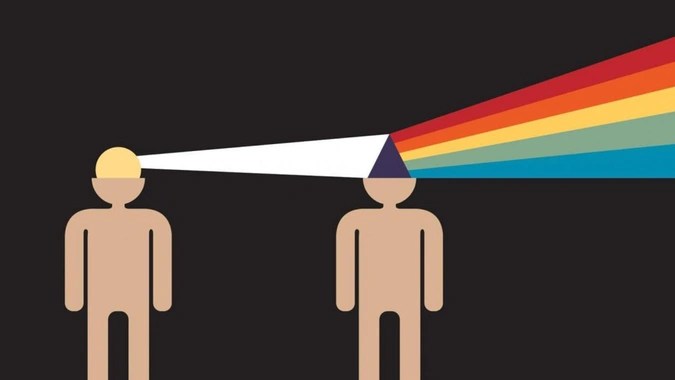
For more on prebunking, see “Fact or Fake? The role of knowledge neglect in misinformation” (source of the image above.
Also apposite: “Is social media fueling political polarization?“
On the other hand, there’s this consideration of misinformation in the larger epistemological context of all of the information available to us: “How Dangerous is Misinformation?“: “The problem with alarmism about “misinformation” is not that it is too pessimistic about the state of media and public discourse. The problem is that it is not pessimistic enough.” Caveat lector.
* Neil Postman, Amusing Ourselves to Death
###
As we steel ourselves, we might recall that it was on this date in 1947 that Kenneth Arnold reported a UFO sighting; Arnold claimed that he saw a string of nine, shiny unidentified flying objects flying past Mount Rainier (in Washington State) at speeds that he estimated at a minimum of 1,200 miles an hour.
His was the first post-World War II sighting in the United States that attracted nationwide news coverage and is credited with being the first of the modern era of UFO sightings– including numerous reported sightings over the next two to three weeks. Arnold’s description of the objects led the press quickly to coin the terms flying saucer and flying disc as popular descriptive terms for UFOs.
After the 1947 UFO sighting, Arnold became famous “practically overnight.” Arnold’s daughter would later recall the family receiving 10,000 letters and constant phone calls. In the 1960’s Arnold entered politics, running as a Republican for Lieutenant Governor of Idaho. He lost to the Democratic incumbent.

“Man, sometimes it takes a long time to sound like yourself”*…
Ian Leslie on why we need to take control of our influences and what we can learn from artists about how to do so…
We live in age of social influence, and while there is no shortage of advice on how to take advantage of that – how to influence others, how to build a following, how to change minds – there is a dearth of thinking on how to be influenced. Which is odd, because that seems, to me, to be one of the key questions of the age…
Being influenced by others is inevitable and essential. But it’s also true that when we over-conform to influences, we surrender individuality. We get infected by harmful behaviours: smoking, anorexia, even suicide are all subject to social influence. We swallow conspiracy theories and false beliefs. We become mindless creatures of habit unable to imagine new possibilities. Conforming to influence can generate anxiety: we become worried that we’re not conforming well enough. There are externalities to be considered, too. Over-conformity is a kind of free-riding. The over-conformer takes from the shared pot of memes but fails to contribute to it. A society with too much imitation is liable to decay and degenerate, because it stops creating, thinking and innovating.
Each of us, then, has to try and strike a balance. Be impervious to social influence and you get closed off from the best that your fellow humans have to offer. Be defenceless against it and you become easily manipulable, boring, and unhappy.
But it’s harder than ever to strike this balance, because we live in societies where influence is everywhere, pressing upon us from all sides. We can instantly find out what strangers think, or at least what they say they’re thinking, on any given topic. We can consult with our friends every second of the day. It’s easier to outsource your opinions than ever; it feels good, it feels safe, to side with a crowd. There are higher costs to non-conformity, too: online communities assiduously police the boundaries of acceptable thought and behaviour…
… on the one hand, we have access to a broader range of information and insight than any generation in history, which ought to make us all more interesting. On the other, it’s very difficult, amidst the crossfire hurricane of influence, to think and act for yourself – to be you.
I could leave it there, with the conclusion that we’re all being influenced all the time and we’re not remotely prepared for how to manage these influences, and that maybe we should think about that a little more. But I want to add this: that there is a group of people who have a lot to teach us about how to live in the age of influence, because they have confronted this question with a special intensity for hundreds of years.
Artists (in the broad sense – painters, novelists, composers, etc) are pretty much defined by the struggle to be themselves; to absorb influences without surrendering to them; to be open to others and stubbornly individual. Consequently, artists have a different relationship to influence than the rest of us do. The core difference is this: artists do not absorb their influences passively. They choose their influences, and they choose how to be influenced by them…
Read on for sound advice: “How To Be Influenced,” from @mrianleslie via @TheBrowser.
Apposite: “The Age of Algorithmic Anxiety,” from @chaykak
* Miles Davis
###
As we steal like an artist, we might recall that it was on this date in 1790 that the first U.S. patent was issued to Samuel Hopkins for an improvement “in the making of Potash and Pearlash by a new Apparatus and Process.” It was signed by then-President George Washington.
A number of inventors had been clamoring for patents and copyrights (which were, of course, anticipated in Article I, Section 8, Clause 8 of the Constitution), but the first session of the First Congress in 1789 acted on none of the petitions. On January 8, 1790, President Washington recommended in his State of the Union address that Congress give attention to the encouragement of new and useful inventions; and within the month, the House appointed a committee to draft a patent statute. Even then the process worked slowly: Hopkins’ patent was issued over six months later.

“This is one of those cases in which the imagination is baffled by the facts”*…

A couple of years ago we visited Little Sis (the opposite of Big Brother)– “Those in power must spend a lot of time laughing at us“… The site has added a nifty new feature, Oligrapher, a tool for visualizing networks of influence using LittleSis data.
* Adam Smith
###
As we we note again that it’s all about who you know, we might wish a Buon Compleanno to Luigi Pirandello, the dramatist and novelist best remembered for Six Characters in Search of an Author. He was born on this date in 1867, turned to writing when the family sulphur mines failed, and received the Nobel Prize for Literature in 1934.

“Without culture, and the relative freedom it implies, society, even when perfect, is but a jungle. This is why any authentic creation is a gift to the future”*…

From MIT’s Media Lab and it Pantheon Project, an interactive mapping tool that let’s one visualize the history of cultural production.
You were not born with the ability to fly, cure disease or communicate at long distances, but you were born in a society that endows you with these capacities. These capacities are the result of information that has been generated by humans and that humans have been able to embed in tangible and digital objects.
This information is all around you. It is the way in which the atoms in an airplane are arranged or the way in which your cell-phone whispers dance instructions to electromagnetic waves.
Pantheon is a project celebrating the cultural information that endows our species with these fantastic capacities. To celebrate our global cultural heritage we are compiling, analyzing and visualizing datasets that can help us understand the process of global cultural development. Dive in, visualize, and enjoy.
Pantheon allows one to select a time period, then see the results sorted by place of origin (as in the chart above) or by profession, and provides a ranked listing of people.
It’s all fascinating, but the “professional” sort is especially telling, as Kottke observes:
Up until the Renaissance, the most well-known people in the world were mostly politicians and religious figures, with some writers and philosophers thrown in for good measure. Starting with the Renaissance through the beginnings of the Industrial Revolution, politicians, writers, painters, and composers become more prominent. For the past 50 years, athletes and entertainers dominate the list, with footballers making up almost a third of the most known. (If you only go back to 1990, actors dominate.)

Politicians rate slightly behind tennis players (but ahead of pornographic actors) and religious figures are not represented in the graph at all.
Visit Pantheon to see for yourself, and find more on the data and methodology used here.
* Albert Camus, The Myth of Sisyphus and Other Essays
###
As we put down the remote control and pick up a book, we might send tasty birthday greetings to the culinary genius behind green eggs and ham, Theodor Seuss Geisel, AKA “Dr. Seuss”; he was born on this date in 1904. After a fascinating series of early-career explorations, Geisel settled on a style that created what turned out to be the perfect “gateway drug” to book addiction for generations of young readers.
The more that you read,
The more things you will know.
The more that you learn,
The more places you’ll go.
– I Can Read With My Eyes Shut! (1978)

You must be logged in to post a comment.