Posts Tagged ‘Big Bang theory’
“One cries because one is sad. For example, I cry because others are stupid, and that makes me sad.”*…

From our friends at The Pudding, a case study in Chinese censorship: Manyun Zou watched the first 100 episodes of The Big Bang Theory that stream in the U.S. and on the Chinese streaming site Youku, side by side, and tracked 206 missing scenes from the Youku version…
Growing up in China, I had a blast watching American TV shows. They not only helped me learn English, but also introduced me to fresh perspectives and worldviews. The Big Bang Theory was among my favorites.
I quickly became a fan of the sitcom when it was officially introduced in China on a video streaming website in 2011. But when I rewatched the show in 2022 on Youku, a Chinese video streaming website backed by e-commerce giant Alibaba, I couldn’t help but notice weird jumps, pauses, and disconnected canned laughter…
What happened to the show?
To understand that, we have to back up a bit. This change can be traced to a sudden political decision in 2014. According to the state-owned media outlet Xinhua, streaming platforms received a private notification from regulators to remind them of one key rule:
“imported American and British TV shows must be ‘reviewed and approved by officials before streaming to the public.’”
Shortly thereafter, The Big Bang Theory was among a handful of imported shows pulled from Chinese websites. Audiences were only left with a black screen and a line: “video has been removed due to policy reasons.”
When these shows resurfaced, they were full of these weird jumps, signaling that scenes were removed during censorship because someone somewhere thought it would be inappropriate or illegal to stream such content.
So the question has to be asked: what kind of content has been removed, and why?
To find out, I compared 100 episodes of the original version of The Big Bang Theory with the edited Youku version to understand what was cut out and decipher the logic behind the decision…
A fascinating look at what Chinese censors fear: “The Big [Censored] Theory,” from @Manyun_Zou in @puddingviz.
* “Sheldon,” The Big Bang Theory, “The Gorilla Experiment” (Season 3, Episode 10)
###
As we contemplate censorship, we might spare a thought for Immanuel Kant; he died on this date in 1804. One of the central figures of modern philosophy, Kant is remembered primarily for his efforts to unite reason with experience (e.g., Critique of Pure Reason [Kritik der reinen Vernunft], 1781), and for his work on ethics (e.g., Metaphysics of Morals [Die Metaphysik der Sitten], 1797) and aesthetics (e.g., Critique of Judgment [Kritik der Urteilskraft], 1790). But he made important contributions to mathematics and astronomy as well; for example: Kant’s argument that mathematical truths are a form of synthetic a priori knowledge was cited by Einstein as an important early influence on his work. And his description of the Milky Way as a lens-shaped collection of stars that represented only one of many “island universes,” was later shown to be accurate by Herschel.
Act so as to treat humanity, whether in your own person or in that of another, at all times also as an end, and not only as a means.

“It is unnatural in a large field to have only one shaft of wheat, and in the infinite Universe only one living world”*…

NASA’s top scientists have a provocative message for the scientific community: that they need a plan in place for if — or when — we find evidence of extraterrestrial life…
James Green, the agency’s chief scientist, coauthored a new article, published in the journal Nature, urging researchers to create a framework for reporting evidence of aliens. In it, the authors stressed the importance of clearly communicating any findings of extraterrestrial life, as well as establishing clear expectations for the public for when it occurs and accurately expressing ambiguity in early evidence.
“As life-detection objectives become increasingly prominent in space sciences, it is essential to open a community dialogue about how to convey information in a subject matter that is diverse, complicated and has a high potential to be sensationalized,” read the paper.
Green and his co-authors propose a confidence of life detection (CoLD) scale to help evaluate any evidence that might be discovered. The scale itself contains seven different levels like a staircase. Each level is a benchmark that must be met before we can proceed to the next step.
For example, level one would be discovering life signatures such as biological molecules. The second level would be ruling out that the sign of life is the result of contamination from Earth. Eventually, the CoLD scale ends with the final step: scientists declaring that they’ve confidently discovered evidence of extraterrestrial life.
“Having a scale like this will help us understand where we are in terms of the search for life in particular locations, and in terms of the capabilities of missions and technologies that help us in that quest,” Green said in a NASA news release.
The paper’s authors stress that the scale is merely a starting point for a larger conversation with scientists and science communicators about the best ways to proceed if and when we discover evidence of alien life.
It also comes in the context of the upcoming launch of the powerful James Webb telescope, along with the Perseverance Mars rover searching for life on the Red Planet, meaning that such a finding might become a reality sooner rather than later.
“The search for life beyond Earth requires broad participation from the scientific community and many kinds of observations and experiments,” Mary Voltek, co-author of the study and head of NASA’s Astrobiology Program, said in the release. “Together, we can be stronger in our efforts to look for hints that we are not alone.”
“NASA Says We Need a Plan for When We Discover Alien Life,” from @futurism.
As to what we’ll do with that knowledge, a complicating factor: “94% of the universe’s galaxies are permanently beyond our reach” (if the speed of light remains an upper limit on travel).
###
As we search far and wide, we might send enduring birthday greetings to Sir Hermann Bondi; he was born on this date in 1919. A mathematician and cosmologist, he is best remembered for developing the steady state model of the universe with Fred Hoyle and Thomas Gold as an alternative to the Big Bang theory. In an attempt to explain the paradox: how can the stars continually recede, yet without disappearing, they audaciously proposed an unproven hypothesis: that the universe has an eternal existence, with no beginning and without an end. Further, they argued, the universe is continuously expanding, maintaining a constant density by continually creating new matter from energy. Their model was rendered obsolete when, in 1965, Arno Penzias and Robert Wilson detected a background microwave radiation from all directions in space, as predicted by the “Big Bang” theory of creation that is now accepted. [See here for more on Penzias’ and Wilson’s discovery.)
Bondi also contributed to the theory of general relativity; was the first to analyze the inertial and gravitational interaction of negative mass; and the first to explicate correctly the nature of gravitational waves.

“Do not worry about your difficulties in Mathematics. I can assure you mine are still greater.”*…
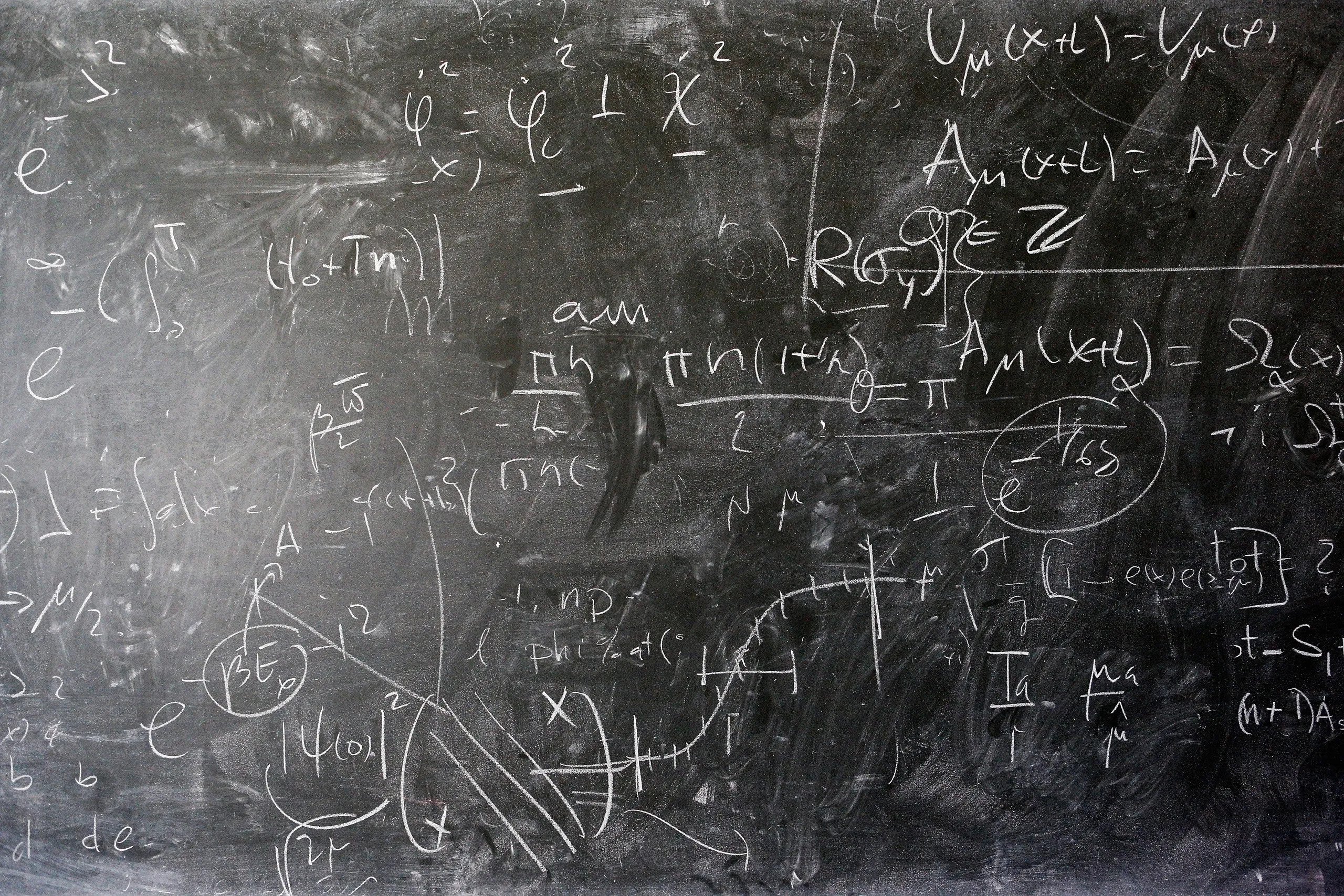
No scripture is as old as mathematics is. All the other sciences are younger, most by thousands of years. More than history, mathematics is the record that humanity is keeping of itself. History can be revised or manipulated or erased or lost. Mathematics is permanent. A² + B² = C² was true before Pythagoras had his name attached to it, and will be true when the sun goes out and no one is left to think of it. It is true for any alien life that might think of it, and true whether they think of it or not. It cannot be changed. So long as there is a world with a horizontal and a vertical axis, a sky and a horizon, it is inviolable and as true as anything that can be thought.
…
As precise as mathematics is, it is also the most explicit language we have for the description of mysteries. Being the language of physics, it describes actual mysteries—things we can’t see clearly in the natural world but suspect are true and later confirm—and imaginary mysteries, things that exist only in the minds of mathematicians. A question is where these abstract mysteries exist, what their home range is. Some people would say that they reside in the human mind, that only the human mind has the capacity to conceive of what are called mathematical objects, meaning numbers and equations and formulas and so on—the whole glossary and apparatus of mathematics—and to bring these into being, and that such things arrive as they do because of the way our minds are structured. We are led to examine the world in a way that agrees with the tools that we have for examining it. (We see colors as we do, for example, because of how our brains are structured to receive the reflection of light from surfaces.) This is a minority view, held mainly by neuroscientists and a certain number of mathematicians disinclined toward speculation. The more widely held view is that no one knows where math resides. There is no mathematician/naturalist who can point somewhere and say, “That is where math comes from” or “Mathematics lives over there,” say, while maybe gesturing toward magnetic north and the Arctic, which I think would suit such a contrary and coldly specifying discipline.
The belief that mathematics exists somewhere else than within us, that it is discovered more than created, is called Platonism, after Plato’s belief in a non-spatiotemporal realm that is the region of the perfect forms of which the objects on earth are imperfect reproductions. By definition, the non-spatiotemporal realm is outside time and space. It is not the creation of any deity; it simply is. To say that it is eternal or that it has always existed is to make a temporal remark, which does not apply. It is the timeless nowhere that never has and never will exist anywhere but that nevertheless is. The physical world is temporal and declines; the non-spatiotemporal one is ideal and doesn’t.
A third point of view, historically and presently, for a small but not inconsequential number of mathematicians, is that the home of mathematics is in the mind of a higher being and that mathematicians are somehow engaged with Their thoughts. Georg Cantor, the creator of set theory—which in my childhood was taught as a part of the “new math”—said, “The highest perfection of God lies in the ability to create an infinite set, and its immense goodness leads Him to create it.” And the wildly inventive and self-taught mathematician Srinivasa Ramanujan, about whom the movie “The Man Who Knew Infinity” was made, in 2015, said, “An equation for me has no meaning unless it expresses a thought of God.”
In Book 7 of the Republic, Plato has Socrates say that mathematicians are people who dream that they are awake. I partly understand this, and I partly don’t.
Mathematics has been variously described as an ideal reality, a formal game, and the poetry of logical ideas… an excerpt from “What is Mathematics?” from Alec Wilkinson— eminently worthy of reading in full.
* Albert Einstein
###
As we sum it up, we might send carefull-calcuated birthday greetings to Georgiy Antonovich Gamov; he was born on this date in 1904. Better known by the name he adopted on immigrating to the U.S., George Gamow, he was a physicist and cosmologist whose early work was instrumental in developing the Big Bang theory of the universe; he also developed the first mathematical model of the atomic nucleus.
But mid-career Gamow began to shift his energy to teaching and to writing popular books on science… one of which, One Two Three… Infinity, inspired legions of young scientists-to-be and kindled a life-long interest in science in an even larger number of other youngsters (like your correspondent).

You must be logged in to post a comment.