Posts Tagged ‘trade’
“Her Majesty’s government should do nothing to place in peril our opium revenues. As for preventing the manufacturing of opium, and the sale of it in China, that is far beyond your power.”*

An excerpt from Linda Jaivin‘s The Shortest History of China…
European traders had been trying to get a foothold in China for centuries. As eager as the Europeans were for Chinese tea, silk, and porcelain, the Chinese remained indifferent to European goods. The Qing restricted access to ports, confining foreign merchants to Guangzhou (Canton), from October to March. Foreign traders resented this, as well as having to work with licensed Chinese intermediaries and abide by local law. In 1793, the British sent an experienced diplomat, Lord George Macartney, to Qianlong’s court carrying a letter arguing for greater access to the empire’s markets, including a reduction in tariffs, the ability of merchants to live in China year-round, and the stationing of an ambassador in Beijing.
The eighty-year-old Qianlong agreed to receive the Englishman at his imperial hunting lodge at Chéngdé, northeast of Beijing. The protocol of an imperial audience demanded a kowtow. Macartney refused, instead bowing on one knee before Qianlong, just as he did with his own sovereign, King George III. Qianlong received him courteously anyway, but once Macartney left and his letter was translated, Qianlong instructed his ministers to bolster the Qing’s coastal defenses, predicting that England, ‘fiercer and stronger than other countries in the Western Ocean,’ might ‘stir up trouble.’ To Macartney he prefaced his reply by saying that the Qing had everything it needed in abundance: ‘I set no value on objects strange or ingenious, and have no use for your country’s manufactures.’
The British East India Company, which enjoyed a British monopoly on East Asian trade, had something for which at least some Chinese had use: opium, grown in British-controlled India. Opium was already cultivated in China, but in small quantities — soldiers and manual laborers relied on it for pain relief, and some of the idle rich smoked it for pleasure. In 1729, the British sold two hundred chests of opium into China, each containing almost sixty kilograms of the drug. In 1790, three years before Macartney’s visit, they sold 4,054 chests. That number increased steadily.
Qianlong retired in 1796 in a gesture of filial piety, not wanting his reign to outlast that of his revered grandfather, Kangxi. This left the problem of opium to his successor, Jiāqìng (r. 1796-1820).
In 1815, the British sent another envoy, Lord Amherst, to Beijing. Jiāqìng expelled him after another tussle over the kowtow.
Opium addiction began to damage the fabric of Chinese society. The illegal trade fostered corruption, and silver drained from the imperial coffers. Debate raged in the court of Jiāqìng and his successor, Dàoguāng (r. 1821-1850), over whether to legalize opium — encouraging domestic production and limiting trade-related corruption — or ban it. In 1838, Daoguang decided on prohibition. In March 1839, the emperor sent the official Lín Zéxú (1785-1850) to Guangzhou, the hub of the opium trade, to implement the ban. By July, Lin had arrested thousands of addicts and confiscated almost twenty-three thousand kilos of opium, as well as seventy thousand pipes.
Lín Zéxú demanded that the 350 or so foreign traders in Guangzhou surrender their opium. As tensions rose, he locked them in their warehouses. Chinese soldiers blew horns and banged gongs to increase the pressure on them. It took six weeks, but the foreigners handed over twenty thousand chests. Now in possession of almost 1.4 million kilos of opium, Lín Zéxú had it mixed with water, salt, and lime and flushed out to sea.
In response, British warships blockaded the entrance to Guangzhou’s harbor, smashed through Chinese defenses, and captured ports including Shanghai and Ningbo, blocking maritime traffic on the Grand Canal and lower Yangtze. This became known as the First Opium War.
Under duress, the Qing signed the Treaty of Nanjing in 1842, which granted the British access to Guangzhou, Shanghai, and three other ‘treaty ports.’ It also ceded the island of Hong Kong — ‘fragrant port,’ named for the spice trade — to the British in perpetuity. (The British foreign secretary at the time, Lord Palmerston, questioned the wisdom of acquiring ‘a barren island with hardly a House upon it’ that would never become a great ‘Mart of Trade.’) It imposed indemnities on the Qing totaling twenty-one million silver dollars. The United States, France, and other nations piled on with their own demands, including ‘extraterritoriality’ exemption from local justice for foreigners who committed crimes in China. Chinese law would not apply within ‘concessions’ those parts of the treaty ports controlled by foreign powers. These agreements were the first of what are called the Unequal Treaties, beginning a century of China’s humiliation at the hands of various imperialist powers. They heralded the beginning of the end, not just of the Qing, but of the dynastic system by which China had been ruled for thousands of years…
Via the invaluable Delancyplace (@delanceyplace): “The Opium Wars.”
* Lord Ellenborough, 1843
###
As we contemplate colonialism, we might recall that it was on this date in 1812 that President James Madison signed the declaration of war against Great Britain that formally launched the War of 1812.
Three U.S. incursions into Canada launched in 1812 and 1813 had been handily turned back by the British despite the fact that the bulk of British force was tied up in an unpleasantness with the Emperor of France and his troops. But the decline of Napoleon’s strength freed the English to devote more resources to the West… leading to the 1814 burning of the White House, the Capital, and much of the rest of official Washington by British soldiers (retaliating for the U.S. burning of some official buildings in Canada). Still, by the end of 1814 a combination of naval and ground victories by the Americans had driven the British back to Canada, and on December 14, 1814 the Treaty of Ghent, ending the war, was signed… sadly for the British, word of the accord did not reach troops on the Gulf Coast in time to head off an attack (on January 8, 1815) on New Orleans– which was turned back by American forces led by Andrew Jackson. Jackson became a national hero, who rode his fame to the (rebuilt) White House; Johnny Horton got a Number One record out of it (Billboard Hot 100, 1959)… and the English had to console themselves with their victory at Waterloo later that year– on this date in 1815…
“One bullion cube… one Concord grape… one Philly cheese-steak… and a jar of garlic pickles! No one will want to kiss me after these, eh, Smithers?”*…

Kunwar Khuldune Shahid explains how immigration patterns and global politics — plus a bit of serendipity — intertwined to make Philadelphia’s iconic sandwich a hit in a 13-million-resident Pakistani megalopolis…
… [Chef Mazhar] Hussain has worked at some of the most high-profile restaurants in Lahore — Monal, Tuscany Courtyard, Chaayé Khana and Café Aylanto, among others — covering a wide range of cuisines. His experience at Philly’s Steak Sandwich, though, has been unique. It’s a smaller restaurant than those, he says, and the guests come from all walks of life. The one thing that connects them: “The steak sandwich is extremely popular with everyone.”
Philly’s Steak Sandwich sits on a small highway apart from Johar Town’s main food centers, atop a hair salon. The shop fights for customers with a biryani restaurant across the street and buzzes all evening with motorbikes and cars jammed into the cramped parking spaces. The cheesesteak is especially popular among nearby students, who can enjoy it for PKR 579, or a little over two bucks.
…
Lahore, Pakistan’s second-largest city and the capital of the historic Punjab region, is considered the country’s food hub (although citizens of Karachi loudly dispute that claim). Its location at the crossroads of the many empires to have ruled over the Indian subcontinent, from the Mughals to the British, has added multicultural layers to Lahori heritage and culture. This is reflected in the city’s food, which blends Persian and Afghan flavors, a combination we now deem synonymous with the cuisine of North India — which Lahore was an integral part of before the 1947 partition created what is today called Pakistan, in the northwestern part of the Indian subcontinent.
That Indic syncretism, which Lahore has oozed with for centuries, is today introducing a new cuisine to the city’s taste buds: Philadelphian. But while Philly’s Steak Sandwich might be the first to put our city’s renowned sandwich on local billboards, Lahore’s love-in with the cheesesteak is, in fact, decades old…
More fission than fusion: “The Amazing Story of How Philly Cheesesteaks Became Huge in Lahore, Pakistan,” from @khuldune in @PhiladelphiaMag.
* “Montgomery Burns,” in The Simpsons
###
As we muse on migration, we might recall that it was on this date in 1959 that the St. Lawrence Seaway opened. A system of locks, canals, and channels in Canada and the United States, it permits oceangoing vessels to travel from the Atlantic Ocean to the Great Lakes of North America– as far inland as Duluth, Minnesota, at the western end of Lake Superior. The Seaway handles 40–50 million tons of cargo annually, about 50% of of which travels to and from international ports in Europe, the Middle East, and Africa.


“The ideas of economists and political philosophers, both when they are right and when they are wrong, are more powerful than is commonly understood”*…

… so the quality of those thoughts matters– as does their diversity. Ha-Joon Chang surveys the monoculture of current economic thinking, explains why that’s problematic, and proposes a remedy…
… Up to the 1970s, economics was populated by a diverse range of ‘schools’ containing different visions and research methods – classical, Marxist, neoclassical, Keynesian, developmentalist, Austrian, Schumpeterian, institutionalist, and behaviouralist, to name only the most significant. These schools of economics – or different approaches to economics – had (and still have) distinct visions in the sense that they had conflicting moral values and political positions, while understanding the way the economy works in divergent ways. I explain the competing methods of economists in my book Economics: The User’s Guide (2014), in a chapter called ‘Let a Hundred Flowers Bloom – How to “Do” Economics’.
Not only did the different methods coexist but they interacted with each other. Sometimes, the competing schools of economics clashed in a ‘death match’ – the Austrians vs the Marxists in the 1920s and ’30s, or the Keynesians vs the neoclassicals in the 1960s and ’70s. At other times, the interactions were more benign. Through debates and policy experiments tried by different governments around the world, each school was forced to hone its arguments. Different schools borrowed ideas from each other (often without proper acknowledgement). Some economists even tried the fusion of different theories – for example, some economists fused the Keynesian and the Marxist theories and created ‘post-Keynesian’ economics.
Economics until the 1970s was, then, rather like the British food scene today: many different cuisines, each with different strengths and weaknesses, competing for attention; all of them proud of their traditions but obliged to learn from each other; with lots of deliberate and unintentional fusion happening.
Since the 1980s, however, economics has become the British food scene before the 1990s. One tradition – neoclassical economics – is the only item on the menu. Like all other schools, it has its strengths; it also has serious limitations… neoclassical economics is today so dominant in most countries (Japan and Brazil, and, to a lesser extent, Italy and Turkey are exceptions) that the term ‘economics’ has – for many – become synonymous with ‘neoclassical economics’. This intellectual ‘monocropping’ has narrowed the intellectual gene pool of the subject. Few neoclassical economists (that is, the vast majority of economists today) even acknowledge the existence, never mind the intellectual merits, of other schools. Those who do, assert the other varieties to be inferior. Some ideas, like those of the Marxist school, they will argue, are ‘not even economics’. It’s claimed that the few useful insights these other schools once possessed – say, for instance, the Schumpeterian school’s idea of innovation, or the idea of limited human rationality from the behaviouralist school – have already been incorporated into the ‘mainstream’ of economics, that is, neoclassical economics. They fail to see that these incorporations are mere ‘bolt-ons’, like the baked potato beside a Pizzaland pizza, rather than genuine fusions – like Peruvian cuisine, with Inca, Spanish, Chinese and Japanese influences, or the dishes by the Korean American chef David Chang (no relation), with American, Korean, Japanese, Chinese and Mexican influences…
The problem… is the almost total dominance of one school, which has limited the scope of economics and created theoretical biases and blindspots. In the same way in which the country’s refusal to accept diverse culinary traditions made Britain before the 1990s a place with a boring and unhealthy diet, the dominance of economics by one school has made economics limited in its coverage and narrow in its ethical foundation…
Economics… influences who we are by affecting the way the economy develops and thus the way we live and work, which in turn shapes us… economics influences the kind of society we have. First, by shaping individuals differently, varying economic theories make societies of contrasting types. Thus, an economic theory that encourages industrialisation will lead to a society with more forces pushing for more egalitarian policies, as explained above. For another example, an economic theory that believes humans to be (almost) exclusively driven by self-interest will create a society where cooperation is more difficult. Second, different economic theories have different views on where the boundary of the ‘economic sphere’ should lie. So, if an economic theory recommends privatisation of what many consider to be essential services – healthcare, education, water, public transport, electricity and housing, for example – it is recommending that the market logic of ‘one-dollar-one-vote’ should be expanded against the democratic logic of ‘one-person-one-vote.’ Finally, economic theories represent contrasting impacts on economic variables, such as inequality (of income or wealth) or economic rights (labour vs capital, consumer vs producer). Differences in these variables, in turn, influence how much conflict exists in society: greater income inequality or fewer labour rights generate not just more clashes between the powerful and those under them but also more conflicts among the less privileged, as they fight over the dwindling piece of pie available to them.
Understood like this, economics affects us in many more fundamental ways than when it is narrowly defined – income, jobs and pensions. That is why it is vital that every citizen needs to learn at least some economics. If we are to reform the economy for the benefit of the majority, make our democracy more effective, and make the world a better place to live for us and for the coming generations, we must ensure some basic economic literacy…
Economics is the language of power and affects us all. What can we do to improve its impoverished menu of ideas? The case for economic literacy: “The Empty Basket,” in @aeonmag. Eminently worth reading in full.
* John Maynard Keynes
###
As we go to school, we might spare a thought for a candidate for study, David Ricardo; he died on this date in 1823. A political economist, he developed a labor theory of value in his seminal Principles of Political Economy and Taxation, published in 1817; he was instrumental in the development of theories of rent, wages, and profits; and at a time of mercantilist sentiment, he introduced the theory of competitive advance and advocated free trade. Indeed, most economists rank Ricardo as the second most influential economic thinker working before the 20th century, after Adam Smith.

“When you leave the Island of Pentam and sail about 100 miles, you reach the Island of Java”*…
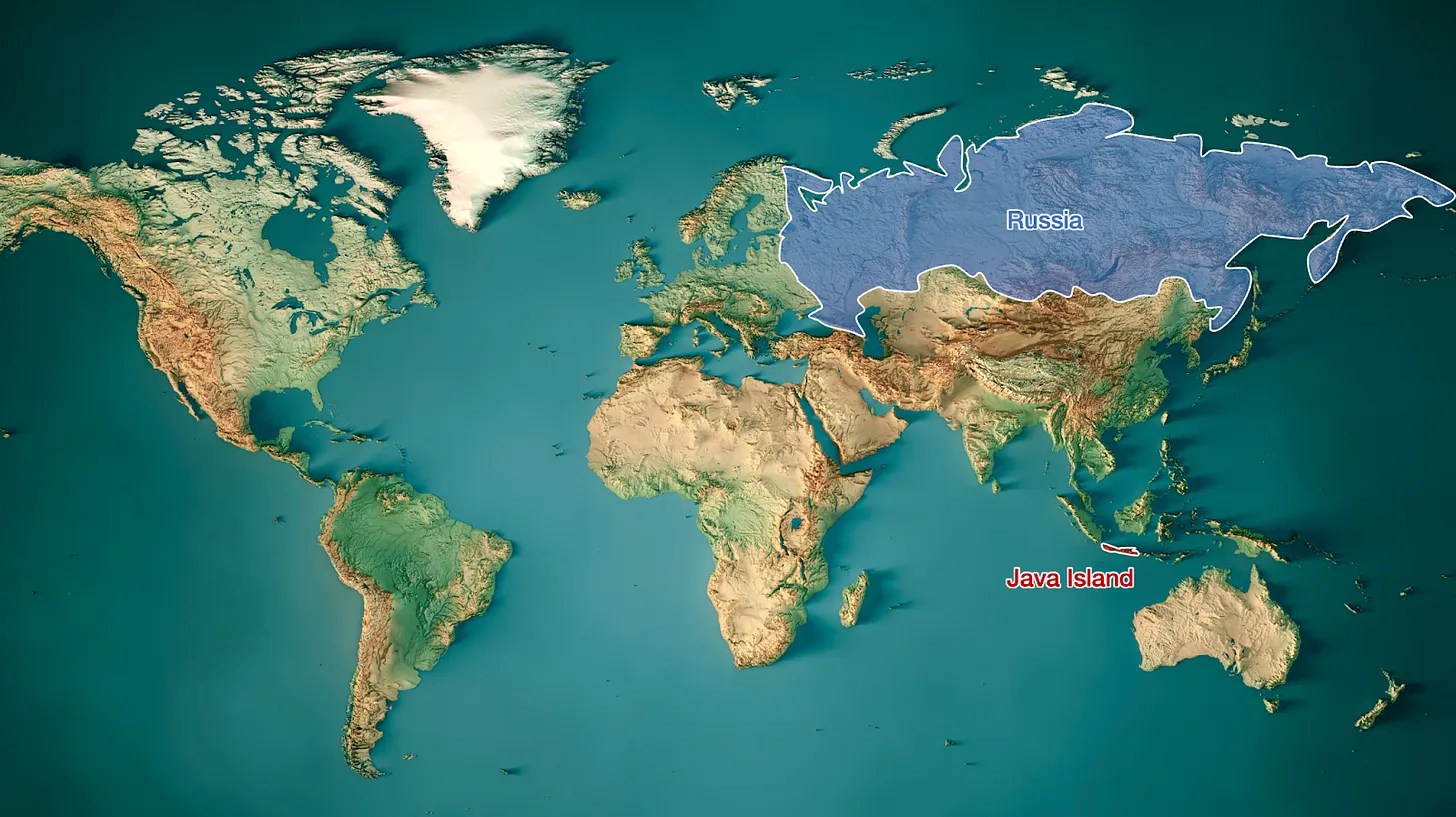
Indonesia is the 14th largest country by area at 735,358 square miles; Java, the island on which the capital Jakarta is located, is only 58,000 square miles– but Java is home to over half the Indonesian population, over 150 million people. It’s the most populous island in the world, and one of its most populous places. Tomas Pueyo explores the reasons why…
Java’s population density is 1,100 people per square km. This is 3x the density of Japan or the Philippines, 7x that of China, 30x that of the US. It’s nearly the density of Houston, Texas. For an entire island! With volcanoes!
Even weirder: Its neighboring islands in Indonesia are not that densely populated. Compared to its big neighboring islands, it’s 8x more densely populated than Sumatra and 30x more than Borneo.
Why!? What made this island so special?
Read on for a fascinating explanation: “Why is Java So Weird?!” from @tomaspueyo via his wonderful newsletter Uncharted Territories.
* Marco Polo (who was probably, it turns out, actually talking about Sumatra)
###
As we dig into development, we might recall that it was on this date in 1497 that Dominican friar and populist agitator Girolamo Savonarola, having convinced the populace of Florence to expel the Medici and recruited the city-state’s youth in a puritanical campaign, presided over “The Bonfire of the Vanities,” the public burning of art works, books, cosmetics, and other items deemed to be vessels of personal aggrandizement. Many art historians, relying on Vasari’s account, believe that Botticelli, a partisan of Savonarola, consigned several of his paintings to the flames and “fell into very great distress.” Others are not so certain. In any case, it seems sure that the fire consumed works by Fra Bartolomeo, Lorenzo di Credi, and many other painters, along with a number of statues and other antiquities.

“The function of small corner shops in maintaining cities as viable social institutions does not appear in the Washington consensus. The possibility that corner shops may do better at safeguarding social cohesion than mass imprisonment is considered outlandish – if it is considered at all.”*…

For decades, globalist neoliberalism (and here) has driven the policies and practices and political, commercial, and financial leaders and institutions across the developed– and given development policy, the developing– world. Rana Foroohar argues that its time may be up; geography is retaking the upper hand…
For most of the last 40 years, U.S. policymakers acted as if the world were flat. Steeped in the dominant strain of neoliberal economic thinking, they assumed that capital, goods, and people would go wherever they would be the most productive for everyone. If companies created jobs overseas, where it was cheapest to do so, domestic employment losses would be outweighed by consumer benefits. And if governments lowered trade barriers and deregulated capital markets, money would flow where it was needed most. Policymakers didn’t have to take geography into account, since the invisible hand was at work everywhere. Place, in other words, didn’t matter.
U.S. administrations from both parties have until quite recently pursued policies based on these broad assumptions—deregulating global finance, striking trade deals such as the North American Free Trade Agreement, welcoming China into the World Trade Organization (WTO), and not only allowing but encouraging American manufacturers to move much of their production overseas. Free-market globalism was of course pushed in large part by the powerful multinational companies best positioned to exploit it (companies that, of course, donated equally to politicians from both major U.S. parties to ensure that they would see the virtues of neoliberalism). It became a kind of crusade to spread this new American creed around the globe, delivering the thrill of fast fashion and ever-cheaper electronic gadgets to consumers everywhere. American goods, in effect, would represent American goodness. They would advertise American philosophical values, the liberalism tucked inside neoliberalism. The idea was that other countries, delighted by the fruits of American-style capitalism, would be moved to become “free” like the United States.
By some measures, the results of these policies were tremendously beneficial: American consumers in particular enjoyed the fruits of cheap foreign manufacturing while billions of people were lifted out of poverty, especially in developing countries. As emerging markets joined the free-market system, global inequality declined, and a new global middle class was born. How free it was politically, of course, depended on the country.
But neoliberal policies also created immense inequalities within countries and led to sometimes destabilizing capital flows between them. Money can move much faster than goods or people, which invites risky financial speculation. (The number of financial crises has grown substantially since the 1980s.) What is more, neoliberal policies caused the global economy to become dangerously untethered from national politics. Through much of the 1990s, these tectonic shifts were partly obscured in the United States by falling prices, increased consumer debt, and low interest rates. By the year 2000, however, the regional inequalities wrought by neoliberalism had become impossible to ignore. While coastal U.S. cities prospered, many parts of the Midwest, the Northeast, and the South were experiencing catastrophic job losses. Average incomes among U.S. states began to diverge, having converged throughout the 1990s…
Since the beginning of the neoliberal era, a handful of economists had pushed back against the received wisdom of the field. Karl Polanyi, an Austro-Hungarian economic historian, critiqued classical economic views as early as 1944, arguing that totally free markets were a utopian myth. Scholars of the postwar period, including Joseph Stiglitz, Dani Rodrik, Raghuram Rajan, Simon Johnson, and Daron Acemoglu, also understood that place mattered. As Stiglitz, who grew up in the Rust Belt, once told me, “It was obvious if you were raised in a place like Gary, Indiana, that markets aren’t always efficient.”
This view, that location plays a role in determining economic outcomes, is only just beginning to land in policy circles, but a growing body of research supports it. From the work of Thomas Piketty, Emmanuel Saez, and Gabriel Zucman to that of Raj Chetty and Thomas Philippon, there is now a consensus among scholars that geographically specific factors such as the quality of public health, education, and drinking water have important economic implications. That might seem intuitive or even obvious to most people, but it has only recently gained broad acceptance among mainstream economists. As Peter Orszag, who served as President Barack Obama’s budget director, told me, “If you ask a normal human being, ‘Does it matter where you are?’ they would start from the presumption that ‘Yes, where you live and where you work and who you’re surrounded by matters a ton.’ It’s like Econ 101 has just gone off the path for the last 40 to 50 years, and we’re all little islands atomized into perfectly rational calculating machines. And policy has just drifted along with this thinking.” He added, “The Economics 101 approach, which is place-agnostic, has clearly failed.”
The importance of place has become even more evident since the start of the COVID-19 pandemic, the economic decoupling of the United States and China, and Russia’s war in Ukraine. Globalization has crested and begun to recede. In its place, a more regionalized and even localized world is taking shape. Faced with rising political discontent at home and geopolitical tensions abroad, governments and businesses alike are increasingly focused on resilience in addition to efficiency. In the coming post-neoliberal world, production and consumption will be more closely connected within countries and regions, labor will gain power relative to capital, and politics will have a greater impact on economic outcomes than it has for half a century. If all politics is local, the same could soon be true for economics…
All economics is local: “After Neoliberalism,” from @RanaForoohar in @ForeignAffairs. Eminently worth reading in full (and contemplating the consequences of this all-too-plausible shift for addressing global issues like change change and the migration it is sure to drive).
###
As we re-scope, we might recall that it was on this date in 1975 that prescient objectors, the Sex Pistols, made their live debut at St Martin’s School Of Art in central London, supporting a band called Bazooka Joe, which included Stuart Goddard (the future Adam Ant). The Pistols’ performance lasted 10 minutes.

You must be logged in to post a comment.