Posts Tagged ‘Opium Wars’
“Her Majesty’s government should do nothing to place in peril our opium revenues. As for preventing the manufacturing of opium, and the sale of it in China, that is far beyond your power.”*

An excerpt from Linda Jaivin‘s The Shortest History of China…
European traders had been trying to get a foothold in China for centuries. As eager as the Europeans were for Chinese tea, silk, and porcelain, the Chinese remained indifferent to European goods. The Qing restricted access to ports, confining foreign merchants to Guangzhou (Canton), from October to March. Foreign traders resented this, as well as having to work with licensed Chinese intermediaries and abide by local law. In 1793, the British sent an experienced diplomat, Lord George Macartney, to Qianlong’s court carrying a letter arguing for greater access to the empire’s markets, including a reduction in tariffs, the ability of merchants to live in China year-round, and the stationing of an ambassador in Beijing.
The eighty-year-old Qianlong agreed to receive the Englishman at his imperial hunting lodge at Chéngdé, northeast of Beijing. The protocol of an imperial audience demanded a kowtow. Macartney refused, instead bowing on one knee before Qianlong, just as he did with his own sovereign, King George III. Qianlong received him courteously anyway, but once Macartney left and his letter was translated, Qianlong instructed his ministers to bolster the Qing’s coastal defenses, predicting that England, ‘fiercer and stronger than other countries in the Western Ocean,’ might ‘stir up trouble.’ To Macartney he prefaced his reply by saying that the Qing had everything it needed in abundance: ‘I set no value on objects strange or ingenious, and have no use for your country’s manufactures.’
The British East India Company, which enjoyed a British monopoly on East Asian trade, had something for which at least some Chinese had use: opium, grown in British-controlled India. Opium was already cultivated in China, but in small quantities — soldiers and manual laborers relied on it for pain relief, and some of the idle rich smoked it for pleasure. In 1729, the British sold two hundred chests of opium into China, each containing almost sixty kilograms of the drug. In 1790, three years before Macartney’s visit, they sold 4,054 chests. That number increased steadily.
Qianlong retired in 1796 in a gesture of filial piety, not wanting his reign to outlast that of his revered grandfather, Kangxi. This left the problem of opium to his successor, Jiāqìng (r. 1796-1820).
In 1815, the British sent another envoy, Lord Amherst, to Beijing. Jiāqìng expelled him after another tussle over the kowtow.
Opium addiction began to damage the fabric of Chinese society. The illegal trade fostered corruption, and silver drained from the imperial coffers. Debate raged in the court of Jiāqìng and his successor, Dàoguāng (r. 1821-1850), over whether to legalize opium — encouraging domestic production and limiting trade-related corruption — or ban it. In 1838, Daoguang decided on prohibition. In March 1839, the emperor sent the official Lín Zéxú (1785-1850) to Guangzhou, the hub of the opium trade, to implement the ban. By July, Lin had arrested thousands of addicts and confiscated almost twenty-three thousand kilos of opium, as well as seventy thousand pipes.
Lín Zéxú demanded that the 350 or so foreign traders in Guangzhou surrender their opium. As tensions rose, he locked them in their warehouses. Chinese soldiers blew horns and banged gongs to increase the pressure on them. It took six weeks, but the foreigners handed over twenty thousand chests. Now in possession of almost 1.4 million kilos of opium, Lín Zéxú had it mixed with water, salt, and lime and flushed out to sea.
In response, British warships blockaded the entrance to Guangzhou’s harbor, smashed through Chinese defenses, and captured ports including Shanghai and Ningbo, blocking maritime traffic on the Grand Canal and lower Yangtze. This became known as the First Opium War.
Under duress, the Qing signed the Treaty of Nanjing in 1842, which granted the British access to Guangzhou, Shanghai, and three other ‘treaty ports.’ It also ceded the island of Hong Kong — ‘fragrant port,’ named for the spice trade — to the British in perpetuity. (The British foreign secretary at the time, Lord Palmerston, questioned the wisdom of acquiring ‘a barren island with hardly a House upon it’ that would never become a great ‘Mart of Trade.’) It imposed indemnities on the Qing totaling twenty-one million silver dollars. The United States, France, and other nations piled on with their own demands, including ‘extraterritoriality’ exemption from local justice for foreigners who committed crimes in China. Chinese law would not apply within ‘concessions’ those parts of the treaty ports controlled by foreign powers. These agreements were the first of what are called the Unequal Treaties, beginning a century of China’s humiliation at the hands of various imperialist powers. They heralded the beginning of the end, not just of the Qing, but of the dynastic system by which China had been ruled for thousands of years…
Via the invaluable Delancyplace (@delanceyplace): “The Opium Wars.”
* Lord Ellenborough, 1843
###
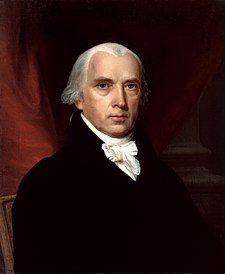
As we contemplate colonialism, we might recall that it was on this date in 1812 that President James Madison signed the declaration of war against Great Britain that formally launched the War of 1812.
Three U.S. incursions into Canada launched in 1812 and 1813 had been handily turned back by the British despite the fact that the bulk of British force was tied up in an unpleasantness with the Emperor of France and his troops. But the decline of Napoleon’s strength freed the English to devote more resources to the West… leading to the 1814 burning of the White House, the Capital, and much of the rest of official Washington by British soldiers (retaliating for the U.S. burning of some official buildings in Canada). Still, by the end of 1814 a combination of naval and ground victories by the Americans had driven the British back to Canada, and on December 14, 1814 the Treaty of Ghent, ending the war, was signed… sadly for the British, word of the accord did not reach troops on the Gulf Coast in time to head off an attack (on January 8, 1815) on New Orleans– which was turned back by American forces led by Andrew Jackson. Jackson became a national hero, who rode his fame to the (rebuilt) White House; Johnny Horton got a Number One record out of it (Billboard Hot 100, 1959)… and the English had to console themselves with their victory at Waterloo later that year– on this date in 1815…
The Groves of Academe…
It’s that time of year- graduation season. So, from our friends at Good, a look back at what college graduates will remember, and a peek forward to what those escaping high school can expect: “The Top 10 Oddest College Courses that $50,000 Can Buy.”
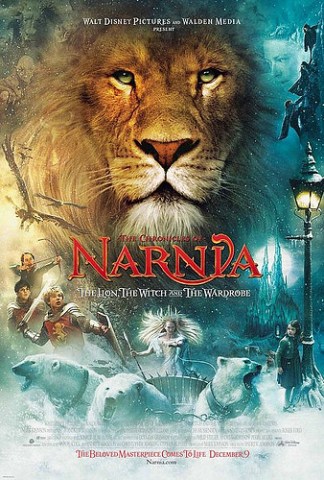 Beyond Narnia: The Political Theory and Writings of C.S. Lewis
Offered by Brown University (Providence, Rhode Island)
Annual cost of tuition and fees: $52,030
Photo (cc) by Flickr user menj
More provocative pedagogy at “The Top 10 Oddest College Courses that $50,000 Can Buy.”
As we sharpen our pencils, we might recall that it was on this date in 1839 that Chinese authorities led by Lin Zexu destroyed 1.2 million kg of opium confiscated from British merchants in Canton. Sino-British trade had been brisk since 1756. Initially the trade was an exchange of British silver for Chinese luxury goods; but this generated a trade imbalance that the British addressed by beginning, in the 1780’s to substitute opium (harvested in India) for silver. While opium had some documented medical uses, the primarily application was “recreational”– and it proved very popular indeed. Imports of the narcotic exploded. In the 1830’s the British East India Company’s monopoly on Chinese trade was ended, and Americans began to import cheaper Turkish opium to compete with the British. Use in China grew even more widespread… and the problem that it created became undeniable. In 1839, the Daoguang Emperor appointed Lin Zexu governor of Canton, charging him with ending the opium trade… and so it was that the First Opium War was begun.
The Chinese underestimated Britain’s commitment to its merchants– and its newly-strengthened military and naval power. The War ended In 1842 with the Treaty of Nanking, the first of what the Chinese called “the unequal treaties,” which granted an indemnity to Britain, opened five “treaty [free, for the British] ports,” and the ceded of Hong Kong Island to the Crown. But even these concessions failed to satisfy the British appetite for trade; the Second Opium War began in 1856.
 HMS Nemesis destroying Chinese junks during the First Opium War (source)
In Xanadu did Kubla Khan…
 an exhibit in The Opium Museum
This website is a virtual museum dedicated to a little-known subject: the artistry of antique Chinese opium-smoking paraphernalia.
The controversy of the Opium Wars and the subsequent British opium trade with China is still widely remembered today. What has been forgotten is that by the time the trade was banished, and opium smoking began to be effectively eradicated in China, it had already become an integral part of Qing dynasty culture, indulged in at every level of Chinese society – from the lowliest rickshaw pullers to the court eunuchs within the luxurious chambers of old Peking’s Forbidden City. And to satisfy the sophisticated tastes of China’s noble, mandarin, and merchant classes, the paraphernalia and ritual of opium smoking reached dizzying artistic heights. Opium pipes, opium lamps and other accoutrements were crafted from the finest materials – ivory, jade, silver, cloisonné and porcelain.
Beginning in the 18th century, opium accompanied the Chinese diaspora: first to the Chinese quarters of Asian cities, and later to the Chinatowns of the West, particularly North America, where opium smoking in the Chinese manner and with Chinese-made paraphernalia became fashionable among non-Chinese.
Once the drug was banned and its paraphernalia outlawed, these illicit items were heaped into piles and burned in public bonfires. From Shanghai to Saigon to San Francisco, the means to smoke opium were destroyed along with the drug itself. So few examples of these relics remain that most experts on Chinese art are blithely unaware of just how sumptuous and opulent this art form had become during its heyday.
We at the Opium Museum believe that, right or wrong, opium smoking was a part of the human experience, and as such, examples of its paraphernalia should be preserved for posterity. We are not advocating the use of opium. Our appreciation lies in the unique design and aesthetic genius of opium paraphernalia, as well as the ritual that evolved around its preparation and ingestion. In no other addictive substance did man’s quest for mood-enhancement reach such artistic heights.
As we admire the accoutrement of vice (even as we abhor the vice itself), we might recall that, on this date in 1861, the Confederate States of America began selling postage stamps.

![Reblog this post [with Zemanta]](https://i0.wp.com/img.zemanta.com/reblog_e.png?w=700)
You must be logged in to post a comment.