Posts Tagged ‘Michelangelo’
“God has no religion”*…

For the last 15 years, the Public Religion Research Institute (PRRI) has done quantitative and qualitative research on religious values in the U.S. A recent study has generated a number of headlines, most focusing on a single issue– a good example: “People say they’re leaving religion due to anti-LGBTQ teachings and sexual abuse“… which is in fact a significant finding, but only one finding in a wide range of other interesting– and important– observations that emerge…
America encompasses a rich diversity of faith traditions, and “religious churning” is very common. In 2023, PRRI surveyed more than 5,600 adults across the United States about their experiences with religion. This report examines how well major faith traditions retain their members, the reasons people disaffiliate, and the reasons people attend religious services. Additionally, this report considers how atheists and agnostics differ from those who say they are “nothing in particular.” Finally, it analyzes the prevalence of charismatic elements as well as prophecy and prosperity theology in American churches and the role of charismatic Christianity in today’s Republican Party…
[Among the major areas explored…]
- “Unaffiliated” is the only major religious category experiencing growth…
- Catholic loss continues to be highest among major religious groups; white Evangelical retention rate has improved since 2016…
- While most disaffiliate because they stop believing, religious teachings on the LGBTQ community and clergy sexual abuse now play a more prominent role…
- The religiously unaffiliated are not a monolith…
- Most unaffiliated Americans are not looking for a religious or spiritual home…
- Church attendance among Americans is down and fewer Americans say religion is important; most Americans who attend religious services do so to feel closer to God…
- Exploring the prevalence of charismatic elements in American churches…
- Prophetic and Prosperity theological beliefs are more common among Republicans and African Americans…
- Religion and the MAGA Movement: The Role of Charismatic Christianity and Prophecy/Prophetic Beliefs in the Republican Party…
The state of faith in the U. S. and what it can tell us about our society: “Religious Change in America” from @PRRIpoll.
Apposite: “Ufologists, Unite!“– Nathaniel Rich‘s review of two books by D.W. Pasulka, a professor of religious studies at the University of North Carolina Wilmington who (to oversimplify only slightly) sees the growing devotion to UFOs/UAPs as a new religious movement… one not considered in the PRRI study.
* Gandhi
###
As we contemplate celestial conviction, we might recall that it was on this date in 1506 that the cornerstone of the current St. Peter’s Basilica was laid. (It was completed in 1626.) Located in Vatican City, an independent microstate enclaved within the city of Rome, it was initially planned in the 15th century by Pope Nicholas V and then Pope Julius II to replace the ageing Old St. Peter’s Basilica, which was built in the fourth century by Roman emperor Constantine the Great.
Designed principally by Donato Bramante, Michelangelo, and Carlo Maderno, with piazza and fittings by Gian Lorenzo Bernini, St. Peter’s is one of the most renowned works of the Italian High Renaissance. It is the largest church in the world (by interior measure). And while it is neither the mother church of the Catholic Church nor the cathedral of the Diocese of Rome (these equivalent titles being held by the Archbasilica of Saint John Lateran in Rome), St. Peter’s is regarded as one of the holiest Catholic shrines. The pope presides at a number of liturgies throughout the year both within the basilica or the adjoining St. Peter’s Square, liturgies that draw audiences numbering from 15,000 to over 80,000 people.

“Nothing is poorer than a truth expressed as it was thought”*…
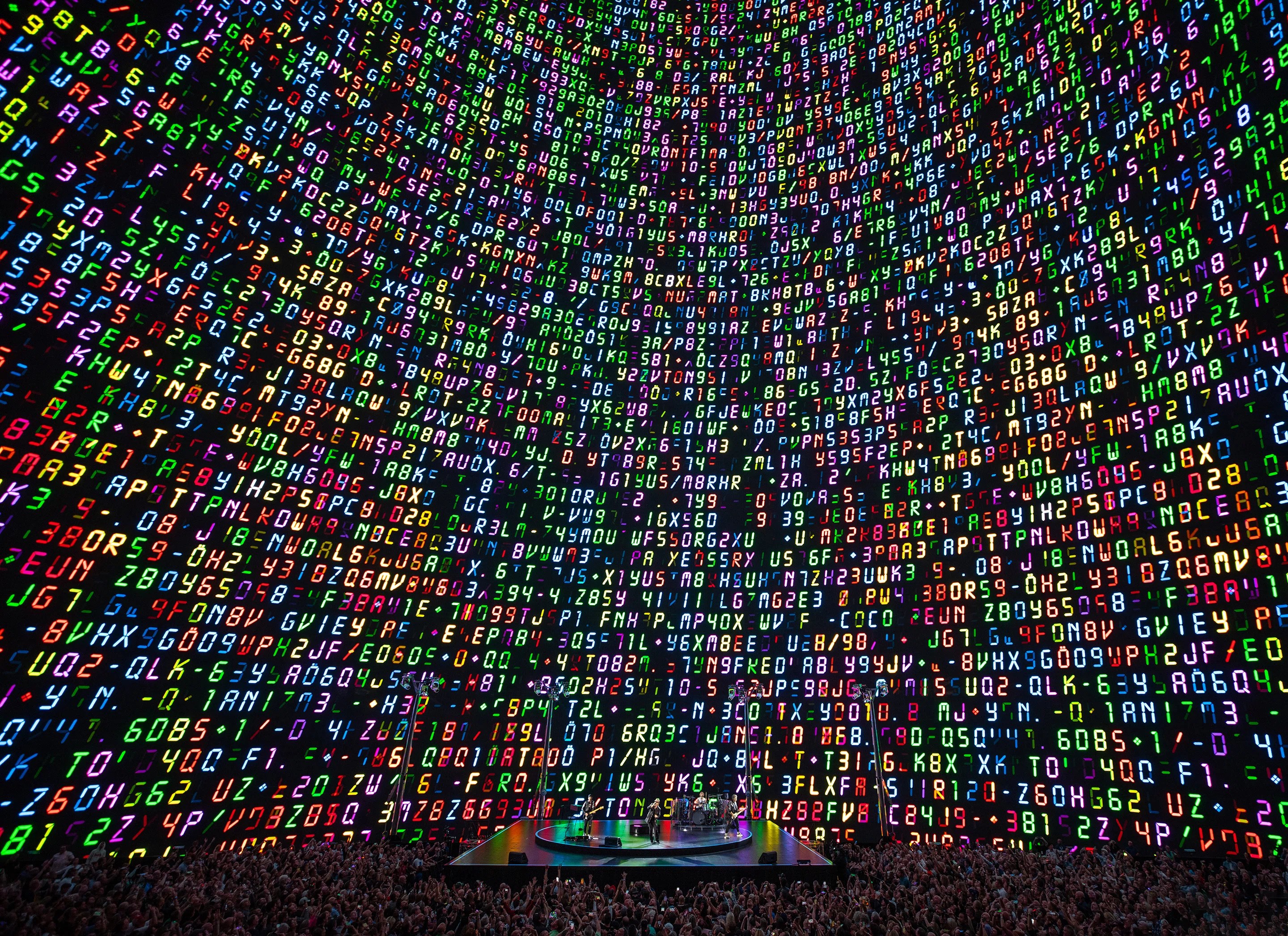
Many bemoan the experiential art that has taken over our galleries and screens, but is, Róisín Lanigan asks, it a populist fad or a way to make art more accessible?…
You don’t have to be a historian or a creative to notice it: art just isn’t what it used to be. Or at least, the act of experiencing art in public isn’t what it used to be. Whereas once we paid to go to galleries to silently view paint behind plexiglass, a new wave of curators and creators have decided that for art to be truly appreciated, we must be completely immersed in the audio, visual and experiential world it inhabits. From London’s Outernet to Yayoi Kusama’s Infinity Mirrors and Vegas’s controversial The Sphere, it’s never been clearer that we’re living in the midst of the immersive art boom.
Even if you’ve never been to one of these spaces – all immersive art exhibitions exist as ‘spaces’; ‘gallery’ is increasingly an archaic term – you’ll be cognisant of their existence. Because they don’t just live in the real world, they live on your screen too. Social media is awash with immersive exhibition selfies, with videos recommending the top ten best immersive art events to see for free in most big cities. The hashtag ‘immersive art’ clocks in at over 99 million views on TikTok and nearly half a million on Instagram (where in all fairness millennials are less amenable to the transformative power of the hashtag than the algorithmically attuned TikTok zoomers).
Outernet, based in Soho, sees around 1.5 million to their ‘district’ on a monthly basis, and say they’re on track to hit 6.8 million visitors this year alone, which would put them on track to be one of the most visited destinations in the UK, just one year after opening. The Smithsonian says that Kusama’s roving Infinity Mirrors exhibition has reached 330 million people across Twitter and other platforms. It’s not a leap to say we’re reaching, if we haven’t already, peak immersive art. But is that a bad thing? And if we’re already at the apex, where do we go from here?
It’s easy to take up the mantle that immersive-mania is, of course, wholly bad. The arguments for this always follow common throughlines; it’s common, it’s populist, it’s diluting the experience of what true art really is. In a recent scathing example, a Vulture review of Refik Anadol’s Unsupervised at Moma called the immersive exhibition “a glorified lava lamp” and accused it of being nothing more than “crowd-pleasing, like-generating mediocrity”.
But who decides what that experience is, what it looks like? The art world, much like the fashion and film industries, has undergone much-needed transformations in recent years to get rid of those antiquated ideals and cultural gatekeepers. Slowly but surely, it’s become more diverse, younger, more experimental and in the process, more accessible. For every charge that immersive events are diluting our experience of artistry, there’s a counterpoint to be made that it’s opening that experience out to people who might not normally gravitate towards it…
[But, she reports, there’s a snake in the garden…]
There is, though, for all the accessibility that immersive exhibitions offer, something antithetical to the experience of being moved by a piece of art when in the back of our minds we’re thinking about how many likes we might get for it on social media. Immersive events which actively encourage selfies and photo opportunities risk detracting from the art itself; a depressing natural end-point to queues to take photos in front of the Mona Lisa and cameras being banned from Basquiat’s recent exhibition in London. Although cameras could never be conceivably banned from the grid-ready world of immersive art, it’s a fine line to treat between posting too much too; leaving your exhibition open to an ‘Instagram vs Reality’ takedown, or revealing spoilers. In the case of Sphere, organisers briefly considered asking guests to put stickers over their phone cameras before realising that their footage is as much promotion as it is a leak…
… There are so many immersive pop-ups that even the gallerists and producers themselves are getting sick of it. Lizzie Pocock tells me almost every brief she’s received for the past five years has used the word “immersive”, a term she now calls “overused”. “I don’t want to sort of be disrespectful, but so many things that get called immersive, you still sort of just go and watch,” she says. “You don’t feel like you’re in them, or you’re affected by them. It’s almost a bit of a lazy word, a buzzword, isn’t it? It’s like, let’s do something that’s immersive. It’s perhaps an excuse to not really delve into sort of the deeper experience and the deeper reason for why you’re putting it live.”
If the people behind the immersive shows are getting sick of them, then perhaps we finally have reached peak immersive. Now we just have to wait for audiences to catch up, for the algorithm to get bored, and for the art world to determine what their next lucrative buzzword will be. Personally, my money’s on AI…
“Have we reached peak immersive art?,” from @rosielanners in @itsnicethat.
See also: “The Rise of ‘Immersive’ Art” and “Ready to plunge in? The rise and rise of immersive art.”
* “Nothing is poorer than a truth expressed as it was thought. Committed to writing in such cases, it is not even a bad photograph. Truth wants to be startled abruptly, at one stroke, from her self-immersion, whether by uproar, music or cries for help.” – Walter Benjamin
###
As we dive in, we might spare a thought for Michelangelo di Lodovico Buonarroti Simoni; he died on this date in 1564. A sculptor, painter, architect, poet, and engineer in the High Renaissance, Michelangelo was considered one of the greatest artists of his time. And given his profound influence on the development of Western art, he has subsequently been considered one of the greatest artists of all time. Indeed, he is widely held to be (with Leonardo da Vinci) the archetypal Renaissance man.
Further to the item above, we might also note that, via his painting on the ceiling of the Sistine Chapel in Rome, he was a pioneer of immersive art.

“It is often our mightiest projects that most obviously betray the degree of our insecurity– the construction of fortifications, for instance”*…

From Public Domain Review, a look at a 17th century book that collects (beautiful) plans for forts and fortifications…
What is the peculiar appeal of military architecture? Whether Norman castle or Cold War concrete, there is a kind of sublimity that belongs to defensive design. It stems obviously from the massive scale of construction, and from the luxury of uncompromised execution that generous defence budgets afford. But there is also pleasure to be taken in the unornamented purity of style of structures that have been built solely for practical ends.
These qualities are abundant in the work of the seventeenth-century French military engineer Allain Manesson Mallet. Born in Paris in 1630, Manesson studied mathematics before becoming a soldier (he added the name Mallet in tribute to his teacher). In 1663, he was posted to Alentejo as an army engineer in the service of the Portuguese king Alfonso VI, where he fortified chateaux, until the Treaty of Lisbon in 1668. He returned to France with an appointment as mathematics instructor at the court of Louis XIV.
He recorded his military ideas in a highly successful manual, The Works of Mars (i.e. “the art of war”) in 1671. A year later came German and Dutch editions (the source of the images above), even though France was by then at war with the Netherlands.
Manesson’s book encompassed theories of fortifications from their origins in designs developed in the sixteenth century by Michelangelo and the architect Vincenzo Scamozzi, including more recent innovations of French and Dutch engineers….
More– and many more renderings of ramparts: “The Works of Mars” from @PublicDomainRev.
* W. G. Sebald, Austerlitz
###
As we build bastions, we might understand the Dutch interest in Manesson’s manual as we recall that it was on this date in 1602 that the Spanish-held city of Grave in the Netherlands was taken, at the end of a two-month siege, by a Dutch and English army led by Maurice of Orange and Francis Vere respectively.
Part of the Eighty Years’ War and the Anglo–Spanish War, the Siege of Grave and its ultimate fall were severe enough to cause a major mutiny in the Spanish army.

“The medieval principles led up to Raphael, and the modern principles lead down from him”*…
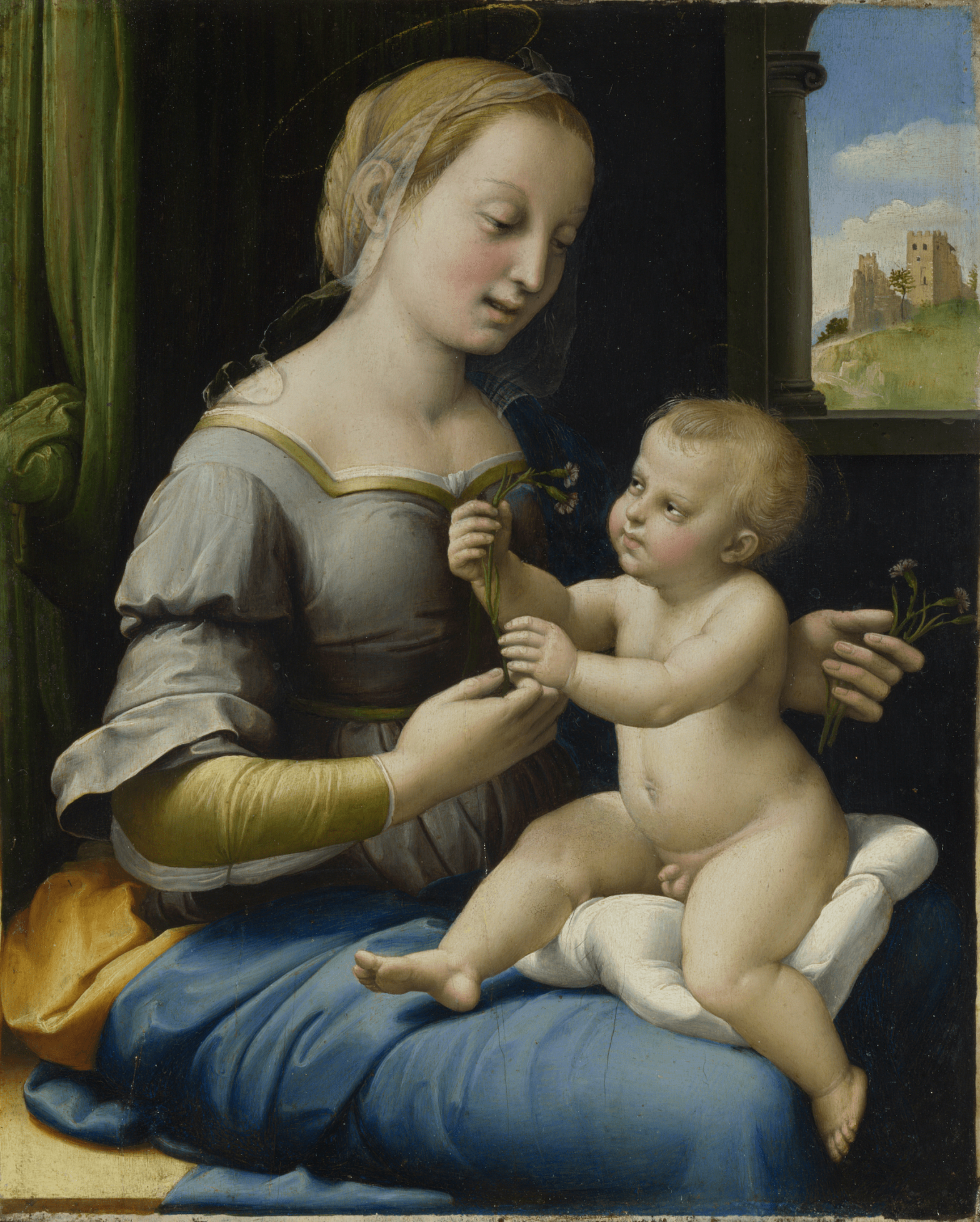
On the occasion of a major National Gallery show in London, Michael Glover on Raphael…
… he was born a mere man, a citizen of Urbino in the Marche, the son of a court painter, who was orphaned very young and raised by an uncle who also happened to be a priest. Perhaps the reverence is due to his talents, which were superabundant, and moved in so many directions at once. He was a painter, printmaker, architect, designer, sculptor, and much else. His industriousness, and the consistent quality of his output, were superhuman. That is undeniable.
Raphael painted relatively few portraits… during his short lifetime, and even fewer in which he could be said to have painted them in order to please himself, because he was always so much in demand by immensely rich and powerful male patrons for the kinds of things that they wanted him to do. They wanted him to beautify public (and private) spaces, all the greater to reflect their own power and importance — beneath the ever-watchful eye of the Christian God, their chief sponsor, in whose revered name they splashed all this cash.
Raphael was the very well remunerated servant of these rich masters, and this was entirely a matter of choice. He was boundlessly ambitious and intimidatingly energetic (he was already running a studio by the age of 17), charming, good-looking (though not to an excessive degree), diplomatic, and utterly opportunistic. Michelangelo loathed him because, though much younger, Raphael seemed to sweep all before him. What a break for the irascible, prickly Michelangelo that his young rival died, quite unexpectedly, of a fever, when he did, leaving him unchallenged for decades!
And Raphael, the name, the work, the style, has resonated and resonated across the centuries…
On the Renaissance painter described by Vasari, his first biographer, as the universal artist: “Raphael Between Heaven and Earth,” in @hyperallergic.
Raphael paints wisdom, Handel sings it, Phidias carves it, Shakespeare writes it, Wren builds it, Columbus sails it, Luther preaches it, Washington arms it, Watt mechanizes it.
Ralph Waldo Emerson
###
As we appreciate art, we might recall that it was on this date in 1890 that Vincent Van Gogh shot himself in the chest with a revolver; he died two days later. A post-impressionist painter, he was not commercially successful in his lifetime and, struggling with severe depression and poverty, committed suicide at the age of 37. But he subsequently became, with Raphael, one of the most famous and influential figures in Western art history.

“To paraphrase Oedipus, Hamlet, Lear, and all those guys, “I wish I had known this some time ago”*…

“Irony” is a term that everyone uses and seems to understand. It is also a concept that is notoriously difficult to define. Much like Winona Ryder’s character in the 1994 rom-com “Reality Bites,” whose inability to describe irony costs her a job interview, we know it when we see it, but nonetheless have trouble articulating it. Even worse, it seems as if the same term is used to describe very different things. And following your mother’s advice — to look it up in the dictionary — is liable to leave you even more confused than before.
Uncertainty about irony can be found almost everywhere. An American president posts a tweet containing the phrase “Isn’t it ironic?” and is derided for misusing the term. A North Korean dictator bans sarcasm directed at him and his regime because he fears that people are only agreeing with him ironically. A song about irony is mocked because its lyrics contain non-ironic examples. The term has been applied to a number of different phenomena over time, and as a label, it has been stretched to accommodate a number of new senses. But exactly how does irony differ from related concepts like coincidence, paradox, satire, and parody?…
A handy guide to distinguishing the notoriously slippery concept of irony from its distant cousins coincidence, satire, parody, and paradox: “What Irony is Not,” excerpted from Irony and Sarcasm, by Roger Kreuz.
* Sign of the Unicorn
###
As we choose our words, we might recall that it was on this date in 1483 that Pope Sixtus IV consecrated the Sistine Chapel (which takes its name from his) in the Apostolic Palace, the official residence of the Pope in Vatican City. Originally known as the Cappella Magna (Great Chapel), Sixtus had renovated it, enlisting a team of Renaissance painters that included Sandro Botticelli, Pietro Perugino, Pinturicchio, Domenico Ghirlandaio and Cosimo Rosselli to create a series of frescos depicting the Life of Moses and the Life of Christ, offset by papal portraits above and trompe-l’œil drapery below. Michelangelo’s famous ceiling was painted from 1508 to 1512; and his equally-remarkable altarpiece, The Last Judgement, from 1536 to 1541.

You must be logged in to post a comment.