Posts Tagged ‘logic’
“If everybody contemplates the infinite instead of fixing the drains, many of us will die of cholera”*…

A talk from Maciej Cegłowski that provides helpful context for thinking about A.I…
In 1945, as American physicists were preparing to test the atomic bomb, it occurred to someone to ask if such a test could set the atmosphere on fire.
This was a legitimate concern. Nitrogen, which makes up most of the atmosphere, is not energetically stable. Smush two nitrogen atoms together hard enough and they will combine into an atom of magnesium, an alpha particle, and release a whole lot of energy:
N14 + N14 ⇒ Mg24 + α + 17.7 MeV
The vital question was whether this reaction could be self-sustaining. The temperature inside the nuclear fireball would be hotter than any event in the Earth’s history. Were we throwing a match into a bunch of dry leaves?
Los Alamos physicists performed the analysis and decided there was a satisfactory margin of safety. Since we’re all attending this conference today, we know they were right. They had confidence in their predictions because the laws governing nuclear reactions were straightforward and fairly well understood.
Today we’re building another world-changing technology, machine intelligence. We know that it will affect the world in profound ways, change how the economy works, and have knock-on effects we can’t predict.
But there’s also the risk of a runaway reaction, where a machine intelligence reaches and exceeds human levels of intelligence in a very short span of time.
At that point, social and economic problems would be the least of our worries. Any hyperintelligent machine (the argument goes) would have its own hypergoals, and would work to achieve them by manipulating humans, or simply using their bodies as a handy source of raw materials.
… the philosopher Nick Bostrom published Superintelligence, a book that synthesizes the alarmist view of AI and makes a case that such an intelligence explosion is both dangerous and inevitable given a set of modest assumptions.
[Ceglowski unpacks those assumptions…]
If you accept all these premises, what you get is disaster!
Because at some point, as computers get faster, and we program them to be more intelligent, there’s going to be a runaway effect like an explosion.
As soon as a computer reaches human levels of intelligence, it will no longer need help from people to design better versions of itself. Instead, it will start doing on a much faster time scale, and it’s not going to stop until it hits a natural limit that might be very many times greater than human intelligence.
At that point this monstrous intellectual creature, through devious modeling of what our emotions and intellect are like, will be able to persuade us to do things like give it access to factories, synthesize custom DNA, or simply let it connect to the Internet, where it can hack its way into anything it likes and completely obliterate everyone in arguments on message boards.
From there things get very sci-fi very quickly.
[Ceglowski unspools a scenario in whihc Bostrom’s worst nightmare comes true…]
This scenario is a caricature of Bostrom’s argument, because I am not trying to convince you of it, but vaccinate you against it.
…
People who believe in superintelligence present an interesting case, because many of them are freakishly smart. They can argue you into the ground. But are their arguments right, or is there just something about very smart minds that leaves them vulnerable to religious conversion about AI risk, and makes them particularly persuasive?
Is the idea of “superintelligence” just a memetic hazard?
When you’re evaluating persuasive arguments about something strange, there are two perspectives you can choose, the inside one or the outside one.
Say that some people show up at your front door one day wearing funny robes, asking you if you will join their movement. They believe that a UFO is going to visit Earth two years from now, and it is our task to prepare humanity for the Great Upbeaming.
The inside view requires you to engage with these arguments on their merits. You ask your visitors how they learned about the UFO, why they think it’s coming to get us—all the normal questions a skeptic would ask in this situation.
Imagine you talk to them for an hour, and come away utterly persuaded. They make an ironclad case that the UFO is coming, that humanity needs to be prepared, and you have never believed something as hard in your life as you now believe in the importance of preparing humanity for this great event.
But the outside view tells you something different. These people are wearing funny robes and beads, they live in a remote compound, and they speak in unison in a really creepy way. Even though their arguments are irrefutable, everything in your experience tells you you’re dealing with a cult.
Of course, they have a brilliant argument for why you should ignore those instincts, but that’s the inside view talking.
The outside view doesn’t care about content, it sees the form and the context, and it doesn’t look good.
[Ceglowski then engages the question of AI risk from both of those perspectives; he comes down on the side of the “outside”…]
The most harmful social effect of AI anxiety is something I call AI cosplay. People who are genuinely persuaded that AI is real and imminent begin behaving like their fantasy of what a hyperintelligent AI would do.
In his book, Bostrom lists six things an AI would have to master to take over the world:
- Intelligence Amplification
- Strategizing
- Social manipulation
- Hacking
- Technology research
- Economic productivity
If you look at AI believers in Silicon Valley, this is the quasi-sociopathic checklist they themselves seem to be working from.
Sam Altman, the man who runs YCombinator, is my favorite example of this archetype. He seems entranced by the idea of reinventing the world from scratch, maximizing impact and personal productivity. He has assigned teams to work on reinventing cities, and is doing secret behind-the-scenes political work to swing the election.
Such skull-and-dagger behavior by the tech elite is going to provoke a backlash by non-technical people who don’t like to be manipulated. You can’t tug on the levers of power indefinitely before it starts to annoy other people in your democratic society.
I’ve even seen people in the so-called rationalist community refer to people who they don’t think are effective as ‘Non Player Characters’, or NPCs, a term borrowed from video games. This is a horrible way to look at the world.
So I work in an industry where the self-professed rationalists are the craziest ones of all. It’s getting me down… Really it’s a distorted image of themselves that they’re reacting to. There’s a feedback loop between how intelligent people imagine a God-like intelligence would behave, and how they choose to behave themselves.
So what’s the answer? What’s the fix?
We need better scifi! And like so many things, we already have the technology…
[Ceglowski eaxplains– and demostrates– what he means…]
In the near future, the kind of AI and machine learning we have to face is much different than the phantasmagorical AI in Bostrom’s book, and poses its own serious problems.
It’s like if those Alamogordo scientists had decided to completely focus on whether they were going to blow up the atmosphere, and forgot that they were also making nuclear weapons, and had to figure out how to cope with that.
The pressing ethical questions in machine learning are not about machines becoming self-aware and taking over the world, but about how people can exploit other people, or through carelessness introduce immoral behavior into automated systems.
And of course there’s the question of how AI and machine learning affect power relationships. We’ve watched surveillance become a de facto part of our lives, in an unexpected way. We never thought it would look quite like this.
So we’ve created a very powerful system of social control, and unfortunately put it in the hands of people who run it are distracted by a crazy idea.
What I hope I’ve done today is shown you the dangers of being too smart. Hopefully you’ll leave this talk a little dumber than you started it, and be more immune to the seductions of AI that seem to bedevil smarter people…
In the absence of effective leadership from those at the top of our industry, it’s up to us to make an effort, and to think through all of the ethical issues that AI—as it actually exists—is bringing into the world…
Eminently worth reading in full: “Superintelligence- the idea that eats smart people,” from @baconmeteor.
* John Rich
###
As we find balance, we might recall that it was on thsi date in 1936 that Alan Turing‘s paper, “On Computable Numbers, with an Application to the Entscheidungsproblem,” in which he unpacked the concept of what we now call the Turing Machine, was received by the London Mathematical Society, which published it several months later. It was, as (Roughly) Daily reported a few days ago, the start of all of this…

“Machines take me by surprise with great frequency”*…
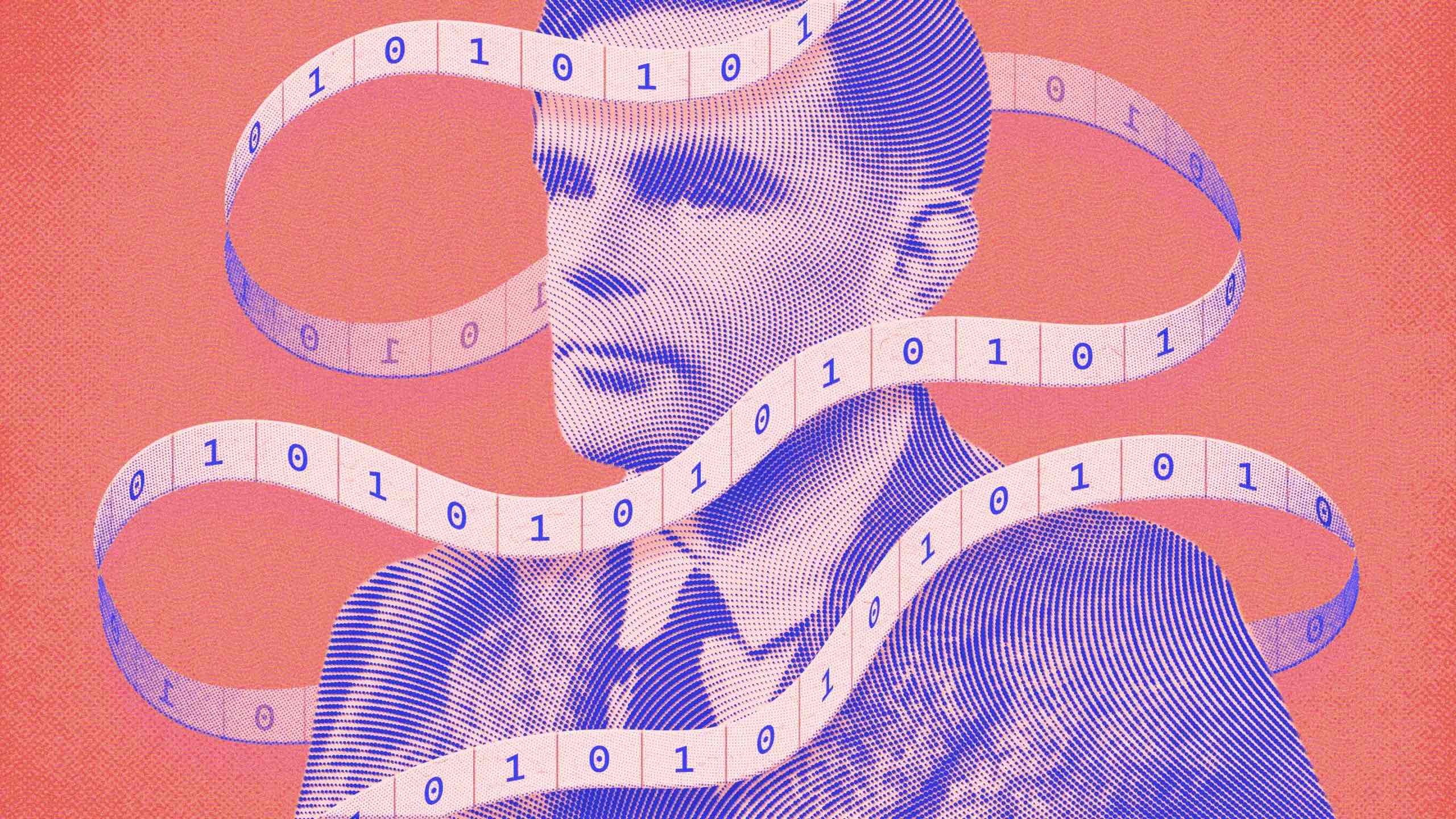
In search of universals in the 17th century, Gottfried Leibniz imagined the calculus ratiocinator, a theoretical logical calculation framework aimed at universal application, that led Norbert Wiener to suggest that Leibniz should be considered the patron saint of cybernetics. In the 19th century, Charles Babbage and Ada Lovelace took a pair of whacks at making it real.
Ironically, it was confronting the impossibility of a universal calculator that led to modern computing. In 1936 (the same year that Charlie Chaplin released Modern Times) Alan Turing (following on Godel’s demonstration that mathematics is incomplete and addressing Hilbert‘s “decision problem,” querying the limits of computation) published the (notional) design of a “machine” that elegantly demonstrated those limits– and, as Sheon Han explains, birthed computing as we know it…
… [Hilbert’s] question would lead to a formal definition of computability, one that allowed mathematicians to answer a host of new problems and laid the foundation for theoretical computer science.
The definition came from a 23-year-old grad student named Alan Turing, who in 1936 wrote a seminal paper that not only formalized the concept of computation, but also proved a fundamental question in mathematics and created the intellectual foundation for the invention of the electronic computer. Turing’s great insight was to provide a concrete answer to the computation question in the form of an abstract machine, later named the Turing machine by his doctoral adviser, Alonzo Church. It’s abstract because it doesn’t (and can’t) physically exist as a tangible device. Instead, it’s a conceptual model of computation: If the machine can calculate a function, then the function is computable.
…
With his abstract machine, Turing established a model of computation to answer the Entscheidungsproblem, which formally asks: Given a set of mathematical axioms, is there a mechanical process — a set of instructions, which today we’d call an algorithm — that can always determine whether a given statement is true?…
… in 1936, Church and Turing — using different methods — independently proved that there is no general way of solving every instance of the Entscheidungsproblem. For example, some games, such as John Conway’s Game of Life, are undecidable: No algorithm can determine whether a certain pattern will appear from an initial pattern.
…
Beyond answering these fundamental questions, Turing’s machine also led directly to the development of modern computers, through a variant known as the universal Turing machine. This is a special kind of Turing machine that can simulate any other Turing machine on any input. It can read a description of other Turing machines (their rules and input tapes) and simulate their behaviors on its own input tape, producing the same output that the simulated machine would produce, just as today’s computers can read any program and execute it. In 1945, John von Neumann proposed a computer architecture — called the von Neumann architecture — that made the universal Turing machine concept possible in a real-life machine…
As Turing said, “if a machine is expected to be infallible, it cannot also be intelligent.” On the importance of thought experiments: “The Most Important Machine That Was Never Built,” from @sheonhan in @QuantaMagazine.
* Alan Turing
###
As we sum it up, we might spare a thought for Martin Gardner; he died on this date in 2010. Though not an academic, nor ever a formal student of math or science, he wrote widely and prolifically on both subjects in such popular books as The Ambidextrous Universe and The Relativity Explosion and as the “Mathematical Games” columnist for Scientific American. Indeed, his elegant– and understandable– puzzles delighted professional and amateur readers alike, and helped inspire a generation of young mathematicians.
Gardner’s interests were wide; in addition to the math and science that were his power alley, he studied and wrote on topics that included magic, philosophy, religion, and literature (c.f., especially his work on Lewis Carroll– including the delightful Annotated Alice— and on G.K. Chesterton). And he was a fierce debunker of pseudoscience: a founding member of CSICOP, and contributor of a monthly column (“Notes of a Fringe Watcher,” from 1983 to 2002) in Skeptical Inquirer, that organization’s monthly magazine.

“I think inequality is fine, as long as it is in the common interest. The problem is when it gets so extreme, when it becomes excessive.”*…

Alvin Chang, with a beautifully-told (and beautifully-illustrated) primer on a startling unpacking of the fundamental logic of our market economy…
Why do super rich people exist in a society?
Many of us assume it’s because some people make better financial decisions. But what if this isn’t true? What if the economy – our economy – is designed to create a few super rich people?
That’s what mathematicians argue in something called the Yard-sale model…
Read it and reap: “Why the super rich are inevitable,” by @alv9n in @puddingviz.
* Thomas Piketty, A Brief History of Equality
###
As we ponder propriety, we might recall that it was on this date that Jane Austen‘s [and here] Pride and Prejudice was published. A novel of manners– much concerned with the dictates of wealth (and the lack thereof), it was credited to an anonymous authors “the author of Sense and Sensibility,” as all of her novels were.

Title page of the first edition (source)
“The opposite of a correct statement is a false statement. But the opposite of a profound truth may well be another profound truth.”*…

Zeno shows the Doors to Truth and Falsity (Veritas et Falsitas). Fresco in the Library of El Escorial, Madrid (source)
As Joel David Hamkins explains, an ancient puzzle leads ultimately to a remarkable observation on the malleable nature of infinite sums…
The Greek philosopher Zeno of Elea (c. 490–430 BC) argued in antiquity that all motion is impossible. It is simply impossible to walk through town or even across the room, to go from here to there. What? We know, of course, that this is possible—we walk from here to there every day. And yet, Zeno offers us his proof that this is an illusion—we simply cannot do it.
Zeno argued like this. Suppose it were possible for you to move from some point A to another distinct point B.

Before you complete the move from A to B , however, you must of course have gotten half way there.

But before you get to this half-way point, of course, you must get half way to the half-way point! And before you get to that place, you must get half way there.

And so on, ad infinitum.
Thus, to move from A to B , or indeed anywhere at all, one must have completed an infinite number of tasks—a supertask. It follows, according to Zeno, that you can never start moving—you cannot move any amount at all, since before doing that you must already have moved half as much. And so, contrary to appearances, you are frozen motionless, unable to begin. All motion is impossible.
Is the argument convincing? On what grounds would you object to it? Do you think, contrary to Zeno, that we can actually complete infinitely many tasks? How would that be possible?
It will be no good, of course, to criticize Zeno’s argument on the grounds that we know that motion is possible, for we move from one point to another every day. That is, to argue merely that the conclusion is false does not actually tell you what is wrong with the argument—it does not identify any particular flaw in Zeno’s reasoning. After all, if it were in fact an illusion that we experience motion, then your objection would be groundless…
Learning from an enigma– plus “the most contested equation in middle school” and more: “Zeno’s paradox,” from @JDHamkins.
* Niels Bohr
###
As we interrogate infinity, we might send-well-groomed birthday greetings to Frank Joseph Zamboni, Jr.; he was born on this date in 1901. An engineer and inventor, he is best known for the modern ice resurfacer, seen at work at hockey games and figure skating competitions (completing its rounds, Zeno notwithstanding); indeed, his surname is the registered trademark for these devices.

“Oops, I did it again”*…

(Roughly) Daily has contemplated game theory a number of times (e.g., here). The Generalist Academy offers a particularly poignant example…
Football [or, as it’s called in the U.S., soccer] has a lot of strange rules – like Ted Lasso, I still don’t understand exactly how the offside rule works. But the basic game is pretty simple: get the ball into your opponent’s goal, and prevent them from getting the ball into your goal. Scoring a goal against your own side is a rare and accidental embarrassment. Usually.
The qualification round for the 1994 Caribbean Cup had some unusual rules. No match could end in a draw; if the teams were tied at the end of regular time, they would go into sudden death extra time. But! Any goal scored in extra time would count as two goals. This was presumably done because this tournament, like many, used goal difference to break ties in the qualifying groups. (Goal difference = total number of goals they’ve scored minus the number of goals they’ve conceded.) So that extra time “golden goal” would give a team an edge in the overall competition. Little did the organisers know that it would also lead to one of the strangest football games ever seen…
A truly remarkable match: “Own-Goal Football,” from @GeneralistAcad.
* Britney Spears (Songwriters: Martin Max / Rami Yacoub)
###
As we work backwards, we might send carefully-calculated birthday greetings to Félix Édouard Justin Émile Borel; he was born on this date in 1871. A mathematician (and politician, who served as French Minister of the Navy), he is remembered for his foundational work in measure theory and probability. He published a number of research papers on game theory and was the first to define games of strategy.
But Borel may be best remembered for a thought experiment he introduced in one of his books, proposing that a monkey hitting keys at random on a typewriter keyboard will – with absolute certainty – eventually type every book in France’s Bibliothèque Nationale de France. This is now popularly known as the infinite monkey theorem.

You must be logged in to post a comment.