Posts Tagged ‘identity’
“We cannot reason ourselves out of our basic irrationality. All we can do is to learn the art of being irrational in a reasonable way.”*…

Classical economists posit that investment decisions are driven by rationality — a clear-eyed evaluation of risks and rewards… but then, meme stocks.
Kwabena Donkor, an assistant professor of marketing at Stanford Graduate School of Business has just unveiled some new research that suggests that identity distorts our financial choices, leading us to overvalue investments that reinforce our sense of self…
People don’t just invest with their wallets — they invest with their identity,” says Donkor, a faculty fellow at the Stanford Institute for Economic Policy Research.
In a novel field study involving soccer fans, Donkor and several colleagues uncover evidence of how identity can skew economic thinking. The researchers ran a series of experiments focused on fans who placed nearly 40,000 bets on English Premier League matches during the 2021-22 season. Participants — nearly 800 from Kenya and 1,600 from the United Kingdom — were given a budget and asked to place bets on upcoming matches. They received winnings based on the outcomes of randomly selected games.
Most of the participants were longtime supporters of a particular team. (Manchester United was their top favorite.) They were more optimistic about their favorite teams, betting 20% more on them. They rated their teams as having a 10% to 18% higher chance of victory than other teams, even when presented with forecasts from professional oddsmakers suggesting otherwise. These results persisted even after accounting for factors such as personal beliefs and appetite for risk.
The study also finds that participants placed a lower value on gains not aligned with their identity — what the researchers referred to as an “identity tax.” Fans effectively devalued these neutral bets by 17% to 27%. For poorly performing teams, this “tax” could soar as high as 47%, reflecting a strong emotional impulse to support their favorite team even when the odds were against it
The research, detailed in a paper cowritten with Lorenz Goette of the National University of Singapore, Maximilian Müller of the Toulouse School of Economics, Eugen Dimant of the University of Pennsylvania, and Michael Kurschilgen of UniDistance Suisse, shows that identity-driven preferences explain much of the gap in bettors’ behavior. Simulations showed that distorted beliefs due to identity account for as much as 44% of the difference in fans’ betting behavior. The remainder stemmed from preferences rooted in identity itself — people were willing to sacrifice potential gains to support options that aligned with who they are…
… The study’s findings have far-reaching implications for understanding economic behavior, particularly in areas like consumer finance, brand loyalty, and even political decision-making…
… the research hints at how consumers view different products. Items that align with a person’s identity are likely to be seen as complements rather than substitutes. For example, Donkor says a consumer who identifies strongly with sustainability might view eco-friendly products as essential enhancements to their lifestyle, even if they’re similar to comparable, less expensive goods.
Ultimately, these findings could improve our thinking about the biases that influence our financial lives. As the researchers point out, acknowledging the role of identity in decision-making is one key to designing better policies, creating more effective financial products, and ultimately improving individual welfare. “If we ignore identity,” Donkor concludes, “we miss the bigger picture in decision-making.”…
Understanding the choices that we, and those around us, make: “What Soccer Fans Can Teach Us About Making Irrational Decisions,” from @SIEPR.
* Aldous Huxley
###
As we ponder the price (and as a reminder that there are other kinds of irrational decisions and that sometimes returns do matter to investors), we might recall that it was on this date in 2008 that Bernard “Bernie” Madoff was arrested and charged with defrauding investment clients of as much as $65 billion. A pioneer in electronic trading and chairman of the Nasdaq stock exchange in the early 1990s, he had turned to money management. By 2008, Madoff was running a huge and growing fund that promised its investors high and stable returns… the problem: it was a Ponzi scheme, the largest known Ponzi scheme in history.

“After nourishment, shelter and companionship, stories are the thing we need most in the world”*…

The estimable Terry Eagleton on the equally estimable Peter Brooks‘ Seduced By Story: The Use and Abuse of Narrative…
Forty years ago, Peter Brooks produced a pathbreaking study, Reading for the Plot, which was part of the so-called narrative turn in literary criticism. Narratology, as it became known, spread swiftly to other disciplines: law, psychology, philosophy, religion, anthropology and so on. But a problem arose when it began to seep into the general culture – or, as Brooks puts it, into ‘the orbit of political cant and corporate branding’ [and importantly, your correspondent would observe, into journalism]. Not since the work of Freud, whose concepts of neurosis, the Oedipal and the unconscious quickly became common currency, has a piece of high theory so readily entered everyday language. The narratologists had given birth to a monster: George W. Bush announced that ‘each person has got their own story that is so unique’; ‘We are all virtuoso novelists,’ the philosopher Daniel Dennett wrote. What Brooks glumly calls ‘the narrative takeover of reality’ was complete…
Everyone these days is on a journey, which can lend some provisional shape to lives without much sense of direction. Humanity was also on a journey in medieval times, but it was a collective expedition with an origin, well signposted stages and a distinct destination. The Enlightenment notion of progress was more open-ended: to imagine an end to human self-perfecting was to deny our infinite potential. This creed was inherited by some 19th-century thinkers – ironically, since the dominant model of development at the time was evolution, which is random, littered with blind alleys and lengthy digressions and heads nowhere in particular.
If you can carve your own path to the grave these days, it is because grand narratives of this kind have crumbled and can no longer constrain you. Journeys are no longer communal but self-tailored, more like hitchhiking than a coach tour. They are no longer mass products but for the most part embarked on alone. The world has ceased to be story-shaped, which means that you can make your life up as you go along. You can own it, just as you can own a boutique. As the current cliché has it, everybody is different, a proposition which if true would spell the end of ethics, sociology, demography, medical science and a good deal besides.
…
One of the great clichés of modernism is that art imposes order on an anarchic reality. In Brooks’s view, narrative invests our lives with a shapeliness they would otherwise lack. But the world comes to us not as raw material to be sculpted but as already organised, in however rough-and-ready a way. There may be no grand narrative immanent in history, but that isn’t to say situations don’t have a certain structure which is independent of the ways we articulate them. That there was once a revolution in France isn’t just a tidy way of arranging the world. One of the traditional functions of fiction was to give voice to stories that were somehow inherent in reality. This conception was thrown into crisis by modernism, rather as a faith in the inevitability of human progress was challenged around the same time by the First World War. Among other things, modernism is a crisis of narrativity. Telling a story is becoming harder and harder. But there is no point in making things even more difficult for yourself by adopting the Nietzschean position that reality lacks all form until we ourselves breathe one into it.
…
For a slim volume, Seduced by Story covers an impressive array of topics: oral narrative, the function of character, the role of narration in law, storytelling’s affinity with child’s play, what narrators know and don’t know, those raconteurs who calculate the act of narrating into their stories and those who refuse to be authoritative. In the end, however, there is a touch of desperation about demanding so much of fiction and narrative while acknowledging the ease with which they are abused. It isn’t that Brooks thinks fiction can save us, as I.A. Richards believed poetry could; it’s rather that he can think of nowhere else to turn. Story and poetry are important, to be sure, but not that important. Literary types, unsurprisingly, have often overrated their power, loading them with a pressure to which they are unequal. The hope that value and insight are to be found mainly in art is a symptom of our condition, not a solution to it….
The use and abuse of narrative: “What’s Your Story?” from @EagletonTerry in @LRB. Both the book and the article are eminently worth reading in full.
And see (also from Eagleton): “Conspiracies are the price of freedom“: Conspiracy theories are the insecure person’s defense against a confusing world with too many competing narratives. Conspiracy theories allow believers to claim a position of relative strength: They alone know what is going on. This hidden truth is always sinister, not because conspiracy theorists need more to fear, but because they need an explanation for the fear in which they already live. (via @TheBrowser)
* Philip Pullman
###
As we ponder plots, we might note that today is National Rationalization Day.

“Man, sometimes it takes a long time to sound like yourself”*…
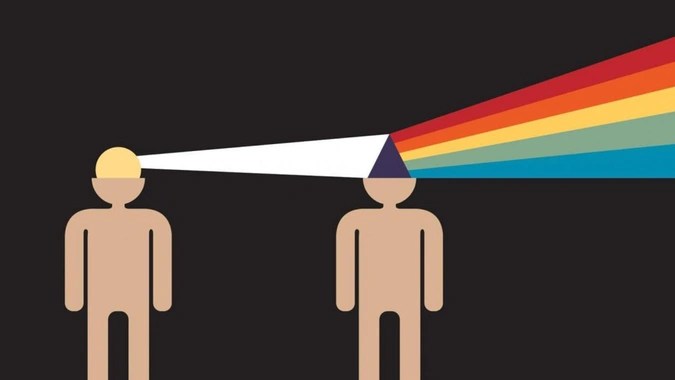
Ian Leslie on why we need to take control of our influences and what we can learn from artists about how to do so…
We live in age of social influence, and while there is no shortage of advice on how to take advantage of that – how to influence others, how to build a following, how to change minds – there is a dearth of thinking on how to be influenced. Which is odd, because that seems, to me, to be one of the key questions of the age…
Being influenced by others is inevitable and essential. But it’s also true that when we over-conform to influences, we surrender individuality. We get infected by harmful behaviours: smoking, anorexia, even suicide are all subject to social influence. We swallow conspiracy theories and false beliefs. We become mindless creatures of habit unable to imagine new possibilities. Conforming to influence can generate anxiety: we become worried that we’re not conforming well enough. There are externalities to be considered, too. Over-conformity is a kind of free-riding. The over-conformer takes from the shared pot of memes but fails to contribute to it. A society with too much imitation is liable to decay and degenerate, because it stops creating, thinking and innovating.
Each of us, then, has to try and strike a balance. Be impervious to social influence and you get closed off from the best that your fellow humans have to offer. Be defenceless against it and you become easily manipulable, boring, and unhappy.
But it’s harder than ever to strike this balance, because we live in societies where influence is everywhere, pressing upon us from all sides. We can instantly find out what strangers think, or at least what they say they’re thinking, on any given topic. We can consult with our friends every second of the day. It’s easier to outsource your opinions than ever; it feels good, it feels safe, to side with a crowd. There are higher costs to non-conformity, too: online communities assiduously police the boundaries of acceptable thought and behaviour…
… on the one hand, we have access to a broader range of information and insight than any generation in history, which ought to make us all more interesting. On the other, it’s very difficult, amidst the crossfire hurricane of influence, to think and act for yourself – to be you.
I could leave it there, with the conclusion that we’re all being influenced all the time and we’re not remotely prepared for how to manage these influences, and that maybe we should think about that a little more. But I want to add this: that there is a group of people who have a lot to teach us about how to live in the age of influence, because they have confronted this question with a special intensity for hundreds of years.
Artists (in the broad sense – painters, novelists, composers, etc) are pretty much defined by the struggle to be themselves; to absorb influences without surrendering to them; to be open to others and stubbornly individual. Consequently, artists have a different relationship to influence than the rest of us do. The core difference is this: artists do not absorb their influences passively. They choose their influences, and they choose how to be influenced by them…
Read on for sound advice: “How To Be Influenced,” from @mrianleslie via @TheBrowser.
Apposite: “The Age of Algorithmic Anxiety,” from @chaykak
* Miles Davis
###
As we steal like an artist, we might recall that it was on this date in 1790 that the first U.S. patent was issued to Samuel Hopkins for an improvement “in the making of Potash and Pearlash by a new Apparatus and Process.” It was signed by then-President George Washington.
A number of inventors had been clamoring for patents and copyrights (which were, of course, anticipated in Article I, Section 8, Clause 8 of the Constitution), but the first session of the First Congress in 1789 acted on none of the petitions. On January 8, 1790, President Washington recommended in his State of the Union address that Congress give attention to the encouragement of new and useful inventions; and within the month, the House appointed a committee to draft a patent statute. Even then the process worked slowly: Hopkins’ patent was issued over six months later.

“Attend to mushrooms and all other things will answer up”*…

The living– and conscious?– infrastructure of the biosphere…
Imagine that you are afloat on your back in the sea. You have some sense of its vast, unknowable depths—worlds of life are surely darting about beneath you. Now imagine lying in a field, or on the forest floor. The same applies, though we rarely think of it: the dirt beneath you, whether a mile or a foot deep, is teeming with more organisms than researchers can quantify. Their best guess is that there are as many as one billion microbes in a single teaspoon of soil. Plant roots plunge and swerve like superhighways with an infinite number of on-ramps. And everywhere there are probing fungi.
Fungi are classified as their own kingdom, separate from plants and animals. They are often microscopic and reside mostly out of sight—mainly underground—but as Merlin Sheldrake writes in Entangled Life: How Fungi Make Our Worlds, Change Our Minds and Shape Our Futures, they support and sustain nearly all living systems. Fungi are nature’s premiere destroyers and creators, digesting the world’s dead and leaving behind new soil. When millions of hair-like fungal threads—called hyphae—coalesce, felting themselves into complex shapes, they emerge from the ground as mushrooms. A mushroom is to a fungus as a pear is to a pear tree: the organism’s fruiting body, with spores instead of seeds. Mushrooms disperse spores by elaborate means: some species generate puffs of air to send them aloft, while others eject them by means of tiny, specialized catapults so they accelerate ten thousand times faster than a space shuttle during launch.
But Sheldrake is most interested in fungi’s other wonders—specifically, how they challenge our understanding of nonhuman intelligence and stretch the notion of biological individuality. Fungi infiltrate the roots of almost every plant, determining so much about its life that researchers are now asking whether plants can be considered plants without them. They are similarly interwoven throughout the human body, busily performing functions necessary to our health and well-being or, depending on the fungi’s species and lifestyle, wreaking havoc. All of this prompts doubts about what we thought we knew to be the boundaries between one organism and another…
ungi themselves form large networks of hyphae strands in order to feed. These strands, when massed together, are called mycelium. The total length of mycelium threaded through the globe’s uppermost four inches of soil is believed to be enough to span half the width of our galaxy. Mycelium is constantly moving, probing its surroundings in every direction and coordinating its movements over long distances. When food is found—a nice chunk of rotting wood, for example—disparate parts of the mycelium redirect to coalesce around it, excrete enzymes that digest it externally, and then absorb it. As Sheldrake puts it, “The difference between animals and fungi is simple: Animals put food in their bodies, whereas fungi put their bodies in the food.”
Fungi are literally woven into the roots and bodies of nearly every plant grown in natural conditions. “A plant’s fungal partners,” Sheldrake writes, “can have a noticeable impact on its growth.” In one striking example, he describes an experiment in which strawberries grown with different fungal partners changed their sweetness and shape. Bumblebees seemed able to discern the difference and were more attracted to the flowers of strawberry plants grown with certain fungal species. Elsewhere he discusses an experiment in which researchers took fungi that inhabited the roots of a species of coastal grass that grew readily in saltwater and added it to a dry-land grass that could not tolerate the sea. Suddenly the dry-land grass did just fine in brine.
Much has been written lately about trees communicating and sharing resources among themselves; healthy trees have been documented moving resources toward trees that have fallen ill. This is often characterized as friendship or altruism between trees, but it is not at all clear whether trees pass information or nutrients intentionally. What is clear, though, is that the fungal networks entwined in every tree root make this communication possible. “Why might it benefit a fungus to pass a warning between the multiple plants that it lives with?” Sheldrake asks. The answer is survival. “If a fungus is connected to several plants and one is attacked by aphids, the fungus will suffer as well as the plant,” he writes. “It is the fungus that stands to benefit from keeping the healthy plant alive.”…
Fungi are genetically closer to animals than to plants, and similar enough to humans at the molecular level that we benefit from many of their biochemical innovations. In fact, many of our pharmaceuticals are borrowed innovations from fungi. Penicillin, discovered in 1928 by the Scottish researcher Alexander Fleming, is a compound produced by fungus for protection against bacterial infection. The anti-cancer drug Taxol was originally isolated from the fungi that live inside yew trees. More than half of all enzymes used in industry are generated by fungi, Sheldrake notes, and 15 percent of all vaccines are produced using yeast. We are, as he puts it, “borrowing a fungal solution and rehousing it within our own bodies.”..
We know that fungi maintain “countless channels of chemical communication with other organisms,” and that they are constantly processing diverse information about their environment. Some can recognize color, thanks to receptors sensitive to blue and red light, though it is not entirely clear what they do with that information. Some even have opsins, light-detecting proteins also found within the rods and cones of the animal eye. One fungus, Phycomyces blakesleeanus, has a sensitivity to light similar to that of a human eye and can “detect light at levels as low as that provided by a single star” to help it decide where to grow. It is also able to sense the presence of nearby objects and will bend away from them before ever making contact. Still other fungi recognize texture; according to Sheldrake, the bean rust fungus has been demonstrated to detect grooves in artificial surfaces “three times shallower than the gap between the laser tracks on a CD.”
Can fungi, then, be said to have a mind of their own? That is, as Sheldrake puts it, a “question of taste”—there is no settled scientific definition for “intelligence,” not even for animals. The Latin root of the word means “to choose between,” an action fungi clearly do all the time. But the application of this kind of term to fungi is loaded with something more mystical than that simple definition and demands a willingness to rattle our sense of where we ourselves fall in the imagined hierarchy of life. If fungi can be said to think, it is a form of cognition so utterly different that we strain to see it.
After all, philosophers of mind like Daniel Dennett argue that drawing any neat line between nonhumans and humans with “real minds” is an “archaic myth.” Our brains evolved from nonmental material. “Brains are just one such network,” Sheldrake writes, “one way of processing information.” We still don’t know how the excitement of brain cells gives rise to experience. Can we really dismiss the possibility of cognition in an organism that clearly adapts, learns, and makes decisions simply based on the lack of a brain structure analogous to ours?
Perhaps there is intelligent life all around us, and our view is too human-centric to notice. Are fungi intelligent? Sheldrake reserves judgment, deferring instead to scientific mystery: “A sophisticated understanding of mycelium is yet to emerge.” Still, after spending long enough in the atmosphere of Sheldrake’s sporulating mind, I began to adopt the fungal perspective. I can’t help now but see something like a mind wherever there might be fungal threads—which is to say everywhere, a mesh-like entangled whole, all over the earth.
Fungi challenge our understanding of nonhuman intelligence and complicate the boundaries between one organism and another: “Our Silent Partners“– Zoë Schlanger (@zoeschlanger) reviewing Merlin Sheldrake’s Entangled Life: How Fungi Make Our Worlds, Change Our Minds and Shape Our Futures in @nybooks.
“Why did the mushroom go to the party? Because he was a fungi.” – Lewis Tomlinson
* A. R. Ammons
###
As we ponder partnership, we might spare a thought for Jens Wilhelm August Lind; he died on this date in 1939. An apothecary, botanist and mycologist, he published a full account of all fungi collected in Denmark by his teacher, Emil Rostrup. Combining his pharmaceutical and mycological knowledge, he was early in experimenting with chemical control of plant pathogens.
Lind also collaborated with Knud Jessen on an account on the immigration history of weeds to Denmark.

“Who are you?”*…

Detail of the François kratēr: the ship of Theseus (fragment from vase) source
In the metaphysics of identity, “the ship of Theseus” (legendary Greek hero and founder of Athens) is a thought experiment that raises the question of whether an object that has had all of its components replaced remains fundamentally the same object. One of the oldest concepts in Western philosophy, it was discussed by the likes of Heraclitus and Plato by ca. 500-400 BC; it first appeared in written form in Plutarch:
The ship wherein Theseus and the youth of Athens returned had thirty oars, and was preserved by the Athenians down even to the time of Demetrius Phalereus, for they took away the old planks as they decayed, putting in new and stronger timber in their place, insomuch that this ship became a standing example among the philosophers, for the logical question of things that grow; one side holding that the ship remained the same, and the other contending that it was not the same…
Vita Thesei, 22-23
Philosophers and theorists of identity still wrestle with the questions it raises…
Suppose that the famous ship has been kept in a harbor as a museum piece, and as the years went by some of the wooden parts began to rot and were replaced by new ones; then, after a century or so, all of the parts had been replaced. The question then is if the “restored” ship is still the same object as the original.
If it is then supposed that each of the removed pieces were stored in a warehouse, and after the century, technology developed to cure their rotting and enabled them to be put back together to make a ship, then the question is if this “reconstructed” ship is still the original ship. And if so, then what of the restored ship in the harbor?
Explore the puzzle at “The Ship of Theseus and the Question of Identity, ” “This thought experiment will have you questioning your identity,” “Identity, Persistence, and the Ship of Theseus,” and “Ship of Theseus.”
And for nifty list of appearances by the paradox in pop culture, see here.
###
As we interrogate identity, we might recall that it was on this date in 1856 that Millard Fillmore was nominated for the Presidency by the (altogether-accurately named far right nativist) Know-Nothing Party. Fillmore, who had been elected Vice President in 1848 had ascended to the presidency in 1850, when Zachary Taylor died, but then failed to get his own party’s– the Whig’s– nomination to run for re-election in 1852. In 1856, Fillmore turned to the Know-Nothings in (an ultimately unsuccessful) attempt actually to be elected to the highest office.
He was finally trumped by Gerald Ford, who was not even elected– but was appointed in 1973 by Richard Nixon– to the Vice-Presidency, then assumed the top job on Nixon’s resignation in 1974. Ford beat back a primary challenge from Ronald Reagan to win the Republican nomination in 1976, but lost to Jimmy Carter.
 Millard Fillmore, by Matthew Brady (1850)
You must be logged in to post a comment.