Posts Tagged ‘health care’
“Well, I was born in a small town”*…

… which is, new federal designations now dictate, definitely not an urban area…
Hundreds of urban areas in the U.S. are becoming rural, but it’s not because people are leaving.
It’s just that the U.S. Census Bureau is changing the definition of an urban area. Under the new criteria, more than 1,300 small cities, towns and villages designated urban a decade ago would be considered rural.
That matters because urban and rural areas qualify for different types of federal funding. Some communities worry the change could affect health clinics in rural areas as well as transportation and education funding from federal programs…
Groups like the American Hospital Association say the changes, which are the biggest being made to the definitions in decades, could cause problems for people who need medical care in rural areas…
Different federal programs use different definitions of urban and rural, and some communities qualify for rural funding for some programs and not others. But any changes “will have significant implications for many groups and communities,” said Kenneth Johnson, a senior demographer at the University of New Hampshire who studies rural issues.
“Another likely concern for many rural communities is that if many existing urban areas are redefined as rural, competition for the limited rural funds will increase,” Johnson said…
The difference a designation can make: “100s of US urban areas will become rural with new criteria,” from @AP.
[image above: source]
* John Mellencamp, “Small Town”
###
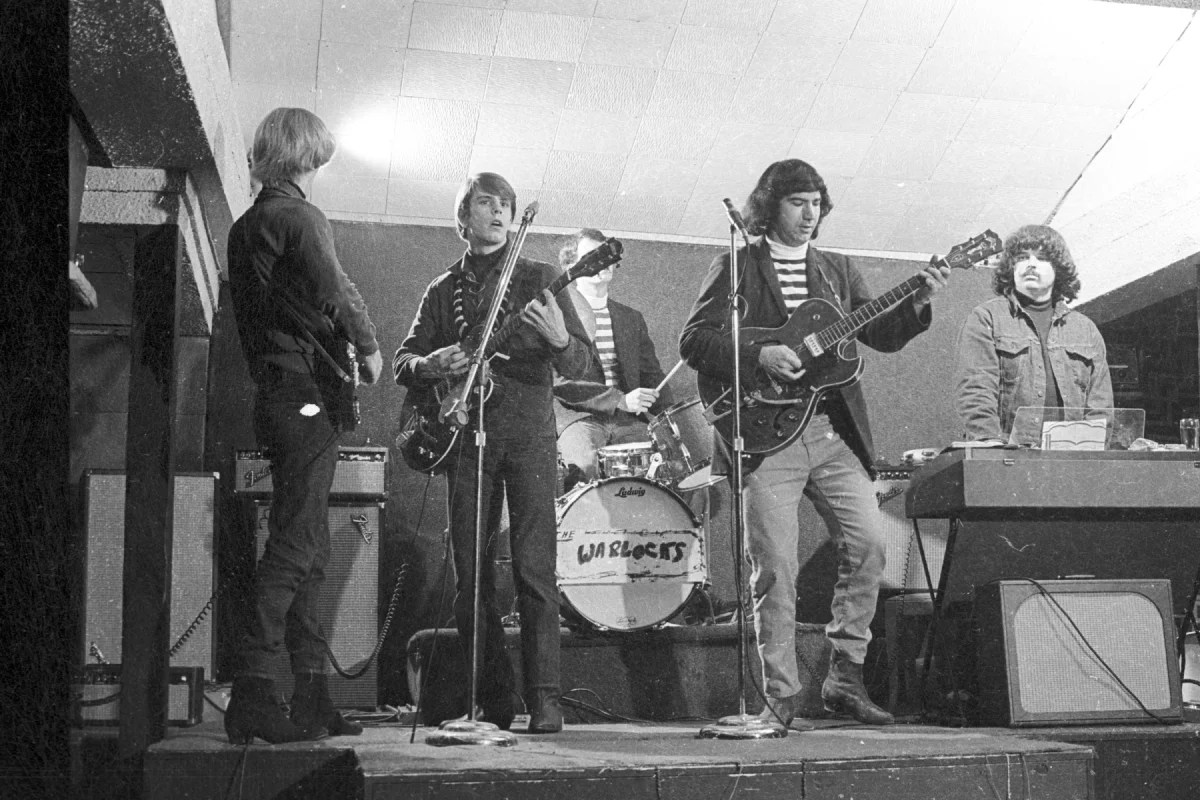
As we contemplate categories and their consequences, we might recall that it was on this date in 1965, at Magoo’s Pizza in (the then small town of) Menlo Park, CA, that Phil Lesh attended a performance of a band then known as The Warlocks. High on acid, he enjoyed it so much that he danced by himself in front of the bandstand. The Warlock’s leader, Jerry Garcia, cornered him and announced, “Hey, man-you’re going to be the bass player in this band”… and so the fundamental line-up of what became The Grateful Dead was set.
“By temporarily disrupting the order of the brain, a new order forms. And that order may have incredible value at either the level of mental health and psychology or the level of creativity.”*…

But, Zoe Cormier warns, if the means of that constructive disruption are industrialized and turned into aggressively-marketed products, we could be in for trouble…
Welcome to the strange new world of “psychedelic capitalism,” where dozens of start-ups have already raised millions (and in some cases billions) of dollars to commercialize psilocybin (the psychedelic ingredient in magic mushrooms), DMT (found in the Amazonian brew ayahuasca), mescaline (peyote’s active component), and LSD—despite the fact that all of these “classic psychedelics” are still ranked as Schedule I drugs under the federal Controlled Substances Act. Manufacturing any of these drugs without a license can still land you a long prison sentence. But marketing one, even though they all remain illegal and none have passed all the clinical trials required for approval? That can make you a millionaire…
The days when mind-bending psychedelics were seen as appealing only to drug dealers, nut jobs, and hippies are over. Today, serious-minded people interested in randomized controlled trials and stock valuations are leading the charge.
The “psychedelic renaissance” we’ve awaited for half a century—the promised era when acid, shrooms, and peyote would be brought back into legitimate research and legal access—is finally here. But will it turn out to be worth the wait? Or the hype?
Because it’s not like we ever stopped enjoying them: In the West, hippies, scientists, “healers,” and others have used psychedelics continuously for seven decades. And before we got our hands on them, Indigenous cultures used psychedelics for thousands of years as ritual sacraments. Now dozens of start-ups want to standardize, commercialize, alter, patent, and market these ancient compounds—and they stand to make a fortune doing so.
Will old-school profit-centered tactics bring down decades of dogged work by activists, scientists, and reformers to have these drugs reassessed for their virtues? Will we experience another nasty, research-smothering backlash?…
The profiteers have arrived; get ready for Psychedelics Inc.: “The Brave New World of Legalized Psychedelics Is Already Here,” from @zoecormier @thenation.
* Michael Pollan, in conversation with Tim Ferriss on Ferriss’ blog
###
As we tune in, we might spare a thought for Ellen Swallow Richards; she died on this date in 1911. The first female student admitted to MIT, she became its first female faculty member. A chemist, she did pioneering work in sanitary engineering, but is best remembered for her experimental research in domestic science, which laid the foundation for the new science of home economics, of which she is considered founder. She was one of the first ecofeminists, believing that women’s work within the home was not just vital to the economy, but also a critical aspect of our relationship to the earth.

“We are healthy only to the extent that our ideas are humane”*…

For three days, thousands of uninsured Americans converge on the Wise County [Virginia] Fairgrounds for the largest pop-up clinic in the country. Most are poor, many are in pain, but all have faith in a level of care that neither the government nor private industry can provide…

A story both heart-warming and horrifying: “Tent Revival.”
* Kurt Vonnegut, Breakfast of Champions
###
As we tend to the needy, we might send instructive birthday greetings to William Sanford “Bill” Nye; he was born on this date in 1955. A mechanical engineer turned actor, science educator, and television presenter, he is best known as the host of the PBS children’s science show Bill Nye the Science Guy (1993–1998), and for his many subsequent appearances in popular media.
Nye was greatly influenced by Carl Sagan, with whom he studied astronomy at Cornell University. He began his career with Boeing, in Seattle, designing hydraulic systems, from the early to mid 1980s. From 1986-91, he created and developed the Science Guy persona for local radio and TV, while eking out a spartan existence as a stand-up comedian. But in 1992. he made a pilot program for the local PBS station, attracted underwriters, and launched what became a five-year national PBS series, Bill Nye the Science Guy. Since then he has appeared in other TV science programs and as a guest expert on TV shows, continuing his quest to make science accessible to the public. He currently serves as CEO of The Planetary Society.

Say “ah”…
 click here for larger, interactive version
In 1960, hospital costs were were 38% of total U.S.healthcare costs; in 2010, they were 37%. But in 1960, hospital costs were $9 billion of a total $23.4 billion in healthcare costs; in 2010, they were $814 billion of a total $2, 186 billion. (Simple inflation, using the CPI as a metric, means that the 1960 figure, in 2010 dollars, would be around $1.8 billion.)
But in many ways more interesting than the growth in the overall total are the changes in how healthcare is financed– in who pays. In 1960, for example, almost 100% of the spending on prescription drugs came out of the consumer’s pocket; by 2010, out-of-pocket spending was down to 20%.
Watch the healthcare economy evolve in the California Healthcare Foundation’s interactive graphic, “U.S. Healthcare Spending: Who Pays?”
###
As we stock up on supplements, we might spare an anatomically-correct thought for Guillaume-Benjamin-Amand Duchenne (de Boulogne); he died on this date in 1875. Regarded by many to be the “father of modern neurology,” Duchenne developed the first working understanding of the conductivity of neural pathways; he was the first to understand the effect of lesions on these structures; and he innovated diagnostic techniques including deep tissue biopsy, nerve conduction tests, and clinical photography. He’s probably best remembered for identifying the myopathies that came to bear his name: Duchenne Muscular Dystrophy, Duchenne-Aran spinal muscular atrophy, Duchenne-Erb paralysis, Duchenne’s disease (Tabes dorsalis), and Duchenne’s paralysis (progressive bulbar palsy).

“Time moves in one direction, memory in another”*…

* William Gibson
###
As we Dance to the Music of Time, we might spare a thought for Lady Mary Wortley Montagu. An accomplished writer (her poems and her letters home from Turkey, where her husband was Ambassador, were widely influential), Lady Mary was perhaps as importantly a health-care pioneer: she was instrumental in establishing the practice of vaccination against smallpox.
Her last words, uttered on this date in 1762, were– appropriately enough– “It has all been most interesting.”
 Lady Mary, with her son Edward (source)
You must be logged in to post a comment.