Posts Tagged ‘free market’
“Without reflection, we go blindly on our way”*…

… or at least sociopathic. Indeed, Evgeny Morozov suggests, we may be well on our way. There may be versions of A.G.I. (Artificial General Intelligence) that will be a boon to society; but, he argues, the current approaches aren’t likely to yield them…
… The mounting anxiety about A.I. isn’t because of the boring but reliable technologies that autocomplete our text messages or direct robot vacuums to dodge obstacles in our living rooms. It is the rise of artificial general intelligence, or A.G.I., that worries the experts.
A.G.I. doesn’t exist yet, but some believe that the rapidly growing capabilities of OpenAI’s ChatGPT suggest its emergence is near. Sam Altman, a co-founder of OpenAI, has described it as “systems that are generally smarter than humans.” Building such systems remains a daunting — some say impossible — task. But the benefits appear truly tantalizing.
Imagine Roombas, no longer condemned to vacuuming the floors, that evolve into all-purpose robots, happy to brew morning coffee or fold laundry — without ever being programmed to do these things.Sounds appealing. But should these A.G.I. Roombas get too powerful, their mission to create a spotless utopia might get messy for their dust-spreading human masters. At least we’ve had a good run.Discussions of A.G.I. are rife with such apocalyptic scenarios. Yet a nascent A.G.I. lobby of academics, investors and entrepreneurs counter that, once made safe, A.G.I. would be a boon to civilization. Mr. Altman, the face of this campaign, embarked on a global tour to charm lawmakers. Earlier this year he wrote that A.G.I. might even turbocharge the economy, boost scientific knowledge and “elevate humanity by increasing abundance.”
This is why, for all the hand-wringing, so many smart people in the tech industry are toiling to build this controversial technology: not using it to save the world seems immoral. They are beholden to an ideology that views this new technology as inevitable and, in a safe version, as universally beneficial. Its proponents can think of no better alternatives for fixing humanity and expanding its intelligence.But this ideology — call it A.G.I.-ism — is mistaken. The real risks of A.G.I. are political and won’t be fixed by taming rebellious robots. The safest of A.G.I.s would not deliver the progressive panacea promised by its lobby. And in presenting its emergence as all but inevitable, A.G.I.-ism distracts from finding better ways to augment intelligence.
Unbeknown to its proponents, A.G.I.-ism is just a bastard child of a much grander ideology, one preaching that, as Margaret Thatcher memorably put it, there is no alternative, not to the market.
Rather than breaking capitalism, as Mr. Altman has hinted it could do, A.G.I. — or at least the rush to build it — is more likely to create a powerful (and much hipper) ally for capitalism’s most destructive creed: neoliberalism.
Fascinated with privatization, competition and free trade, the architects of neoliberalism wanted to dynamize and transform a stagnant and labor-friendly economy through markets and deregulation…
… the Biden administration has distanced itself from the ideology, acknowledging that markets sometimes get it wrong. Foundations, think tanks and academics have even dared to imagine a post-neoliberal future.Yet neoliberalism is far from dead. Worse, it has found an ally in A.G.I.-ism, which stands to reinforce and replicate its main biases: that private actors outperform public ones (the market bias), that adapting to reality beats transforming it (the adaptation bias) and that efficiency trumps social concerns (the efficiency bias).These biases turn the alluring promise behind A.G.I. on its head: Instead of saving the world, the quest to build it will make things only worse. Here is how…
[There follows a bracing run-down…]
… Margaret Thatcher’s other famous neoliberal dictum was that “there is no such thing as society.”The A.G.I. lobby unwittingly shares this grim view. For them, the kind of intelligence worth replicating is a function of what happens in individuals’ heads rather than in society at large.
But human intelligence is as much a product of policies and institutions as it is of genes and individual aptitudes. It’s easier to be smart on a fellowship in the Library of Congress than while working several jobs in a place without a bookstore or even decent Wi-Fi.
It doesn’t seem all that controversial to suggest that more scholarships and public libraries will do wonders for boosting human intelligence. But for the solutionist crowd in Silicon Valley, augmenting intelligence is primarily a technological problem — hence the excitement about A.G.I.
However, if A.G.I.-ism really is neoliberalism by other means, then we should be ready to see fewer — not more — intelligence-enabling institutions. After all, they are the remnants of that dreaded “society” that, for neoliberals, doesn’t really exist. A.G.I.’s grand project of amplifying intelligence may end up shrinking it.
Because of such solutionist bias, even seemingly innovative policy ideas around A.G.I. fail to excite. Take the recent proposal for a “Manhattan Project for A.I. Safety.” This is premised on the false idea that there’s no alternative to A.G.I.But wouldn’t our quest for augmenting intelligence be far more effective if the government funded a Manhattan Project for culture and education and the institutions that nurture them instead?
Without such efforts, the vast cultural resources of our existing public institutions risk becoming mere training data sets for A.G.I. start-ups, reinforcing the falsehood that society doesn’t exist…
If it’s true that we shape our tools, then our tools shape us, then it behooves us to be very careful as to how we shape them… Eminently worth reading in full: “The True Threat of Artificial Intelligence” (gift link) from @evgenymorozov in @nytimes.
Apposite: on the A. I. we currently have: “The LLMentalist Effect: how chat-based Large Language Models replicate the mechanisms of a psychic’s con,” from @baldurbjarnason.
[Image above: source]
* Margaret J. Wheatley
###
As we set aside solutionism, we might we might send thoroughly-organized birthday greetings to Josiah Wedgwood; he was born on this date in 1730. An English potter, businessman (he founded the Wedgwood company), and inventor (he designed the company’s process machinery and high-temperature beehive-shaped kilns), he is credited, via his technique of “division of labor,” with the industrialization of the manufacture of pottery– and via his example, much of British (and thus American) manufacturing. Wedgwood was a member of the Lunar Society, the Royal Society, and was an ardent abolitionist. His daughter, Susannah, was the mother of Charles Darwin.

“An imbalance between rich and poor is the oldest and most fatal ailment of all republics”*…

In a stark sign of the economic inequality that has marked the pandemic recession and recovery, Americans as a whole are now earning the same amount in wages and salaries that they did before the virus struck — even with nearly 9 million fewer people working.
The turnaround in total wages underscores how disproportionately America’s job losses have afflicted workers in lower-income occupations rather than in higher-paying industries, where employees have actually gained jobs as well as income since early last year.
In February 2020, Americans earned $9.66 trillion in wages and salaries, at a seasonally adjusted annual rate, according to the Commerce Department data. By April, after the virus had flattened the U.S. economy, that figure had shrunk by 10%. It then gradually recovered before reaching $9.67 trillion in December, the latest period for which data is available.
Those dollar figures include only wages and salaries that people earned from jobs. They don’t include money that tens of millions of Americans have received from unemployment benefits or the Social Security and other aid that goes to many other households. The figures also don’t include investment income…

The figures document that the vanished earnings from 8.9 million Americans who have lost jobs to the pandemic remain less than the combined salaries of new hires and the pay raises that the 150 million Americans who have kept their jobs have received.
The job cuts resulting from the pandemic recession have fallen heavily on lower-income workers across the service sector— from restaurants and hotels to retail stores and entertainment venues. By contrast, tens of millions of higher-income Americans, especially those able to work from home, have managed to keep or acquire jobs and continue to receive pay increases.
“We’ve never seen anything like that before,” said Richard Deitz, a senior economist at the Federal Reserve Bank of New York, referring to the concentration of job losses. “It’s a totally different kind of downturn than we’ve experienced in modern times.”
The figures also underscore the unusually accelerated nature of this recession. As a whole, both the job losses that struck early last spring and the initial rebound in hiring that followed have happened much faster than they did in previous recessions and recoveries. After the Great Recession, for example, it took nearly 2 1/2 years for wages and salaries to regain their pre-recession levels…
One reason why the job losses have had relatively little impact on the nation’s total pay is that so many of the affected employees worked part time. The average work week in the industry that includes hotels, restaurants and bars is just below 26 hours. That’s the shortest such figure among 13 major industries tracked by the government. The next shortest is retail, at about 31 hours. The average for all industries is nearly 35 hours.
The recovery in wages and salaries helps explain why some states haven’t suffered as sharp a drop in tax revenue as many had feared. That is especially true for states that rely on progressive taxes that fall more heavily on the rich. California, for example, said last month that it has a $15 billion budget surplus. Yet many cities are still struggling, and local transit agencies, such as New York City’s subway, have been hammered by the pandemic.
The wage and salary data also helps explain the steady gains in the stock market, which have been led by high-tech companies whose products are being heavily purchased and used by higher-income Americans, such as Apple iPads, Peloton bikes, or Amazon’s online shopping.
This week, the New York Fed released research that underscored how focused the job losses have been. For people making less than $30,000 a year, employment has fallen 14% as of December. For those earning more than $85,000, it has actually risen slightly. For those in-between, employment has fallen 4%…
Some companies have cut wages in this recession, but on the whole the many millions of Americans fortunate enough to keep their jobs have generally received pay raises at largely pre-recession rates. Some of those income gains likely reflect cost-of-living raises; the Commerce Department’s wage and salary data isn’t adjusted for inflation…
Truman Bewley, a retired Yale University economist who wrote a book about the concept of sticky wages, said that most companies have a key core of workers they rely on through hard times and are reluctant to cut pay for them.
And there’s another reason, Bewley said, why many companies cut jobs instead of pay. While researching his book, he said a factory manager told him why his company did so: “It gets the misery out the door.”
More at: “Sign of inequality: US salaries recover even as jobs haven’t.”
See also “More Than 33 Million Americans Have Filed for Unemployment During Coronavirus Pandemic.” source of the image above.
And to compare the U.S. to other countries, try this nifty interactive visualization.
* Plutarch
###
As we examine equity, we might send foundational birthday greetings to Pierre le Pesant, sieur de Boisguilbert; he was born on this date in 1646. A French lawmaker and a Jansenist, he is best remembered as one of the inventors of the notion of an economic market– he championed free trade in opposition to Colbert‘s mercantilist views (which generated government revenues through duties and tariffs).
But he is also noteworthy as the champion of a single tax on each citizen (in lieu of all tariffs, customs, and other trade-related fees) that in some ways presaged Henry George‘s proposals.

“Science is what we have learned about how to keep from fooling ourselves”*…
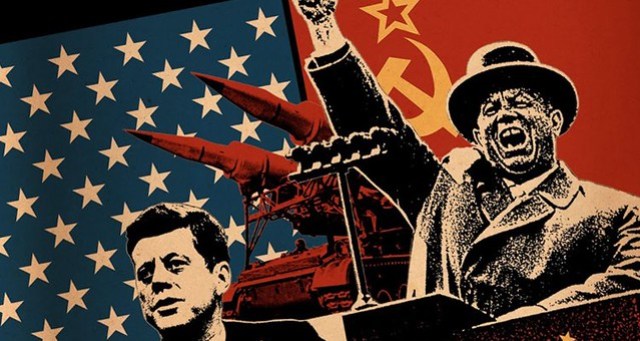
… or at least that’s the idea. Here, another of our occasional looks at the intellectual history of the cultural moment that we’re in: how a concern with Commies in California’s universities led to “Cold War philosophy”– the yoking of rational choice theory to the scientific method– and how it embedded the free-market mindset in US society:
Cold War philosophy also influences US society through its ethics. Its main ethical implication is somewhat hidden, because Cold War philosophy inherits from rational choice theory a proclamation of ethical neutrality: a person’s preferences and goals are not subjected to moral evaluation. As far as rational choice theory is concerned, it doesn’t matter if I want to end world hunger, pass the bar, or buy myself a nice private jet; I make my choices the same way. Similarly for Cold War philosophy – but it also has an ethical imperative that concerns not ends but means. However laudable or nefarious my goals might be, I will be better able to achieve them if I have two things: wealth and power. We therefore derive an ‘ethical’ imperative: whatever else you want to do, increase your wealth and power!
Results of this are easily seen in today’s universities. Academic units that enable individuals to become wealthy and powerful (business schools, law schools) or stay that way (medical schools) are extravagantly funded; units that do not (humanities departments) are on tight rations. Also on tight rations nationwide are facilities that help individuals become wealthy and powerful but do not convey competitive advantage on them because they are open to all or most: highways, bridges, dams, airports, and so on.
Seventy years after the Cold War began, and almost 30 after it ended, Cold War philosophy also continues to affect US politics. The Right holds that if reason itself is rooted in market choice, then business skills must transfer smoothly into all other domains, including governance – an explicit principle of the Trump administration. On the Left, meritocracy rules: all three of Barack Obama’s Supreme Court nominees attended law school at either Harvard (as Obama himself did) or Yale (as Hillary Clinton did). The view that choice solves all problems is evident in the White House press secretary Sean Spicer’s presentation of the Republican vision for US health care, at his press briefing last March 23: “We’ve lost consumer choice … The idea is to instill choice back into the market.”…
How this happened and what it wrought– the remarkable (but true) tale in its entirety: “America’s hidden philosophy.”
* Richard Feynman
###
As we question authority, we might recall that it was on this date in 1956 that Congress authorized “In God We Trust” as the U.S. national motto.
The phrase had appeared occasionally (as had variations on the theme) on coinage since Civil War times; regularly– despite Theodore Roosevelt’s conviction that it was sacrilegious– from 1908. But it didn’t appear on bills until 1957…

You must be logged in to post a comment.