Posts Tagged ‘finance’
“Money is a servant to politicians and the country. But, if the politicians and the country become the servant of the money, the politicians have failed.”*…

Given all that’s going on in the current adminsitration, it’s hard to keep track of the havoc. Here, an update on a drama playing out in the legislature (with heavy White House involvement).
Crypto interests came after the local banker last week in a bitter Congressional fight. As Matt Stoller explains, they didn’t win, but it’s not over…
… [Last] Thursday, the Senate Banking Committee abruptly canceled its meeting, known as a mark-up, to write little-noticed legislation to deregulate the financial system. And the reason is that two of the more powerful forces in D.C. – the banking lobby and the new MAGA-powered crypto world – came into conflict. The result, so far, is a stalemate.
I haven’t written about crypto for a few years, because there’s not much to say beyond “they did a lot of bribes in a bribe-prone system.” But depending on what happens next, we could be looking at the end of an iconic American figure, the local banker, and his or her replacement with something very different. The context of the legislative fight is, as you see in lots of other areas, the decline of the productive institutional fabric of America.
Culturally speaking, banks have a weird place in America, as they are the institutions that control permission to use resources. The endless number of bank heist movies, often with plucky burglars as heroic figures telling bank customers they needn’t worry because it’s not their money at risk, suggests that there’s a lot of skepticism of financial power in general. But there are two types of bankers, the generous local elite and the extractive beancounter. These represent a traditional populist vs oligarch framework.
Take the holiday classic film It’s a Wonderful Life. It’s about a small town banker named George Bailey, played by Jimmy Stewart. Bailey’s help financing useful things in Bedford Falls, like houses and businesses, contrasts with the avaricious Harry Potter, who is a stand-in for Wall Street.
There’s a reason for these cultural totems. Americans have always understood that distant control of credit is dangerous, the theme of movies such as Wall Street, Margin Call, and The Big Short. They also see that local control of credit and payments is key to self-sufficiency. Local banks uses to be, and to some extent still are, the powerhouse of American cities and towns.
That said, there have always been a variety of financial institutions to serve different kinds of customers, including large corporations. There are three kinds of banks in America, the small bank, the regional bank spanning a few states, and a few dozen national mega-banks. Local banks, a la George Bailey, are more efficient with better service and more commercial lending. According to the Institute for Local Self-Reliance, roughly half of U.S. assets were held in small banks, which did most of the productive lending. In 2020, small and regionals held just 17% of industry assets, but offered 46% of bank lending to new and growing businesses.
In the post-war era, this mix of banking was relatively stable, with roughly fourteen thousand local banks and thrifts serving as mortgage and commercial lenders, and check clearing institutions. But in the early 1980s, policymakers sought to consolidate the sector, enacting a series of deregulatory laws to encourage bank failures and mergers. The result is that today we have fewer than four thousand banks, and by the end of the Trump administration, we may have fewer than a thousand.
Of course, the world isn’t the same as it was forty five years ago. Since the 1980s, finance has changed. We are a capital markets driven economy, not a bank-driven one, and we use credit cards not checks, apps and ATMs more than branches. Bailouts have replaced proactive regulation, and we now have four giant Too Big to Fail banks that span multiple lines of business from investment banking to brokerage services. But local economies still depend on local banks, and there are fewer and fewer of them…
… Banking is a great business, because mostly you pay customers a small amount for the use of their money, and get the government to guarantee you a profit. You can make more if you actually do the work to lend money, but you don’t have to.
In return for this easy profit via a government safety net, bankers accept regulation. As the brilliant scholar Saule Omarova notes, the best way to understand banks is as franchises from the government. Bankers safeguard the nation’s money and payments system, and are well-paid for it, but it’s fundamentally a public and not a private duty. That’s why there are banking charters from the state.
The rise of crypto parallels the consolidation and corruption of banking. From the 1980s onward, small town bankers, like everyone else during the neoliberal era, became heavily oriented around removing rules against speculation and froth. The low interest rate environment of the New Deal gave way to a high interest rate world, and that put enormous pressure on the balance sheets of bankers who had lent money more cheaply. That, plus the turn of the Democrats away from protecting small towns in favor of consumer rights, led to a sharp anti-government sentiment among local bankers…
[Stoller unpacks the history of banking the last few decades and then turns to crypto…]
… While anti-monopolists argued for a renewal of public institutions to tamp down on concentrations of wealth and power, the crypto world went the opposite way, arguing that it was the very existence and power of public institutions that led to the crisis in the first place.
Crypto was ideological, at first framed around utopian rhetoric and the blockchain. Unfortunately, there were no actual real use cases for productive ends, it was entirely a way of scamming or speculating without rules. During the 2010s, when the Federal Reserve kept interest rates at zero and engineered a set of bubbles, crypto was one of the more prominent ones. In 2021, I wrote an article titled “Cryptocurrencies: A Necessary Scam” describing the ideological goal of crypto.
Fortunately, regulators kept crypto hived off from the real economy, so as the bubble blew up, it didn’t much matter. In 2022, when Sam Bankman-Fried and a host of crypto institutions collapsed in an orgy of fraud and leverage and money laundering and sanctions evasions, crypto seemed to be over. But it wasn’t, because of the power of the banking lobby, the weakness of Joe Biden’s administration, and the general pro-deregulation consensus in Congress…
… After Biden, the crypto industry had immense political leverage over a supine Congress and a friendly administration. Concerns over things like consumer protection ended, of course, but even more “serious” things like worries over national security and sanctions evaporated. Trump pardoned the Binance CEO Changpeng Zhao, and no one cared any longer that crypto was used to funnel money to Hamas and Venezuela.
The narrative around crypto changed, as crypto proponents dropped their naive ideological arguments. Industry proponents no longer argued there’s anything innovative, or that crypto is important for payments or any other purpose. It’s purely a mechanism to speculate. And the industry ended its commitment to a stateless approach. The trading side of crypto attacked stock market regulations, while the banking side demanded access to the banking franchise, including bank charters, access to the Federal Reserve safety net, and so forth. They started claiming they are bank-like, only better, and that the current banking order is lazy and protected by regulation.
And that brings us to the legislative fight last week. A few months ago, Congress did its first set of favors for the crypto industry, passing the Genius Act, which allowed for companies to issue “stablecoins,” which is to say, they can take dollar deposits as long as they back those deposits with actual dollars. However, they were mostly barred from paying interest on stablecoins. And the payment of interest on deposits is really key, because that’s what would allow stablecoin issuers and crypto exchanges to compete with banks over those cheap customer deposits that enable profits. It is an existential problem, not for the JP Morgan’s of the world, as they are so big it doesn’t matter, but for the rest of the banking sector, the local and community guys.
The most aggressive crypto firm, Coinbase, sort of offers interest on deposits, with what are called “rewards.” By calling them rewards instead of interest, Coinbase is trying to create a loophole in the Genius Act. But it’s a grey area, at best, and regulators could crack down.
The next piece of legislation pushed by the crypto world was called the Clarity Act, which has a number of elements, some of them involving rules around speculation. If it passes, we can expect very little regulation of the stock market, anti-money laundering, or insider trading going forward. But the fight that led to the cancelation of the markup of the Clarity Act is whether “rewards,” aka interest on deposits, are legal. Enter the banking lobby.
Community and regional bankers are not used to fighting with conservatives, because they haven’t had to. They did block liberal lawyer Omarova from becoming the bank regulator at the Office of Comptroller of the Currency. But they certainly aren’t used to dealing with feral and weird crypto MAGA online influencers with billions of dollars. That doesn’t make sense to them. And it should have been obvious that they were in the crosshairs of the crypto industry; the Federal Reserve just launched a rulemaking to give crypto a mini bank charter, which should scare the hell out of the local banks.
But they finally have started to get in gear, pointing to a Treasury report saying that $6.6 trillion of deposits might leave the banking system if crypto companies could pay interest on stablecoins. The Independent Community Bankers Association, the trade group for local bankers, mobilized its members against stablecoin rewards.
Much of the crypto world doesn’t care about stablecoins or banking; they are interested in removing the rules regulating speculation and gambling. For them, it’s a securities law matter. But for Coinbase, which makes roughly a billion dollars in revenue with stablecoins, that part of the bill does matter. And so Brian Armstrong pulled his support for the bill on the eve of the markup. There’s something a bit odd about Coinbase’s opposition, since they got 95% of what they wanted, and everyone else is fine with the legislation. But I don’t want to speculate too much on motivations, the point is Armstrong was unhappy with the final bill.
It’s not clear what happens now. The Senate Banking Committee has put enormous time and effort into this legislation, at the behest of crypto donors. But it really is an zero sum fight. If crypto exchanges can pay interest or rewards on stablecoins, then local banks lose their deposit base. If crypto exchanges can’t, then they won’t get access to cheap deposits. While Senators are desperate for some sort of compromise, it doesn’t look like there is one. Someone has to win and someone has to lose.
This battle is one where there is no good guy, but if there’s someone who is less bad, it would be the local bankers. They at least do lend into communities, and are subject to real regulation. Crypto is a disaster, and if we integrate crypto into the real economy, they will eventually demand their own bailout. But the critique that banks don’t pay much in interest on accounts is accurate. Furthermore, the credit card business is a bloated monopolistic mess. Still, those problems are largely about the Too Big to Fail banks, not the local guys, and the TBTF banks will be fine regardless.
Honestly, I’m exhausted by the question that we are forced to answer in this fight. Should credit allocation and payments be controlled by a set of lazy right-wing bankers who hate government, or a hungrier and deeply corrupt group of crypto scammers? It would be nice to have an alternative to those two interest groups. And eventually, we will, since it’s becoming clear that the state will have to take a much bigger role in credit allocation. But for now, the fact that crypto finally got stopped, at least temporarily, by the banking lobby, well at least it’s funny. And it does show how checks and balances are useful even when everyone involved is deeply flawed.
At this moment, I’ll take what I can get…
The end of an era? “The Slow Death of Banking in America,” from @mattstoller.skystack.xyz.
Pair with Molly White‘s “They’ve bought themselves a Congress” (“Coinbase calls the shots in the Senate…”) and from Matt Levine: “Stablecoin Narrow Banking” (“one solution here is to allow stablecoins to pay interest (like banks) but also impose capital requirements (like banks). I would not bet on that happening though…”) “Memecoin Venture Capital,” (“… today I want to talk about the fourth category, tokens promising no rights…”)
* Oliver Kemper
###
As we hollow out our mattresses, we might send painless birthday greetings to Felix Hoffman; he was born on this date in 1868. A chemist for the German chemical and pharmaceutical company Bayer, he sythesized both acetylsalicylic acid (ASA), which Bayer marketed as “aspirin,” and diamorphine, which was popularized under the Bayer trade name “heroin.”

“Risk comes from not knowing what you’re doing”*…
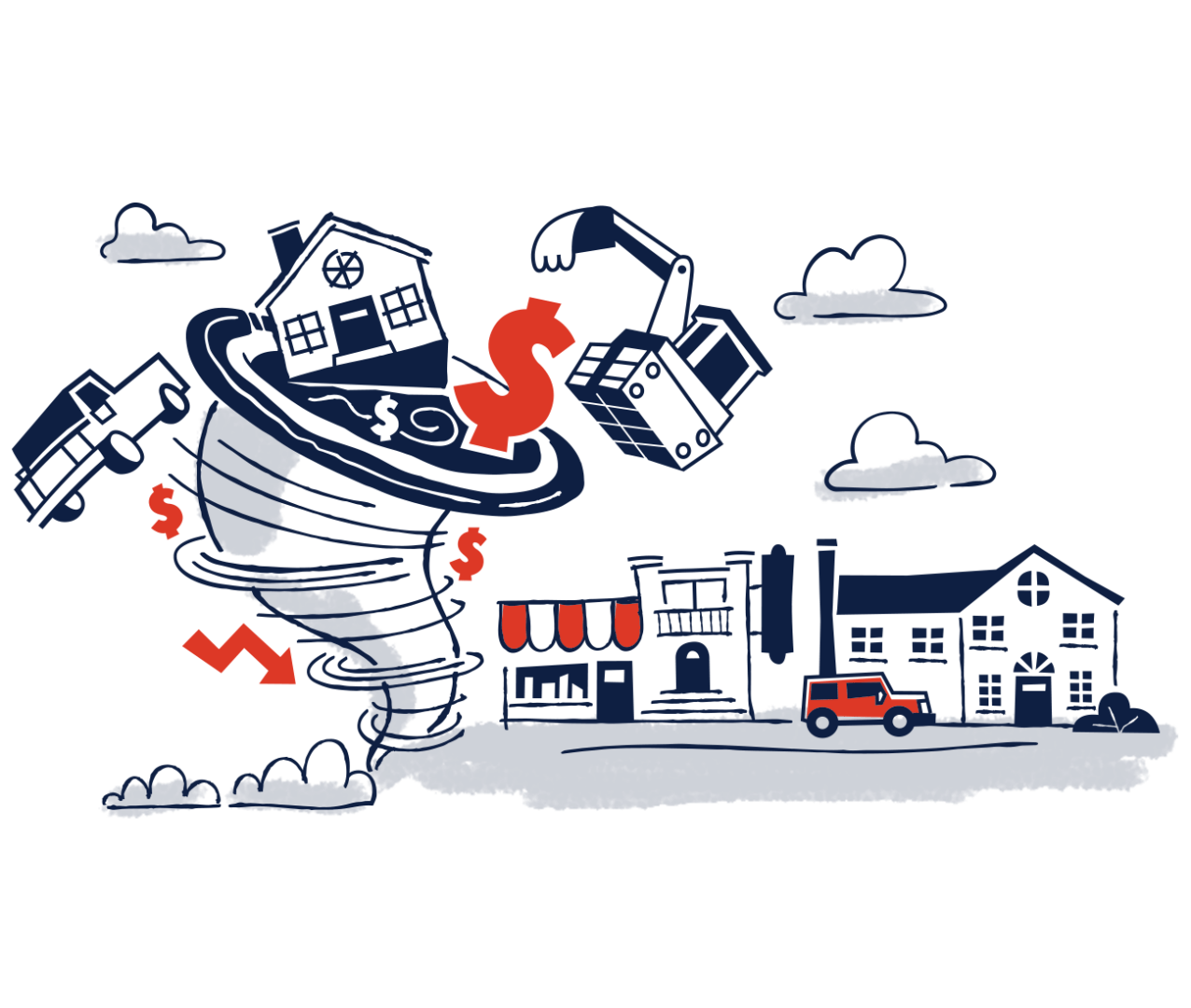
In a follow-on (in a fashion) to an (R)D earlier this month on financialization and gambling, Liz Hoffman on the striking changes underway in the financial sector…
Wall Street is starting to look a bit like a stage drama where nobody is playing the part that casting assigned.
To build a giant Louisiana data center, Meta raised $29 billion in equity from Blue Owl (a firm known for private credit) and private credit from PIMCO (a firm known for public bonds). Google has piles of cash and a red-hot stock, but is instead bringing its pristine credit rating to the deal table, backstopping crypto miners. The $7 billion that KKR and Apollo are putting into Keurig Dr Pepper is “equity” in the sense that it will help KDP reduce its debt load. But it isn’t coming from their traditional PE funds.
You think companies are built with equity and debt? That’s cute, today’s masters of the universe will chuckle while patting your head.
What used to be called simply “investing” or “lending” has been replaced by “capital solutions” — hybrid equity, kickers, and cash flows tailored to match the returns promised to investors on the other side. Growing pots of money now resemble liquid sand, moldable into whatever shape will fit the money hole in front of it. This shift has been obscured by narratives, overcooked in my view, about a battle between private credit and banks: “There’s one system,” Goldman Sachs President John Waldron told me a few weeks ago, and it’s changing quickly.
Goldman reorganized itself along these lines earlier this year… Apollo, one of the original private-equity firms, is now 80% credit… and firms from Chicago buyout shops to Middle Eastern sovereign wealth funds have launched “capital solutions” arms. Lawyers are jumping in downstream.
Prioritizing what companies actually need over whatever widgets Wall Street happens to sell is good customer service. Personal wealth management got a lot better when firms started asking “how much do you need to retire?” instead of “would you like to buy this structured note?”
And the rise of insurance money in investing has created patient capital that in many cases fits those money holes better than blunter instruments. Much of KKR and Apollo’s Keurig investment will end up in their insurance arms, backed by long-term contracts with the coffee-pod maker, people familiar with the matter said.
But flexible capital will almost certainly overflex, and not everyone with “go-anywhere” money should go anywhere. I suspect that before this cycle is over, we’ll see a few instances that leave everyone asking, “why did they own that?”… Sometimes “capital solutions” just code for investing in distressed companies, which is nothing if not a capital problem in search of a solution, trade publication Private Debt Investor wrote…
“What Wall Street’s obsession with ‘capital solutions’ tells us,” from @semafor.com.
[Image above: source]
* Warren Buffett
###
As we go back to basics, we might note that it’s International Accounting Day– a celebration of the field on this date each year that commemorates the publication of Luca Pacioli’s seminal work, Summa de Arithmetica, Geometria, Proportioni et Proportionalita, in 1494, which introduced the double-entry bookkeeping system—a foundational element of modern accounting.

“Neoliberalism: An ideology to absolve banks, landlords and monopolists from accusations of predatory behavior”*…

Neoliberalism has undoubtably contributed to remarkable economic growth, but it has also fostered inequality and “enshittification.” In any case, neoliberalism is, to put it politiely, showing strains. What’s next for the structure of the economy in the U.S. and the world? The estimable Branko Milanović…
Why did neoliberalism, in its domestic and international components, fail? I ask this question, in much more detail than I can do it in a short essay here, in my forthcoming The Great Global Transformation: National Market Liberalism in a Multipolar World. I am asking it for personal reasons too: some of my best friends are neoliberal. It was a generational project of Western baby-boomers which later got adopted by others, from Eastern Europe like myself, and Latin American and African elites. When nowadays I meet my aging baby-boomer friends, still displaying an almost undiminished zeal for neoliberalism, they seem like the ideological escapees from a world that has disappeared long time ago. They are not from Venus or Mars; they are from the Titanic.
When I say that neoliberalism was defeated I do not mean than it was intellectually defeated in the sense than there is an alternative ready-made project waiting in the wings to replace it. No: like communism, neoliberalism was defeated by reality. Real world simply refused to behave the way that liberals thought it should.
We need first to acknowledge that the project had many attractive sides. It was ideologically and generationally linked to the rebellious generation of the 1960s, so its pedigree was non-conformist. It promoted racial, gender and sexual equality. By its emphasis on globalization, it has to be credited by helping along the greatest reduction in global poverty ever and for helping many countries find the path to prosperity. Even its much-reviled Washington consensus—while some of its commandments were taken to an extreme length and other ignored—is fundamentally sound and has much to recommend itself. Not least that it provides an easily understandable shortcut to economic policy. It does not require more than an hour to explain it to the most economically ignorant person.
So, to go back to the original question, why did neoliberalism not remain the dominant ideology? I think there are three reasons: its universalism, hubris of its adherents (which always comes with universalism), and mendacity of its governments.
That neoliberalism is universal or cosmopolitan requires, I believe, little convincing. Liberal ideology treats, in principle, every individual and every nation the same. This is an asset: liberalism and neoliberalism can, again in principle, appeal to the most diverse groups, regardless of history, language or religion. But universalism is also its Achilles’ heel. The pretense that it applies to everybody soon comes into conflict with the realization that local conditions are often different. Trying to bend them to correspond to the tenets of neoliberalism fails. Local conditions (and especially so in social matters which are products of history and religion) are refractory to the beliefs founded under very different geographical and historical conditions. So in its encounter with the real world, neoliberalism retreats. The real world takes over.
But all universalists (communists among them too) refuse to accept that defeat. As they must because every defeat is a sign of non-universalism. That’s where the intellectual hubris kicks in. The defeat is seen as due to moral flaws among those who failed to adopt neoliberal values. To its votaries nothing short of its full acceptance qualifies one as a sane and morally righteous person. Whatever new social contract its votaries have determined is valid, were it only a week ago, must unconditionally be applied henceforth. The morality play combined with economic success that many proponents of neoliberalism enjoyed due to their age, geographical location, and education, gave it Victorian or even Calvinist undertones: becoming rich was seen not only as a sign of worldly success but as an indication of moral superiority. As Deng Xiaoping said, “getting rich is glorious”. This moral element implied lack of empathy with those who failed to find their right place within the new order. If one failed, it was because he deserved to fail. Faithful to its universalism, Western upper middle-class neoliberals did not treat co-citizens any differently from foreigners. Local failure was no less merited than the failure in a faraway place. This contributed more than anything else to the neoliberals’ political defeat: they simply ignored the fact that most politics is domestic.
The hubris which comes from success (and which got elevated to unheard-of heights after the defeat of communism) was reinforced by universalism—a feature shared by all ideologies and religions that by their very construct refuse to accept that local conditions and practices matter. Syncretism was not in the neoliberals’ playbook.
Finally, mendacity. The failure to observe, especially in international relations, even the self-defined and self-acclaimed “rules-based global order”, and the tendency to use these rules selectively—that is, to follow the old-fashioned policies of national interest without acknowledging it, created among many the perception of double standards. Western neoliberal governments refused to own to it and kept on repeating their mantras even when such statements were in glaring contradiction with what they were actually doing. In the international arena, they ended in a cul-de-sac, manipulating words, reinventing concepts, fabricating realities, all in the attempt to mask the truth. A part of that mendacity was present domestically too when people were told to shut up and not complain because the statistical data were not giving them reason and thus their subjective views were wrong and had to be ignored.
What next? I discuss that in The Great Global Transformation. I think there is one thing on which most people would agree: that the past fifty years have seen the debacles of two universalist ideologies: communism and neoliberalism. Both were defeated by the real world. The new ideologies will not be universal: they would not claim to apply to the entire world. They will be particularist, limited in scope, both geographically and politically and geared toward the maintenance of hegemony wherever they rule; not fashioning it into universal principles. This is why the talk about global ideologies of authoritarianism is meaningless. These ideologies are local, aiming at the preservation of power and of the status quo. This does not make them averse to the old imperialist temptation. But that temptation can never be extended to the world as a whole nor can various authoritarianisms work together to accomplish that. Moreover, since they lack universal principles, they are likely to clash. The only way for authoritarians not to fight with each other is to accept a very narrow set of principles, essentially those of non-interference in domestic affairs and absence of aggression, and leave it at that. Xi Jinping’s proclamation of five such narrow rules at the recent Shanghai Cooperation Organization meeting may be based on such a calculation…
Neoliberalism in crisis: “Defeated by reality,” from @brankomilan.bsky.social.
For a less certain perspective: “Will Trump Bring Neoliberalism’s Apocalypse, or Merely a New Iteration?” (source of the image above).
And apposite: “Why Neoliberalism Needs Neofascists,” “Has Liberalism’s Very Success in Delivering Human Flourishing Doomed It?,” and “The future of the world economy beyond globalization – or, thinking with soup.”
###
As we rethink, we might recall that it was on this date in 1975 that New York City came within two hours of bankruptcy. The city had payments due of $350 million, but had only a fraction of that available. Washington had refused craft a bailout package. It was estimated by some that 100 banks would fail if the city went bankrupt. A notice had been drafted and signed by the mayor:

But at the last minute, as creditors were lined up at government buildings and teachers were being notified to stay home, the teachers union pension fund came to the rescue, buying city bonds and giving the city the lifeline it needed to avoid default.

More at: “The Night NYC Saved Itself”
“The real danger is assuming that because you haven’t had a problem yet, you won’t have one soon”*…

Joan Didion once observed that “survivors look back and see omens, messages they missed.” That’s certainly true in investment arena… where stock indices have been hovering near all time highs while everyone awaits the falling of the shoe(s) from Trump’s tariffs and assorted other blows to the economy. Will we look back in the not-too-distant future to signs that it couldn’t, thus wouldn’t, continue?
Omens registered in advance are “early warning signs.” A classic on the economic front is the “cardboard box index“; the output of cardboard boxes is believed to be an indicator of future production of consumer goods, since cardboard containers are so common for packaging and shipping these goods. It’s down.
Mike Schuler, the managing editor of gCaptain weighs in with another…
The U.S. container shipping industry is heading toward what could be one of the most significant volume declines in its six-decade history, according to the latest analysis from shipping expert John McCown.
August data revealed only a slight 0.1% year-over-year increase in inbound container volume at the ten largest U.S. ports, following a temporary reprieve in July when volumes rose 3.2%. Meanwhile, outbound volume in August dropped 2.6%, continuing an erratic pattern that saw a 2.0% increase in July and a 1.7% decrease in June.
The marginal growth in August inbound volumes can be attributed to an exception for goods in transit after the August 7 implementation of revised reciprocal tariffs. “The new tariffs did not apply to containers that were loaded on vessels at their last foreign port of call before August 7 provided they entered the U.S. before October 5,” McCown explains.
This exemption artificially supported August figures, as “the large majority of boxes coming into the U.S. in August being exempt from the tariffs going into effect on August 7.” McCown adds that this mechanism may have even incentivized strategic deployment adjustments where “ships were loaded by August 7 and slow-steamed to the U.S.”
A stark contrast is emerging between U.S. container volumes and global shipping trends. “When U.S. container volume data is compared to global data and data in other major areas, there is a noticeable and widening gap as the downtrends in U.S. lanes are being significantly mitigated by increased volume in other areas,” notes McCown.
Evidence of this divergence can be seen in Far East export figures, which “set a new record and were 6.3% ahead of the same month last year” in July. McCown observes that “world container supply chains have already begun to adapt and reconfigure trading patterns. The U.S. is a less relevant player in world trade today than it was prior to these various tariff initiatives and will become more so as announced plans are implemented.”
The National Retail Federation has revised its projection for 2025, now expecting total inbound volume to decrease by 3.4%. When considering that year-to-date volume through August shows a 3.1% increase, this projection translates to “the remaining four months of 2025 being down 15.7% compared to the same four months in 2024.”
September will likely mark the beginning of more pronounced declines. In a September 17 presentation, the Port of Los Angeles director stated they expected inbound volume to drop 10% compared to the same month last year. Container bookings data supports this outlook, with bookings from China to the U.S. down 26% in the first week of September compared to the same period last year.
The situation could worsen if currently paused reciprocal tariffs on Chinese imports are implemented in mid-November. “If and when those tariffs are implemented, it is highly likely that they would lead to broader declines related to inbound containers to the U.S. from China,” McCown warns.
Adding another layer of complexity is the upcoming USTR ship fee plan targeting ships built in China or operated by Chinese carriers, set to take effect in mid-October. McCown describes this as “moving container volume related to trade lanes involving the U.S. into unchartered waters.” As these lanes account for more than a quarter of global container miles, “there will be a ripple effect that will be felt globally.”
The projected decline represents an unprecedented shift for an industry that has historically grown at rates exceeding U.S. GDP. “For a tangible metric that has consistently for decades grown above U.S GDP, most often at two, three or even more multiples of GDP, the unusual nature of an actual decline in inbound container volume into the U.S. cannot be overemphasized,” McCown states.
While the immediate volume impact is becoming clearer, the inflationary effects of the tariffs will take longer to manifest fully in economic data. McCown notes that “it will not be until at least when the inflation data is released in during the fourth quarter that the inflationary impact of the tariffs can begin to be accurately assessed.”
McCown concludes that the U.S. faces a difficult trade-off: “The more inbound container volume to the U.S. declines, the more commerce and growth will be impacted but the less inflation we will get. The less inbound container volume to the U.S. declines, the more inflation we will get but the less commerce and growth will be impacted. Unfortunately, there is simply no good place to be on that spectrum.”…
For what it’s worth, your correspondent does not share McCown’s confidence that a drop in container volume– in imported goods– will not raise prices. While the goods that don’t arrive won’t be passed along with tariffs baked into their prices, their substitutes, which will, per force, be scare for some time, seem likely to have their prices “bid” up…
“U.S. Container Imports Face Historic Decline as Tariff Effects Take Hold.”
All this said, prediction on the basis of indicators (and omens and signs and early warning signals and the like) is a tricky business. See, for example: “List of dates predicted for apocalyptic events.”
* G. Scott Graham, Early Warning Signals
###
As we batten down, we might recall that it was on this date in 2008 that U.S. stock markets, already on edge after the near failure of Wachovia Bank the day before, fell over the edge after the House rejected a bailout plan touted to help ease the ongoing financial crisis. Markets began their decline as soon as it became apparent the bill would fail. The Dow had its worst single day point decline in history, falling 777.68 points… the day that “The Crash of 2008” became real.

“When these systems work well, they hide in plain sight”*…

Plumbing, like most bits of the infrastucture on which we depend, is ideally out of sight and out of mind. It’s usually only when it fails that we pay attention… and then, too late to preempt the damage done and the problem that we then have to fix.
Nobel laureate economist Paul Krugman turns to Nathan Tankus to discuss a wonky, but crucially-important, piece of financial infrastructure now being beset by the Trump administration…
Nathan Tankus has become an essential resource during these strange and scary times. My last chat with Nathan was about DOGE’s depredations at government agencies. This time I spoke with him about disruptions in financial markets.
I continue to be astonished at how important the “plumbing” of these markets — the stuff that makes them function, which we normally don’t even notice — becomes when everything falls apart. And economists in general don’t know that much about the plumbing, so we need help from people like Nathan who do.
One thing that struck me during the conversation was Nathan’s explanation of the partial easing of financial stress after the crazy tariffs announced April 2 were replaced by the equally crazy tariffs of April 9. He points out that while a serious analysis of the April 9 tariffs showed that they were as bad in their own way as the original tariffs, the narrative was that policy had eased. And markets, he insists (and I agree) are less information processors than conventional wisdom processors.
Much more in the interview…
Watch, listen, and/or read: “Liquidity, Volatility and Market Craziness: Paul Krugman Interviews Nathan Tankus Again.”
* Deb Chachra [and here], How Infrastructure Works
###
As we batten down the hatches, we might recall that this date in 1970 inaugurated a celebration of the mother of all infrastructures: it was the first Earth Day. Initially suggested by John McConnell for March 21 (the Equinox in the Northern Hemisphere, a day of natural equipoise), Secretary General U Thant signed a UN Proclamation to that effect. But Earth Day as we know it was founded by U.S. Senator Gaylord Nelson (who was later awarded the Presidential Medal of Freedom Award for his work) as an environmental teach-in to be held on on this date. The first Earth Day had participants and celebrants in two thousand colleges and universities, roughly ten thousand primary and secondary schools, and hundreds of communities across the United States. Later that year, President Nixon signed the Environmental Protection Agency into being. Earth Day is now observed in 192 countries, coordinated by the nonprofit Earth Day Network, chaired by the first Earth Day 1970 organizer Denis Hayes– according to whom Earth Day is now “the largest secular holiday in the world, celebrated by more than a billion people every year.”

Earth Day Flag created by John McConnell (source)
You must be logged in to post a comment.