Posts Tagged ‘comedy’
“A serious and good philosophical work could be written consisting entirely of jokes”*…

For the inimitable Slovenian philosopher and cultural critic Slavoj Žižek, jokes are amusing stories that offer a shortcut to philosophical insight. Indeed, he’s published a book of them. His preface…
Instead of Introduction:
The Role of Jokes in the Becoming-Man of the ApeOne of the popular myths of the late Communist regimes in Eastern Europe was that there was a department of the secret police whose function was (not to collect, but) to invent and put in circulation political jokes against the regime and its representatives, as they were aware of jokes’ positive stabilizing function (political jokes offer to ordinary people an easy and tolerable way to blow off steam, easing their frustrations). Attractive as it is, this myth ignores a rarely mentioned but nonetheless crucial feature of jokes: they never seem to have an author, as if the question “who is the author of this joke?” were an impossible one. Jokes are originally “told,” they are always-already “heard” (recall the proverbial “Did you hear that joke about …?”).
Therein resides their mystery: they are idiosyncratic, they stand for the unique creativity of language, but are nonetheless “collective,” anonymous, authorless, all of a sudden here out of nowhere. The idea that there has to be an author of a joke is properly paranoiac: it means that there has to be an “Other of the Other,” of the anonymous symbolic order, as if the very unfathomable contingent generative power of language has to be personalized, located into an agent who controls it and secretly pulls the strings. This is why, from the theological perspective, God is the ultimate jokester. This is the thesis of Isaac Asimov’s charming short story “Jokester,” about a group of historians of language who, in order to support the hypothesis that God created man out of apes by telling them a joke (he told apes who, up to that moment, were merely exchanging animal signs, the first joke that gave birth to spirit), try to reconstruct this joke, the “mother of all jokes.” (Incidentally, for a member of the Judeo-Christian tradition, this work is superfluous, since we all know what this joke was: “Do not eat from the tree of knowledge!” — the first prohibition that clearly is a joke, a perplexing temptation whose point is not clear.)…
Two examples:
In an old joke from the defunct German Democratic Republic, a German worker gets a job in Siberia; aware of how all mail will be read by censors, he tells his friends: “Let’s establish a code: if a letter you will get from me is written in ordinary blue ink, it is true; if it is written in red ink, it is false.” After a month, his friends get the first letter, written in blue ink: “Everything is wonderful here: stores are full, food is abundant, apartments are large and properly heated, movie theaters show films from the West, there are many beautiful girls ready for an affair — the only thing unavailable is red ink.”
And is this not our situation till now? We have all the freedoms one wants — the only thing missing is the “red ink”: We “feel free” because we lack the very language to articulate our unfreedom. What this lack of red ink means is that, today, all the main terms we use to designate the present conflict — “war on terror,” “democracy and freedom,” “human rights,” etc. — are false terms, mystifying our perception of the situation instead of allowing us to think it. The task today is to give the protesters red ink…
There is an old Jewish joke, loved by Derrida, about a group of Jews in a synagogue publicly admitting their nullity in the eyes of God. First, a rabbi stands up and says: “O God, I know I am worthless. I am nothing!” After he has finished, a rich businessman stands up and says, beating himself on the chest: “O God, I am also worthless, obsessed with material wealth. I am nothing!” After this spectacle, a poor ordinary Jew also stands up and also proclaims: “O God, I am nothing.” The rich businessman kicks the rabbi and whispers in his ear with scorn: “What insolence! Who is that guy who dares to claim that he is nothing too!”…
The lightness of profundity– three more excerpts at: “Five Jokes by Slavoj Žižek” from @mitpress.bsky.social.
* Ludwig Wittgenstein (sort of)
###
As we chuckle, we might send one-line birthday greetings to Shecky Greene (Fred Sheldon Greenfield); he was born on this date in 1926. A comedian and actor, he was known for his nightclub performances in Las Vegas, where he became a headliner in the 1950s, 60s, and 70s. He appeared in several films, including Tony Rome; History of the World, Part I; and Splash, and guest-starred on such television shows as Love, American Style and Combat!, and later Laverne & Shirley and Mad About You.
Best remembered for his stand-up, Greene was adored by audiences and revered by his fellow entertainers (including Bob Hope, Johnny Carson, and, most famously, Frank Sinatra, who hand-picked him as his opening act for a stretch).
The Doctor gave a man six months to live. The man couldn’t pay his bill so the doctor gave him another six months.
A drunk was in front of a judge. The judge says, “You’ve been brought here for drinking.”
The drunk says “Okay, let’s get started.”
A man called his mother in Florida
“Mom, how are you?”
” Not too good,” said the mother. “I’ve been very weak.”
The son said, “Why are you so weak?” She said, “Because I haven’t eaten in 38 days.”
The son said, “That’s terrible.
Why haven’t you eaten in 38 days?”
The mother answered,”Because I didn’t want my mouth to be filled with food if you should call.”

“I know not all that may be coming, but be it what it will, I’ll go to it laughing”*…
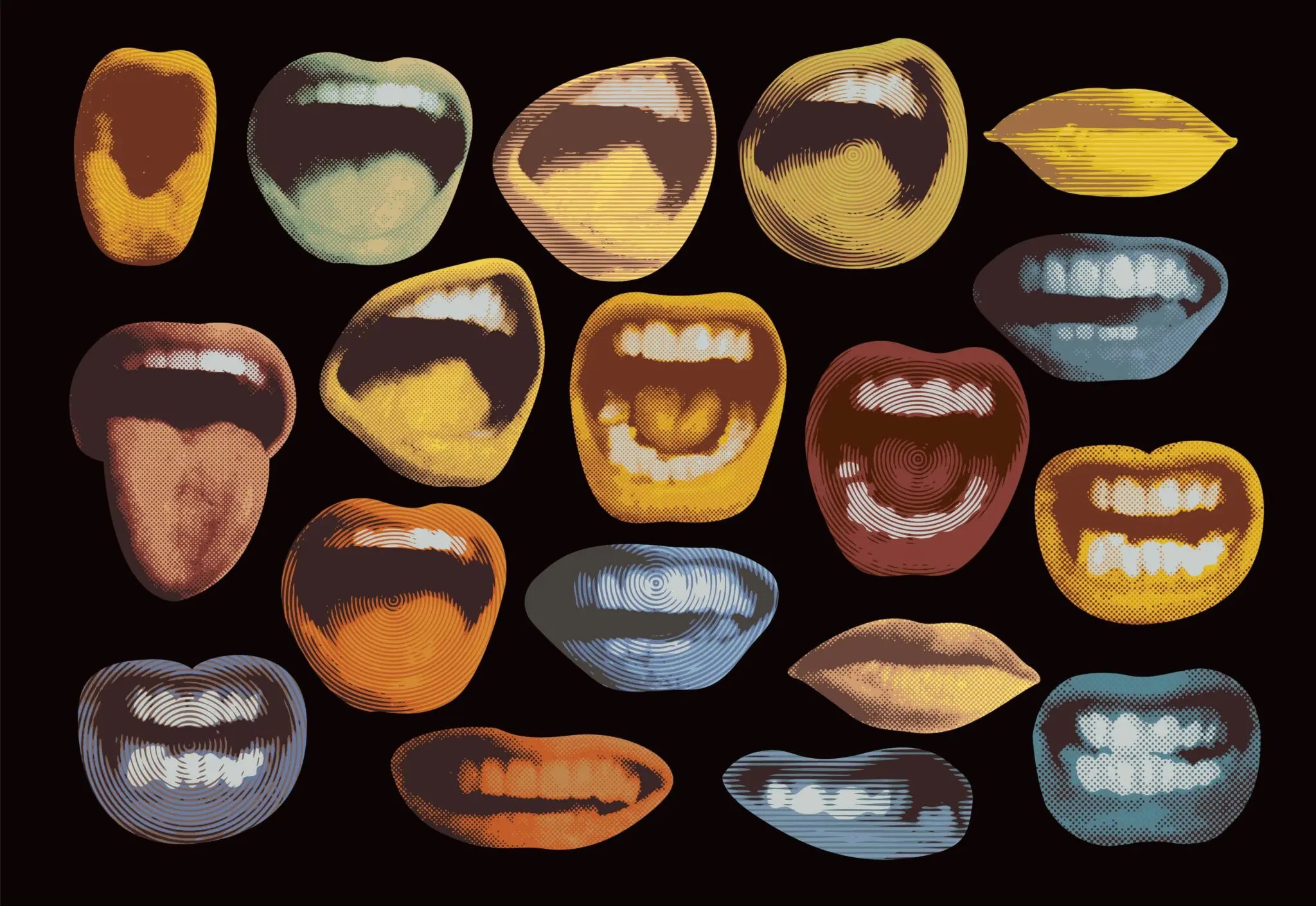
Antropologist Kristin Bell explores laughter as a far more complex phenomenon than simple delight, reflecting on its surprising power to disturb and disrupt…
… As an anthropologist specializing in health and medicine, laughter isn’t really in my professional wheelhouse—unless you subscribe to the view that laughter is the best medicine. My interest in the topic is more personal, not just because of my history as a former Giggling Gertie, but because it’s a behavior that is much less straightforward than it seems.
Ideally, laughter is something we share. According to anthropologist Munro Edmonson, laughter is sociable; it ideally invites a similar response. Indeed, it has contagious qualities: When we hear someone laugh, we often laugh, or at least smile, ourselves—an effect consistently shown through psychological research. This is how we ended up with canned laughter on sitcoms. Studios realized that the sound of laughter made their shows seem funnier to their audiences, while also giving them a degree of control over when people laughed…
… According to the anthropologist Munro Edmonson, the central feature of laughter is aspiration: We release a forceful puff of air as we laugh.
But laughter is also characterized by repetition. In fact, given the extraordinary variability in the sounds people make when they laugh, repetition is what makes laughter universally recognizable. This is why writers conventionalize laughter as “he-he-he,” “ha-ha-ha,” and “ho-ho-ho” (well, at least if you’re Santa Claus). Notably, this feature isn’t exclusive to English representations. Edmonson observed that laughter is represented in Russian as xe, xe, xe; in Tzotzil—a Mayan language spoken in Mexico—it’s ‘eh ‘eh ‘eh.
We don’t fully understand why humans make this sound when we laugh. When 19th-century biologist Charles Darwin set out to explore the biology of feelings in The Expression of the Emotions in Man and Animals, he wrote, “why the sounds which man utters when he is pleased have the peculiar reiterated character of laughter we do not know.” However, the response seems to occur well before culture is embedded in our behaviors: Recognizable laughter is evident in babies from 4 months old.
Nor is laughter unique to humans. Great apes respond to being tickled in much the same way that humans do. Of course, because chimps, bonobos, et cetera have a different vocal apparatus than humans, it sounds more like a dog panting or a person having an asthma attack or energetic sex. However, these primate sounds have the same “peculiar, reiterated character” that Darwin highlighted in humans. This is why laughter is characterized by scientists as a cross-species phenomenon.
Yet, while laughter is evident in the play of other primates, it’s unclear whether they have a sense of humor. Recent research provides evidence of a capacity for teasing through nonverbal behavior. But, as the evolutionary psychologist Robert Provine noted, “there is no evidence that they respond to apparently humorous behavior, their own or that of others, with laughter.”
Giving meaning to laughter seems to be distinctively human.
While some laughter is deliberate, much of it is outside conscious control—an attribute that goes a long way toward explaining the widespread Euro-American ambivalence toward the act. According to the literary scholar Sebastian Coxon, a growing anxiety about mirth is evident in the European historical record from the late Middle Ages. For example, the 16th-century Dutch philosopher Desiderius Erasmus, better known for advising children to “replace farts with coughs,” also warned against “loud laughter and immoderate mirth.”
Notably, Erasmus singled out the “neighing sound that some people make when they laugh” for particular opprobrium—an impulse evident in the contemporary tendency to compare unrestrained laughter with the cries of animals: “howling” with laughter, “hooting” in delight, “snorting” with amusement, and so on. Indeed, while the term “guffaw” might not be borrowed from animal noises, it certainly sounds like it could be.
These characterizations reveal an attempt to draw laughter into the realm of taste and civility—categories that are strongly tied to gender and class strictures. For instance, in an 1860 etiquette guide titled The Ladies’ Book of Etiquette and Manual of Politeness: A Complete Hand Book for the Use of the Lady in Polite Society, readers are counseled to moderate their laughter during a dinner party so that it’s neither too loud nor too soft: “To laugh in a suppressed way, has the appearance of laughing at those around you, and a loud, boisterous laugh is always unlady-like.”
Social judgments abound not just in relation to how we laugh but what we laugh at—as an early 19th-century artwork attests. “Laughter,” etched by British artist and social commentator Thomas Rowlandson, depicts a man laughing at his cat adorned in a bonnet and cloak.

The caption reads: ‘Laughter is one of the most pleasing of the Passions and is with difficulty accounted for, as risibility is frequently excited from the most simple causes—as is the case with the Countryman and his Cat.’ The implication is that “unsophisticated” countrymen lack “class” and are therefore easily amused. (For the record, I am equally unsophisticated, because I will never not find cats pictured with human props funny.)
Still, despite the association between humor and taste, it’s often physical comedy that gets the most laughs. It’s not a coincidence that the first truly global hit comedy was The Gods Must Be Crazy, whose sublime “Tati-like slapstick routines” drew audiences from New York and Caracas to Tokyo and Lagos, despite being widely condemned by film reviewers as apartheid propaganda.
Indeed, screenwriters have long predicted that physical humor will become increasingly prominent in Hollywood comedies because it “transcends dialogue and even most cultural differences,” and movies must increasingly appeal to a global market to produce reliable returns. (As far as I can tell, the future of Hollywood films is basically Marvel movies and slapstick comedies.)…
… As McDonald observes, laughter disrupts the notion of a stable, coherent self—reflected in terms like “cracking up” and “bursting.” Moreover, unrestrained laughter doesn’t just signify a lack of personal control; it can be politically dangerous as well. The literary historian Joseph Butwin writes of “seditious laughter” as a weapon of the oppressed that can serve to destabilize hierarchies and power relations.
In the end, it’s clear that laughter is a deeply curious thing. It’s simultaneously the most social of human expressions and the one most disruptive of social edifices and rules. Shared, sanctioned laughter might bring us together, but unsanctioned laughter shows the cracks, revealing that we’re not quite who we think…
“The Strange Power of Laughter“
* Herman Melville, Moby-Dick
###
As we muse on mirth (and lest we forget that sometimes laughter is simply a function of simple delight), we might recall that it was on this date in 1929 that Rube Goldberg‘s “The Inventions of Professor Lucifer Gorgonzola Butts, A.K.,” cartoon series first published in Colliers Weekly.

“Just remember: Abraham Lincoln didn’t die in vain, he died in Washington D.C.”*…

Ken Goffman (better known as R. U. Sirius, the co-founder and first editor of the seminal Mondo 2000) on an equally-seminal comedy group…
If you were a college student or Western counterculture person in the late 1960s-70s, the albums of Firesign Theatre occupied more space on your shelf and in your hippocampus than even The Beatles or Pink Floyd. If you were an incipient techno-geek or hacker, this was even more the case. Firesign was the premier comedy recording act of the very first media-saturated technofreak tribe.
In his tremendously informative and enjoyable history of Firesign Theatre titled Firesign: The Electromagnetic History of Everything as told in Nine Comedy Albums, author Jeremy Braddock starts by giving us the roots of a band of satirists that started out (to varying degrees) as social activists with a sense of humor. He shows them slowly coming together in Los Angeles while infiltrating, first, the alternative Pacifica radio stations like KPFK in Los Angeles, and eventually, briefly, hosting programs in the newly thriving hip commercial rock radio stations of the times, before they lost that audience share to corporatization.
Braddock takes us through the entire Firesign career and doesn’t stint on media theory and the sociopolitics of America in the 20th century that were a part of the Firesign oeuvre.
For those of us out in the wilds of the youth counterculture of the time, without access to their radio programs, it was Columbia Records albums that captured our ears and minds, starting with Waiting For the Electrician or Someone Like Him in early 1968. Their third album, Don’t Crush That Dwarf Hand Me the Pliers sold 300,000 right out of the gate and, in the words of an article written for the National Registry in 2005, “breaking into the charts, continually stamped, pressed and available by Columbia Records in the US and Canada, hammering its way through all of the multiple commercial formats over the years: LPs, EPs, 8-Track and Cassette tapes, and numerous reissues on CD, licensed to various companies here and abroad, continuing up to this day.” As covered toward the end of the book, they have been frequently sampled in recent years by hip-hop artists.
My introduction to Firesign came as the result of seeing the cover of their second album How Can You Be In Two Places At Once When You’re Not Anywhere At All in the record section of a department store in upstate New York. It was the cover, with pictures of Groucho Marx and John Lennon and the words “All Hail Marx and Lennon” that caught my eye.
It was the mind-breaking trip of Babe, as he enters a new car purchased from a then-stereotypical, obnoxiously friendly car salesman, and finds himself transitioning from one mediated space to another, eventually landing in a Turkish prison and witnessing the spread of plague, as an element of a TV quiz show.
The album ends with a chanteuse named Lurlene singing “We’re Bringing the War Back Home.” This was all during the militant opposition to the US war in Vietnam. Probably few listeners would have recognized “Bring The War Home” as the slogan of The Weatherman faction of Students for a Democratic Society (SDS), but Braddock gets it, like he gets the seriousness of Firesign’s satire. Indeed, Braddock notes that several reviewers, writing with appreciation about one of their albums, averred that its dystopia was “not funny.”
Most fans would agree with me that the peak of the Firesign run on Columbia Records was the exceedingly multivalent Don’t Crush That Dwarf, Hand Me The Pliers and the futuristic, AI-saturated I Think We’re All Bozos on this Bus, which I note in this interview predicted the future better than any of the self-described futurists of the 1970s. But to apprehend the richness of those two psychedelic assaults on the senses and on the idiocracy of its times, you will need to read the book and listen to the recordings or at least read this interview…
Read on for his conversation with Jeremy Braddock: “Firesign Theatre: The Greatest Satirists of 20th Century Media Culture and its Techno-romanticism were… Not Insane!” from @rusirius.bsky.social and @jbraddock.bsky.social
* Firesign Theatre, How Can You Be In Two Places At Once When You’re Not Anywhere At All
###
As we cherish canny comedy, we might recall that it was on this date in 1932 that Walk a Little Faster opened on Broadway at the St. James Theatre. A “musical review with sketches,” it featured “April in Paris” (by E. Y “Yip” Harburg, who seven years later provided all of the songs– including “Over the Rainbow— for the film The Wizard of Oz) and writing by S. J. Perelman (who had just scripted the Marx Brothers films Monkey Business and Horse Feathers).

“We live, in fact, in a world starved for solitude, silence, and private: and therefore starved for meditation and true friendship”*…

… if then, even more so now. Ben Tarnoff takes off from Lowry Pressly‘s new book to ponder why privacy matters and why we have such trouble even thinking about how to protect it…
… Today, it is harder to keep one’s mind in place. Our thoughts leak through the sieve of our smartphones, where they join the great river of everyone else’s. The consequences, for both our personal and collective lives, are much discussed: How can we safeguard our privacy against state and corporate surveillance? Is Instagram making teen-agers depressed? Is our attention span shrinking?
There is no doubt that an omnipresent Internet connection, and the attendant computerization of everything, is inducing profound changes. Yet the conversation that has sprung up around these changes can sometimes feel a little predictable. The same themes and phrases tend to reappear. As the Internet and the companies that control it have become an object of permanent public concern, the concerns themselves have calcified into clichés. There is an algorithmic quality to our grievances with algorithmic life.
Lowry Pressly’s new book, “The Right to Oblivion: Privacy and the Good Life,” defies this pattern. It is a radiantly original contribution to a conversation gravely in need of new thinking. Pressly, who teaches political science at Stanford, takes up familiar fixations of tech discourse—privacy, mental health, civic strife—but puts them into such a new and surprising arrangement that they are nearly unrecognizable. The effect is like walking through your home town after a tornado: you recognize the buildings, but after some vigorous jumbling they have acquired a very different shape.
Pressly trained as a philosopher, and he has a philosopher’s fondness for sniffing out unspoken assumptions. He finds one that he considers fundamental to our networked era: “the idea that information has a natural existence in human affairs, and that there are no aspects of human life which cannot be translated somehow into data.” This belief, which he calls the “ideology of information,” has an obvious instrumental value to companies whose business models depend on the mass production of data, and to government agencies whose machinery of monitoring and repression rely on the same.
But Pressly also sees the ideology of information lurking in a less likely place—among privacy advocates trying to defend us from digital intrusions. This is because the standard view of privacy assumes there is “some information that already exists,” and what matters is keeping it out of the wrong hands. Such an assumption, for Pressly, is fatal. It “misses privacy’s true value and unwittingly aids the forces it takes itself to be resisting,” he writes. To be clear, Pressly is not opposed to reforms that would give us more power over our data—but it is a mistake “to think that this is what privacy is for.” “Privacy is valuable not because it empowers us to exercise control over our information,” he argues, “but because it protects against the creation of such information in the first place.”
If this idea sounds intriguing but exotic, you may be surprised to learn how common it once was. “A sense that privacy is fundamentally opposed to information has animated public moral discourse on the subject since the very beginning,” Pressly writes…
[Tarnoff recaps Pressly’s a brief history of the technologies that changed our relationship to information, from Kodak through CCTV, to AI…]
… The reason that Pressly feels so strongly about imposing limits on datafication is not only because of the many ways that data can be used to damage us. It is also because, in his view, we lose something precious when we become information, regardless of how it is used. In the very moment when data are made, Pressly believes, a line is crossed. “Oblivion” is his word for what lies on the other side.
Oblivion is a realm of ambiguity and potential. It is fluid, formless, and opaque. A secret is an unknown that can become known. Oblivion, by contrast, is unknowable: it holds those varieties of human experience which are “essentially resistant to articulation and discovery.” It is also a place beyond “deliberate, rational control,” where we lose ourselves or, as Pressly puts it, “come apart.” Sex and sleep are two of the examples he provides. Both bring us into the “unaccountable regions of the self,” those depths at which our ego dissolves and about which it is difficult to speak in definite terms. Physical intimacy is hard to render in words—“The experience is deflated by description,” Pressly observes—and the same is notoriously true of the dreams we have while sleeping, which we struggle to narrate, or even to remember, on waking.
Oblivion is fragile, however. When it comes into contact with information, it disappears. This is why we need privacy: it is the protective barrier that keeps oblivion safe from information. Such protection insures that “one can actually enter into oblivion from time to time, and that it will form a reliably available part of the structure of one’s society.”
But why do we need to enter into oblivion from time to time, and what good does it do us? Pressly gives a long list of answers, drawn not only from the Victorians but also from the work of Michel Foucault, Roland Barthes, Gay Talese, Jorge Luis Borges, and Hannah Arendt. One is that oblivion is restorative: we come apart in order to come back together. (Sleep is a case in point; without a nightly suspension of our rational faculties, we go nuts.) Another is the notion that oblivion is integral to the possibility of personal evolution. “The main interest in life and work is to become someone else that you were not in the beginning,” Foucault writes. To do so, however, you must believe that the future can be different from the past—a belief that becomes harder to sustain when one is besieged by information, as the obsessive documentation of life makes it “more fixed, more factual, with less ambiguity and life-giving potentiality.” Oblivion, by setting aside a space for forgetting, offers a refuge from this “excess of memory,” and thus a standpoint from which to imagine alternative futures.
Oblivion is also essential for human dignity. Because we cannot be fully known, we cannot be fully instrumentalized. Immanuel Kant urged us to treat others as ends in themselves, not merely as means. For Pressly, our obscurities are precisely what endow us with a sense of value that exceeds our usefulness. This, in turn, helps assure us that life is worth living, and that our fellow human beings are worthy of our trust. “There can be no trust of any sort without some limits to knowledge,” Pressly writes…
… Psychoanalysis first emerged in the late nineteenth century, in parallel with the idea of privacy. This was a period when the boundary between public and private was being redrawn, not only with the onslaught of handheld cameras but also, more broadly, because of the dislocating forces of what historians call the Second Industrial Revolution. Urbanization pulled workers from the countryside and packed them into cities, while mass production meant they could buy (rather than make) most of what they needed. These developments weakened the institution of the family, which lost its primacy as people fled rural kin networks and the production of life’s necessities moved from the household to the factory.
In response, a new freedom appeared. For the first time, the historian Eli Zaretsky observes, “personal identity became a problem and a project for individuals.” If you didn’t have your family to tell you who you were, you had to figure it out yourself. Psychoanalysis helped the moderns to make sense of this question, and to try to arrive at an answer.
More than a century later, the situation looks different. If an earlier stage of capitalism laid the material foundations for a new experience of individuality, the present stage seems to be producing the opposite. In their taverns, theatres, and dance halls, the city dwellers of the Second Industrial Revolution created a culture of social and sexual experimentation. Today’s young people are lonely and sexless. At least part of the reason is the permanent connectivity that, as Pressly argues, conveys the feeling that “one’s time and attention—that is to say, one’s life—are not entirely one’s own.”
The modernist city promised anonymity, reinvention. The Internet is devoid of such pleasures. It is more like a village: a place where your identity is fixed. Online, we are the sum of what we have searched, clicked, liked, and bought. But there are futures beyond those predicted through statistical extrapolations from the present. In fact, the past is filled with the arrival of such futures: those blind corners when no amount of information could tell you what was coming. History has a habit of humbling its participants. Somewhere in its strange rhythms sits the lifelong work of making a life of one’s own…
We often want to keep some information to ourselves. But information itself may be the problem: “What Is Privacy For?” from @bentarnoff in @NewYorker. (Possible paywall; archived link here.)
Pair with the two (marvelous, provocative) documentary series from Adam Curtis and the BBC: The Century of Self and Hypernormalization, both of which are available on You Tube.)
* C. S. Lewis
###
As we make room, we might send painfully-observant birthday greetings to Lenny Bruce; he was born on this date in 1925. A comedian, social critic, and satirist, he was ranked (in a 2017 Roling Stone poll) the third best stand-up comic of all time– behind Richard Pryor and George Carlin, both of whom credit Bruce as an influence.

“Life is like a sewer – you get out of it what you put into it”*…

Frances Beckett on the mystery of the great Tom Lehrer: in the 1950s and 60s, his songs stunned and delighted listeners with their irreverence, wit, and nihilism. Then he gave it all up to teach mathematics.
Beckett begins by recounting his own introduction to Lehrer, in 1959, at the “snobbish [British] Jesuit boarding school” to which his parents had sent him…
… Tom Lehrer’s songs burst upon my consciousness like a clown in a cathedral. Days there began with mass, and ended with an uplifting homily in the chapel from an elderly and skeletal priest, generally about death. “Your best friends will desert you leaving you nothing but a winding sheet,” was one of his more cheerful messages. Between the two there was catechism, rugby, occasional bullying and fairly frequent beatings.
But we had the “playroom”, where we could relax and listen to records, and one day an American boy called Ed Monaghan turned up clutching a Lehrer LP. It was a medicinal dose of the irreverence, nihilism and rebellion that I craved. To this day, I am word perfect in many of the songs I first heard then. There was Poisoning Pigeons in the Park, all about the joys of spring, and as darkly funny as its title suggests. There was the American football song Fight Fiercely, Harvard, which seemed to make cruel mock of those cold, dreary afternoons I was forced to spend watching my school play rugby. It was all done with such bouncing musicality that I doubt whether the Jesuits ever realised the subversive nature of what we were listening to.
Lehrer made my life bearable. I have never been able to tell him so, and it might not please him, for he has been quoted as saying: “If, after hearing my songs, just one human being is inspired to say something nasty to a friend, or perhaps to strike a loved one, it will all have been worthwhile.”
I didn’t know then that Lehrer had started out, six years earlier, by paying to have his own record cut because the record companies were shocked by his songs, and selling the LP to fellow students at Harvard. This early samizdat recording was the underground success of the decade with almost no publicity effort from Lehrer – “My songs spread slowly, like herpes, rather than Ebola,” he later recalled.
At that time, Lehrer’s principal accomplishment was that he was a mathematics prodigy who had entered Harvard aged 15, in 1943, taken a first class degree aged 18 and a master’s a year later. Born into a New York Jewish family in 1928, Lehrer had, he has said, every advantage: piano lessons, an expensive school that could get him into Harvard, and “the Broadway of Danny Kaye and Cole Porter.
In the next year or two, Ed Monaghan introduced me to other comedians who were turning the complacent world of American comedy on its head: Mort Sahl, Shelley Berman, Dick Gregory, Lenny Bruce. “What these so-called ‘sickniks’ dispense,” wrote Time magazine in July 1959, “is partly social criticism liberally laced with cyanide, partly a Charles Addams kind of jolly ghoulishness, and partly a personal and highly disturbing hostility toward all the world.”
But in 1960, the year after I discovered him, Lehrer stopped writing and performing, although he briefly re-emerged in 1965 to write new songs for the US version of the satirical British show That Was the Week That Was. The new songs were made into a live LP, and it was even more wonderful than the old one. They included The Vatican Rag – a Catholic hymn set in ragtime: “There the guy who’s got religion’ll / Tell you if your sin’s original.” Although I was by then a confirmed atheist, I probably still thought that making fun of the Catholic church would release a thunderbolt from heaven, and The Vatican Rag cured me.
The album also included three songs condemning nuclear weapons. “There’ll be no more pain and misery / When the world is our rotisserie …” They were so much better than those whiny folk songs of the era, which Lehrer rather despised. “You had to admire these folk singers,” he says on the live LP. “It takes courage to get up in a coffee house or a student auditorium and come out in favour of the things everyone else is against, like peace and justice and brotherhood, and so on.”
In this far more political new record, he satirised the Americans teaming up with West Germany against the USSR (“Once all the Germans were warlike and mean / But that couldn’t happen again / We taught them a lesson in 1918 / And they’ve hardly bothered us since then”), and was horrified that Hitler’s chief rocket scientist was now working for Washington, singing: “‘When the rockets go up who cares where they come down? / That’s not my department,’ says Wernher von Braun.”
And then he gave it up again, and he has spent the rest of his life as an obscure mathematics lecturer. He lives in the house he has occupied for decades, in Cambridge, Massachusetts, and he was 96 last month…
The quest to understand: “‘My songs spread like herpes’: why did satirical genius Tom Lehrer swap worldwide fame for obscurity?” from @francisbeckett in @guardian.
A reminder: in 2020, Lehrer his lyrics, and free streaming and downloadable versions of all of his albums– a satirical gold mine: “Songs and Lyrics by Tom Lehrer.”
* Tom Lehrer
###
As we appreciate art, we might recall that it was on this date in 1972, amid Queen Elizabeth II’s Silver Jubilee celebrations, that the Sex Pistols threw a party aboard a boat called The Queen Elizabeth, inviting friends, journalists, and a film crew to sail along London’s River Thames– a promotion for the band’s new single, “God Save the Queen.” As the sun went down and the boat floated near the Houses of Parliament, the band lit up their amps and performed “Anarchy in the UK,” followed by “God Save the Queen,” “No Feelings,” and “Pretty Vacant.” Upon docking, the band and their fellow partygoers were met by police.
You must be logged in to post a comment.