Posts Tagged ‘Archaeology’
“Our mental models aren’t reality. They are tools… The tool is not reality. The key is knowing the difference.”*…
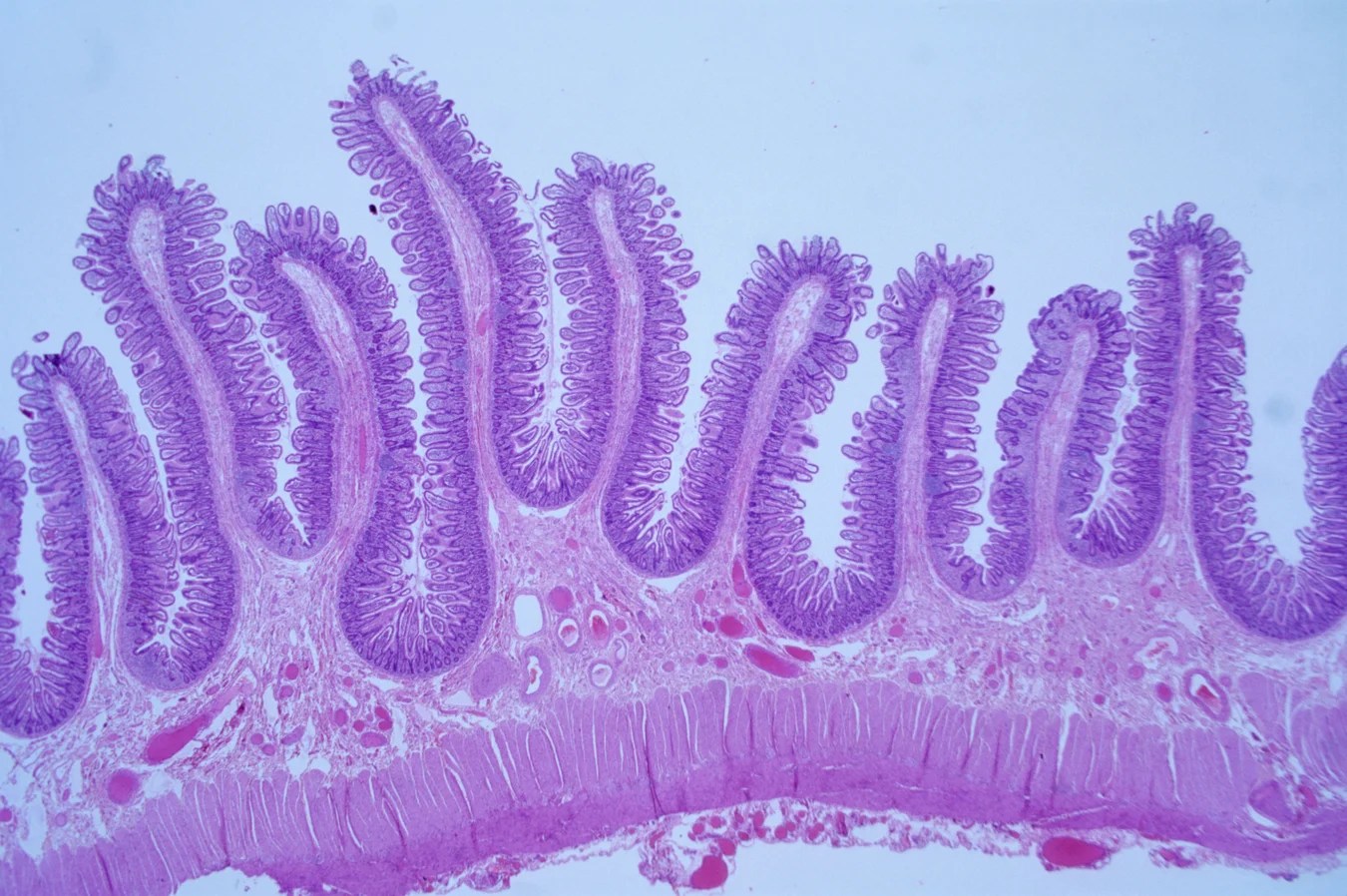
Medical researchers have found a network of fluid-filled spaces that they’d not really noticed before in connective tissue all over the body: below the skin’s surface; lining the digestive tract, lungs, and urinary systems; and surrounding muscles. It amounts, some argue, to a new “organ.” In any case, Jennifer Brandel suggests, it has much to teach us about our relationship with the world at large…
In 2018, scientists discovered a new organ (?) in the human body. You’d think after centuries of cutting ourselves open, we’d know the intimate details of the structures within us by now. Strangely, this body part wasn’t missed because it was invisible; it was overlooked because of what our belief systems wouldn’t let us perceive.
Until quite recently, if doctors wanted to study human tissue from a living person, they had to remove it first. Then they’d essentially mummify it: drying, freezing, slicing, and fixing it on a slide so they could peer at its shriveled dead form under a microscope to ascertain what was happening at a cellular level. As a result, scientists and doctors were taught in medical school that collagen tissue is essentially a dense wall: a barrier.
But a new endoscope, a microscope that snakes into the body through one of two holes (pie- or butt-), now enables us to see and study living tissue inside a breathing body with a beating heart. And once this special endoscope shone its light just below the skin into the collagen layer, it revealed something much more like a sponge than a wall, with fluid rushing between a fractal, honeycombed network.
The ‘they,’ here, of course doesn’t include everyone. Where Western, allopathic medicine focuses on isolating and treating symptoms, Traditional Chinese Medicine has for 2,500 years looked at the body as a dynamic, fluid-oriented system, and takes a more holistic approach to understanding root causes of discomfort and disease. Western doctors and scientists have often lacked the rubric to appreciate the efficacy of acupuncture, despite studies by reputable bodies like the NIH showing its measurable benefits.
Nor have Western doctors come to fully understand and appreciate the role of fascia — the dense collagen network that supports the structure of our musculature and keeps our bones and body aligned. Rolfers, Osteopaths, myofascial workers have been working for years with fascia structure and the fluid within it, looking at the health of the entire body through a lens of interconnection, dependent relationships, and movement.
We now have a shared language, or at least a word, for this system — or this organ, or this infrastructure (depending on whom you ask) — that’s been revealed as a fluid-filled superhighway spanning the entire body. It’s called: the interstitium. It’s such a new word that my autocorrect feature keeps wanting me to change it to “interstitial.”
… The structure of the interstitium is fractal; it exhibits the same pattern at various scales. It’s unified. While scientists had seen glimpses of this mesh-like network before, they had not realized that it connected the entire body — just underneath the skin, and wrapping around organs, arteries, capillaries, veins, head to toes. It’s juicy. It moves four times more fluid through the body than the vascular system does. The fluid isn’t blood, it’s a clear and “pre-lymphatic” substance, carrying within it nutrients, information, and new kinds of cells that are only just being discovered. It’s also a conduit for cancer spread. Turns out that cancer cells moving through the interstitium’s channels are fast.

In short: it’s very important. And it’s wild that, although the interstitium can be seen with the naked eye during surgery, it wasn’t really noticed until now. There is an entire scientific revolution set to unfurl as more studies are peer-reviewed and more science books and classrooms integrate its existence into their cosmologies. We are at the beginning of it all.
…
The reason I’m so hyped about this discovery, despite my last science class having been decades ago, is that the interstitium is a conceptual skeleton key, unlocking a more sophisticated, accurate way of seeing everything in the environment.
In the early modern period, Western scientists conceived of the world in terms of parts, of individuals. Everything was seen as a unit. A molecule, a cell, an organ, a person, a … noun. That’s no accident. The microscope plays an outsized role.
Before microscopes were invented, the composition of the body was a matter of philosophical debate. Aristotle, for instance, believed that the heart was the seat of intelligence and that the brain was a cooling mechanism for the blood. There were long-held beliefs attributed to divine influences, and diseases and recoveries were due to the favor or wrath of deities.
But once the microscope came along, it ushered in a worldview premised on individual identity. The first eyes to peer through those early eyepieces spotted what looked like empty boxes. English scientist Robert Hooke in 1665 coined them as “cells” because they reminded him of the small rooms where monks lived in monasteries. This formative moment led to a worldview called “cell-doctrine” — focusing on things — cells, this basic unit of life from which all living things are composed. Similar cells bundle to form tissues, which then cooperate to form organs, which then carry out the functions necessary to sustain the life of an organism, was how the thinking has gone.
We didn’t pay attention to all of the dynamic, fluid phenomenon, unseen and in between, which connects the organs to one another, and allows the whole system to communicate and stay in homeostasis.
And we grafted this same thinking onto how we organize labor and society. Similar people bundle to form departments, which then cooperate to form companies, which then carry out the functions to sustain our collective communities, countries and world. The enforcement of this model starts young. We ask children, “what do you want to be when you grow up?”, not “how do you want to be when you grow up?” We divide knowledge into subjects, disciplines, majors, then sectors and industries and specific job titles.
We need more navigators skipping between these constructed categories to subvert and replace a perspective of separation that has reached its limits and logical conclusion.
…
“We perceive only that part of nature that our technologies permit,” writes Scott F. Gilbert, Jan Sapp, and Alfred I. Tauber, “and so too, our theories about nature are highly constrained to what our technologies enable us to observe.” In other words, our cosmologies, worldviews, conceptions of the environment and how it works, are limited or expanded by what we can perceive. Our experiences then transmute into the metaphors and grammar that organize our thoughts. New language gives us new worldviews.
The Potawatomi plant ecologist, writer and an actual MacArthur fellow, Robin Wall Kimmerer, writes in Braiding Sweetgrass, “Science can be a language of distance which reduces a being to its working parts; it’s a language of objects.” And in Orion she writes, “The relationship between the structure of a language and the behavior characteristic of a culture, is not a causal one, but many linguists and psychologists agree that language reveals unconscious cultural assumptions and exerts some influence over patterns of thought.”
She wonders, “Can we make a new world with new words?”
Which makes me wonder, how can we activate and apply this new word, interstitium, to harness its meaning and power beyond biology? What will it take to find ways of seeing, languaging and remunerating interstitionary work, so our systems have a chance at correcting and finding balance? No one sector, industry or organization will be able to solve the wicked problems we face in challenges like climate or poverty or corruption…
Re-understanding human biology– and our place in the world: “Invisible Landscapes,” from @JenniferBrandel in @Orion_Magazine.
Listen to the Radiolab episode to which this essay is a companion here.
Learn more about the interstitium in “Meet Your Interstitium, a Newfound ‘Organ’” (source of the image at the top).
* Ed Catmull
###
As we reorient, we might spare a thought for Mary Leakey; she died on this date in 1996. A archaeologist and paleontologist, she made several of the most important fossil finds subsequently interpreted and publicized by her husband, the noted anthropologist Louis Leakey. For every vivid claim made by Louis about the origins of man, the supporting evidence tended to come from Mary’s scrupulous scientific approach. As “the woman who found our ancestors”, Mary’s work in East Africa shed new light on human evolution.
After Louis’ death in 1972, she enjoyed her most spectacular find: three trails of fossilized hominid footprints 3.6 million years old, which she discovered at Laetoli in Tanzania (1978-9) showing man’s ancestors were walking upright at a much earlier period than previously believed.

“Dust to dust”*…
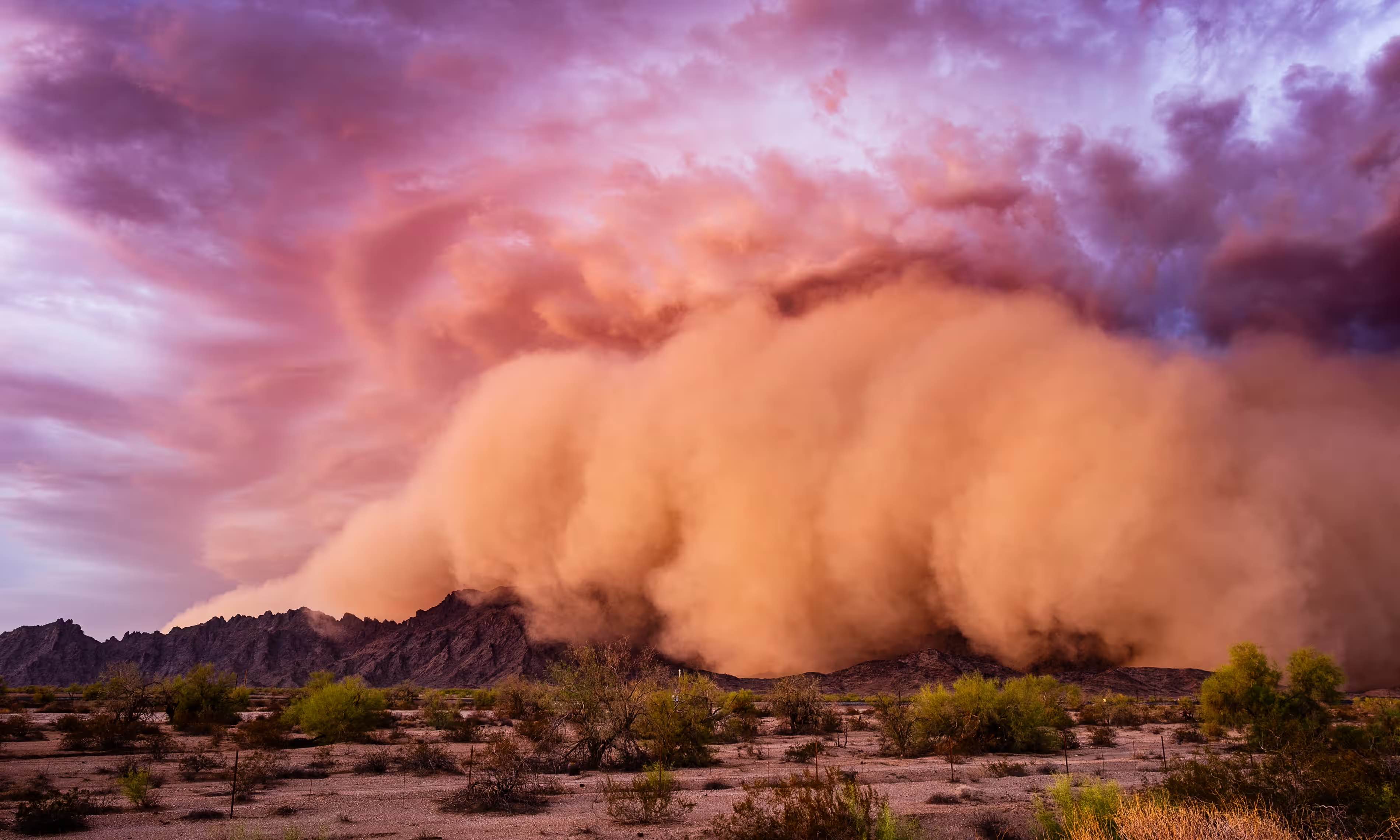
Back in 2016, we visited Jay Owens and his fascinating newsletter on dust… which went silent a couple of years later. Those of us who missed it, and were worried about its author were relieved to learn that he’d pulled back in order to turn his thinking into a book. That book is now here: Dust: The Modern World in a Trillion Particles, and The Guardian is here with an excerpt…
… Nobody normally thinks about dust, what it might be doing or where it should go: it is so tiny, so totally, absolutely, mundane, that it slips beneath the limits of vision. But if we pay attention, we can see the world within it.
Before we go any further, I should define my terms. What do I mean by dust? I want to say everything: almost everything can become dust, given time. The orange haze in the sky over Europe in the spring, the pale fur that accumulates on my writing desk and the black grime I wipe from my face in the evening after a day traversing the city. Dust gains its identity not from a singular material origin, but instead through its form (tiny solid particles), its mode of transport (airborne) and, perhaps, a certain loss of context, an inherent formlessness. If we knew precisely what it was made of, we might not call it dust, but instead dander or cement or pollen. “Tiny flying particles,” though, might suffice as a practical starting definition…
…
Dust is simultaneously a symbol of time, decay and death – and also the residue of life. Its meaning is never black or white, but grey and somewhat fuzzy. Living with dust – as we must – is a slow lesson in embracing contradiction: to clean, but not identify with cleanliness; to respect the material need for hygiene while distrusting it profoundly as a social metaphor…
A fascinating sample of a fascinating book: “Empire of dust: what the tiniest specks reveal about the world,” from @hautepop in @guardian.
Pair with: “Nothing is built on stone; all is built on sand” and “In every grain of sand there is the story of the earth.”
* from the burial service in the Book of Common Prayer
###
As we examine the elemental, we might send exploratory birthday greetings to Friedrich Wilhelm Heinrich Alexander von Humboldt; he was born on this date in 1769. The younger brother of the Prussian minister, philosopher, and linguist Wilhelm von Humboldt, Alexander was a geographer, geologist, archaeologist, naturalist, explorer, and champion of Romantic philosophy. Among many other contributions to human knowledge, his quantitative work on botanical geography laid the foundation for the field of biogeography; he surveyed and collected geological, zoological, botanical, and ethnographic specimens, including over 60,000 rare or new tropical plants.
As a geologist, Humboldt made pioneering observations of geological stratigraphy, structure (he named the Jurassic System), and geomorphology; and he understood the connections between volcanism and earthquakes. His advocacy of long-term systematic geophysical measurement laid the foundation for modern geomagnetic and meteorological monitoring.
For more, see: The Invention of Nature: Alexander Von Humboldt’s New World.

“Rumors and reports of man’s relation with animals are the world’s oldest news stories, headlined in the stars of the zodiac, posted on the walls of prehistoric caves”*…

Aerial view of a kite in the Khaybar area of north-west Saudi Arabia. These ancient hunting structures were named ‘kites’ by aviators in the 1920s because, observed from above, their form is reminiscent of old-fashioned child’s kites with streamers.
… and on the surface of the desert. Vittoria Benzine explains…
In the 1920s, British Royal Air Force pilots over the Middle East recorded the first sightings of what they dubbed desert kites—massive patterns carved into rocky land, often resembling the famous flying toy.
Archaeologists have since debated the purpose of these enigmas, which appear across geographies and eras, dating back to the Neolithic Period (10,000–2,200 B.C.E.) in Jordan, the early Bronze Age (3,300–2,100 B.C.E.) in Israel’s Negev Desert, and the Middle Bronze Age (2,100–1,550 B.C.E.) in Armenia. Some thought they were cultural cornerstones. Still more posited they were pens for domesticating animals.
Three recent peer-reviewed papers confirm popular hypotheses that the desert kites actually served as mass hunting traps, allowing early desert dwellers to kill entire herds of game at once. While they were active, the kites funneled gazelle and ibex down tapered, wall-lined paths which ended in massive pits or sudden cliffs where creatures were trapped and killed. The kites’s particular placement, length, and shape generally demonstrate a sophisticated knowledge of landscapes and animal behaviors…
The full story at “Scientists Have Cracked the Origins of ‘Desert Kites,’ Massive Prehistoric Patterns That Were Carved into the Middle Eastern Desert,” from @vittoriabenzine in @artnet.
* Lewis Lapham
###
As we we admire ingenuity, we might spare a thought for Siegfried Frederick (“S.F.” or “Fred”) Nadel; he died on this date in 1956. An anthropologist who did important work in Africa, he is best remembered as a theorist whose work built on the thinking of Bronislaw Malinowski, sociologist Max Weber, philosopher Alfred North Whitehead, and psychologist Kurt Koffka. In The Foundations of Social Anthropology (1951) he asserted that the main task of the science is to explain as well as to describe aim-controlled, purposive behaviour. Suggesting that sociological facts emerge from psychological facts, he argued that full explanations are to be derived from psychological exploration of motivation and consciousness. And in his posthumous Theory of Social Structure (1958), regarded as one of the 20th century’s foremost theoretical works in the social sciences, Nadel examined social roles, which he considered to be crucial in the analysis of social structure.

“As long as we tell our urban ancestors’ stories, no city is ever lost. They live on, in our imaginations and on our public lands, as a promise that no matter how terrible things get, humans always try again.”*…

In the dusty plains of present-day Sindh in southern Pakistan lie the remains of one of the world’s most impressive ancient cities of which most people have never heard. Samantha Shea reports…
A slight breeze cut through the balmy heat as I surveyed the ancient city around me. Millions of red bricks formed walkways and wells, with entire neighbourhoods sprawled out in a grid-like fashion. An ancient Buddhist stupa towered over the time-worn streets, with a large communal pool complete with a wide staircase below. Somehow, only a handful of other people were here – I practically had the place all to myself.
I was about an hour outside of the dusty town of Larkana in southern Pakistan at the historical site of Mohenjo-daro. While today only ruins remain, 4,500 years ago this was not only one of the world’s earliest cities, but a thriving metropolis featuring highly advanced infrastructures.
Mohenjo-daro – which means “mound of the dead men” in Sindhi – was the largest city of the once-flourishing Indus Valley (also known as Harappan) Civilisation that ruled from north-east Afghanistan to north-west India during the Bronze Age. Believed to have been inhabited by at least 40,000 people, Mohenjo-daro prospered from 2500 to 1700 BCE.
“It was an urban centre that had social, cultural, economic and religious linkages with Mesopotamia and Egypt,” explained Irshad Ali Solangi, a local guide who is the third generation of his family to work at Mohenjo-daro.
But compared to the cities of Ancient Egypt and Mesopotamia, which thrived around the same time, few have heard of Mohenjo-daro. By 1700 BCE, it was abandoned, and to this day, no-one is sure exactly why the inhabitants left or where they went…
The fascinating tale: “Pakistan’s lost city of 40,000 people,” from @IDtravelblog in @BBC_Travel.
* Annalee Newitz, Four Lost Cities: A Secret History of the Urban Age
###
As we muse on mutability, we might send (semi-)adventurous birthday greetings to Thomas Cook; he was born on this date in 1808. An English businessman, he is best known for founding the travel agency Thomas Cook & Son— through which he pioneered the “package tour” and helped build tourism systems (vouchers, company agents/guides, purpose-built hotels, et al.) that fueled the growth of leisure travel first in Italy, then around the world.

“Sharks. I never saw that coming.”*…

While many land-based predators (like wolves) avoid cities, scientists tracking sharks in Florida’s Biscayne Bay found the fish spent just as much time near Miami as away from it. Warren Cornwall explains…
Certain kinds of wildlife are notorious for thriving in urban settings. Think rats, rock pigeons and even the occasional coyote. Now, Florida scientists have added another creature to the list: sharks.
While many large predators show little appetite for city living, an intriguing project tracking the movements of sharks as fearsome as hammerheads revealed the fish are unexpectedly tolerant of life up close to the 6 million humans of greater Miami.
“We were surprised to find that the sharks we tracked spent so much time near the lights and sounds of the busy city, often close to shore, no matter the time of day,” said Neil Hammerschlag, director of the University of Miami’s Shark Research and Conservation Program.
Ecologists group animals into two main categories when it comes to their tolerance for human development. Some, like raccoons or rats, have figured out how to capitalize on the trash we make and the nooks and crannies we build. They are “urban exploiters.” Then there are the animals like mountain lions, lynxes and wolves that generally give human infrastructure a wide berth, often abandoning habitat where roads or buildings encroach. These are the “urban avoiders.”
As that list suggests, on land, big, toothy predators generally keep their distance from the din of the city. But less is known about their aquatic counterparts. So, a group of researchers set out to see if the sharks of Miami’s Biscayne Bay might shed some light on the matter…
“The new wildlife in town: Sharks,” from @WarrenCornwall in @AnthropoceneMag.
###
As we hug the shore, we might send deep birthday greetings to Robert Ballard; he was born on this date in 1942. An oceanographer, explorer, retired naval officer, and professor, he noted for his work in underwater archaeology: maritime archaeology and archaeology of shipwrecks. He is probably best known for his discoveries of the wrecks of the RMS Titanic in 1985, the battleship Bismarck in 1989, the aircraft carrier USS Yorktown in 1998, and the wreck of John F. Kennedy’s PT-109 in 2002. But he believes that his most important discovery was the existence of hydrothermal vents.

You must be logged in to post a comment.