Posts Tagged ‘Animation’
“Cleveland Rocks”*…

How can a city change its image? Vince Guerrieri unspools the complete account of one city’s infamous attempt…
No city fits a punchline quite like Cleveland. “In every country, they make fun of city,” comedian Yakov Smirnoff once said. “In U.S., you make fun of Cleveland. In Russia, we make fun of Cleveland.”
It goes back even longer. Rowan and Martin’s Laugh-In once claimed that Velveeta can be found in the gourmet section of Cleveland supermarkets. “What’s the difference between Cleveland and the Titanic?” Johnny Carson asked on The Tonight Show. “Cleveland has a better orchestra.”
Unfair? Cleveland can be a target-rich environment. The city’s sports teams vacillate between hilarious ineptitude (there’s a reason Major League was set there) and being just good enough to get fans’ hopes up. Fans got drunk and rioted on Ten-Cent Beer Night. In a ceremonial “ribbon-cutting” involving an acetylene torch and a bar of metal, Mayor Ralph Perk accidentally lit his hair on fire. His wife Lucille once declined an invitation to the White House, saying it was her bowling night. The city nearly defaulted on its loans in the late 1970s.
Cleveland became known as an industrial wasteland for frequent fires on the Cuyahoga River. That was a little unfair: In an 18-month span from 1968–69, the Rouge River in Detroit and the Buffalo River in New York also caught fire. But it was the Cuyahoga that Randy Newman wrote a song about.
In 1986, the Cleveland United Way, for its annual fundraiser, wanted to garner some positive publicity for the city, and planned a balloon launch on Public Square. Not just any balloon launch, either, but the biggest balloon launch in human history—they were shooting for a Guinness World Record.
If you’ve heard of Balloonfest ‘86, you’ve heard all about how terrible it was. A cold front blew in, keeping balloons from reaching their intended heights and destination, instead littering the city’s highways and lakefront. Some accounts even call it fatal for two boaters on Lake Erie. Neil Zurcher, a Cleveland journalist, included the balloon launch in his book Ten Ohio Disasters, right up there with the Who concert stampede in Cincinnati, the Xenia tornadoes, and the Silver Bridge collapse. Among the wares sold by Cleveland’s T-shirt–industrial complex is a shirt that boasts, “I survived Balloonfest.”
But has history done Balloonfest dirty? Was it really as bad as everyone says?…
Fascinating: “Balloonfest Made Cleveland A Laughingstock. Did It Deserve It?” from @vinceguerrieri in the always illuminating @DefectorMedia.
* Ian Hunter (on his 1979 album You’re Never Alone with a Schizophrenic); also well-known via the cover by The Presidents of the United States of America that was the theme song of The Drew Carey Show.
###
As we study stunts, we might recall that it was on this date in 1987 that what had been a series of shorts running in The Tracey Ullman Show debuted on Fox as a 30-minute animated comedy– The Simpsons.
Now in its 35th season, the show has won dozens of awards, including 35 Primetime Emmy Awards, 34 Annie Awards, and 2 Peabody Awards. Homer’s exclamatory catchphrase of “D’oh!” has been adopted into the English language, and The Simpsons has had a powerful influence on many other later adult-oriented animated– and live-action– sitcoms.
“If you want to understand today you have to search yesterday”*…

… and for your searching pleasure here are all of our yesterdays, in an animation scrolling by at 1.5 million years per second…
Earth is 4.5 billion years old – which is approximately the same amount of time it took us to create this video. We’ve scaled the complete timeline of our Earth’s life into our first animated movie!… Hop on a musical train ride and experience how long a billion years really is. It’s the perfect background for your next party, a great way to take a break from studying, or a fascinating companion while you’re on the go…
From German animation house Kurzgesagt (“in a nutshell”)…
Posters here.
* Pearl Buck
###
As we trace our steps, we might recall that it was on this date in 1913 that Gulf Refining Company opened the first “drive-in filling station” in Pittsburgh. It was the first architect-designed station and the first to distribute free road maps; it also offered tube and tire installation, free water and air, and crankcase services.

“Better not bring up a lion inside your city, but if you must, then humor all his moods”*…
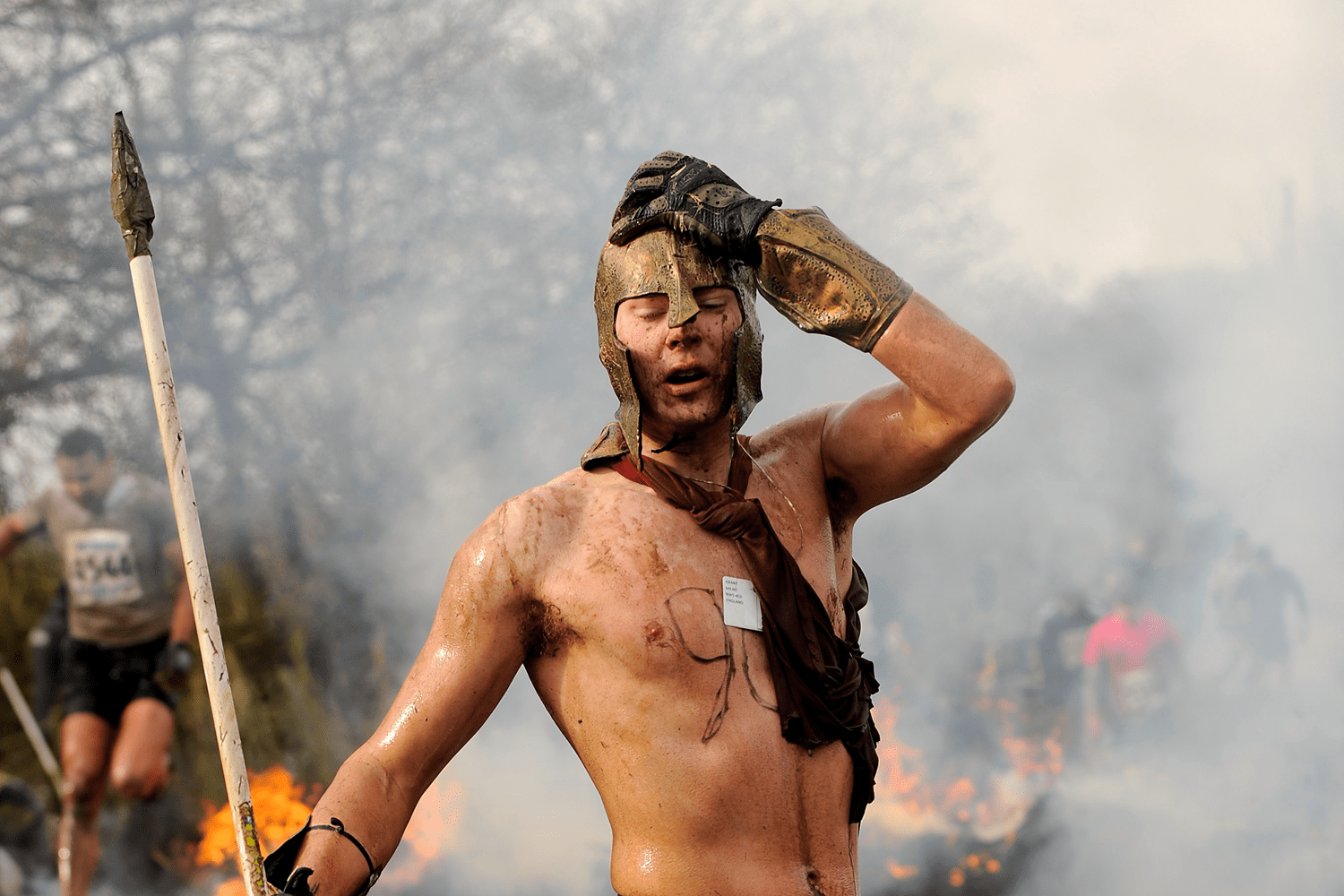
Historian Bret Devereaux on why it’s ill-advised to idolize Spartans…
The Athenian historian Thucydides once remarked that Sparta was so lacking in impressive temples or monuments that future generations who found the place deserted would struggle to believe it had ever been a great power. But even without physical monuments, the memory of Sparta is very much alive in the modern United States. In popular culture, Spartans star in film and feature as the protagonists of several of the largest video game franchises. The Spartan brand is used to promote obstacle races, fitness equipment, and firearms. Sparta has also become a political rallying cry, including by members of the extreme right who stormed the U.S. Capitol on Jan. 6, 2021. Sparta is gone, but the glorification of Sparta—Spartaganda, as it were—is alive and well.
Even more concerning is the U.S. military’s love of all things Spartan. The U.S. Army, of course, has a Spartan Brigade (Motto: “Sparta Lives”) as well as a Task Force Spartan and Spartan Warrior exercises, while the Marine Corps conducts Spartan Trident littoral exercises—an odd choice given that the Spartans were famously very poor at littoral operations. Beyond this sort of official nomenclature, unofficial media regularly invites comparisons between U.S. service personnel and the Spartans as well.
Much of this tendency to imagine U.S. soldiers as Spartan warriors comes from Steven Pressfield’s historical fiction novel Gates of Fire, still regularly assigned in military reading lists. The book presents the Spartans as superior warriors from an ultra-militarized society bravely defending freedom (against an ethnically foreign “other,” a feature drawn out more explicitly in the comic and later film 300). Sparta in this vision is a radically egalitarian society predicated on the cultivation of manly martial virtues. Yet this image of Sparta is almost entirely wrong. Spartan society was singularly unworthy of emulation or praise, especially in a democratic society…
Eminently worth reading in full. U.S. admiration of a proto-fascist city-state is based on bad history: “Spartans Were Losers,” from @BretDevereaux in @ForeignPolicy.
In the spirit of offering alternative perspectives: Brad DeLong in defense of Gates of Fire, if not of the worshipful view of the Spartans.
* Aristophanes, The Frogs
###
As we rethink role models, we might recall that it was on this date in 1951 that Disney’s Alice in Wonderland had its American premiere (in New York, two days after premiering in London).
Walt Disney first tried to adapt Alice into a feature-length animated feature film in the 1930s, but were scrapped in favor of Snow White and the Seven Dwarfs (1937). The idea was revived in the 1940s. The film was originally intended to be a live-action/animated film, but Disney decided it would be the fully animated feature film. During its production, many sequences adapted from Lewis Carroll’s books were later omitted, such as Jabberwocky, White Knight, the Duchess, and Mock Turtle.
Alice in Wonderland was considered a disappointment on its initial release, so was shown on television as one of the first episodes of Disneyland. Its 1974 re-release in theaters proved to be much more successful, leading to subsequent re-releases, merchandising, and home video releases.

“The earth is what we all have in common”*…

Explore a catalog of NASA images and animations of our home planet: “Visible Earth,” from @NASAEarth.
* Wendell Berry
###
As we peruse our planet, we might recall that it was on this date in 1965 that NASA turned on planetary science mode on the Mariner IV spacecraft (which had been launched on November 28, 1964 from Cape Canaveral) as it flew by Mars. Over the next two days, Mariner IV captured the first “close up” pictures (21 in all) of the planets surface. The images taken during the flyby were stored in the on-board tape recorder; each individual photograph took approximately six hours to be transmitted back to Earth.
While waiting for the image data to be computer processed, the team used a pastel set from an art supply store to hand-color (paint-by-numbers style) a numerical printout of the raw pixels. The resulting image provided early verification that the camera was functioning. The hand drawn image compared favorably with the processed image when it became available.

“Animation isn’t the illusion of life; it is life”*…
A unsung pioneer…
A decade before Walt Disney Productions came into existence, making its name synonymous with animated films, there was another pioneer of the art form — Lotte Reiniger.
Reiniger’s filmmaking career spanned 60 years, during which she created more than 70 silhouette animation films, including versions of “Cinderella,” “Puss in Boots” and “Hansel and Gretel.” She’s perhaps best known for her 1926 silent film “The Adventures of Prince Achmed,” a fantastical adaptation of “The Arabian Nights” that was among the first full-length animated features ever made [and the oldest still in existence]…
Beginning with “Prince Achmed,” she also created an early version of the multiplane camera, which gave two-dimensional animation a hitherto unexplored depth, movement and complexity. She called her device a tricktisch, or trick table…
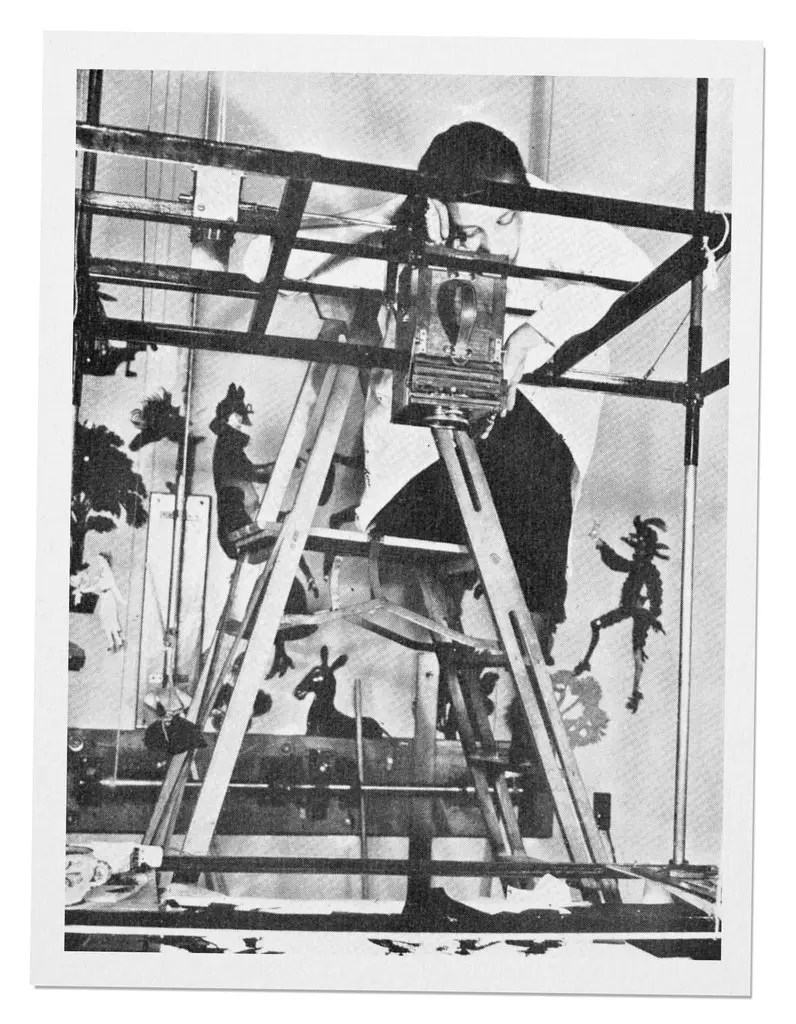
More of Reiniger’s work: The Adventures of Prince Achmed (1926) and a Nivea commercial (1920).
More of Reiniger’s remarkable story: “Overlooked No More: Lotte Reiniger, Animator Who Created Magic With Scissors and Paper” (gift article) from @nytimes, and on Wikipedia.
###
As we sit with the shadows, we might recall that it was on this date in 1935 that Mickey’s Garden was released. Directed by Wilfred Jackson, it was the second Mickey cartoon produced in color and the first color appearance of Pluto. It is also, notably, the first short on which Ollie Johnston (a cleanup artist at the time, ultimately, one of Disney’s “Nine Old Men“) worked.
You must be logged in to post a comment.