Posts Tagged ‘protein’
“Advances are made by answering questions. Discoveries are made by questioning answers.”*…

Three years ago, Google’s AlphaFold pulled off the biggest artificial intelligence breakthrough in science to date [see here]. Yasemin Saplakoglu explains how this has accelerated molecular research and kindled deep questions about why we do science….
In December 2020, when pandemic lockdowns made in-person meetings impossible, hundreds of computational scientists gathered in front of their screens to watch a new era of science unfold.
They were assembled for a conference, a friendly competition some of them had attended in person for almost three decades where they could all get together and obsess over the same question. Known as the protein folding problem, it was simple to state: Could they accurately predict the three-dimensional shape of a protein molecule from the barest of information — its one-dimensional molecular code? Proteins keep our cells and bodies alive and running. Because the shape of a protein determines its behavior, successfully solving this problem would have profound implications for our understanding of diseases, production of new medicines and insight into how life works.
At the conference, held every other year, the scientists put their latest protein-folding tools to the test. But a solution always loomed beyond reach. Some of them had spent their entire careers trying to get just incrementally better at such predictions. These competitions were marked by baby steps, and the researchers had little reason to think that 2020 would be any different.
They were wrong about that.
That week, a relative newcomer to the protein science community named John Jumper had presented a new artificial intelligence tool, AlphaFold2, which had emerged from the offices of Google DeepMind, the tech company’s artificial intelligence arm in London. Over Zoom, he presented data showing that AlphaFold2’s predictive models of 3D protein structures were over 90% accurate — five times better than those of its closest competitor.
In an instant, the protein folding problem had gone from impossible to painless. The success of artificial intelligence where the human mind had floundered rocked the community of biologists. “I was in shock,” said Mohammed AlQuraishi, a systems biologist at Columbia University’s Program for Mathematical Genomics, who attended the meeting. “A lot of people were in denial.”
But in the conference’s concluding remarks, its organizer John Moult left little room for doubt: AlphaFold2 had “largely solved” the protein folding problem — and shifted protein science forever. Sitting in front of a bookshelf in his home office in a black turtleneck, clicking through his slides on Zoom, Moult spoke in tones that were excited but also ominous. “This is not an end but a beginning,” he said…
[Saplakoglu tells the story of AlphaFold and of subsequent developments…]
… Seventy years ago, proteins were thought to be a gelatinous substance, Porter said. “Now look at what we can see”: structure after structure of a vast world of proteins, whether they exist in nature or were designed.
The field of protein biology is “more exciting right now than it was before AlphaFold,” Perrakis said. The excitement comes from the promise of reviving structure-based drug discovery, the acceleration in creating hypotheses and the hope of understanding complex interactions happening within cells.
“It [feels] like the genomics revolution,” AlQuraishi said. There is so much data, and biologists, whether in their wet labs or in front of their computers, are just starting to figure out what to do with it all.
But like other artificial intelligence breakthroughs sparking across the world, this one might have a ceiling.
AlphaFold2’s success was founded on the availability of training data — hundreds of thousands of protein structures meticulously determined by the hands of patient experimentalists. While AlphaFold3 and related algorithms have shown some success in determining the structures of molecular compounds, their accuracy lags behind that of their single-protein predecessors. That’s in part because there is significantly less training data available.
The protein folding problem was “almost a perfect example for an AI solution,” Thornton said, because the algorithm could train on hundreds of thousands of protein structures collected in a uniform way. However, the Protein Data Bank may be an unusual example of organized data sharing in biology. Without high-quality data to train algorithms, they won’t make accurate predictions.
“We got lucky,” Jumper said. “We met the problem at the time it was ready to be solved.”
No one knows if deep learning’s success at addressing the protein folding problem will carry over to other fields of science, or even other areas of biology. But some, like AlQuraishi, are optimistic. “Protein folding is really just the tip of the iceberg,” he said. Chemists, for example, need to perform computationally expensive calculations. With deep learning, these calculations are already being computed up to a million times faster than before, AlQuraishi said.
Artificial intelligence can clearly advance specific kinds of scientific questions. But it may get scientists only so far in advancing knowledge. “Historically, science has been about understanding nature,” AlQuraishi said — the processes that underlie life and the universe. If science moves forward with deep learning tools that reveal solutions and no process, is it really science?
“If you can cure cancer, do you care about how it really works?” AlQuraishi said. “It is a question that we’re going to wrestle with for years to come.”
If many researchers decide to give up on understanding nature’s processes, then artificial intelligence will not just have changed science — it will have changed the scientists too.
Meanwhile, the CASP organizers are wrestling with a different question: how to continue their competition and conference. AlphaFold2 is a product of CASP, and it solved the main problem the conference was organized to address. “It was a big shock for us in terms of: Just what is CASP anymore?” Moult said.
In 2022, the CASP meeting was held in Antalya, Turkey. Google DeepMind didn’t enter, but the team’s presence was felt. “It was more or less just people using AlphaFold,” Jones said. In that sense, he said, Google won anyway.
Some researchers are now less keen on attending. “Once I saw that result, I switched my research,” Xu said. Others continue to hone their algorithms. Jones still dabbles in structure prediction, but it’s more of a hobby for him now. Others, like AlQuraishi and Baker, continue on by developing new algorithms for structure prediction and design, undaunted by the prospect of competing against a multibillion-dollar company.
Moult and the conference organizers are trying to evolve. The next round of CASP opened for entries in May. He is hoping that deep learning will conquer more areas of structural biology, like RNA or biomolecular complexes. “This method worked on this one problem,” Moult said. “There are lots of other related problems in structural biology.”
The next meeting will be held in December 2024 by the aqua waters of the Caribbean Sea. The winds are cordial, as the conversation will probably be. The stamping has long since died down — at least out loud. What this year’s competition will look like is anyone’s guess. But if the past few CASPs are any indication, Moult knows to expect only one thing: “surprises.”…
When one door closes, another opens: “How AI Revolutionized Protein Science, but Didn’t End It,” from @yasemin_sap in @QuantaMagazine.
See also: “How Colorful Ribbon Diagrams Became the Face of Proteins” from the same author.
###
As we ponder progress, we might spare a thought for Edmond H. Fischer; he died on this date in 2021. A biochemist, he and his collaborator, Edwin G. Krebs were awarded the Nobel Prize in Physiology or Medicine in 1992 for describing how reversible phosphorylation works as a switch to activate proteins and regulate a number of cellular processes. Their discovery was a key to unlocking how glycogen in the body breaks down into glucose. It fostered techniques that prevent the body from rejecting transplanted organs and opened new doors for research into cancer, blood pressure, inflammatory reactions, and brain signals.

“The public health, ecological, and social impacts of fish meal—which were a consequence of its cheapness as a feed ingredient—were largely invisible on the other side of the world”*…

… Those deleterious effects were largely missed in the mid-Twentieth Century, when fish meal became important to the rise of industrial-scale farming, and– as Ashley Braun explains– are still, as fish meal use is again growing…
The dirty yellow powder’s underwhelming appearance belies its influence. Fish meal—an unassuming yet protein-dense powder of dried, cooked, and pulverized fish—has fueled South American oligarchs, fostered slums, reshaped ecosystems, and fed Europe’s agricultural industrialization. Fish meal propelled the global production of meat and eggs, all while spurring public health crises, pollution, and unrest. The precipitous rise and fall of this humble commodity in the mid to late 20th century, writes medical and environmental historian Floor Haalboom, offers lessons for today as fish meal’s star rises again…
How cheap protein fueled the Global North’s agricultural expansion and destabilized the Global South: “Boom and Bust, All at Once: The Fraught Modern History of Fish Meal,” from @ashleybraun in @hakaimagazine. Eminently worth reading in full.
###
As we ponder pulverization, we might recall that it was on this date in 1837 that John Wheeley Lea and William Henry Perrins, a pair of successful Worcester chemists, began manufacturing Worcestershire sauce, a savory flavoring that capitalizes on umami. Their condiment, which was broadly available to the public the following year, faced down scores of imitators to become the dominant brand, which it remains.

“Nature is full for us of seeming inconsistencies and glad surprises”*…

George Musser talks with biologist Michael Levin about his practice of uncovering the incredible, latent abilities of living things…
Michael Levin, a developmental biologist at Tufts University, has a knack for taking an unassuming organism and showing it’s capable of the darnedest things. He and his team once extracted skin cells from a frog embryo and cultivated them on their own. With no other cell types around, they were not “bullied,” as he put it, into forming skin tissue. Instead, they reassembled into a new organism of sorts, a “xenobot,” a coinage based on the Latin name of the frog species, Xenopus laevis. It zipped around like a paramecium in pond water. Sometimes it swept up loose skin cells and piled them until they formed their own xenobot—a type of self-replication. For Levin, it demonstrated how all living things have latent abilities. Having evolved to do one thing, they might do something completely different under the right circumstances.
Not long ago I met Levin at a workshop on science, technology, and Buddhism in Kathmandu. He hates flying but said this event was worth it. Even without the backdrop of the Himalayas, his scientific talk was one of the most captivating I’ve ever heard. Every slide introduced some bizarre new experiment. Butterflies retain memories from when they were caterpillars, even though their brains turned to mush in the chrysalis. Cut off the head and tail of a planarian, or flatworm, and it can grow two new heads; if you amputate again, the worm will regrow both heads. Levin argues the worm stores the new shape in its body as an electrical pattern. In fact, he thinks electrical signaling is pervasive in nature; it is not limited to neurons. Recently, Levin and colleagues found that some diseases might be cured by retraining the gene and protein networks as one might train a neural network. But when I sat down to talk to the audacious biologist on the hotel patio, I mostly wanted to hear about slime mold…
Read on for a fascinating conversation: “The Biologist Blowing Our Minds,” @drmichaellevin and @gmusser in @NautilusMag.
* Margaret E. Barber
###
As we’re amazed, we might send tidy birthday greetings to Irwin Rose; he was born on this date in 1926. A biologist and biochemist, he shared the 2004 Nobel Prize in Chemistry for the discovery of ubiquitin-mediated protein degradation.
Ubiquitin is a small protein molecule that attaches to other proteins, tagging them for removal, which are thus recognized by the cell’s proteasomes. These structures are the cell’s waste-disposal units, allowing the proteins to be broken down into tiny pieces for reuse; this ubiquitin-mediated process cleans up unwanted proteins resulting during cell division, and performs quality control on newly synthesized proteins… which matters, as faulty protein-breakdown processes lead to such conditions as cystic fibrosis, several neurodegenerative diseases, and certain types of cancer.

“Most things are never meant”*…
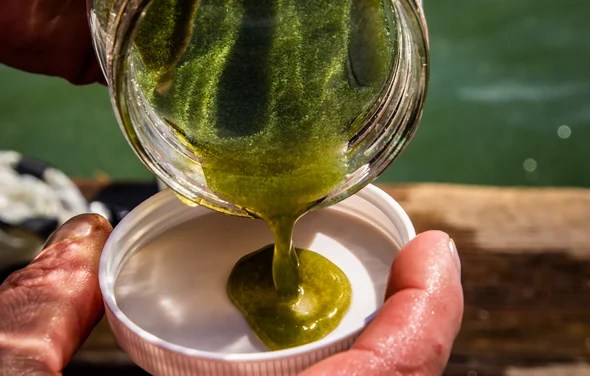
Protein-packed diets add excess nitrogen to the environment through urine, rivaling pollution from agricultural fertilizers…
In the U.S., people eat more protein than they need to. And though it might not be bad for human health, this excess does pose a problem for the country’s waterways. The nation’s wastewater is laden with the leftovers from protein digestion: nitrogen compounds that can feed toxic algal blooms and pollute the air and drinking water. This source of nitrogen pollution even rivals that from fertilizers washed off of fields growing food crops, new research suggests.
When we overconsume protein—whether it comes from lentils, supplements or steak—our body breaks the excess down into urea, a nitrogen-containing compound that exits the body via urine and ultimately ends up in sewage… the majority of nitrogen pollution present in wastewater—some 67 to 100 percent—is a by-product of what people consume…
Once it enters the environment, the nitrogen in urea can trigger a spectrum of ecological impacts known as the “nitrogen cascade.” Under certain chemical conditions, and in the presence of particular microbes, urea can break down to form gases of oxidized nitrogen. These gases reach the atmosphere, where nitrous oxide (N2O) can contribute to warming via the greenhouse effect and nitrogen oxides (NOx) can cause acid rain. Other times, algae and cyanobacteria, photosynthetic bacteria also called blue-green algae, feed on urea directly. The nitrogen helps them grow much faster than they would normally, clogging vital water supplies with blooms that can produce toxins that are harmful to humans, other animals and plants. And when the algae eventually die, the problem is not over. Microorganisms that feast on dead algae use up oxygen in the water, leading to “dead zones,” where many aquatic species simply cannot survive, in rivers, lakes and oceans. Blooms from Puget Sound to Tampa, Fla., have caused large fish die-offs…
If it’s not one thing, it’s another: “Eating Too Much Protein Makes Pee a Problem Pollutant in the U.S.,” from Sasha Warren (@space_for_sasha) in @sciam.
* Philip Larkin, “Going, Going” (in High Windows)
###
As we deliberate on our diets, we might recall that it was on this date in 1888 that Theophilus Van Kannel received a patent for the revolving door, a design that came to characterize the entrances of (then-proliferating) skyscrapers and that earned him induction into the National Inventors Hall of Fame. But lest we think him “all work,” his other notable invention was the popular (at least in the early 20th century) amusement park ride “Witching Waves.”


“In the attempt to make scientific discoveries, every problem is an opportunity and the more difficult the problem, the greater will be the importance of its solution”*…

(Roughly) Daily is headed into its traditional Holiday hibernation; regular service will begin again very early in the New Year.
It seems appropriate (especially given the travails of this past year) to end the year on a positive and optimistic note, with a post celebrating an extraordinary accomplishment– Science magazine‘s (thus, the AAAS‘) “Breakthrough of the Year” for 2021…
In his 1972 Nobel Prize acceptance speech, American biochemist Christian Anfinsen laid out a vision: One day it would be possible, he said, to predict the 3D structure of any protein merely from its sequence of amino acid building blocks. With hundreds of thousands of proteins in the human body alone, such an advance would have vast applications, offering insights into basic biology and revealing promising new drug targets. Now, after nearly 50 years, researchers have shown that artificial intelligence (AI)-driven software can churn out accurate protein structures by the thousands—an advance that realizes Anfinsen’s dream and is Science’s 2021 Breakthrough of the Year.
AI-powered predictions show proteins finding their shapes: the full story: “Protein structures for all.”
And read Nature‘s profile of the scientist behind the breakthrough: “John Jumper: Protein predictor.”
* E. O. Wilson
###
As we celebrate science, we might send well-connected birthday greetings to Robert Elliot Kahn; he was born on this date in 1938. An electrical engineer and computer scientist, he and his co-creator, Vint Cerf, first proposed the Transmission Control Protocol (TCP) and the Internet Protocol (IP), the fundamental communication protocols at the heart of the Internet. Later, he and Vint, along with fellow computer scientists Lawrence Roberts, Paul Baran, and Leonard Kleinrock, built the ARPANET, the first network to successfully link computers around the country.
Kahn has won the Turing Award, the National Medal of Technology, and the Presidential Medal Of Freedom, among many, many other awards and honors.

You must be logged in to post a comment.