Posts Tagged ‘cryptocurrency’
“Quantum computation is … nothing less than a distinctly new way of harnessing nature”*…

As the tools in the world around us change, the world– and we– change with them. The onslaught of AI is the change that seems to be grabbing most of our mindshare these days… and with reason. But there are, of course, other changes (in biotech, in materials science, et al.) that are also going to be hugely impactful.
Today, a look at the computing technology stalking up behind AI: quantum computing. As enthusiasts like David Deutsch (author of the quote above) argue, it can have tremendous benefits, perhaps especially in our ability to model (and thus better understand) our reality.
But quantum computing will, if/when it arrives, also present huge challenges to us as individuals and as societies– perhaps most prominently in its threat to the ways in which we protect our systems and our information: We’ve felt pretty safe for decades, secure in the knowledge that we could lose passwords to phising or hacks, but that it would take the “classical” computers we have 1 billion years to break today’s RSA-2048 encryption. A quantum computer could crack it in as little as a hundred seconds.
The technology has been “somewhere on the horizon” for 30 years… so not something that has seemed urgent to confront. But progress has accelerated; a recent Google paper reports on a programming and architectural breakthrough that greatly reduces the computing resources necessary to break classical cryptography… putting the prospect of “Q-Day” (the point at which quantum computers become powerful enough to break standard encryption methods (RSA, ECC), endangering global digital security) much closer, which would put everything from crypto-wallets to our e-banking accounts at risk.
Charlie Wood brings us up to speed…
Some 30 years ago, the mathematician Peter Shor took a niche physics project — the dream of building a computer based on the counterintuitive rules of quantum mechanics — and shook the world.
Shor worked out a way for quantum computers to swiftly solve a couple of math problems that classical computers could complete only after many billions of years. Those two math problems happened to be the ones that secured the then-emerging digital world. The trustworthiness of nearly every website, inbox, and bank account rests on the assumption that these two problems are impossible to solve. Shor’s algorithm proved that assumption wrong.
For 30 years, Shor’s algorithm has been a security threat in theory only. Physicists initially estimated that they would need a colossal quantum machine with billions of qubits — the elements used in quantum calculations — to run it. That estimate has come down drastically over the years, falling recently to a million qubits. But it has still always sat comfortably beyond the modest capabilities of existing quantum computers, which typically have just hundreds of qubits.
However, two different groups of researchers have just announced advances that notably reduce the gap between theoretical estimates and real machines. A star-studded team of quantum physicists at the California Institute of Technology went public with a design for a quantum computer that could break encryption with only tens of thousands of qubits and said that it had formed a company to build the machine. And researchers at Google announced that they had developed an implementation of Shor’s algorithm that is ten times as efficient as the best previous method.
Neither company has the hardware to break encryption today. But the results underscore what some quantum physicists had already come to suspect: that powerful quantum computers may be years away, rather than decades. “If you care about privacy or you have secrets, then you better start looking for alternatives,” said Nikolas Breuckmann, a mathematical physicist at the University of Bristol, who did not work on either of the papers.
While the new results may provide a jolt for the policymakers and corporations that guard our digital infrastructure, they also signal the rapid progress that physicists have made toward building machines that will let them more thoroughly explore the quantum world.
“We’re going to actually do this,” said Dolev Bluvstein, a Caltech physicist and CEO of the new company, Oratomic…
[Wood unpacks the history of the development of the technology and explores the challenges that remain; he concludes…]
… If any group succeeds at building a quantum computer that can realize Shor’s algorithm, it will mark the end an era — specifically, the “Noisy Intermediate Scale Quantum” era, as Preskill dubbed the pre-error-correction period in a 2018 paper. Each researcher has a vision for what to pursue first with a machine in the new “fault-tolerant” era.
[Robert] Huang said he would start by running Shor’s algorithm, just to prove that the device works. After that, he said he would try to use it to speed up machine learning — an application to be detailed in coming work.
Most of the architects building quantum computers, whether at Oratomic or other startups, are physicists at heart. They’re interested in physics, not cryptography. Specifically, they’re interested in all the things a computer fluent in the language of quantum mechanics could teach them about the quantum realm, such as what sort of materials might become superconductors even at warm temperatures. Preskill, for his part, would like to simulate the quantum nature of space-time.
The Caltech group knows it has years of work ahead before any of its dreams have a chance of coming true. But the researchers can’t wait to get started. “Pick a cooler life quest than building the world’s first quantum computer with your friends!” said a jubilant Bluvstein, reached by phone shortly before their paper went live, before rushing off to celebrate…
Eminently worth reading in full: “New Advances Bring the Era of Quantum Computers Closer Than Ever,” from @walkingthedot.bsky.social in @quantamagazine.bsky.social.
* David Deutsch, The Fabric of Reality
###
As we prepare, we might take a moment to appreciate just how vastly and deeply the legacy systems challenged by quantum computing run, recalling that on this date in 1959 Mary Hawes, a computer scientist for the Burroughs Corporation held a meeting of computers users, manufacturers, and academics at the University of Pennsylvania aimed at creating a common business oriented programming language. At the meeting, representative Grace Hopper suggested that they ask the Department of Defense to fund the effort to create such a language. Also attending was Charles Phillips who was director of the Data System Research Staff at the DoD and was excited by the possibility of a common language streamlining their operations. He agreed to sponsor the creation of such a language. This was the genesis of what would eventually become the COBOL language.
To this day COBOL is still the most common programming language used in business, finance, and administrative systems for companies and governments, primarily on mainframe systems, with around 200 billion lines of code still in production use… all of which are in question and/or at risk in a world of quantum computing.

“Money is a servant to politicians and the country. But, if the politicians and the country become the servant of the money, the politicians have failed.”*…

Given all that’s going on in the current adminsitration, it’s hard to keep track of the havoc. Here, an update on a drama playing out in the legislature (with heavy White House involvement).
Crypto interests came after the local banker last week in a bitter Congressional fight. As Matt Stoller explains, they didn’t win, but it’s not over…
… [Last] Thursday, the Senate Banking Committee abruptly canceled its meeting, known as a mark-up, to write little-noticed legislation to deregulate the financial system. And the reason is that two of the more powerful forces in D.C. – the banking lobby and the new MAGA-powered crypto world – came into conflict. The result, so far, is a stalemate.
I haven’t written about crypto for a few years, because there’s not much to say beyond “they did a lot of bribes in a bribe-prone system.” But depending on what happens next, we could be looking at the end of an iconic American figure, the local banker, and his or her replacement with something very different. The context of the legislative fight is, as you see in lots of other areas, the decline of the productive institutional fabric of America.
Culturally speaking, banks have a weird place in America, as they are the institutions that control permission to use resources. The endless number of bank heist movies, often with plucky burglars as heroic figures telling bank customers they needn’t worry because it’s not their money at risk, suggests that there’s a lot of skepticism of financial power in general. But there are two types of bankers, the generous local elite and the extractive beancounter. These represent a traditional populist vs oligarch framework.
Take the holiday classic film It’s a Wonderful Life. It’s about a small town banker named George Bailey, played by Jimmy Stewart. Bailey’s help financing useful things in Bedford Falls, like houses and businesses, contrasts with the avaricious Harry Potter, who is a stand-in for Wall Street.
There’s a reason for these cultural totems. Americans have always understood that distant control of credit is dangerous, the theme of movies such as Wall Street, Margin Call, and The Big Short. They also see that local control of credit and payments is key to self-sufficiency. Local banks uses to be, and to some extent still are, the powerhouse of American cities and towns.
That said, there have always been a variety of financial institutions to serve different kinds of customers, including large corporations. There are three kinds of banks in America, the small bank, the regional bank spanning a few states, and a few dozen national mega-banks. Local banks, a la George Bailey, are more efficient with better service and more commercial lending. According to the Institute for Local Self-Reliance, roughly half of U.S. assets were held in small banks, which did most of the productive lending. In 2020, small and regionals held just 17% of industry assets, but offered 46% of bank lending to new and growing businesses.
In the post-war era, this mix of banking was relatively stable, with roughly fourteen thousand local banks and thrifts serving as mortgage and commercial lenders, and check clearing institutions. But in the early 1980s, policymakers sought to consolidate the sector, enacting a series of deregulatory laws to encourage bank failures and mergers. The result is that today we have fewer than four thousand banks, and by the end of the Trump administration, we may have fewer than a thousand.
Of course, the world isn’t the same as it was forty five years ago. Since the 1980s, finance has changed. We are a capital markets driven economy, not a bank-driven one, and we use credit cards not checks, apps and ATMs more than branches. Bailouts have replaced proactive regulation, and we now have four giant Too Big to Fail banks that span multiple lines of business from investment banking to brokerage services. But local economies still depend on local banks, and there are fewer and fewer of them…
… Banking is a great business, because mostly you pay customers a small amount for the use of their money, and get the government to guarantee you a profit. You can make more if you actually do the work to lend money, but you don’t have to.
In return for this easy profit via a government safety net, bankers accept regulation. As the brilliant scholar Saule Omarova notes, the best way to understand banks is as franchises from the government. Bankers safeguard the nation’s money and payments system, and are well-paid for it, but it’s fundamentally a public and not a private duty. That’s why there are banking charters from the state.
The rise of crypto parallels the consolidation and corruption of banking. From the 1980s onward, small town bankers, like everyone else during the neoliberal era, became heavily oriented around removing rules against speculation and froth. The low interest rate environment of the New Deal gave way to a high interest rate world, and that put enormous pressure on the balance sheets of bankers who had lent money more cheaply. That, plus the turn of the Democrats away from protecting small towns in favor of consumer rights, led to a sharp anti-government sentiment among local bankers…
[Stoller unpacks the history of banking the last few decades and then turns to crypto…]
… While anti-monopolists argued for a renewal of public institutions to tamp down on concentrations of wealth and power, the crypto world went the opposite way, arguing that it was the very existence and power of public institutions that led to the crisis in the first place.
Crypto was ideological, at first framed around utopian rhetoric and the blockchain. Unfortunately, there were no actual real use cases for productive ends, it was entirely a way of scamming or speculating without rules. During the 2010s, when the Federal Reserve kept interest rates at zero and engineered a set of bubbles, crypto was one of the more prominent ones. In 2021, I wrote an article titled “Cryptocurrencies: A Necessary Scam” describing the ideological goal of crypto.
Fortunately, regulators kept crypto hived off from the real economy, so as the bubble blew up, it didn’t much matter. In 2022, when Sam Bankman-Fried and a host of crypto institutions collapsed in an orgy of fraud and leverage and money laundering and sanctions evasions, crypto seemed to be over. But it wasn’t, because of the power of the banking lobby, the weakness of Joe Biden’s administration, and the general pro-deregulation consensus in Congress…
… After Biden, the crypto industry had immense political leverage over a supine Congress and a friendly administration. Concerns over things like consumer protection ended, of course, but even more “serious” things like worries over national security and sanctions evaporated. Trump pardoned the Binance CEO Changpeng Zhao, and no one cared any longer that crypto was used to funnel money to Hamas and Venezuela.
The narrative around crypto changed, as crypto proponents dropped their naive ideological arguments. Industry proponents no longer argued there’s anything innovative, or that crypto is important for payments or any other purpose. It’s purely a mechanism to speculate. And the industry ended its commitment to a stateless approach. The trading side of crypto attacked stock market regulations, while the banking side demanded access to the banking franchise, including bank charters, access to the Federal Reserve safety net, and so forth. They started claiming they are bank-like, only better, and that the current banking order is lazy and protected by regulation.
And that brings us to the legislative fight last week. A few months ago, Congress did its first set of favors for the crypto industry, passing the Genius Act, which allowed for companies to issue “stablecoins,” which is to say, they can take dollar deposits as long as they back those deposits with actual dollars. However, they were mostly barred from paying interest on stablecoins. And the payment of interest on deposits is really key, because that’s what would allow stablecoin issuers and crypto exchanges to compete with banks over those cheap customer deposits that enable profits. It is an existential problem, not for the JP Morgan’s of the world, as they are so big it doesn’t matter, but for the rest of the banking sector, the local and community guys.
The most aggressive crypto firm, Coinbase, sort of offers interest on deposits, with what are called “rewards.” By calling them rewards instead of interest, Coinbase is trying to create a loophole in the Genius Act. But it’s a grey area, at best, and regulators could crack down.
The next piece of legislation pushed by the crypto world was called the Clarity Act, which has a number of elements, some of them involving rules around speculation. If it passes, we can expect very little regulation of the stock market, anti-money laundering, or insider trading going forward. But the fight that led to the cancelation of the markup of the Clarity Act is whether “rewards,” aka interest on deposits, are legal. Enter the banking lobby.
Community and regional bankers are not used to fighting with conservatives, because they haven’t had to. They did block liberal lawyer Omarova from becoming the bank regulator at the Office of Comptroller of the Currency. But they certainly aren’t used to dealing with feral and weird crypto MAGA online influencers with billions of dollars. That doesn’t make sense to them. And it should have been obvious that they were in the crosshairs of the crypto industry; the Federal Reserve just launched a rulemaking to give crypto a mini bank charter, which should scare the hell out of the local banks.
But they finally have started to get in gear, pointing to a Treasury report saying that $6.6 trillion of deposits might leave the banking system if crypto companies could pay interest on stablecoins. The Independent Community Bankers Association, the trade group for local bankers, mobilized its members against stablecoin rewards.
Much of the crypto world doesn’t care about stablecoins or banking; they are interested in removing the rules regulating speculation and gambling. For them, it’s a securities law matter. But for Coinbase, which makes roughly a billion dollars in revenue with stablecoins, that part of the bill does matter. And so Brian Armstrong pulled his support for the bill on the eve of the markup. There’s something a bit odd about Coinbase’s opposition, since they got 95% of what they wanted, and everyone else is fine with the legislation. But I don’t want to speculate too much on motivations, the point is Armstrong was unhappy with the final bill.
It’s not clear what happens now. The Senate Banking Committee has put enormous time and effort into this legislation, at the behest of crypto donors. But it really is an zero sum fight. If crypto exchanges can pay interest or rewards on stablecoins, then local banks lose their deposit base. If crypto exchanges can’t, then they won’t get access to cheap deposits. While Senators are desperate for some sort of compromise, it doesn’t look like there is one. Someone has to win and someone has to lose.
This battle is one where there is no good guy, but if there’s someone who is less bad, it would be the local bankers. They at least do lend into communities, and are subject to real regulation. Crypto is a disaster, and if we integrate crypto into the real economy, they will eventually demand their own bailout. But the critique that banks don’t pay much in interest on accounts is accurate. Furthermore, the credit card business is a bloated monopolistic mess. Still, those problems are largely about the Too Big to Fail banks, not the local guys, and the TBTF banks will be fine regardless.
Honestly, I’m exhausted by the question that we are forced to answer in this fight. Should credit allocation and payments be controlled by a set of lazy right-wing bankers who hate government, or a hungrier and deeply corrupt group of crypto scammers? It would be nice to have an alternative to those two interest groups. And eventually, we will, since it’s becoming clear that the state will have to take a much bigger role in credit allocation. But for now, the fact that crypto finally got stopped, at least temporarily, by the banking lobby, well at least it’s funny. And it does show how checks and balances are useful even when everyone involved is deeply flawed.
At this moment, I’ll take what I can get…
The end of an era? “The Slow Death of Banking in America,” from @mattstoller.skystack.xyz.
Pair with Molly White‘s “They’ve bought themselves a Congress” (“Coinbase calls the shots in the Senate…”) and from Matt Levine: “Stablecoin Narrow Banking” (“one solution here is to allow stablecoins to pay interest (like banks) but also impose capital requirements (like banks). I would not bet on that happening though…”) “Memecoin Venture Capital,” (“… today I want to talk about the fourth category, tokens promising no rights…”)
* Oliver Kemper
###
As we hollow out our mattresses, we might send painless birthday greetings to Felix Hoffman; he was born on this date in 1868. A chemist for the German chemical and pharmaceutical company Bayer, he sythesized both acetylsalicylic acid (ASA), which Bayer marketed as “aspirin,” and diamorphine, which was popularized under the Bayer trade name “heroin.”

“Palantir is still not a data company”*…

Palantir, founded in 2003 by Peter Thiel, Stephen Cohen, Joe Lonsdale, and Alex Karp, has grown into a company with revenues approaching $3 Billion. It works for a number of giant corporations; but its power alley has, from the start, been insinuating itself into the U.S. government ever more intimately, becoming one of the few winners in the Trump administration’s cost-cutting push (and emerging as the chosen agent to compile data on all Americans).
Palantir has become a darling of the stock market, the top-performing stock in the S&P 500 for two years running. Its stock has risen nearly 150% this year and an incredible 2,000% since its 2020 debut.
But what’s fueling all of this? Is the company’s extraordinary valuation justified? Sustainable? But more fundamentally, what is it that Palantir actually does? Palantir is often called a data broker, a data miner, or a giant database of personal information. In reality, it’s none of these—but even former employees struggle to explain it. Caroline Haskins reports…
Palantir is arguably one of the most notorious corporations in contemporary America. Cofounded by libertarian tech billionaire Peter Thiel, the software firm’s work with Immigration and Customs Enforcement, the US Department of Defense, and the Israeli military has sparked numerous protests in multiple countries. Palantir has been so infamous for so long that, for some people, its name has become a cultural shorthand for dystopian surveillance.
But a number of former Palantir employees tell WIRED they believe the public still largely misunderstands what the company actually does and how its software works. Some people think it’s a data broker that buys information from private companies and resells it to the government. Others think it’s a data miner, constantly scanning the internet for unique insights it can collect and market to customers. Still others think it maintains a giant, centralized database of information collected from all of its clients. In reality, Palantir does none of these things, but the misconceptions continue to persist.
Palantir has tried to correct the record itself in a series of blog posts with titles like “Palantir Is Not a Data Company” and “Palantir Is Still Not a Data Company.” In the latter, Palantir explains that “misconceptions can arise because our products are complicated,” but nonetheless, “it is absolutely possible” to accurately describe them to “people who are curious.”
The problem, however, is that even ex-employees struggle to provide a clear description of the company. “It’s really hard to explain what Palantir works on or what it does,” says Linda Xia, who was an engineer at Palantir from 2022 to 2024. “Even as someone who worked there, it’s hard to figure out, how do you give a cohesive explanation?”
Xia was one of 13 former Palantir staffers who signed an open letter published in May arguing that the company risks being complicit in authoritarianism by continuing to cooperate with the Trump administration. She and other former Palantir staffers who spoke to WIRED for this story argue that, in order to grapple with Palantir and its role in the world, let alone hold the company accountable, you need to first understand what it really is.
It’s not that former employees literally don’t know what Palantir is selling. In interviews with WIRED, they spoke fluidly about how its software can connect and transform different kinds of data collected by government agencies and corporations. But when asked to, say, name its direct business competitors, two former Palantir employees who requested anonymity to speak freely about their experiences, struggled to come up with anything. “I still don’t know how to answer that question, to be honest,” says one.
Juan Sebastián Pinto, who worked as a content strategist at Palantir and also signed the open letter, says it sells software to other businesses, a category commonly referred to in Silicon Valley as B2B SaaS. Another former staffer says Palantir provides “really extravagant plumbing with data.”
Xia calls Foundry, one of Palantir’s flagship software platforms, “a collection of different applications” that customers use to “operationalize data.” A fourth ex-employee dubbed Foundry a “super-charged filing cabinet.” While all of these descriptions are technically accurate, they could also apply to products from hundreds of other tech companies. So what sets Palantir apart?
Part of the answer may lie in Palantir’s marketing strategy. Pinto says he believes that the company, which recently began using the tagline “software that dominates,” has cultivated its mysterious public image on purpose. Unlike consumer-facing startups that need to clearly explain their products to everyday users, Palantir’s main audience is sprawling government agencies and Fortune 500 companies.
What it’s ultimately selling them is not just software, but the idea of a seamless, almost magical solution to complex problems. To do that, Palantir often uses the language and aesthetics of warfare, painting itself as a powerful, quasi-military intelligence partner. “Palantir is here to disrupt and make the institutions we partner with the very best in the world,” Palantir CEO Alexander Karp says in a February 2025 earnings call, “And when it’s necessary, to scare enemies, and on occasion, kill them.”…
… Underneath the jargon and marketing, Palantir sells tools that its customers—corporations, nonprofits, government agencies—use to sort through data. What makes Palantir different from other tech companies is the scale and scope of its products. Its pitch to potential customers is that they can buy one system and use it to replace perhaps a dozen other dashboards and programs, according to a 2022 analysis of Palantir’s offerings published by blogger and data engineer Ben Rogojan.
Crucially, Palantir doesn’t reorganize a company’s bins and pipes, so to speak, meaning it doesn’t change how data is collected or how it moves through the guts of an organization. Instead, its software sits on top of a customer’s messy systems and allows them to integrate and analyze data without needing to fix the underlying architecture. In some ways, it’s a technical band-aid. In theory, this makes Palantir particularly well suited for government agencies that may use state-of-the-art software cobbled together with programming languages dating back to the 1960s.
Palantir began gaining steam in the 2010s, a decade when corporate business discourse was dominated by the rise of “Big Data.” Hundreds of tech startups popped up promising to disrupt the market by leveraging information that was now readily available thanks to smartphones and internet-connected sensors, including everything from global shipping patterns to the social media habits of college students. The hype around Big Data put pressure on companies, especially legacy brands without sophisticated technical know-how, to upgrade their software, or else risk looking like dinosaurs to their customers and investors.
But it’s not exactly easy or cheap to upgrade computer systems that may date back years, or even decades. Rather than tearing everything down and building anew, companies may want a solution designed to be slapped on top of what they already have. That’s where Palantir comes in.
Palantir’s software is designed with nontechnical users in mind. Rather than relying on specialized technical teams to parse and analyze data, Palantir allows people across an organization to get insights, sometimes without writing a single line of code. All they need to do is log into one of Palantir’s two primary platforms: Foundry, for commercial users, or Gotham, for law enforcement and government users…
… Since leaving Palantir, Pinto says he’s spent a lot of time reflecting on the company’s ability to parse and connect vast amounts of data. He’s now deeply worried that an authoritarian state could use this power to “tell any narrative they want” about, say, immigrants or dissidents it may be seeking to arrest or deport. He says that software like Palantir’s doesn’t eliminate human bias.
People are the ones that choose how to work with data, what questions to ask about it, and what conclusions to draw. Their choices could have positive outcomes, like ensuring enough Covid-19 vaccines are delivered to vulnerable areas. They could also have devastating ones, like launching a deadly airstrike, or deporting someone.
In some ways, Palantir can be seen as an amplifier of people’s intentions and biases. It helps them make evermore precise and intentional decisions, for better or for worse. But this may not always be obvious to Palantir’s users. They may only experience a sophisticated platform, sold to them using the vocabulary of warfare and hegemony. It may feel as if objective conclusions are flowing naturally from the data. When Gotham users connect disparate pieces of information about a person, it could seem like they are reading their whole life story, rather than just a slice of it.
“It’s a really powerful tool,” says one former Palantir employee. “And when it’s in the wrong hands, it can be really dangerous. And I think people should be really scared about it.”
“What Does Palantir Actually Do?” from @carolinehaskins.bsky.social in @wired.com.
See also: “Decoding Palantir, the Most Mysterious Company in Silicon Valley.”
And by way of context: “TESCREAL“
* Palantir blog post (linked above)
###
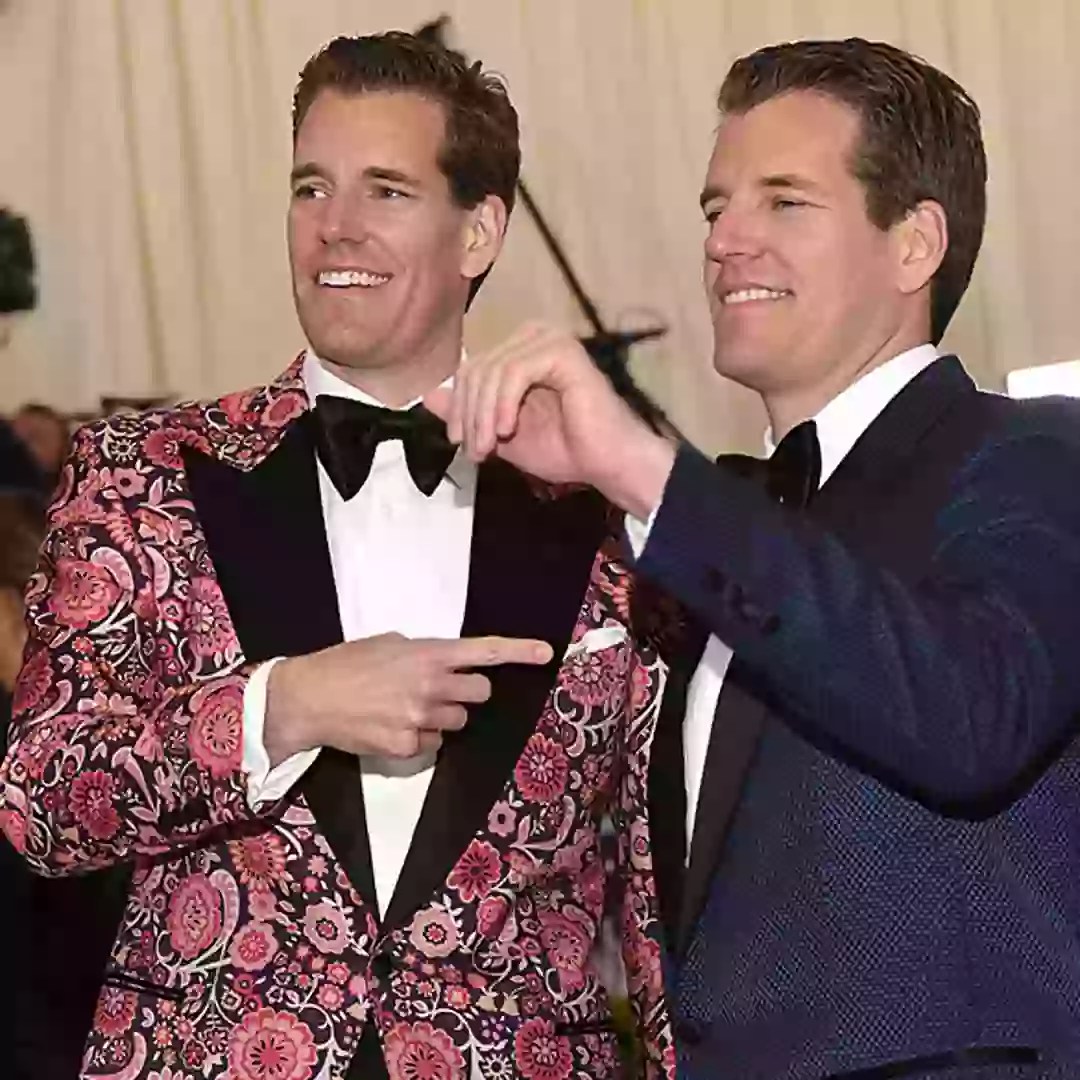
As we bow to Big Brother, we might note that it was on this date in 1981 that the Winklevoss twins, Cameron and Tyler, were born. As famously dramatized in The Social Network, the twins enlisted Harvard College classmate Mark Zuckerberg to help them with a social network project, but Zuckerberg peeled away, with the project that became Facebook. The Winklevosses agreed to a settlement (of $20 million cash and more than a million Facebook shares ), but then sued, claiming that Zuckerberg had misled them about the value of the shares (and that they were entitled to four times as many). After years of litigation, the agreement stood.
But the twins were not solely engaged in litigation. Starting with the cash stake in the original settlement, they went long on cryptocurrency, starting Winklevoss Capital Management (which invests across several asset classes, but heavily in Bitcoin and other cryptocurrencies) and Gemini (a cryptocurrency exchange). They have become major supporters of pro-cryto Republicans in general, and of Donald Trump in particular… which, one notes seems to be earning a return.
“We have the best government that money can buy”*…

Most Americans agree that the prevalence of big money in politics is a problem. But sometimes it can be hard to see the (tallest) trees for the forest. The estimable Molly White…
Did you know that the cryptocurrency industry has spent more on 2024 elections in the United States than the oil industry? More than the pharmaceutical industry?
In fact, the cryptocurrency industry has spent more on 2024 elections than [either] the entire energy sector [or] the entire health sector. Those industries, both worth hundreds of billions or trillions of dollars, are being outspent by an industry that, even by generous estimates, is worth less than $20 billion.**
Most of the cryptocurrency industry’s money is going to massive super PACs like Fairshake — that is, single-issue committees focused only on installing crypto-friendly politicians and ousting those the industry views as a threat.
Although these PACs have spent only a fraction of the more than $200 million in their combined war chests, they’re already finding some success. Democratic California Senate candidate Katie Porter lost her primary race after Fairshake spent $10 million on attack ads against her. In New York, Fairshake piled on $2 million to oppose Democratic House Candidate Jamaal Bowman, who ultimately lost his primary race. $1.5 million from the Republican-focused blockchain super PAC, Defend American Jobs, helped Republican Jim Justice win his West Virginia Senate primary. $1.7 million from the Democrat-focused blockchain super PAC, Protect Progress, similarly aided Shomari Figures in winning his Alabama House primary.
Although election spending information is public, it can be incredibly time- and labor-intensive to comb through. The crypto industry isn’t helping to make things clearer, either, with innocuously-named PACs like “Fairshake” that obscure the goals of these committees. Although the industry likes to claim that crypto is a major election issue with grassroots support, advertisements run by these committees rarely mention cryptocurrency or blockchains at all, or even technology or finance more broadly. And some of these PACs funnel money through surrogate committees, obscuring the origins of some of the more heavily partisan spending.
Furthermore, the wealthy executives and venture capitalists associated with the industry are spending heavily as individuals, without going through these PACs or spending through their companies. Cameron and Tyler Winklevoss — founders of the Gemini cryptocurrency exchange — each donated $1 million each to Donald Trump’s presidential campaign. They were followed soon after by Jesse Powell, chairman of the Kraken cryptocurrency exchange, who pitched in another million…
** Unlike most other industries, people really like to estimate the “size” of the cryptocurrency industry by the total market cap of all cryptocurrencies (a notoriously inaccurate number). Estimates based on traditional metrics vary widely from low single-digit billions to around $20 billion, although the higher numbers are typically projections rather than historical data.
The biggest big corporate money on politics– how the cryptocurrency industry is spending to influence 2024 elections in the United States: “Follow the Crypto,” from @molly0xFFF.
You can, in fact, “follow the crypto” on White’s new site, which tracks contributions to cryptocurrency-focused super PACs like Fairshake, Defend American Jobs, and Protect Progress. As White observes:
Despite how much these PACs have already raised, the cryptocurrency industry is only ramping up their spending as elections draw nearer, and most of the money held by these PACs is still waiting to be deployed. 50% of the funds in Fairshake’s coffers — $85 million — was raised in May alone, and that’s the last month with complete data. These companies show no sign of slowing down. With this site, we will be able to follow how these industries are working to buy influence across the country…
* Mark Twain
###
As we ponder the purchase of the plebiscite, we might recall that it was on this date in 1968 that a major contributor to the technostructure supporting crypto was born when Robert Noyce and Gordon Moore incorporated Intel with $2.5 million in capital. The semiconductor company became the emergent industry’s leader, before relinquishing that title (currently held by TSMC); still, the company is currently valued at $131.32 billion.

“Fortune favors the brave”*…

Cryptonauts
History is filled with almosts. With those who almost adventured, who almost achieved, but ultimately, for them it proved to be too much. Then, there are others. The ones who embrace the moment, and commit. And in these moments of truth . . . they calm their minds and steel their nerves with four simple words that have been whispered by the intrepid since the time of the Romans. Fortune favours the brave.
Adam Tooze been mulling these lines ever since he first saw the commercial for crypto.com done by Matt Damon during a football game back in the autumn of 2021:
Now he unpacks the backstory…
The phrase “fortune favors the brave” is generally attributed to Pliny the Elder, the obsessive scholar and Roman Fleet commander. He uttered it on the fateful night of August 24 79 AD when the volcano Vesuvius erupted and buried Herculaneum and Pompeii. As recalled 25 years later, at the request of Tacitus, by his nephew Pliny the Younger, Pliny the Elder ignored the advice of his helmsman and steered directly towards the eruption, hoping to pull off a famous rescue. Instead, he was overwhelmed, lost control of the situation and finally, in ridiculous circumstances, succumbed to the fumes, becoming one of the thousands of casualties…
You might say that evoking Pliny’s famous phrase was more apt than Damon or crypto.com realized.
…
But Vesuvius does not belong only to the classical tradition. In the 18th century, the volcano would become one of the quintessential sites of the romantic sublime…
A fascinating “close read” of an influential TV spot, its intellectual antecedents, and its (intended and unintended) message: “Fortune Favors the Brave: the making of crypto ideology, Vesuvius, and the romantic sublime,” from @adam_tooze.
* Pliny the Younger, “quoting” Pliny the Elder
###
As we iron out the irony, we might recall that, on this date in 2008, the Dow Jones Average fell 8%, continuing a slide that had begun with the collapse of Lehman Brothers and other smaller financial firms. The DJI was at 8,149.09, roughly the midpoint (in both timing) of the sub-prime lending crisis and the Dow’s 54% fall to 6,469.95 (in March, 2009) from its peak of 14,164 on October 9, 2007. The recovery, of course, took much longer.

You must be logged in to post a comment.