Posts Tagged ‘Sartre’
“We do not stop playing because we grow old, we grow old because we stop playing”*…

… and so we shouldn’t. Ryan Weber (a professor of technical writing who, happily for us, moonlights) is here to help…


More at “‘Descartes Against Humanity’ and Other Games Designed by Famous Philosophers,” from @mcsweeneys.net.
Unrelated, but important: “Help save Internet Archive’s Wayback Machine by signing this petition.”
* George Bernard Shaw (though often mis-attributed to Benjamin Franklin)
###
As we play, we might spare a thought for a philosopher whose game would likely be “The Game of Life,” Bernard Williams; he died on this date in 2003. As Knightbridge Professor of Philosophy at the University of Cambridge and Deutsch Professor of Philosophy at the University of California, Berkeley, Williams became known for his efforts to reorient the study of moral philosophy to psychology, history, and in particular to the Greeks.
His publications include Problems of the Self (1973), Ethics and the Limits of Philosophy (1985), Shame and Necessity (1993), and Truth and Truthfulness (2002). Gilbert Ryle, one of Williams’s mentors at Oxford University, said that Williams “understands what you’re going to say better than you understand it yourself, and sees all the possible objections to it, and all the possible answers to all the possible objections, before you’ve got to the end of your own sentence.”
Described by Colin McGinn as an “analytical philosopher with the soul of a general humanist,” he was sceptical about attempts to create a foundation for moral philosophy. Martha Nussbaum wrote that he demanded of philosophy that it “come to terms with, and contain, the difficulty and complexity of human life.”

“The problem with introspection is that it has no end”*…

Still, we persevere. Samantha Rose Hill considers Hannah Arendt‘s final unfinished work, in which the philosopher (and self-described political theorist) mounted an incisive critique of the idea that we are in search of our true selves. More specifically, she explores Arendt’s wrestling with the concept of authenticity…
… In the midst of the Second World War, French existentialism emerged out of German existentialism. If authenticity was a question of being for Heidegger and a question of freedom for Jaspers, for Jean-Paul Sartre, Simone de Beauvoir and Albert Camus it became a question of individual ethics. The underlying question shifted from ‘What is the meaning of Being?’ to ‘How should I be?’ The credo underpinning Sartre’s work – ‘existence precedes essence’ – meant that we are thrown into the world without any fixed substance, and this meant that we get to choose who we become. While philosophers like Thomas Hobbes and Jean-Jacques Rousseau tried to capture human nature by imagining what life was like before society, for Sartre, there is no human nature. We must always be imagining and reimagining who we are, which is to say we are always in the process of becoming. For Beauvoir, becoming was a creative enterprise, a work of art. And she argued that it was not enough to shape oneself within the existing conditions of the world, but that one must also shape the conditions of the world itself. Authenticity for the French existentialists was not about uncovering a pre-existing true self, but rather choosing to engage in a process of becoming.
Caught between German and French existentialism, Arendt offered a critique of authenticity in her final unfinished work, The Life of the Mind. In place of authenticity, Arendt turned to the concept of the will in order to think about how one decides to act in the world. A student of Heidegger and Jaspers, and a fellow traveller of Sartre, Camus and Beauvoir from 1933-41 during her years of exile in Paris, Arendt rejected the idea that a true self exists within the self. She was not a transcendental thinker. For her there was no capital-G God, and there was no capital-B Being. In place of an inner-authentic self, she argued that the inner organ of decision-making that guided one’s actions was the will.
Following the work of St Augustine and Jaspers, Arendt turned Heidegger on his head and argued that all thinking moves from experience in the world, not from Being. By arguing that thinking was a function of Being, Heidegger had tried to divorce thinking from the will in order to argue that it was one’s true inner Being that determined ultimately who they became in the world. But for Arendt, this was an abdication of personal responsibility and choice. It was a way of handing over one’s decision-making power. And for her, it is only the choices that we make in real time when confronted with decisions that determine who we will become, and in turn determine the kind of world that we will help to shape.
So, what is the will? And is it a persuasive alternative to authenticity?
Unlike ‘authenticity’, ‘willing’ is not a very desirable word. First of all, it’s not a thing one can possess, it’s an action, something one has to do. And unlike authenticity, there is no sense of comfort in ‘the will’. Authenticity promises certainty, whereas the will promises uncertainty. And in times of turmoil, it is all too human to prefer that which promises predictability to the unknown. Colloquially, willing usually appears around New Year’s Eve when people start talking about resolutions and how they’d like to change their lives. The will becomes a question of ‘willpower’. Or worse, willing can remind us of those difficult times when someone implores us ‘Are you willing to cooperate?’ ‘Are you willing to try?’ ‘Are you willing to do what it takes to get the job done?’ But for Arendt, the will was the means to our freedom, it was the promise that we can always be other than we are, and so to the world. The will is a space of tension inside the self where one actively feels the difference between where they are and where they would like to be.
Willing is the mental activity that goes on between thinking and judgment. It has the power to shape us by drawing us into conflict with ourselves. Without inner conflict, there is no forward movement. These are the basic principles of willing:
- Willing is characterised by an inner state of disharmony.
- Willing is experienced as a felt sense of tension within the body where the mind is at war with itself.
- Willing makes one aware of possible decisions, which creates a feeling of being pulled in multiple directions at once.
- Willing can feel very lonely. Decisions and choices are shaped by one’s environment, by the everydayness of being, but ultimately the responsibility for deciding is up to oneself.
- Willing makes one aware of the tension that exists between oneself as a part of the world, and oneself as an individual alone existing in relationship to the world.
- Willing is the principle of human individuation.
- Willing relates to the world through action.
- The will is the inner organ of freedom.
Everyone makes hundreds of decisions a day, but most of the time they aren’t conscious of the decisions they are making. Their decisions are not subjected to the will. Instead, they are simply following a routine of patterns that have been formed over time. In order to engage the will, one must be willing to pause. Because, while thinking moves from past experience, and imagination fixates on what might happen in the future, the past and the future are beyond the reach of the will. Willing is what happens before one acts. To be in a state of willing is to be in the Now.
Authenticity is attractive in part because it promises a sense of harmony, it is the promise that, if we know who we are, then we can act in a way where our actions are in alignment with our values. But the will is characterised by a sense of conflict. It is the inner organ that generates tension within the self, making one aware of the discrepancies between who they are and who they might like to be, or what they want and what they might be able to have. But it is this tension that is vital for bringing consciousness to decision-making…
Eminently worth reading in full: “Beyond authenticity,” from @Samantharhill in @aeonmag.
Pair with Lionel Trilling‘s Sincerity and Authenticity, the transcriptions of his 1970 Norton Lectures at Harvard, in which Trilling examined “the moral life in process of revising itself” as first sincerity (in the pre-Enlightenment, e.g., Shakespeare), then “authenticity” (in the 20th century, as the article linked above explains) became central to moral thought.
* Philip K. Dick
###
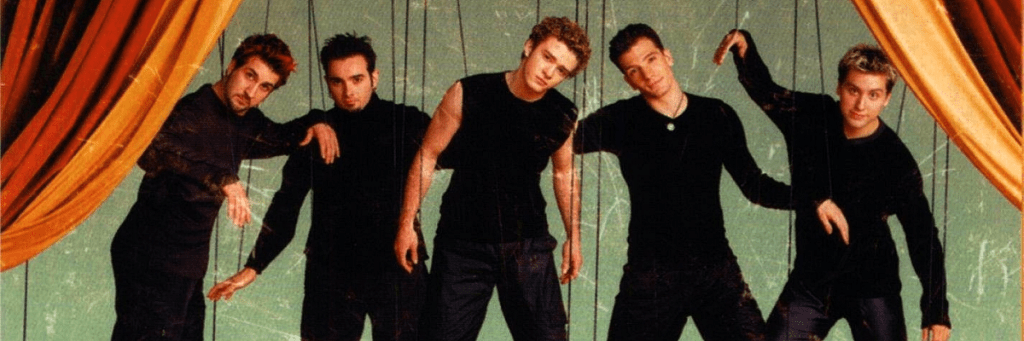
As we double down on determination, we might recall that it was on this date in 2000 that the boy band *NSYNC had its first number #1 hit, “It’s Gonna Be Me.”
“It is the province of knowledge to speak, and it is the privilege of wisdom to listen”*…

Wisdom is full of paradoxes. It is one of the oldest topics in the intellectual history of humanity, and yet talking about wisdom can feel odd and disingenuous. People seem to have intuitions about who is and isn’t wise, but if you press them to define wisdom, they will hesitate. Wisdom, with its mystical qualities, sits on a pedestal, inspiring awe and trepidation, a bit of hushed reverence thrown in. It’s easy to distil wisdom’s archetypes in history (druids, Sufi sages) or popular culture (Star Wars’ Yoda, or Harry Potter’s Dumbledore), but harder to apply to the person on the street. Most people would agree that wisdom is desirable, yet what exactly is it?…
Some psychologists are increasingly confident that they can now measure– and nurture– wisdom, superseding the “speculations” of philosophy and religion: “The Science of Wisdom.”
* Oliver Wendell Holmes
###
As we savor sagacity, we might recall that it was on this date in 1964 that Jean-Paul Sartre was awarded the Nobel Prize in Literature despite attempting to refuse it, saying that he always declined official honors since “a writer should not allow himself to be turned into an institution.”

“The rule of thumb is the more profound the experience, the longer you should wait before doing it again”*…

Beyond their visual qualities, mescaline’s hallucinations posed profound philosophical questions. During the mid-1930s three prominent writers and thinkers left records of their experiments with it. In 1934 and 1935 respectively, Walter Benjamin and Jean-Paul Sartre participated in the now-familiar modus operandi of private session between psychiatrist and artist, with the scientific gaze and the philosopher’s insights informing—or, more often, pitted against—one another…
Sartre wrote little directly about his experience, describing it briefly in notes that later found a place in L’imaginaire, his 1940 study of the phenomenology of the imagination. He found its effects elusive and sinister. “It could only exist by stealth,” he wrote; it distorted every sensation, yet whenever he attempted to perceive it directly it withdrew into the background or shifted shape. Its action on the mind “inconsistent and mysterious,” offering no solid vantage point from which to observe it. In contrast to previous descriptions of the “double consciousness” or état mixte, in which the normal self was able to observe its hallucinations dispassionately, Sartre found it impossible to be a spectator of his own experience. On the contrary, he felt submerged against his will in a miasma of sensations that assailed him viscerally at every turn, a world of grotesque extreme close-ups in which everything disgusted him.
The best-known detail of Sartre’s bad trip is Simone de Beauvoir’s anecdote of him being haunted for weeks after by lobster-like creatures scuttling just beyond his field of vision. Sartre, like Aldous Huxley, was partially sighted—a curious coincidence linking two of the most celebrated intellectuals to have taken the vision-producing drug—and his poor vision may have exacerbated his anxieties about shapes lurking just beyond its reach. Later in life he claimed that it had driven him to a nervous breakdown. “After I took mescaline, I started seeing crabs around me all the time,” he recalled in 1971; “I mean they followed me into the street, into class.” Even though he knew they were imaginary he spoke to them, requesting them to be quiet during his lectures. Eventually he sought psychotherapeutic help from a young Jacques Lacan, which generated “nothing that he or I valued very much,” though “with the crabs, we sort of concluded that it was fear of becoming alone.”…
Caveat comedenti: “Sartre’s bad trip.”
###
As we contemplate crustacea, we might spare a thought for Jerome Phillip Horwitz; he died on this date in 2012. A chemist active in cancer research, Horowitz was the first to synthesized AZT (azidothymidine), in 1964, in the hope that it might retard the growth of malignant cells. It failed at that task, and lay dormant for two decades… until Burroughs Wellcome tested– and patented– Horowitz’s development as a treatment for HIV-AIDS. The drug company got FDA approval in 1986, and went on to reap enormous financial returns, of which Horowitz saw none.
After AZT, Horowitz went on to create many successful treatments for cancer and other diseases.
(While some believe that Horwitz was referenced in the Captain Underpants books, the Jerome Horwitz Elementary School in the children’s book series was in fact named after Curly Howard (Jerome Lester Horowitz) of The Three Stooges.

“Life has no meaning a priori… It is up to you to give it a meaning, and value is nothing but the meaning that you choose”*…

Simone de Beauvoir and Jean-Paul Sartre in Paris, June 1977
Existentialism has a reputation for being angst-ridden and gloomy mostly because of its emphasis on pondering the meaninglessness of existence, but two of the best-known existentialists knew how to have fun in the face of absurdity. Simone de Beauvoir and Jean-Paul Sartre spent a lot of time partying: talking, drinking, dancing, laughing, loving and listening to music with friends, and this was an aspect of their philosophical stance on life. They weren’t just philosophers who happened to enjoy parties, either – the parties were an expression of their philosophy of seizing life, and for them there were authentic and inauthentic ways to do this…
Skye C. Cleary celebrates “Being and drunkenness: how to party like an existentialist.”
*
###
As we raise a glass, we might send provocative birthday greetings to Jean Baudrillard; he was born on this date in 1929. A sociologist, philosopher, cultural theorist, political commentator, and photographer, he is best known for his analyses of media, contemporary culture, and technological communication, as well as his formulation of concepts such as simulation and hyperreality. He wrote widely– touching subjects including consumerism, gender relations, economics, social history, art, Western foreign policy, and popular culture– and is perhaps best known for Simulacra and Simulation (1981). Part of a generation of French thinkers that included Roland, Barthes, Gilles Deleuze, Jean-François Lyotard, Michel Foucault, Jacques Derrida, and Jacques Lacan, with all of whom Baudrillard shared an interest in semiotics, he is often seen as a central to the post-structuralist philosophical school… which offered a response to nihilism complementary to that offered by the existentialists.

You must be logged in to post a comment.