Archive for October 2024
“Do you have the time to listen to me whine?”*…

This year marks the thirtieth anniversary of the release of Green Day‘s Dookie. The band is marking the occasion with a collaboration with the design studio Brain. For your weekend listening pleasure…
When an album hits a big milestone like its 30th anniversary, it gets the usual remasters on the usual formats. But Dookie isn’t a usual album.
Instead of smoothing out its edges and tweaking its dynamic ranges, this version of Dookie has been meticulously mangled to fit on formats with uncompromisingly low fidelity, from wax cylinders to answering machines to toothbrushes. The listening experience is unparalleled, sacrificing not only sonic quality, but also convenience, and occasionally entire verses.
The result is Dookie Demastered: the album that exploded the format of punk rock, re-exploded onto 15 obscure, obsolete, and otherwise inconvenient formats, the way it was never meant to be heard…

Enjoy: “Dookie, Demastered” @GreenDay
* Billie Joe Armstrong / Frank Edwin Wright Iii / Mike Ryan Pritchard, “Basket Case” (on Dookie)
###
As we have a blast, we might recall that it was on this date in 2023 that Green Day, still going strong, premiered (at a concert in Las Vegas) “The American Dream Is Killing Me,” which became the first single from their upcoming album Saviors.
“For every complex problem, there’s a solution that is simple, neat, and wrong”*…

Last year, in explaining the Biden Administration’s emerging new economic policy, National Security Advisor Jake Sullivan talked of a “small yard, high fence” approach to its trade with China. The idea: to place strict restrictions on a small number of technologies with significant military potential while maintaining normal economic exchange in other areas.
The estimable Henry Farrell argues that this approach to technology and China is working poorly (though, he suggests, it will work much worse if Trump wins and takes office in January). Self-reinforcing political feedback loops and self-reinforcing expectations are leading to breakdown.
The fundamental problem of managing geopolitics through manipulating technological trajectories is not readily solvable given existing means, Farrell suggests. We live in a much more complex world than existing state institutions are capable of handling. Therefore, he argues, we need to remake the state…
… Making the right choices in a complex policy environment requires an approach that is a world away from the application of brute force at scale. Your maps of the environment are going to be all wrong when you go in, and brute force is likely to have unexpected consequences. It isn’t just that you are going to make mistakes (you are), but your map of the actual problem you are trying to solve is likely to be utterly out of whack. As you try to catch up with China on EV, you discover that you don’t understand the market right. As you try to impose controls on military use of semiconductors, you find out that you don’t have the information you need to really actually understand how the semiconductor market works.
The problem – as Jen Pahlka’s book Recoding America explains at length – is that addressing such complex problems does not fit well with the way that the U.S. government works. When you are trying to impose order a vast sprawling bureaucracy, which is its own mid-sized global economy, and when your people don’t trust government much, you rely on rigid contracting systems, which define the problem in advance down to its finest details, even if that definition is out of whack with reality. You don’t build connections between the bureaucracy and outside actors, unless they run through cumbersome and rigidly pre-defined channels because it takes months or years to get approval for such connections. And you certainly don’t try to remake policy in realtime as your understanding of the situation changes. Pahlka’s book is cunningly disguised as an account of US software outsourcing practices. If it mentions either ‘national security’ or ‘economic security’ once, I don’t remember it. But it is arguably (along with Dan Davies’ similarly motivated The Unaccountability Machine) the most important book on these topics of the last twenty years. [Your correspondent heartily agrees.]…
… what do you do – is this. You start to think… about how to build economic security institutions that are designed from the ground up to manage complexity. If you want to take ‘small yard, high fence’ seriously as a policy approach, you need to build the apparatus to discover what lies inside, what lies outside, and what the barriers ought be. That apparatus – and its prescriptions – need to change over time both to match a better understanding of the policy environment, and changes in the environment itself.
And we don’t have the apparatus to actually implement small yard, high fence properly. Nor do we have it for pretty well every other plausible economic security policy you might imagine, short of a brute force decoupling of the U.S. and Chinese economies. And if you did that, you would need enormous capacity to manage the horrifically complex aftermath, if that aftermath could even be managed at all.
Clearly, it is far easier to make these arguments in the general than the particular. Saying that you need reforms is straightforward, but figuring out what they ought to be, let alone how to implement them in current political circumstances, is an altogether more difficult challenge. But it is where the debate needs to be going – and there is a role for technology in it. We are in a situation that rhymes in weird ways with the situation discovered by Vannevar Bush after World War II – recognizing that the needs of government had changed, that vastly better information and feedback systems were required to meet those needs, and that even if we didn’t exactly know what those systems were, we needed to start figuring them out, and quickly. That world had its pathologies. This one does too. But to prevent them becoming worse, we need better ways to manage them, and to ensure that the solutions are better than the problems that they are supposed to mitigate.
This is – obviously – a radical set of claims. But it’s one that is entailed by the diagnosis of the problem that I’ve presented. If we need to manage complex challenges – of which the U.S. China relationship is only one – we need a state that is capable of managing complexities. We don’t have one. And that remains a first order problem, regardless of however hawkish or dovish you are…
We need a new kind of state for the new geopolitics: “‘Small Yard, High Fence’: these four words conceal a mess,” from @himself.bsky.social (and @pahlkadot.bsky.social). Eminently worth reading in full.
* H.L. Mencken
###
As we ruminate on restructuring, we might recall that it was on this date in 1954 (7 years after the transistor was developed at Bell Labs) that Texas Instruments introduced the Regency TR-1, the first commercially-manufactured transistor radio. Its performance was mediocre, but its small size and portability drove sales of over 150,000 units.
Further to Farrell’s and Pahlka’s points, it’s instructive to ponder what became of the transistor radio as a product category (and of the competitors in it) over the next few decades– and the altogether-unanticipated plethora of small, convenient, hand-held product categories it spawned: calculators, mobile phones, tablets… and whatever comes next…

“I am saying something far more serious than that we are being deprived of authentic information. I am saying we are losing our sense of what it means to be well informed”*…

With under three weeks to go until the election, Sarah Scire with a bracing report (via a new study from Pew): even as more and more TikTok users get news from the platform, the most-followed/viewed creators don’t follow the news…
Pop culture, viral dances, and comedy are big on TikTok. News and politics? Not so much.
A new report from the Pew Research Center finds that Americans on TikTok follow very few politicians, journalists, or traditional media outlets. In fact, the typical U.S. adult on TikTok follows zero accounts in those categories.
For the new analysis published Tuesday, the Pew Research Center used human coding and machine classification to look at a nationally representative group of 664 U.S. adults who use TikTok and the 227,946 unique accounts they follow. (Pew researchers have shared details on how they use OpenAI’s GPT model to tackle “rote” research tasks before.) Journalists, traditional media outlets, and politicians each accounted for less than half of 1% of the followed accounts.

And this is a problem, because…
Previous studies have shown that though TikTok users — especially those under 30 — are increasingly getting news from the platform, the vast majority (95%) say they use the platform because it’s entertaining…
…
… In 2022, Pew conducted a similar analysis of the accounts U.S. adults follow on Twitter. The most recent report highlights “one key difference in following behaviors” between TikTok today and Twitter two years ago:
“The accounts followed by the largest share of U.S. adults on Twitter contained a much higher proportion of media outlets or journalists, governmental or political figures, or policy/advocacy groups than is true on TikTok today,” the Pew report notes. “These accounts are nearly nonexistent among the most-followed accounts on TikTok at the time of our new study.”…
Eminently worth reading— and pondering– in full: “The typical American TikTok user doesn’t follow a single journalist or traditional media outlet,” @pewresearch via @SarahScire and @NiemanLab.
The full report is linked above, and here.
Apposite: “Americans are as skeptical of the media as they’ve ever been– none more so than the youngest generations“
Resonant (and dark): “I’m Running Out of Ways to Explain How Bad This Is– what’s happening in America today is something darker than a misinformation crisis” (gift article)
(Image above, ironically, sourced here)
* Neil Postman, Amusing Ourselves to Death
###
As we contemplate civil discourse, we might recall that it was on this date in 1907 that Guglielmo Marconi inititaed the first commercial trans-Atlantic radio service. Three years earlier, Marconi had introduced a service that transmitted nightly news summaries to subscribing ships.

“Be careful what you wish for”*…

… And how you wish for it. Eric Athas, with an all-too-timely reminder…
Whenever I’m thinking about ideas to send to you all, I’m reminded of a principle called Goodhart’s Law, which says: “When a measure becomes a target, it ceases to be a good measure.”
In other words, when you tell people they’re being evaluated by a target they must hit, you risk pushing them to produce the wrong results in the name of reaching the target. The incentives can drive them to fixate on achieving the target, not achieving the overall goal.
The concept is named after the economist Charles Goodhart, who introduced it in a 1975 paper about monetary management. But the theory has been connected to a range of situations.
One of the most famous examples is a story about colonial India, when the British government sought to subdue an overpopulation of cobras in Delhi by placing a bounty on the snakes. Turn in a snakeskin, get some money.
But the plan backfired. People started farming cobras to cash in on the bounties, only exacerbating the population problem. This tale, which you can hear more about in a 2012 Freakonomics episode, spawned a shorthand for this phenomenon—the cobra effect…
… Goodhart’s Law, or the cobra effect, isn’t limited to economic policy or invasive species. You can apply it to everyday situations:
- A fitness tracker rewards you for clocking 10,000 steps a day, so you spend your evenings pacing around your living room. [see here]
- A calorie-counting app pushes you to form an unhealthy diet to stay under the limit.
- You set a resolution to read book a week but soon begin selecting books purely based on length—not interest or relevance—to hit the target.
- A construction firm is given unrealistic milestones and must cut corners to fulfill a contract.
- A school becomes hyper-focused on its test scores and offers incentives for grades instead of providing a well-rounded educational experience.
That last one happened in a years-long cheating scandal in Atlanta that unraveled in the 2010s.
Workplace quotas can have this effect, too. When you’re evaluated based on a quota, you may do anything to meet that quota, even if the quality of the work diminishes.
On the flip side, a quota policy may demotivate workers. Here’s what Adam Cobb, a professor of management at Wharton, said in a Wharton write-up about quotas: “People might start withholding effort … If you can easily meet your monthly quota, why should you try as hard once the goal is reached? Doing so may encourage the company to raise the quota, making your life harder.”
You can find the cobra effect in academic research, too, with the push for publication fueling an increase in fake papers.
Today, we’re surrounded by measurements that can be tempting to use as targets in our behavior. What is inbox zero but a target that may distract us from completing more fulfilling work?
I think a lot about the cobra effect with social media, where your success is tied to your ability to accrue views, likes, comments, and shares. Those targets can create an expectation that you must always be creating something new. Social media managers, influencers, and YouTubers have talked about the pressure to churn out new content to please algorithms and feed their audiences…
… Which brings me back to the point I started with a few hundred words ago, and the title of this post. I send this newsletter every Sunday. The routine is helpful because it provides me with a structure to work within. Absent that framework, I could end up spending too little or too much time on it.
But I must remind myself that the weekly tempo isn’t the target. If it were, I’d be critiquing myself based on arbitrary timing, not on the quality of the information I’m sharing with you. I’d be more prone to “spin up” content, as opposed to finding interesting ideas to share with you. I try to keep Goodhart’s Law in mind each week.
As you go about your day, consider your own goals, personally and professionally. When you take an action, like posting a photo on social media or completing a work task, are you doing it to please a measurement? To hit a target?…
The cobra effect and the dangers of turning measures into targets: “I’m not writing this to hit a weekly target,” from @ericathas.
Apposite: “When workplace bonuses backfire” (Economist gift link)
(Image above: source)
* Aesop’s Fables
###
As we interrogate our intentions, we might recall that it was on this date in 1793 that the Queen of France, Marie Antoinette, was beheaded. The French Revolution had begun in 1789…
… The Storming of the Bastille on 14 July led to a series of radical measures by the Assembly, among them the abolition of feudalism, state control over the Catholic Church in France, and a declaration of rights.
The next three years were dominated by the struggle for political control, exacerbated by economic depression. Military defeats following the outbreak of the French Revolutionary Wars in April 1792 resulted in the insurrection of 10 August 1792. The monarchy was replaced by the French First Republic in September, while Louis XVI was executed in January 1793.
After another revolt in June 1793, the constitution was suspended, and adequate political power passed from the National Convention to the Committee of Public Safety [which decreed Marie Antoinette’s fate]. About 16,000 people were executed in a Reign of Terror, which ended in July 1794. Weakened by external threats and internal opposition, the Republic was replaced in 1795 by the Directory. Four years later, in 1799, the Consulate seized power in a military coup led by Napoleon Bonaparte. This is generally seen as marking the end of the Revolutionary period…

“The mind is its own place, and in itself can make a heaven of hell, a hell of heaven”*…
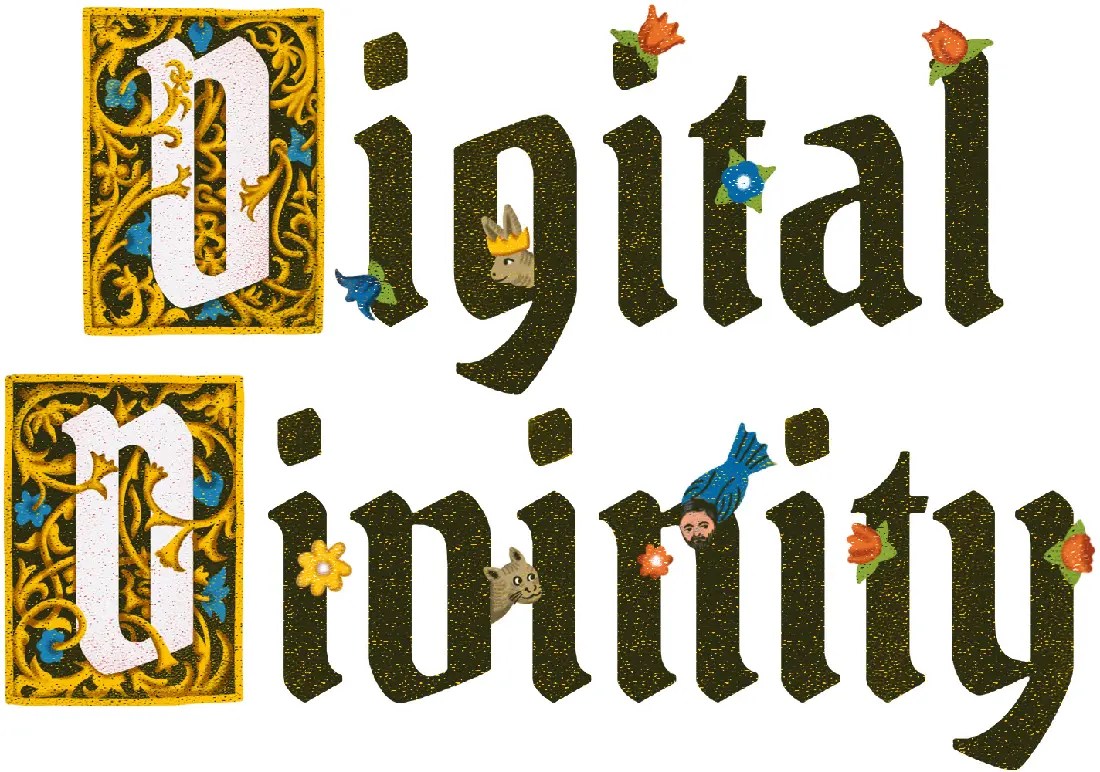
… and now, as Cengiz Yar demonstrates in the always-illuminating newsletter Rest of World, technology is here to help…
Technology has transformed how we spend, study, live, eat — even how we sleep. And for the 6.75 billion people around the world who consider themselves religious, technology is also changing their faith. How people worship, pray, and commune with the divine is transforming from Seoul to Lagos.
Earlier this year, Rest of World set out to document the myriad of ways that religious believers are using new technologies in their daily practices. This illustrated storybook represents a broad spectrum of themes and trends playing out across a number of religions and countries that include Hindu temples made by 3D printers to priests that dance on TikTok. They speak to the unraveling tensions of our time as people turn to technology to simplify their lives, search for answers, or find platform-born fame.
These short stories offer insight into trends that range from the unique and unexpected to the artificial and financial. Just as influence, power, and need are shaping the world, they are also moving ancient faiths. This push and pull between old and new, between the ancient and modern, is now happening at lightning speed.
22 arresting examples of ancient traditions meeting modern technology: “Digital Divinity,” from @CengizYar in @restofworld. (Work supported by @HLuceFdn.)
* John Milton, Paradise Lost
###
As we ponder piety, we might recall that this was the date in 1582 that a new “technology” obliterated 10 days from the lives of Catholics in the Holy Roman Empire: Italy, Spain, Portugal, Poland (and the miscellaneous states in the HRE) introduced the Gregorian calendar. While this was “October 5” in the rest of the world, those countries, adopting Pope Gregory XIII’s innovation, skipped ten days– so that there, the date shifted from October 4 to October 15. With the shift, the calendar was aligned with the equinoxes (and the lunar cycles used to establish the celebration of Easter). Britain and its colonies resisted this Popish change and used the Julian calendar for another century and a half, until September 2, 1752.

You must be logged in to post a comment.