Posts Tagged ‘William Topaz McGonagall’
“We moralize among ruins”*…
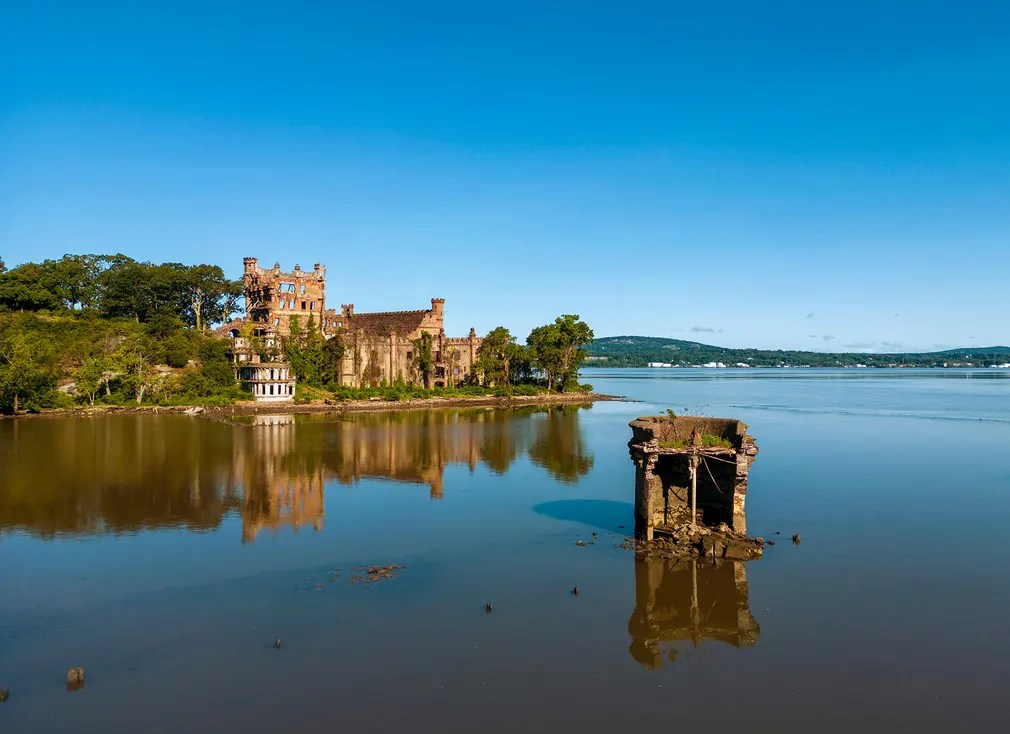
Via The Guardian…
Photographer Phillip Buehler, who captured the death of the American mall in a 2022 photo series, has a new exhibition of pictures from the last 50 years that trace the often forgotten history of the islands surrounding Manhattan. No Man Is an Island: Poetry in the Ruins of the New York Archipelago is now on show until 23 June at the Front Room Gallery in Hudson, New York…
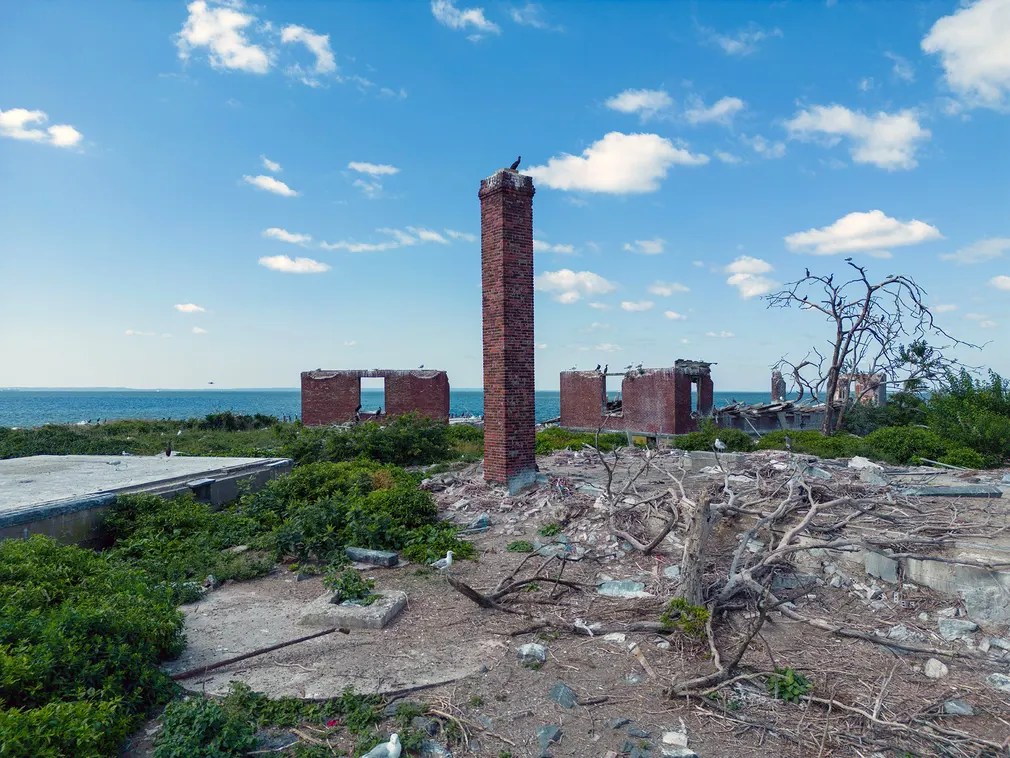

All photos by Phillip Buehler (and here). More of this series: “The inaccessible and abandoned islands of New York – in pictures,” via @guardian.
And for companions to Buehler’s earlier series on abandoned malls, see here and here.
* Benjamin Disraeli
###
As we ponder passage, we might recall that it was on this date in 1878, the original Tay Bridge was officially opened by Queen Victoria. It carried a single rail line across the Forth of Tay on the east coast of Scotland. At almost 2 miles in overall length, it was the world’s longest bridge at the time.
It’s designer, Sir Thomas Bouch, a railway engineer and executive, was knighted for engineering and overseeing the building of the bridge— on which an estimated 75 people died when, the following year, unable to withstand high winds, it collapsed. An enquiry found Bouch to be liable, by virtue of bad design and construction; he died four months after the verdict.
Bouch and his creation are thus also indirectly responsible for the best-known poem, “The Tay Bridge Disaster,” by the gentleman widely considered to have been the worst published poet in British history, William Topaz McGonagall (and here).

“Consider the furniture!”*…

Ikea is a behemoth. The home furnishing company uses 1 percent of the planet’s lumber, it says, and the 530 million cubic feet of wood used to make Ikea furniture each year pulls with its own kind of twisted gravity. For many, a sojourn to the enormous blue-and-yellow store winds up defining the space in which they sit, cook, eat and sleep.
All that wood is turned into furniture that tries to bring a spare, modern aesthetic to the masses. “We’re talking about democratizing design,” Marty Marston, a product public relations manager at Ikea, told me.
The furniture is also sold according to some unique economics. In many cases, Ikea’s famously affordable pieces get dramatically cheaper year after year. In others, prices creep up. In some cases, products disappear entirely. The result is an ever-evolving, survival-of-the-fittest catalog that wields an enormous amount of influence over residential interiors…
Pull up a chair at “The Weird Economics Of Ikea.”
* Arthur Conan Doyle, The Adventure of the Mazarin Stone
###
As we avoid the meatballs, we might spare a thought for Sir Thomas Bouch; he died on this date in 1880. A railway engineer and executive whose career began at age 17, Bouch was knighted for designing the two-mile-long Tay River Bridge— on which an estimated 75 people died when the bridge collapsed. An enquiry found Bouch to be liable, by virtue of bad design and construction; he died four months after the verdict.
Bouch is thus also indirectly responsible for the best-known poem, “The Tay Bridge Disaster,” by the gentleman widely-regarded to have been the the worst published poet in British history, William Topaz McGonagall.

Sir Thomas Bouch
“The cure for anything is salt water – sweat, tears, or the sea”*…

Back in the 18th and 19th century, recreational swimming kickstarted a service industry of aids for decent beach life etiquette. These tools of maintaining dignity were perhaps unsurprisingly mostly aimed at women. Among innovations of this time was the Bathing Machine, or the Bathing Van, which helped bathers change into to their bathing attire right next to the water.
Bathing machines became a thing around all of Great Britain’s empire starting ca. 1750 and spread to the United States, France, Germany and Mexico to serve the greater goal of common decency at beaches…
The passenger enters a horse or human drawn carriage, which is transported some distance out into the water. The van’s human cargo changes into whatever shapeless sack was deemed suitable at the time. The mechanics of it all are unsurprisingly not that glamorous and worth exploring in further detail…

More at “Victorian Beach Life: Photos of 19th Century Bathing Machines in Operation.”
* Isak Dinesen
###
As we dive in, we might recall that it was on this date in 1871 that the foundation stone was laid for the Tay Railway Bridge to be built across the Firth of Tay on the east Scottish coast. It’s designer, Sir Thomas Bouch, a railway engineer and executive, was knighted for engineering and overseeing the building of the two-mile-long bridge— on which an estimated 75 people died when the bridge collapsed. An enquiry found Bouch to be liable, by virtue of bad design and construction; he died four months after the verdict.
Bouch and his creation are thus also indirectly responsible for the best-known poem, “The Tay Bridge Disaster,” by the gentleman widely-regarded to have been the the worst published poet in British history, William Topaz McGonagall.

Contemporary illustration of the search after the disaster
Diplomatic Impunity…

The U.N. may be a beacon of hope and peaceful negotiation around the world, but it brings with it workers who use their immunity to park in front of fire hydrants, red zones, and anywhere else they please– it’s the stuff of urban legends and West Wing episodes.
New York is owed over $17 million in unpaid parking tickets; Washington, D.C., over $500,000:
New York’s top offenders:
Egypt – $1,929,142
Kuwait – $1,266,901
Nigeria – $1,019,998
Indonesia – $692,200
Brazil – $608,733
D.C.’s:
Russia – $27,200
Yemen – $24,600
Cameroon – $19,520
France – $19,520
Mauritania – $8,070
What do these countries have in common? Freakonomics (quoting Forbes) suggests that “the level of a country’s corruption (according to the Corruption Perception Index) predicted the level of parking ticket delinquency, along with a country’s level of anti-American sentiment.”
As we pine for diplomatic plates, we might compose a loosely rhymed remembrance of William Topaz McGonagall, widely considered to be the worst published poet in British history; he died on this date in 1902. McGonagall distributed his poems, often about momentous events, on handbills and performed them publicly (often, it is reported, to cat calls and thrown food). And he collected his verse into volumes including Poetic Gems, More Poetic Gems, Still More Poetic Gems, Further Poetic Gems, and Yet Further Poetic Gems. (Readers will find a selection of his poems here.)
McGonagall’s best-known work, a verse recounting of “The Tay Bridge Disaster,” ends instructively:
I must now conclude my lay
By telling the world fearlessly without the least dismay
That your central girders would not have given way,
At least many sensible men do say,
Had they been supported on each side with buttresses,
At least many sensible men confesses,
For the stronger we our houses do build,
The less chance we have of being killed.

You must be logged in to post a comment.