Posts Tagged ‘Tay Bridge’
“We moralize among ruins”*…
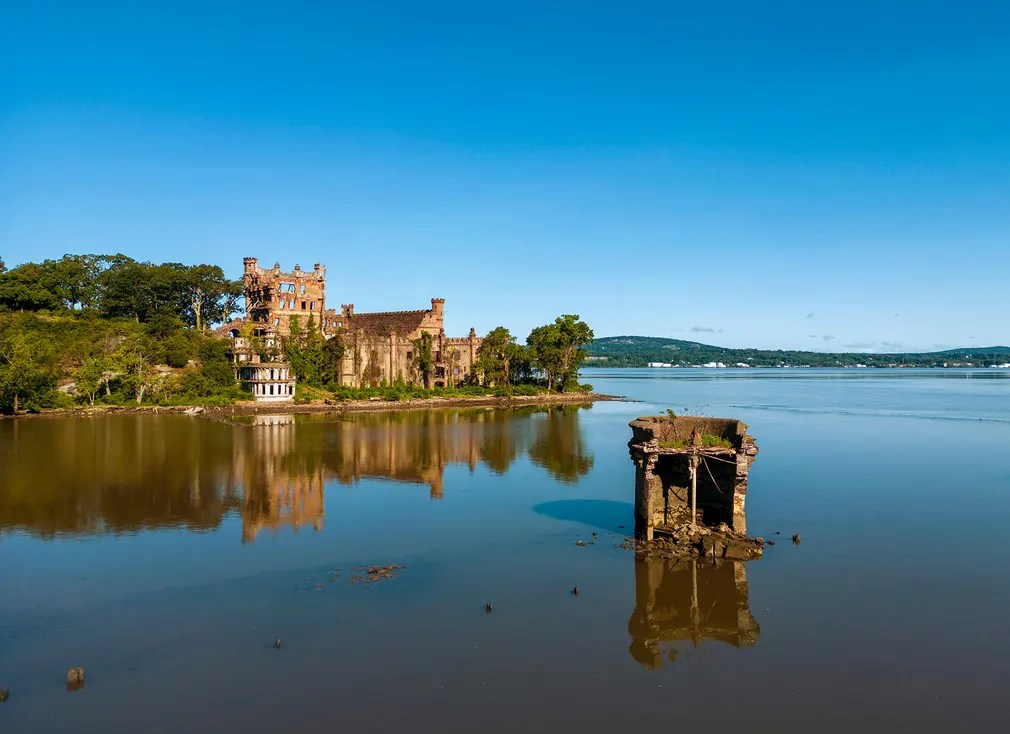
Via The Guardian…
Photographer Phillip Buehler, who captured the death of the American mall in a 2022 photo series, has a new exhibition of pictures from the last 50 years that trace the often forgotten history of the islands surrounding Manhattan. No Man Is an Island: Poetry in the Ruins of the New York Archipelago is now on show until 23 June at the Front Room Gallery in Hudson, New York…
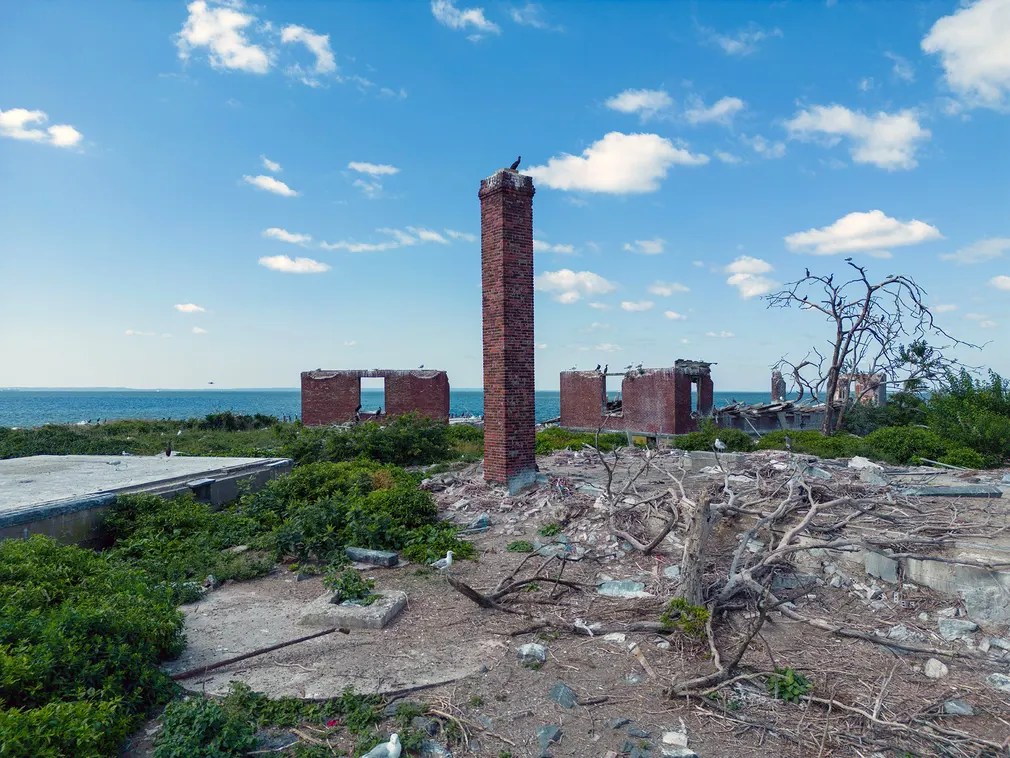

All photos by Phillip Buehler (and here). More of this series: “The inaccessible and abandoned islands of New York – in pictures,” via @guardian.
And for companions to Buehler’s earlier series on abandoned malls, see here and here.
* Benjamin Disraeli
###
As we ponder passage, we might recall that it was on this date in 1878, the original Tay Bridge was officially opened by Queen Victoria. It carried a single rail line across the Forth of Tay on the east coast of Scotland. At almost 2 miles in overall length, it was the world’s longest bridge at the time.
It’s designer, Sir Thomas Bouch, a railway engineer and executive, was knighted for engineering and overseeing the building of the bridge— on which an estimated 75 people died when, the following year, unable to withstand high winds, it collapsed. An enquiry found Bouch to be liable, by virtue of bad design and construction; he died four months after the verdict.
Bouch and his creation are thus also indirectly responsible for the best-known poem, “The Tay Bridge Disaster,” by the gentleman widely considered to have been the worst published poet in British history, William Topaz McGonagall (and here).

“The cure for anything is salt water – sweat, tears, or the sea”*…

Back in the 18th and 19th century, recreational swimming kickstarted a service industry of aids for decent beach life etiquette. These tools of maintaining dignity were perhaps unsurprisingly mostly aimed at women. Among innovations of this time was the Bathing Machine, or the Bathing Van, which helped bathers change into to their bathing attire right next to the water.
Bathing machines became a thing around all of Great Britain’s empire starting ca. 1750 and spread to the United States, France, Germany and Mexico to serve the greater goal of common decency at beaches…
The passenger enters a horse or human drawn carriage, which is transported some distance out into the water. The van’s human cargo changes into whatever shapeless sack was deemed suitable at the time. The mechanics of it all are unsurprisingly not that glamorous and worth exploring in further detail…

More at “Victorian Beach Life: Photos of 19th Century Bathing Machines in Operation.”
* Isak Dinesen
###
As we dive in, we might recall that it was on this date in 1871 that the foundation stone was laid for the Tay Railway Bridge to be built across the Firth of Tay on the east Scottish coast. It’s designer, Sir Thomas Bouch, a railway engineer and executive, was knighted for engineering and overseeing the building of the two-mile-long bridge— on which an estimated 75 people died when the bridge collapsed. An enquiry found Bouch to be liable, by virtue of bad design and construction; he died four months after the verdict.
Bouch and his creation are thus also indirectly responsible for the best-known poem, “The Tay Bridge Disaster,” by the gentleman widely-regarded to have been the the worst published poet in British history, William Topaz McGonagall.

Contemporary illustration of the search after the disaster
You must be logged in to post a comment.