“We moralize among ruins”*…
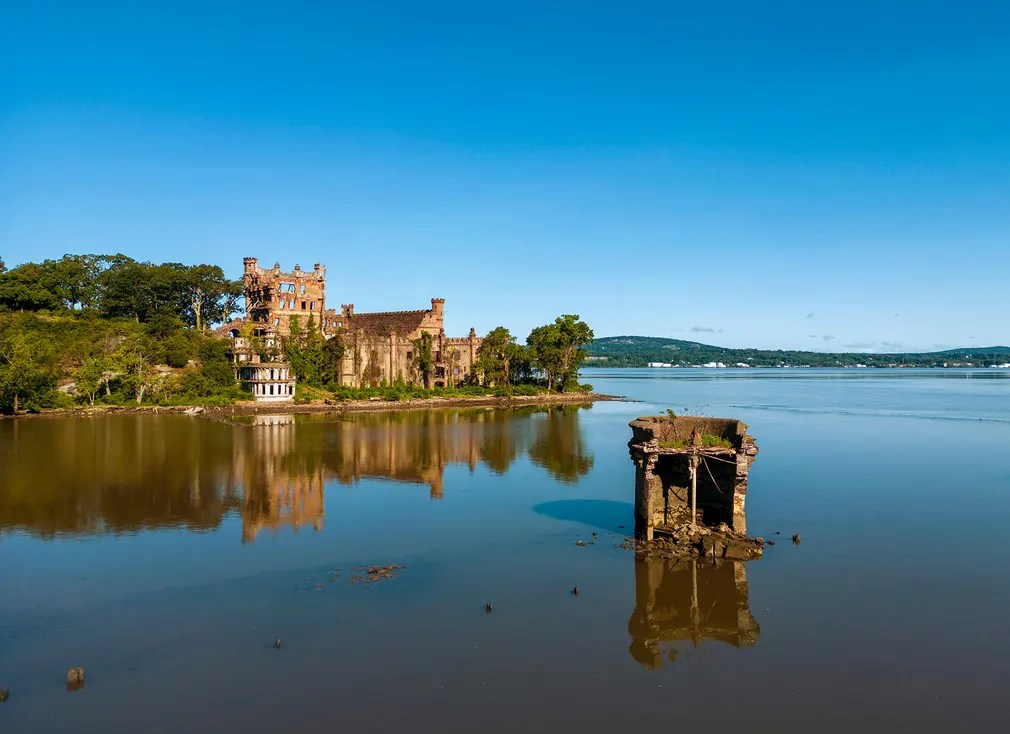
Via The Guardian…
Photographer Phillip Buehler, who captured the death of the American mall in a 2022 photo series, has a new exhibition of pictures from the last 50 years that trace the often forgotten history of the islands surrounding Manhattan. No Man Is an Island: Poetry in the Ruins of the New York Archipelago is now on show until 23 June at the Front Room Gallery in Hudson, New York…
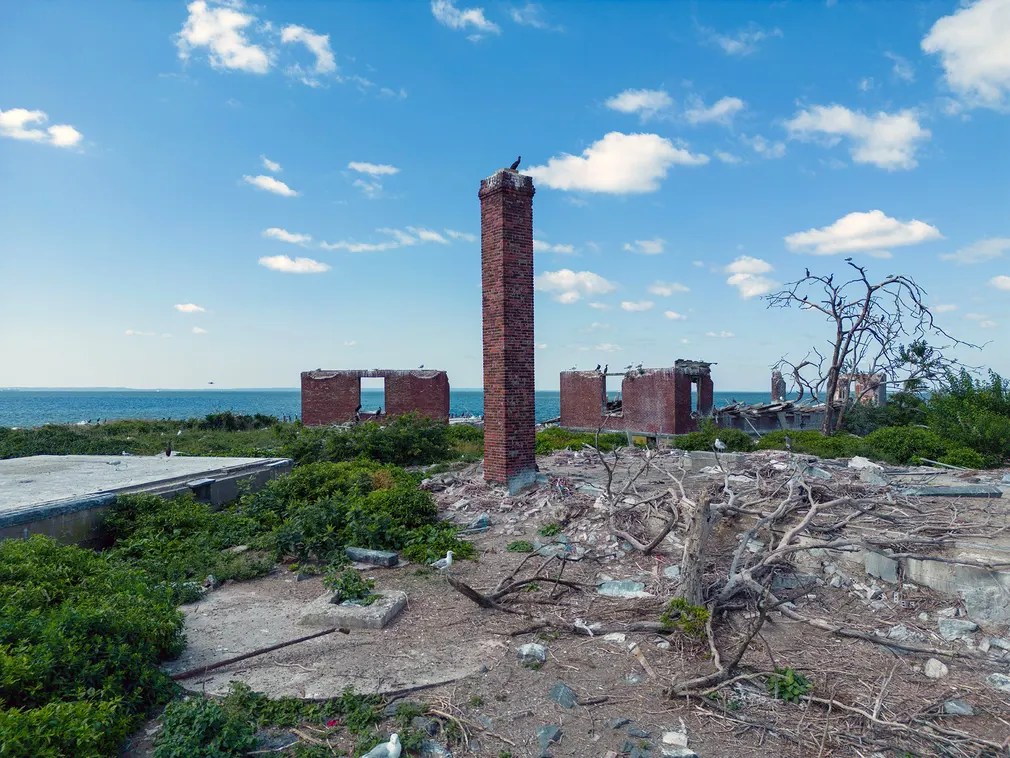

All photos by Phillip Buehler (and here). More of this series: “The inaccessible and abandoned islands of New York – in pictures,” via @guardian.
And for companions to Buehler’s earlier series on abandoned malls, see here and here.
* Benjamin Disraeli
###
As we ponder passage, we might recall that it was on this date in 1878, the original Tay Bridge was officially opened by Queen Victoria. It carried a single rail line across the Forth of Tay on the east coast of Scotland. At almost 2 miles in overall length, it was the world’s longest bridge at the time.
It’s designer, Sir Thomas Bouch, a railway engineer and executive, was knighted for engineering and overseeing the building of the bridge— on which an estimated 75 people died when, the following year, unable to withstand high winds, it collapsed. An enquiry found Bouch to be liable, by virtue of bad design and construction; he died four months after the verdict.
Bouch and his creation are thus also indirectly responsible for the best-known poem, “The Tay Bridge Disaster,” by the gentleman widely considered to have been the worst published poet in British history, William Topaz McGonagall (and here).

You must be logged in to post a comment.