Posts Tagged ‘literature’
“Frederick Douglass taught that literacy is the path from slavery to freedom. There are many kinds of slavery and many kinds of freedom, but reading is still the path”*…
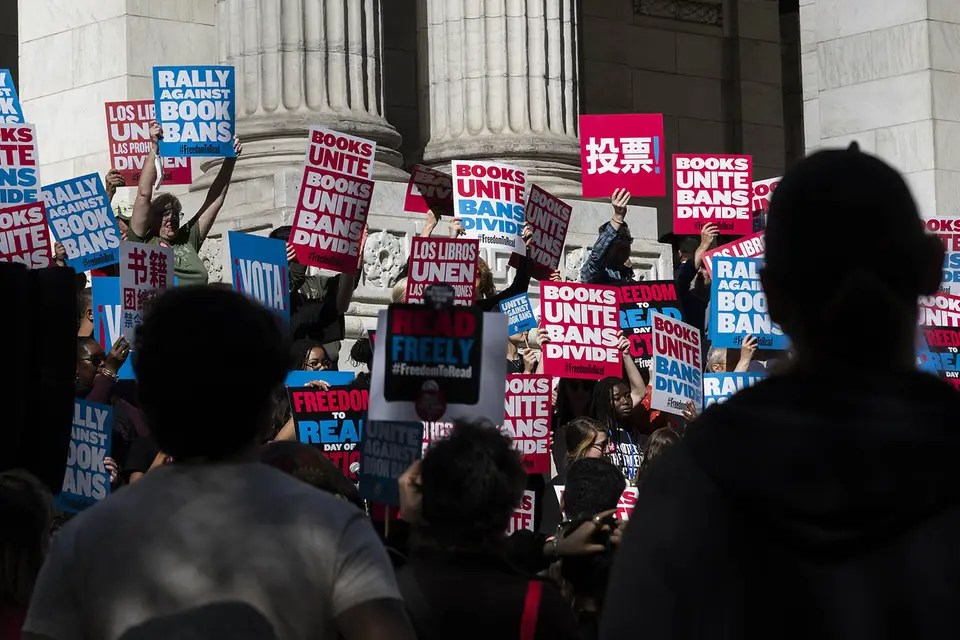
The attack on libraries, in the U.S. and beyond, has been a recurring theme here– precisely because it is so threatening. The estimable Richard Ovenden considers the titles banned, the data deleted, the nation’s librarians sacked without explanation, and explains that Donald Trump’s war on books is a threat to democracy across the world…
I am a librarian. I am fortunate enough to run one of the world’s largest and best known libraries – the Bodleian in Oxford – but my experience of libraries began as a reader. My mother took me as a child to the Deal public library in Kent, and it was there, in its modest book-filled rooms, that I discovered new worlds. My life was transformed by a public library (and its librarians) that allowed me to read freely from its well-stocked shelves. Throughout my career, I have seen at first-hand how libraries underpin the education and self-improvement of all of our citizens, rich and poor, young and old, of all creeds and colours, through providing access to a multitude of ideas and knowledge.
They celebrate the history and identity of our communities; they are stout defenders of facts and truth in an age of misinformation; and they are places where people can learn about their rights and how to protect them. This year we celebrate the 175th anniversary of the Public Libraries Act of 1850, which created our system of free public libraries – a kind of “NHS for the mind”. But what has been happening to American libraries rings a loud alarm bell for our own cherished library system.
Libraries large and small in the US are now on the frontline of the battles over knowledge that have intensified since the second presidency of Donald Trump began. The attack on libraries and librarians there is shocking and happening at a disorienting pace. Thousands of books have been banned from public and school libraries, librarians have received death threats and many have been fired. The heads of both the National Archives and the Library of Congress have been sacked on spurious grounds. Data has been deleted and funding for critical initiatives ceased.
Why is the US, the land of the free, where the realm of ideas and knowledge has been enabled by the first amendment, now turning on institutions that have been among the most trusted in society?
The first dispatches from the war on libraries began to reach me in 2022. I had recently published Burning the Books, which highlighted the role of libraries in society through a long history of attacks on the written word. Librarians began to send me messages and tagged me on social media, sharing news of assaults on public and school libraries in Florida and Texas. As one librarian put it, my book was fast beginning to look as if it would need updating. A pattern was forming: an epidemic of book banning, driven by groups from the far right of the political spectrum, empowered through social media, and funded, it seemed, by larger and darker organisations.
Throughout Joe Biden’s presidency, a coalition of extremist groups, with interests ranging from Christian nationalism to white supremacy, and anti-gay protesters were able to mobilise around common themes such as opposing sex education, LGBTQ+ issues and race equality. They began a concerted campaign to control what young people could read. Two tactics were deployed. The first was to seize control of the boards that oversee small public and school libraries. The boards then censored the books available to library users, especially young people. The second was the mobilisation of supporters using social media, manufacturing outrage through spreading lies, and encouraging challenges to libraries and attacks on librarians.
These tactics have been highly successful. The American Library Association (ALA) collects data on book bans in US libraries. Between 2001 and 2020 an average of 273 unique titles were challenged each year. In 2023, 9,021 individual titles were challenged across hundreds of libraries…
[Richard elaborates on those attacks…]
… Trump’s second presidency has heralded a more ferocious phase in the book-banning wars, moving these acts of local censorship to state and federal level. In April, I received an email letting me know that the Rutherford County’s board of education in Tennessee ordered 145 books to be removed from circulation, citing their “sexually explicit” content; they included Beloved by Toni Morrison and Forever by Judy Blume. In May, a judge ruled that users of Llano County library in Texas have no first amendment right to receive information in the form of books held by public libraries, and that the choice of books a library holds is a form of allowable “government speech” immune from constitutional scrutiny. At a stroke, in Trump’s US, public libraries are the mouthpiece of central government…
… The great civic public libraries, such as those in New York, Brooklyn, San Diego, Boston and Los Angeles, have not sat idly by as the smaller libraries drew the fire. They have digitised banned books to make them available freely online and they have helped develop toolkits to support libraries facing book banning. Despite these efforts, Friedman’s assessment of the future of the free circulation of ideas in the US is sobering: “Between Llano County and Mahmoud v Taylor, we are now seeing a radical upheaval in the legal frameworks for freedom to read,” he explained. It is hard to believe, but in Tennessee, the works of Bill Watterson, the cartoonist author of Calvin and Hobbes, are now considered a danger to young people and are banned in school libraries in many counties…
[Richard unpacks the assault on the Library of Congrees and teh national Archive, and explores the ways on which this particularly heinous form of censorship is being “exported” to other countries…]
… On 10 May 1933, in the heart of Berlin, a mass book-burning was held, where texts considered to be “un-German” – including, of course, Jewish texts, but also books from a library of human sexuality on LGBTQ+ themes – were burned on a pyre on the Unter den Linden boulevard. It is tempting to draw the analogy between this event and the mass burning of books across the US right now.
But if we do we should also remember that new libraries were founded, such as the German Freedom Library in Paris, to counteract Nazi censorship. “You may burn my books and the books of the best minds in Europe,” Helen Keller wrote in 1933, “but the ideas those books contain have passed through millions of channels and will go on.”
We should, in this anniversary year, not only defend the bold and ambitious idea of the Victorian age – that society would benefit from its citizens having access to a free library – but ensure that all people can read freely. To do so, we must empower, support and celebrate the role of libraries and librarians as defenders of an open, pluralist society – the hidden but essential infrastructure of democracy itself…
Eminently worth reading in full: “There is no political power without power over the archive,” from @richove.bsky.social in @theobserveruk.bsky.social.
We might note that, while the primary energy behind this threat is political, it is being supported by the same folks who are hollowing out journalism in the U.S. and capitalizing on the rush to incarcerate immigrants— private equity, which is supporting book banners and local defunding of libraries, then angling to take over the public libraries that they denude.
Your correspondent supports libraries and archives like Richard’s (Oxford’s Bodleian Library), the Harvard Libraries, The New York Public Library, my own local San Francisco Public Library, and the remarkable Internet Archive. You might consider contributing to your local library and to the other libraries and archives of your choice.
* Carl Sagan
###
As we opt for open, we might recall that on this date in 1951 J. D. Salinger’s The Catcher in the Rye was published by Little, Brown and Co. Almost immediately, it was the subject of bans. From 1961 to 1982 it was the most challenged book in the U.S. There was a resurgence of challenges in 2005 and 2009… and it is again the subject of broad removal efforts. In spite of (or more probably, because of) this, it keeps finding its way into adolescent hands, often as assigned reading by high school English teachers.

“I’ve been discovering, much to my dismay, that I’m not a criminal mastermind or anything. I’m just brute force and my powers in no way include super-intelligence, which kind of pisses me off.”*…
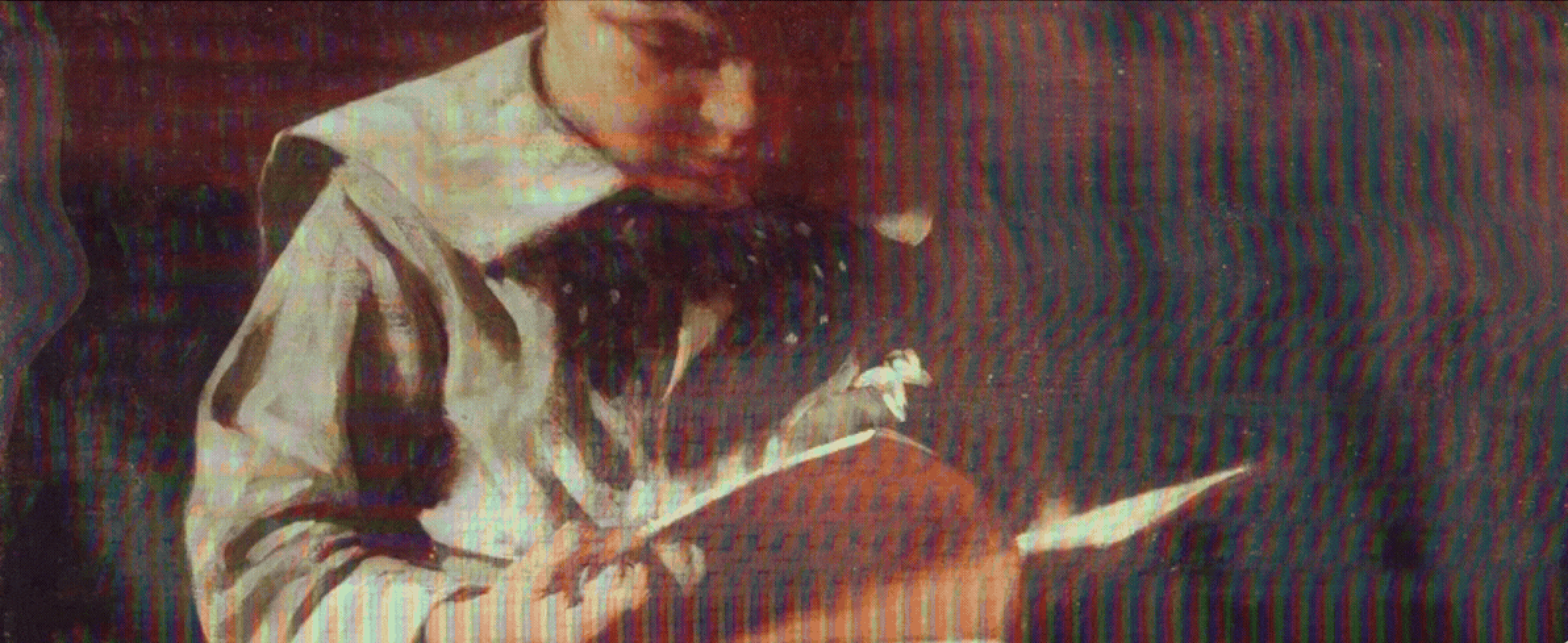
How do we accomodate ourselves to the prospect of an intelligence far greater than our own? In a consideration of J.D. Beresford’s The Hampdenshire Wonder (the first recognized appearance of the concept in modern Englis-language literature), Ted Chiang unspools the intellectual and cultural history of this now-prevalant trope…
J.D. Beresford’s The Hampdenshire Wonder is generally considered to be the first fictional treatment of superhuman intelligence, or “superintelligence.” This is a familiar trope for readers of science fiction today, but when the novel was originally published in 1911 it was anything but. What intellectual soil needed to be tilled before this idea could sprout?
At least since Plato, Western thought has clung to the idea of a Great Chain of Being, also known as the scala naturae, a system of classification in which plants rank below animals; humans rank above animals but below angels; and angels rank above humans but below God. There was no implied movement to this hierarchy; no one expected that plants would turn into animals given enough time, or that humans would turn into angels.
But by the 1800s, naturalists like Lamarck were questioning the assumption that species were immutable; they suggested that over time organisms actually grew more complex, with the human species as the pinnacle of the process. Darwin brought these speculations into public consciousness in 1859 with On the Origin of Species, and while he emphasized that evolution branches in many directions without any predetermined goal in mind, most people came to think of evolution as a linear progression.
Only then, I think, was it possible to conceive of humanity as a point on a line that could keep extending, to imagine something that would be more than human without being supernatural.
Darwin’s half-cousin, Francis Galton, was the first to suggest the idea that mental attributes like intelligence could be quantified. Galton published a volume called Hereditary Genius in 1869, and during the 1880s and ’90s he measured people’s reaction times as a way of gauging their mental ability, pioneering what we now call the field of psychometrics. By 1905, Alfred Binet had introduced a questionnaire to measure children’s intelligence; such questionnaires would evolve into IQ tests. The validity of psychometrics is quite controversial nowadays, as people disagree about what “intelligence” means and to what extent it can be measured. Some modern cognitive scientists do not consider the term intelligence particularly useful, instead preferring to use more specific terms like executive function, attentional control, or theory of mind. In the future “intelligence” may be regarded as a historical curiosity, like phlogiston, but until we develop a more precise vocabulary, we continue to use the term. Our contemporary notion of intelligence first gained currency around the time that Beresford was writing, and one can see how that converged with the idea of the superhuman in The Hampdenshire Wonder.
The titular character of The Hampdenshire Wonder is a boy named Victor Stott…
… Victor is born with an enormous head but an ordinary body, which disappoints his athletic father but also points to certain assumptions we have about the relationship between the mental and the physical. Beresford could have made Victor both an athlete and a genius, but he opted instead to follow a trope perhaps originated by Wells: the idea that evolution is pushing humanity toward a giant-brained phenotype, which is itself implicitly premised on the idea that mental ability and physical ability are in opposition to one another. This has remained a common trope in science fiction, although there are occasional depictions of mental and physical ability going hand in hand…
[Chiang traces the development of the “superintelligence,” the problems it raises, and the ways that they are treated in The Hampdenshire Wonder and elsewhere– “whatever your wisdom, you have to live in a world of comparative ignorance, a world which cannot appreciate you, but which can and will fall back upon the compelling power of the savage—the resort to physical, brute force.”…]
… In 1993 [Vernor] Vinge [here] argued that progress in computer technology would inevitably lead to a machine form of superintelligence. He proposed the term “the singularity” to describe the date—in the next few decades—beyond which events would be impossible to imagine. Since then, the technological singularity has largely replaced biological superintelligence as a trope in science fiction. More than that, it has become a trope in the Silicon Valley tech industry, giving rise to a discourse that is positively eschatological in tone. Superintelligence lies on the other side of a conceptual event horizon. When considered as a purely fictional idea, it imposes a limit on the kind of narratives one can tell about it. But when you start imagining it as something that could exist in reality, it becomes an end to human narratives altogether.
The Hampdenshire Wonder does posit a kind of eschatological scenario, but of a completely different order. After Victor’s downfall, Challis recounts the conclusion he came to after a conversation he’d had with the child, revealing a profound terror about the finiteness of knowledge:
Don’t you see that ignorance is the means of our intellectual pleasure? It is the solving of the problem that brings enjoyment—the solved problem has no further interest. So when all is known, the stimulus for action ceases; when all is known there is quiescence, nothingness. Perfect knowledge implies the peace of death…
… The idea that the search for understanding will inevitably lead to a kind of cognitive heat death is an interesting one. I don’t believe it and I doubt any scientist believes it, so it’s curious that Beresford—clearly an admirer of scientists—apparently did. Challis talks about the need for mysteries that elude explanation, which is a surprisingly anti-intellectual stance to find in a novel about superintelligence. While there is arguably a strain of anti-intellectualism in stories where superintelligent characters bring about their own downfall, those can just as easily be understood as warnings about hubris, a literary device employed as far back as the first recorded literature, “The Epic of Gilgamesh.” But The Hampdenshire Wonder, in its final pages, is making an altogether different claim: The pursuit of knowledge itself is ultimately self-defeating.
Nowadays we associate the word “prodigy” with precocious children, but in centuries past the word was used to describe anything monstrous. Victor Stott clearly qualifies as a prodigy in the modern sense, but he qualifies in the older sense too: Not only does he frighten the ignorant and superstitious, he induces a profound terror in the educated and intellectual. Seen in this light, the first novel about superintelligence is actually a work of horror SF, a cautionary tale about the dangers of knowing too much…
Superintelligence and its discontents, from @ted-chiang.bsky.social in @literaryhub.bsky.social.
Another powerful (and not unrelated) piece from Chiang: “Will A.I. Become the New McKinsey?“
* Kelly Thompson, The Girl Who Would Be King
###
As we wrestle with reason, we might wish a Joyeux Anniversaire to silk weaver Joseph Marie Jacquard; he was born on this date in 1752. Jacquard’s 1805 invention of the programmable power loom, controlled by a series of punched “instruction” cards and capable of weaving essentially any pattern, ignited a technological revolution in the textile industry… indeed, it set off a chain of revolutions: it inspired Charles Babbage in the design of his “Difference Engine” (the ur-computer), and later, Herman Hollerith, who used punched cards in the “tabulator” that he created for the 1890 Census… and in so doing, pioneered the use of those cards for computer input… which is to say that Jacquard helped create the preconditions for AI (among all of the other things that computers can do).

“I’m Your Puppet”*…

Your correspondent is hitting the road again. (Roughly) Daily will be on hiatus until July1…
The first English language history of puppets…
Anybody who grew up with Shari Lewis’ Lamb Chop, Fred Rogers’ King Friday XIII, or Jim Henson’s Muppets will surely feel that they have entered a more expansive puppet realm at the outset of Helen Haiman Joseph’s A Book of Marionettes (1920). Late one evening in Cleveland, Ohio as she makes alterations to their costumes, a cast of stringed characters from Anglo-Irish dramatist Lord Dunsany’s otherworldly drama The Golden Doom — the Chief Prophet of the Stars, the Chamberlain, a pair of Spies, and a Priest — treat Joseph as rudely and defiantly as Pinocchio abused Geppetto. Beating her retreat from this imagined Lilliputian assault, the weary marionette seamstress overhears them vainly reciting their august, cosmopolitan ancestry, from the ancient Indian Ramayana, Japanese jōruri dramas, and medieval Passion plays to pugilistic stars like Pulcinella, Punch, Kasperle and Karaghöz, on down to the devotion of modern immortals spanning from Shakespeare, Voltaire, and Goethe to George Bernard Shaw and Maurice Maeterlinck.
The first comprehensive history of marionette artistry in the English language, A Book of Marionettes appeared at a watershed moment in both American and world puppetry, after a century of artistic and technical innovation, and before the cinema’s global supplanting of human attention and storytelling. Drawing on her field study of European puppetry, Helen Haiman Joseph magisterially surveys the millennia-long world history of string and silhouette marionettes. Born seemingly simultaneously with organized religion, the little creatures never leave their creators’ sides, fully capable of expressing the entire range of human emotion and experience in every corner of the globe, in every age. Enlisted as surrogate actors, marionettes perform with their necessarily circumscribed mechanical gestures deeds of immense gravity, all while barely touching the earth. As Joseph moves adeptly through the ever-dynamic world of marionette theaters, one gets the feeling that she is actually narrating a kind of alternate history of the world, one that is altogether more joyously humane than any epic recounted about mere human beings.
Granted the power to subvert any worldly authority, marionettes, as Joseph proves, perennially overthrow all social, political, religious, and even artistic conventions. When Martin Luther’s Calvinist confrères refused to administer the sacrament to actors, they became puppeteers. On more than a few occasions, both puppeteers and puppets found themselves behind bars, so effective was their satire against oppressive ecclesiastics and governments. Since the modern Western state arose at a time when marionette theaters were ubiquitous, the diminutive legion was always at hand to model courage and stoutheartedness for their momentarily cowed audiences. That Shakespeare’s Julius Caesar, Christopher Marlowe’s Massacre of Paris, and Ben Jonson’s Every Man Out of His Humour were inspired by puppet plays, or that Lord Byron drew his model of Don Juan from a Punch & Judy piece titled The Libertine Destroyed, suggests the deep fraternity of modern drama with its little brother…
More history– and illustrations: “Strings Attached: Helen Haiman Joseph’s A Book of Marionettes (1920)” from @publicdomainrev.bsky.social.
Browse the book in full at the invaluable Internet Archive.
* a song written by Dan Penn and Spooner Oldham, best known in the version recorded by James & Bobby Purify (Hear here)
###
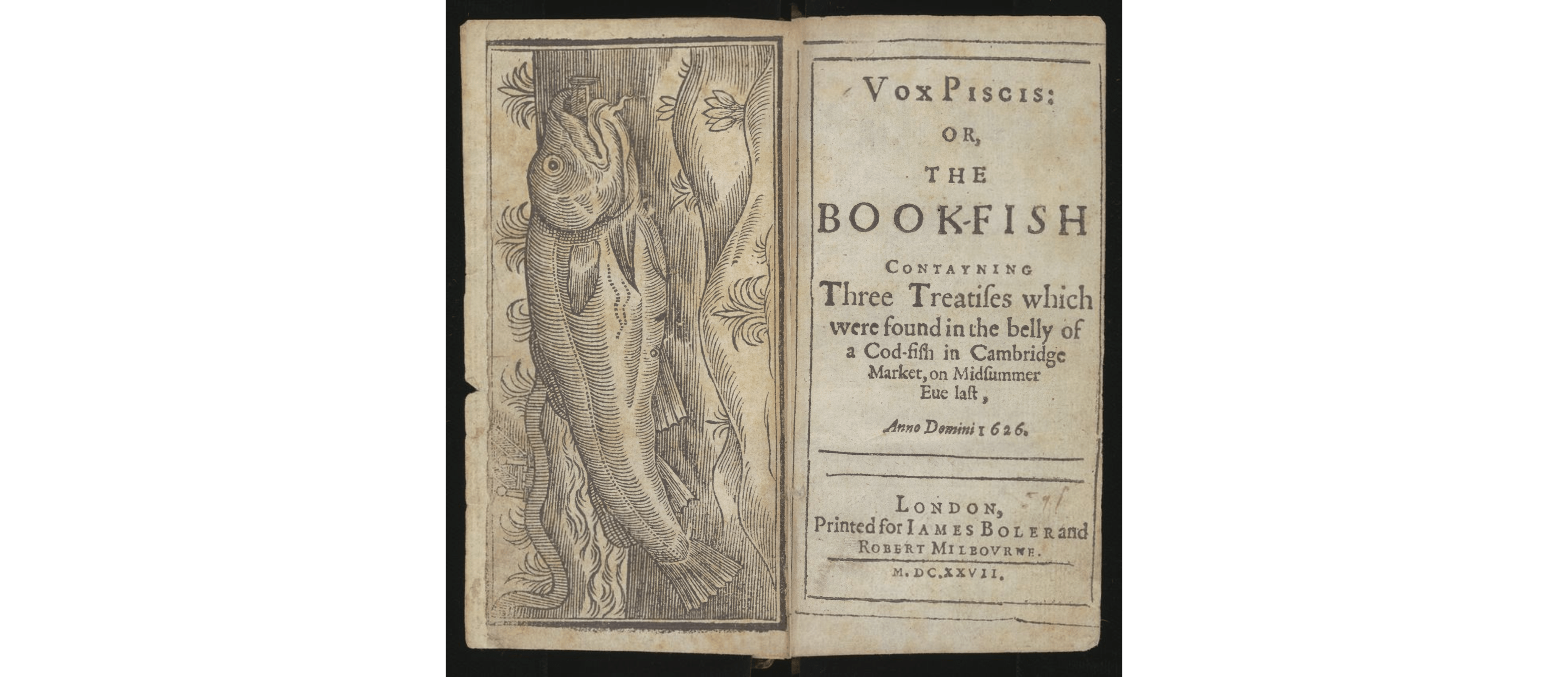
As we untangle the strings, we might recall that it ws on this date in 1623 that a large codfish, split open at a Cambridge market, was found to contain a copy of a book of religious treatises by John Frith.
“Any typos in this email are on purpose actually”*…

Jennifer Sandlin on a gremlin we’ve all met…
The next time you make a mistake in your writing, or pick up something you’ve published and instantly spot a typo (argh!), don’t fret, it wasn’t your fault! Instead of taking on the shame of not proof-reading your work thoroughly enough, you can just point to Titivillus instead!
Who is Titivillus, you might ask? Well, he’s a demon who has long been blamed for, according to Princeton University’s Medieval Studies department, “slips and sins in song, speech, and writing.” In fact, Medieval Studies scholar Jan Ziolkowski, from Harvard University, traces his origins back to at least 1200, when he began showing up in paintings and sermons in medieval Europe and beyond. And he’s definitely got staying power, as he’s still beloved today in some circles. Princeton University provides this helpful overview of his origins and reach:
Thanks to today’s dominance of English, Titivillus is regarded as especially particular to medieval England, but he became commonplace far beyond the Continent and survived past the Middle Ages to appear in Rabelais, the earliest Slovak literature, Anatole France, Herman Melville, and W. H. Auden, before finally having a novel devoted to him in 1953. He remains unforgotten, a curio beloved among calligraphers and role-play gamers…
“Got typos? Blame Titivillus, the “medieval demon of typos” from @boingboing.net.
* Ryan Broderick– the tag line in his nifty newsletter, Garbage Day
###
As we correct, we might ponder a very specific path, recalling that today– and every June 16– is Bloomsday, a commemoration and celebration of the life of Irish writer James Joyce (whose typos may or may not have been typos), during which the events of his novel Ulysses (the modern classic set on this date in 1904) are relived: Leopold Bloom goes about Dublin, Joyce’s immortalization of his first outing with Nora Barnacle, the woman who would eventually become his wife.
The first Bloomsday was observed on the 50th anniversary of the events in the novel, in 1954, when John Ryan (artist, critic, publican and founder of Envoy magazine) and the novelist Brian O’Nolan organized what was to be a daylong pilgrimage along the Ulysses route. They were joined by Patrick Kavanagh, Anthony Cronin, Tom Joyce (a dentist who, as Joyce’s cousin, represented the family interest), and AJ Leventhal (a lecturer in French at Trinity College, Dublin).

“I quit school in the sixth grade because of pneumonia. Not because I had it, but because I couldn’t spell it.”*…

At the other end of the spectrum are the kids who make it to– and in– the Spelling Bee. Sebastian Stockman shares his unique perspective…
Every March, I get an email from Joan Lanigan at City Hall: The Binder has arrived.
The Spelling Bee words are in The Binder. I need The Binder because I’m the Pronouncer.
And so, my annual participation in the Boston Citywide Spelling Bee begins with a bit of spycraft—not the Tom-Cruise-scales-the-Burj-Khalifa type, more the George-Smiley-hands-you-a-file kind.
The handoff always takes place somewhere on my campus in between classes. Over the years, Joan has popped out of the passenger seat of an illegally parked car to hand me the nondescript white three-ring binder. She has waited for me in the rain, under an umbrella, outside my classroom building. She’s shown up in sunglasses and workout clothes, dropping The Binder off before her run. This year we met on the steps of the Museum of Fine Arts.
Joan’s not paranoid. She just does things by the book. As Program Manager at the Boston Centers for Youth and Families, Joan is the city’s point of contact between the Scripps National Spelling Bee and the several dozen public and private schools in Boston who send representatives to the regional competition. The winner of that competition receives a trophy, various wordy prizes, and travel and accommodations to the National Spelling Bee, just outside of Washington, D.C., where they’ll have their words pronounced by Dr. Jacques Bailly, the affable, unflappable LeBron James of the Bee world.
The Scripps people do not provide the word list digitally, because they want to limit sharing. It says so at the top of the first page, centered in red italics:
“Please do not give this guide to any spellers, parents or teachers.
The Scripps National Spelling Bee will provide your regional champion with study materials for the National Competition.”This is the Spelling Bee. OpSec is critical…
A proctor’s-eye view: “Confessions Of A Spelling Bee Pronouncer,” from @substockman.bsky.social in @defector.com.
###
As we honor orthography, we might recall that on this date in 1988, Rageshree Ramachandran won the Scripps National Spelling Bee (correctly spelling “elegiacal”). 13 years old (and In the eighth grade) at the time, Ramachandran proceeded to race through high school in three years. At age 15, she won a $10,000 Westinghouse Science Talent Search scholarship. She started Stanford at age 16, and graduated in 1995 with both a B.S. and an M.S. She moved then to medical school at the University of Pennsylvania where she earned a Ph.D. in 2022 and an M.D. in 2023, then moved back to the Bay Area to do her residency at UCSF… where today she is a professor of clinical pathology.

You must be logged in to post a comment.