Posts Tagged ‘architecture’
“Nothing is built on stone; all is built on sand”*…

(Roughly) Daily has looked before at sand: as a scarce resource, thus as a valuable commodity and an object of theft, and as a metaphor. In this excerpt from his book, The World in a Grain: The Story of Sand and How It Transformed Civilization, Vince Beiser makes the case that it is the most important solid substance on earth…
[Sand is] the literal foundation of modern civilization. … Sand is the main material that modern cities are made of. It is to cities what flour is to bread, what cells are to our bodies: the invisible but fundamental ingredient that makes up the bulk of the built environment in which most of us live.
Sand is at the core of our daily lives. Look around you right now. Is there a floor beneath you, walls around, a roof overhead? Chances are excellent they are made at least partly out of concrete. And what is concrete? It’s essentially just sand and gravel glued together with cement.
Take a glance out the window. All those other buildings you see are also made from sand. So is the glass in that window. So are the miles of asphalt roads that connect all those buildings. So are the silicon chips that are the brains of your laptop and smartphone. If you’re in downtown San Francisco, in lakefront Chicago, or at Hong Kong’s international airport, the very ground beneath you is likely artificial, manufactured with sand dredged up from underwater. We humans bind together countless trillions of grains of sand to build towering structures, and we break apart the molecules of individual grains to make tiny computer chips.
Some of America’s greatest fortunes were built on sand. Henry J. Kaiser, one of the wealthiest and most powerful industrialists of twentieth-century America, got his start selling sand and gravel to road builders in the Pacific Northwest. Henry Crown, a billionaire who once owned the Empire State Building, began his own empire with sand dredged from Lake Michigan that he sold to developers building Chicago’s skyscrapers. Today the construction industry worldwide consumes some $130 billion worth of sand each year.
Sand lies deep in our cultural consciousness. It suffuses our language. We draw lines in it, build castles in it, hide our heads in it. In medieval Europe (and a classic Metallica song), the Sandman helped ease us into sleep. In our modern mythologies, the Sandman is a DC superhero and a Marvel supervillain. In the creation myths of indigenous cultures from West Africa to North America, sand is portrayed as the element that gives birth to the land. Buddhist monks and Navajo artisans have painted with it for centuries. ‘Like sands through the hourglass, so are the days of our lives,’ intone the opening credits of a classic American soap opera. William Blake encouraged us to ‘see a world in a grain of sand.’ Percy Bysshe Shelley reminded us that even the mightiest of kings end up dead and forgotten, while around them only ‘the lone and level sands stretch far away.’ Sand is both minuscule and infinite, a means of measurement and a substance beyond measuring.
Sand has been important to us for centuries, even millennia. People have used it for construction since at least the time of the ancient Egyptians. In the fifteenth century, an Italian artisan figured out how to turn sand into fully transparent glass, which made possible the microscopes, telescopes, and other technologies that helped drive the Renaissance’s scientific revolution.
But it was only with the advent of the modern industrialized world, in the decades just before and after the turn of the twentieth century, that people really began to harness the full potential of sand and begin making use of it on a colossal scale. It was during this period that sand went from being a resource used for widespread but artisanal purposes to becoming the essential building block of civilization, the key material used to create mass-manufactured structures and products demanded by a fast-growing population.
At the dawn of the twentieth century, almost all of the world’s large structures — apartment blocks, office buildings, churches, palaces, fortresses — were made with stone, brick, clay, or wood. The tallest buildings on Earth stood fewer than ten stories high. Roads were mostly paved with broken stone, or more likely, not paved at all. Glass in the form of windows or tableware was a relatively rare and expensive luxury. The mass manufacture and deployment of concrete and glass changed all that, reshaping how and where people lived in the industrialized world.
Then in the years leading up to the twenty-first century, the use of sand expanded tremendously again, to fill needs both old and unprecedented. Concrete and glass began rapidly expanding their dominion from wealthy Western nations to the entire world. At roughly the same time, digital technology, powered by silicon chips and other sophisticated hardware made with sand, began reshaping the global economy in ways gargantuan and quotidian.
Today, your life depends on sand. You may not realize it, but sand is there, making the way you live possible, in almost every minute of your day. We live in it, travel on it, communicate with it, surround ourselves with it…
“Sand and Civilization,” from @VinceBeiser via @delanceyplace.
* Jorge Luis Borges
###
As we muse on minerals, we might note that it was on this date in 1913 that a famous “sand castle” (concrete building) was opened in New York City, the neo-Gothic Woolworth Building. Located at 233 Broadway in the Tribeca neighborhood of Manhattan, it was the tallest building in the world from 1913 to 1930, at a height of 792 feet; more than a century after its construction, it remains one of the 100 tallest buildings in the United States.
The Woolworth Building has been a National Historic Landmark since 1966 and a New York City designated landmark since 1983. The building is assigned its own ZIP Code, 10279, one of 41 buildings in Manhattan so “honored” as of 2019.

“If I could explain it to the average person, I wouldn’t have been worth the Nobel Prize”*…

Alex Murrell on the surge of sameness all around us…
The interiors of our homes, coffee shops and restaurants all look the same. The buildings where we live and work all look the same. The cars we drive, their colours and their logos all look the same. The way we look and the way we dress all looks the same. Our movies, books and video games all look the same. And the brands we buy, their adverts, identities and taglines all look the same.
But it doesn’t end there. In the age of average, homogeneity can be found in an almost indefinite number of domains.
The Instagram pictures we post, the tweets we read, the TV we watch, the app icons we click, the skylines we see, the websites we visit and the illustrations which adorn them all look the same. The list goes on, and on, and on…
Perhaps when times are turbulent, people seek the safety of the familiar. Perhaps it’s our obsession with quantification and optimisation. Or maybe it’s the inevitable result of inspiration becoming globalised…
But it’s not all bad news.
I believe that the age of average is the age of opportunity…

Lots more mesmerizing examples: “The age of average,” from @alexjmurrell.
* Richard Feynman
###
As we think different, we might recall that it was on this date in 1976 that Steve Jobs, Steve Wozniak, and Ronald Wayne signed a partnership agreement that established the company that would become Apple Computer, Inc.– a company that was all about trumping sameness– on January 3, 1977.
Wayne left the partnership eleven days later, relinquishing his ten percent share for $2,300.

“One man’s trash is another man’s treasure”*…

… and vice versa. Case in point: the new Orange County Museum of Art. On the one hand…
[architect Thom Mayne of the firm Morphosis] created something that is as much a civic plaza as it is a building. The outdoor public space seems to sweep up and glide across the top of the museum, taking up a full 70% of its roof, dissolving any sense that it is a closed and private thing; nor is this mere advertising, since admission is to be free for the next 10 years. Access to the rooftop plaza is by means of a broad flight of stairs, which Mr. Mayne says was inspired by that of New York’s Metropolitan Museum of Art. In fact, it is less a staircase than an amphitheater. At the same time, the building is handsomely detailed, with textured ceramic panels that give the facade a pleasant sense of physical reality…
“The Best Architecture of 2022,” Michael J. Lewis, Wall Street Journal
On the other hand…
Nowhere is the gulf between digital promise and physical fact more spectacularly evident than at the new Orange County Museum of Art (OCMA) in California, which stands as a $94m (£77m) hymn to the difference between render and reality. From a distance, its sinuous white flanks buckle and bend with the trademark fractured geometries of its architects, the Los Angeles practice Morphosis. The facade rears up around a corner, folding in on itself to embrace a roof terrace, with a similar wayward energy to the torqued steel plates of a rusty Richard Serra sculpture that stands outside.
But, as you approach the building, you see that the ruptured, splintered aesthetic goes beyond the sculptural moves alone. Sheets of buckled steel are screwed crookedly against the edge of the undulating facade, hastily cut tiles have been fitted with wonky abandon, while other parts of the building are literally held on with tape. A temporary clamp keeps part of a soffit from falling down, while glass balustrades lean at precarious angles, their oversized steel fixing plates bolted with Frankenstein glee. The shop of horrors continues inside, where sheets of painted foam-board stand in place of steel coping, cracked glass floors line precipitous aerial walkways, and suspended ceilings appear to have been cobbled together from whatever leftover bits were lying around. The US construction industry isn’t known for its attention to detail, but this is something else…
“‘An unfinished Frankenstein’s monster’: the disastrous new Orange County Museum of Art,” Oliver Wainwright, The Guardian
* Proverb
###
As we tackle taste, we might recall that it was on this date in 1958 that The Chipmunks— Alvin, Simon, and Theodore (aka Ross Bagdasarian, aka David Seville)– released “The Chipmunk Song” (“Christmas Don’t Be Late”). The song won three Grammy Awards for Best Comedy Performance, Best Children’s Recording, and Best Engineered Record (that was non classical). It even reached the number one spot on the Billboard Hot 100 Pop Singles chart– the only Christmas record to top the chart spot until Mariah Carey’s “All I Want for Christmas is You” dethroned it in 2019.
That said, when featured on American Bandstand‘s “Rate-A-Record” segment, it received the lowest possible rating—35– across the board.

“The principle of the Gothic architecture is infinity made imaginable”*…
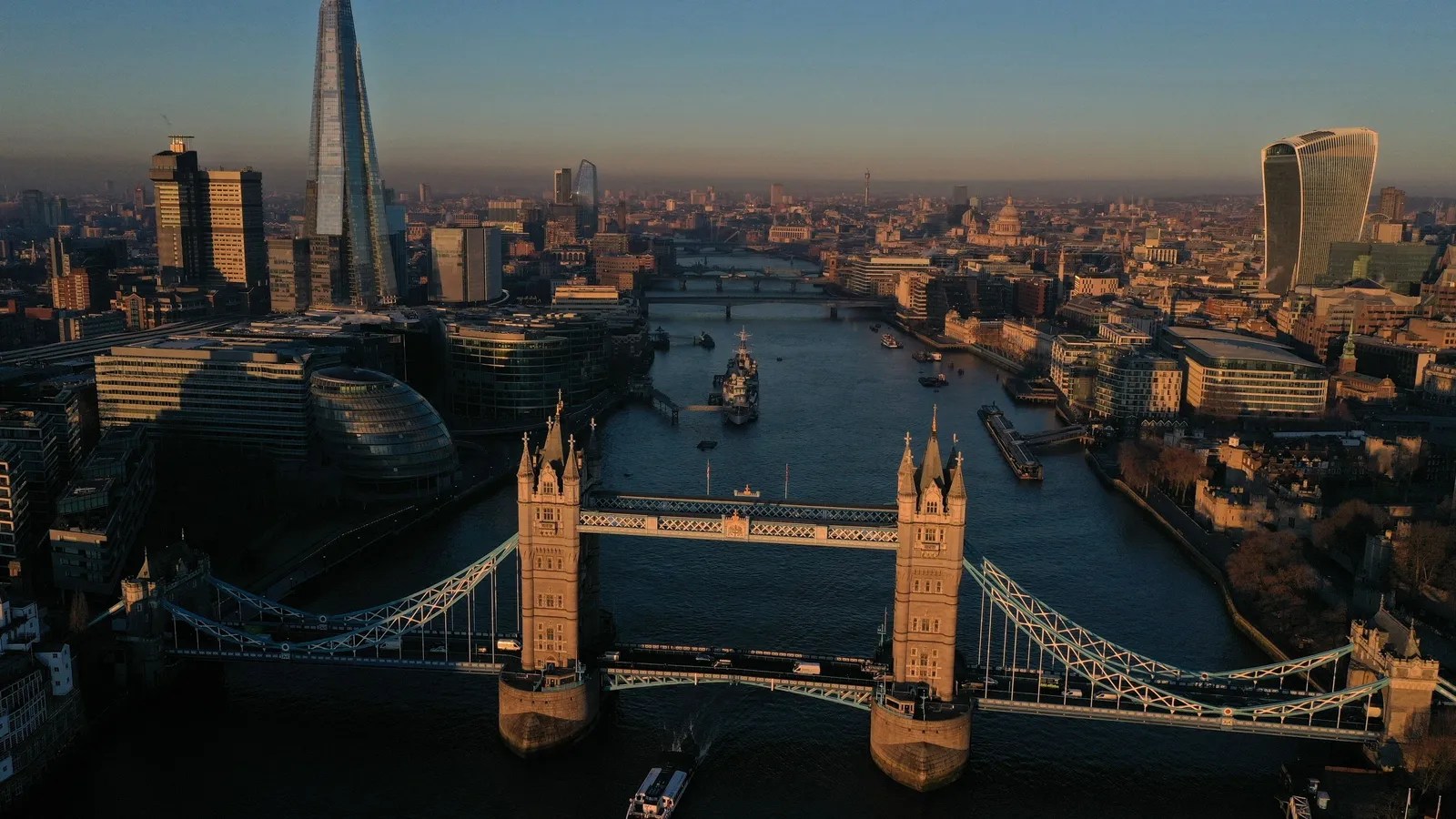
Tower Bridge in London, England, is one of the most famous structures in the Gothic Revival style. Its spires echo Islamic architecture’s minarets, pointing to the ancient exchange of cultural ideas between the West and the Middle East.
There’s more to Gothic architecture and Gothic style than we might imagine. Roger Luckhurst explains…
When fire devastated the Cathedral of Notre Dame in Paris in April 2019, the architectural historian Diana Darke noted in a Twitter post that of course everyone knew the famous twin tower and rose window of France’s finest Gothic cathedral were copied from a Syrian church in Qalb Loze, built in the fifth century. The post went viral: amplified or rebutted, triumphed or tossed.
Darke was surprised at the reaction to what historians have established as a well-known path of influence: the East-West trade in architectural ideas. It was argued centuries ago that key defining elements of the Gothic style were borrowed from the Islamic architecture of the Middle East. The soaring pinnacles of the Palace of Westminster in London, the pointed arches of St. Mark’s Basilica in Venice, and the rose windows of Notre Dame all point to the influence of Islamic design.
But from early in the 19th century, these contributions were forgotten, and Gothic became celebrated as an intrinsically Northern European style. In Britain, it was only in the revival of this medieval style of architecture that it started to be called “Gothic.” The Revivalists no longer dismissed the Gothic as a crude or barbarous form, and instead repurposed it as a national, patriotic style.
By knowing this deeper history of some of Europe’s most iconic buildings, travelers can approach these well-known attractions with new eyes and can appreciate that the “East-West divide” isn’t as deep as we are often led to think…
Hidden in the architecture of some of the world’s most famous buildings is a cultural exchange between Europe and the Middle East: “What is ‘Gothic’? It’s more complicated than you think,” from @TheProfRog in @NatGeo.
* Samuel Taylor Coleridge
###
As we esteem exchange, we might send well-designed birthday greetings to Arduino Cantafora; he was born on this date in 1945. An architect, painter, and writer, he became a postmodernist (in the mode of his teacher/mentor Aldo Rosi), creating designs and paintings that reached back to the Renaissance revival of Gothic themes.

“Look on my works, ye Mighty, and despair!”*…

On YouTube videos and Reddit boards, adherents of a bizarre conspiracy theory argue that everything you know about the history of architecture is wrong. Zach Mortice explains…
In 1908, architect Ernest Flagg completed the Singer Building in Lower Manhattan, a Beaux-Arts showstopper made for the Singer sewing machine company. From a wide base, a slender 27-story tower rose, topped by a mansard roof and a delicate lantern spire.

Every inch dripped with sumptuous detail inside and out; vaulted roofs, marble columns with bronze trim, window mullions with spiral fluting. The lobby was said to have a “celestial radiance.” A book was written just about its construction. For a year, it was the tallest building in the world at 612 feet, and a celebrated landmark for decades after that.
But not for too much longer. Despite its great height, the pencil-thin tower lacked office space. In the 1960s the company sold its ornate headquarters; demolition proceeded in 1967. It’s the tallest building to ever be peacefully demolished.
By any account, it’s a fantastical tale: Once the tallest building in the world and a New York icon, knocked down in just a handful of decades.
For some, it’s too fantastical to believe … or perhaps not fantastical enough. A dedicated group of YouTubers and Reddit posters see the Singer Building and countless other discarded pre-modern beauties and extant Beaux-Arts landmarks as artifacts of a globe-spanning civilization called the Tartarian Empire, which was somehow erased from the history books. Adherents of this theory believe these buildings to be the keys to a hidden past, clandestinely obscured by malevolent actors.
Who? Why? To what possible end? As in many other, more high-profile conspiracy theories, this baroque fantasy doesn’t offer much in the way of practical considerations, logic or evidence. But it’s grounded in some real anxieties, pointing toward the changes wrought by the modern world in general and modern architecture specifically — and rejecting both…
The fascinating tale in full: “Inside the ‘Tartarian Empire,’ the QAnon of Architecture,” from @zachmortice in @business via @MSewillo in @the_prepared.
(In the same spirit, The Glory of the Empire is a “history” of another empire which only existed in the imaginations of author Jean d’Ormesson and his readers.)
* Percy Byssche Shelley, “Ozymandias”
###
As we fabricate fabrications, we might spare a thought for Edmund Bacon; he died on this date in 2005. An urban planner, architect, educator, and author, he was executive director of the Philadelphia City Planning Commission from 1949 to 1970. His visions shaped today’s Philadelphia, the city in which he was born, to the extent that he is sometimes described as “The Father of Modern Philadelphia” (and thus an arch-enemy of Tartarians everywhere).

You must be logged in to post a comment.