Posts Tagged ‘crisis’
“By failing to prepare, you are preparing to fail”*…
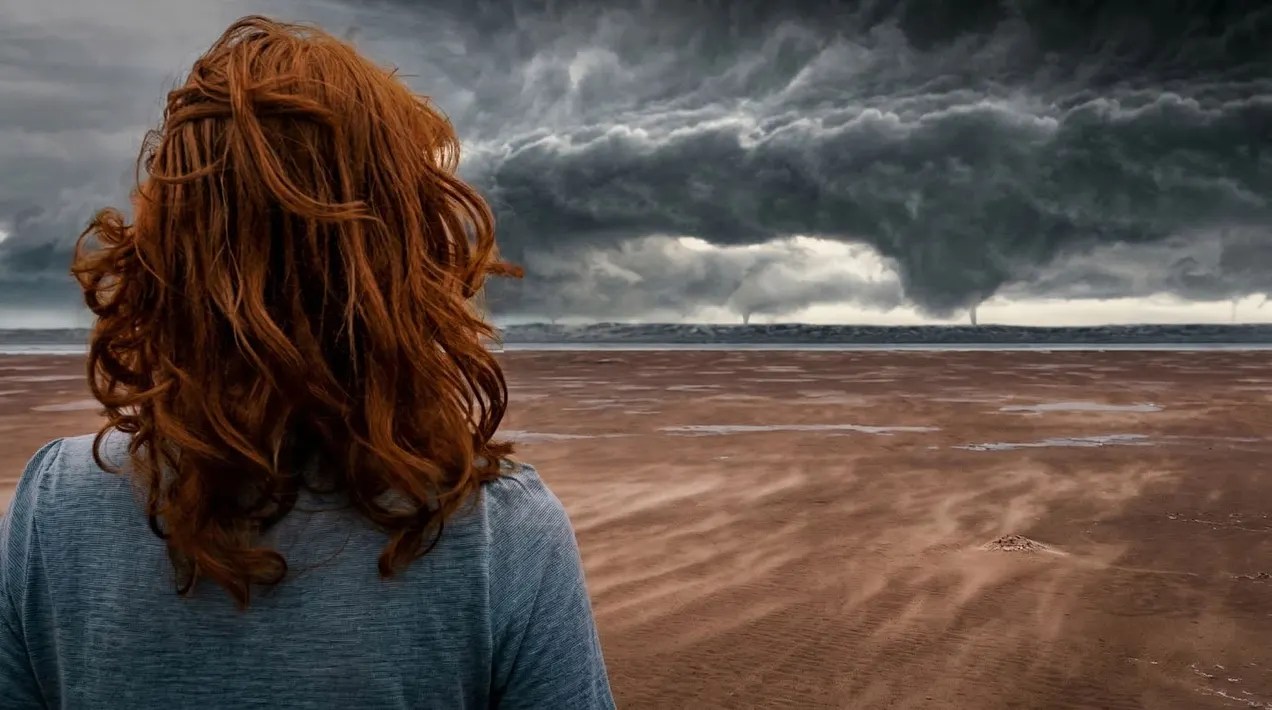
Further, in a fashion, to yesterday’s post, a piece by Nate Hagens on preparing for what promises to be (to put it politely) a challenging future. It’s via (R)D‘s old friend Patrick Tanguay (and his wonderful newsletter Sentiers), who does the introductory honors…
Nate Hagens has spent two decades mapping what he calls the “more-than-human predicament,” the interlocking crises of fossil fuel depletion, ecological overshoot, and economic fragility. This piece marks a shift in his focus: the diagnostic work is largely done, and the current moment demands a framework for action rather than further description of the problem. It’s quite long and perhaps a bit dry, but considering the complexity of everything he’s talking about, I think it reaches a nice balance between all the things and “ok, I can read this, sit with it, and have a well ordered map of what needs doing and a framework from which to work.” The framework has four levels—personal psychological grounding, trusted network-building, six broad intervention fronts, and a timeline—premised on the idea that none of the material work is possible without first stabilising the individual (“being human”) and building shared understanding among people who see the situation clearly.
The six fronts—physical infrastructure, ecological intervention, dignity systems for the dispossessed, governance, culture and meaning, and economic transition—are not a menu but an interdependent set of domains where work is needed simultaneously. Some are familiar territory for anyone thinking about collapse and resilience; others are less obvious. Hagens insists, correctly, on including dignity infrastructure for people who will lose livelihoods as supply chains contract and jobs are automated, and treats culture and collective meaning-making as essential rather than supplementary. He also argues directly that ideological critique, however accurate, is not a plan. That the moment calls for moving from naming what’s wrong to building what comes next.
What gives the framework its structure is the timeline underneath it all: three overlapping phases. Phase A is the stability window that still exists in much of the world, and the one in which trust, infrastructure, and institutions must be built while surplus and coordination capacity remain. Phase B is the period of shocks and triage, already beginning in places, where the goal is to hold systems together and prevent cascades. Phase C is the stable destination—regenerative, locally embedded, equitable—that gives the earlier phases their direction. Hagens’ central argument is that what gets built now sets the initial conditions for everything that follows, and that path dependence operates at a civilisational scale.
Most of the positive climate outcomes we are likely to see in the next twenty years will not come from technology, they will come from curtailed economic expansion driven by the very forces I described at the beginning of this essay: war, debt, and energy depletion. We already got a preview of this during the pandemic as economic activity halted. Industrial activity contracting is not a climate policy, but it is a climate outcome. […]
Subsidiarity and local governance capacity: decisions made at the lowest appropriate level, which in many cases is probably much more local than we currently assume. Communities need the ability to govern their own resource allocation when higher-level institutions can’t or won’t. […]
Collective imagination and sensemaking: the role of arts and creative work in helping communities grieve, adapt, and imagine. This is not a luxury, it is how human groups have always metabolized disruption to continue working together. […]
Shared reality and sovereign visioning: the capacity of communities to tell their own story and find their own vision for the future rather than have it told for them by algorithms, demagogues, or strangers with large followings. In a period of disruption, the communities that hold together will have a strong enough shared cultural narrative to metabolize hardship without breaking apart. This is not a soft category, it is essential and has the ability to bear weight. […]
This window is finite, and many of us – especially in the last few weeks – are increasingly aware that it is closing. We just don’t know exactly how fast. But everything that can only be built in stability – institutional trust, physical infrastructure, knowledge transfer, and relationships – has to be built now, in this window, before conditions change. […]
What does it look like? Regenerative, resilient, human-scale, embedded in local ecology, equitable in a way that does not depend on infinite growth to fund redistribution, and rich in meaning, social connection, and all the things that actually make human life good.
Eminently worth reading in full. The logic of Pascal’s wager suggests that we take Hagens’ advice seriously: “What to Do as the World Falls Apart: A Framework for Action,” from @natehagens.bsky.social (via @inevernu.bsky.social).
Evidence that taking action can matter: “Scientists have scrapped the worst‑case climate scenario – because action is making a difference,” from Andrew King.
And a reminder that there’s more action to take: “The world is heading toward a financial crisis – the state of US politics has left us ill-prepared,” from Eduardo Porter.
* Widely (but incorrectly) attributed to Benjamin Franklin
###
As we prepare, we might recall that the Academy of the Distrustful was founded in the library room of the Palau Dalmases in Barcelona. A Baroque literary and musical academy with the aim of promoting the study of classical and Catalan history and poetry, mostly in Spanish, by fourteen scholars headed by the noble Pau Ignasi de Dalmases i Ros. In the event, it lasted only several years: during the War of the Spanish Succession several of its members supported Charles III of Austria over (the man who became) Philip V of Spain— and disbanded the group.
On this date in 2005, 2025, the 325th anniversary of its foundation, the Academy was reconstituted as a humanities academy (in the broadest sense of the term) in the Sala Dalmases of the Historical Archive of the City of Barcelona.

“The hours of folly are measur’d by the clock, / But of wisdom: no clock can measure.”*…
Our problems are so vast, our distance from them so great. Benjamin Cohen asks how we navigate our “derangement of scale”?
… Parents say the days are long but the years are short. Sophocles says time eases all things. Thoreau says time is but the stream we go a-fishing in. Einstein tells us time is an illusion. I don’t know what I’m supposed to do with that. All of them are right.
A human life can be 70, 80, maybe 90 years. The tuataras, a New Zealand reptile, can live to be 100, as can a crocodile. A Seychelles giant tortoise can live close to 200 years. Sea animals have us all beat. Bowhead whales can live past 200 years. For some sea urchin species, it’s 300. The ocean quahog clam can live past 500. On the other end are insects. An adult dragonfly might live a week. Shadflies, also called mayflies or fishflies, live just a day or two.
Geological time has an entirely different range of long and short. My friend studies ice cores from millions of years ago, examining glacial variation to better understand how climates change. The Pleistocene, Pliocene, Miocene. These are epochs, an official scientific term for a measure of time—less than a period, more than an age. Epochs span millions of years. They put our biological lifespans to shame. We are shadflies to the sandstone sediment of the Miocene.
Our current epoch, scientists argue, is called the Anthropocene. It’s new. The term comes from Paul J. Crutzen, a Nobel Prize-winning chemist who wrote that “human activities are exerting increasing impacts on the environment on all scales”—impacts so profound that we created an entirely new stamp on the timeline. The Anthropocene is a commentary on our scales of time as well as space. It isn’t just how old things are or how long they take, but how big they are and how vast their dimensions are.
I’ll admit a little hesitancy for the concept. It’s an audacious move, to declare the dawn of a new epoch from within; I’m not sure if there’s a bit too much modern exceptionalism at work. But I also can’t say the full scientific validity matters for me. Say what you will about the Anthropocene, but I nod to it for trying to gauge what’s so strange and difficult about our moment. It is the relationship between biological generations and geological epochs, between the scope of mortal activity and that of global planetary activity. It is all scales everywhere all at once.
Understanding the significance of our own lives requires some understanding of scale. “Just as the microscope and telescope extended our vision into spatial realms once too minuscule or too immense for us to see, geology provides a lens through which we can witness time in a way that transcends the limits of our human experiences,” Marcia Bjornerud, a geologist, writes. The Anthropocene, she suggests, is a fine time to “adopt a geologic respect for time and its capacity to transfigure, destroy, renew, amplify, erode, propagate, entwine, innovate, and exterminate.” We need to know how to navigate our epoch: to recognize our profusion of scales and strive to understand, amidst their collisions, not just how to care for the world beyond us but how a person can be, what it means to stand as a morally vested individual.
And yet we humans are still not particularly good at seeing ourselves in time or space. I’m certainly not. So here we are. Not only has our age come face to face with an emergency of scalar challenges—brashly called a global climate crisis—but we have produced a daunting sense of distance from addressing it. The problems are physically too far away, too large, too vast; the psychological distance we feel from addressing them is too great. It’s a double-distancing. Hopelessness comes from the scalar mismatch between we individuals, who are wee individuals, and the problems of an 8,000-mile-diameter earth.
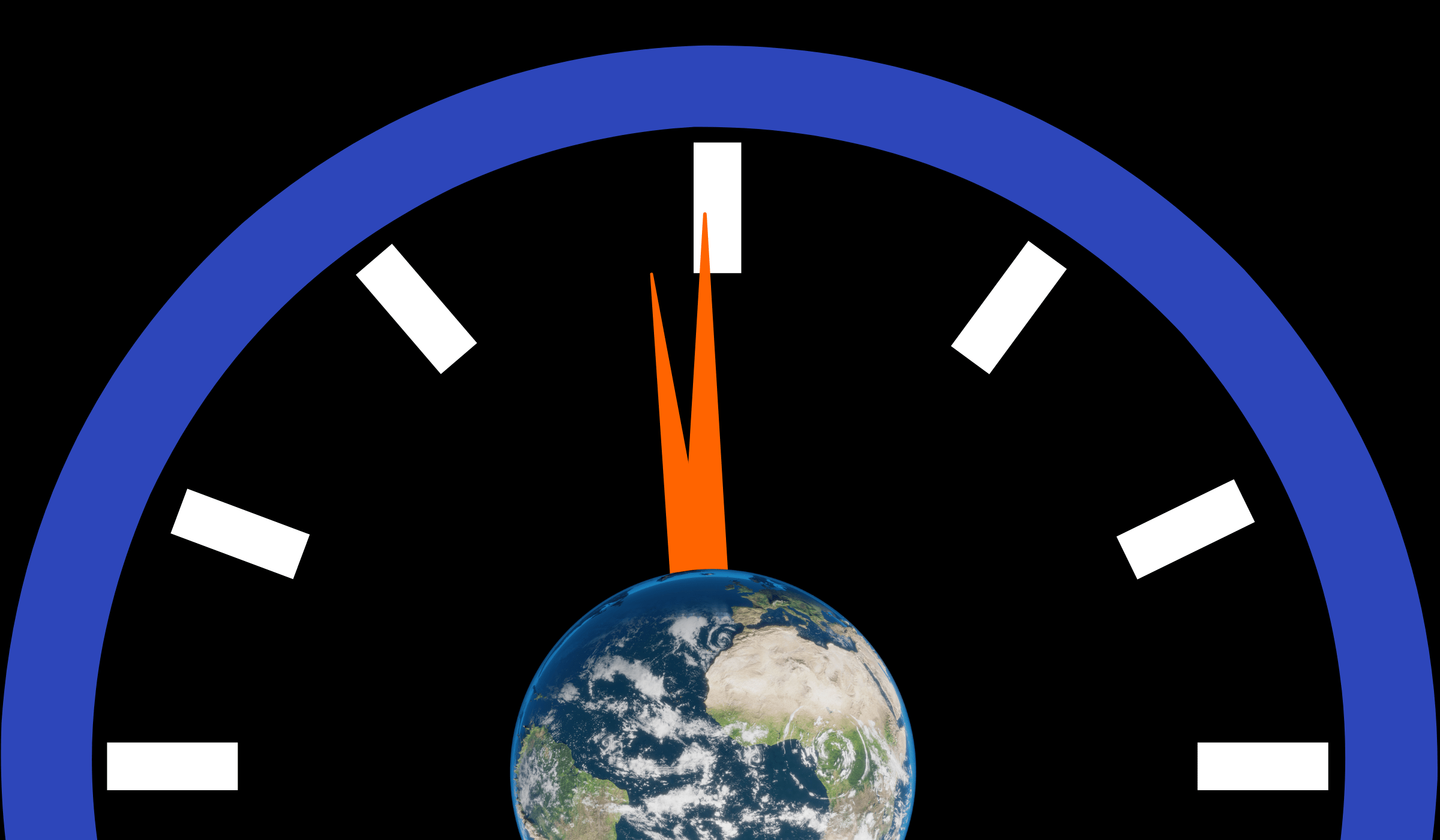
All of this was on my mind when I first met Robert Socolow [here], an 88-year-old physicist who, over the course of his life, turned to environmental science and technology to help humanity respond to our most complex challenges of scale. One of those efforts has been with the Bulletin of the Atomic Scientists, where Socolow helps with their Doomsday Clock. That’s the device that, since 1947, tracks humanity’s proximity to self-destruction. The clock is a metaphor, presuming to measure Blake’s hours of folly by minute and second hand; the hands are set by “nuclear risk, climate change, disruptive technologies, and biosecurity,” among other concerns. They’ve changed positions 26 times in the decades since they began metaphorically ticking. Since 2010, the clock’s hands have only moved closer to midnight.
In 2025, Socolow himself revealed the face of the clock at a press conference in Washington, DC. It was January and he was at the US Institute of Peace in Foggy Bottom. With a crowd of reporters looking on, cameras flashing and shutters digitally clicking, Socolow stood by a modernist wooden stand and spun a turntable to reveal the clock hands at a small, acute angle against midnight. A world of scalar challenges fell into an urgent sort of order. The end was 89 seconds away.
Most of us are daunted, every day, by the vastness of planetary activity and the proximity of our personal choices. We look at the clock, unsure how to balance clashing scopes of time and space. But if I’m unsettled, I want proximity to settle me. I want to be close, I want to feel part of the world I inhabit and see and feel, I want to hold those I love near to me. So what should we do?…
… The confusion may come from what the writer Timothy Clark calls “derangements of scale.” Our experiences as modern global humans, Clark writes, are like being “lost in a small town” and then handed a map of the entire earth for locating yourself and finding your way. In the Anthropocene, he writes, “we have a map, [and] its scale includes the whole earth, but when it comes to relating the threat to daily questions of politics, ethics, or specific interpretations of history, culture, literature, etc., the map is often almost mockingly useless.” Our scales are too imbalanced; we are unable to think the unthinkable. It goes without saying that it can be paralyzing, demoralizing, to be an individual acting as part of the collective, globe-sized world…
[Cohen shares his conversations with Socolow, with call-outs to Tolstoy, Camus, Augustine, and Solnit…]
… The attempt to capture our smallness inside the grandness of the universe is a timeless human quest, I get that. Tolstoy’s theological view is a typical one; God is that which is without scale. Even if I’m not so theological about it, I share the modern anxiety. And that anxiety is currently a dominant emotion.
Clark writes that “deranged jumps in scale and fantasies of agency may recall rhetoric associated with the atomic bomb in the 1950s and after.” After talking to Socolow a number of times, I don’t think it recalls so much as continues that rhetoric. The new atomic age was a test case for the coming collisions of scale that derange us now. The Doomsday Clock was about sounding the alarm. It was meant to shake people, to grab them by the shoulders and yell that they pay attention to human-made catastrophe.
We’ve flipped in the past 50 years, nearly the exact span of my own life. A half century later, and so many people have gone from urgency to hopelessness. They feel bombarded by all scales, not just the next one.
There’s room to reconsider that bombardment. There’s time to think to the next scale. Socolow has been doing it his entire adult life. So were Augustine and Tolstoy and Camus and so is Solnit. It isn’t new, we aren’t alone.
And so Socolow and I stand in his home office, trying to measure. It’s misty outside and calm inside. He is thinking in linear feet of books, where the spatial scale of distance is a proxy for the temporal scale of his life’s work. I’m thinking in years, measuring my sense of contribution and belonging against the shadfly-like limitations of a mere biological lifespan. I’m cautious, excited, gratified that the two of us can talk and compare across the scales of our current lives. That Blake couplet in the epigraph above [title quote] runs through my head. Socolow’s keenly aware of his own place in our epoch. Nearly a hundred linear feet of a life’s work at an archive, and still, as we consider our various measures, he tells me, “I am searching for ways to be constructive, and there are small opportunities here and there so far.” There is wisdom here, even if no clock can measure it…
Eminently worth reading in full: “By All Measures,” from @longreads.com.
* William Blake, “Proverbs of Hell”
###
As we take the long view, we might we might rejoice in the naively and nobly inventive: it was on this date in 1605 that El Ingenioso Hidalgo Don Quijote de la Mancha (or The Ingenious Hidalgo Don Quixote of La Mancha— aka Don Quixote), the masterwork of Miguel de Cervantes (and of the Spanish Golden Age) and a founding work of Western literature, was first published. Widely considered the first modern novel (published in the Western world), it is also considered by many (still) to be the best; it is in any case the second most translated work in the world (after the Bible).

“These are the times that try men’s souls”*…

Last January, (R) D looked, via Adam Tooze, at the concept of the Polycrisis: “I know it is relentless. That is also a feature of the polycrisis we are in. It comes from all sides and it just doesn’t stop.” He’s developed his thinking, summarizing in a recent Financial Times piece…
Pandemic, drought, floods, mega storms and wildfires, threats of a third world war — how rapidly we have become inured to the list of shocks. So much so that, from time to time, it is worth standing back to consider the sheer strangeness of our situation…
Of course, familiar economic mechanisms still have huge power. A bond market panic felled an incompetent British government. It was, you might say, a textbook case of market discipline. But why were the gilt markets so jumpy to begin with? The backdrop was the mammoth energy subsidy bill and the Bank of England’s determination to unwind the huge portfolio of bonds that it had piled up fighting the Covid-19 pandemic.
With economic and non-economic shocks entangled all the way down, it is little wonder that an unfamiliar term is gaining currency — the polycrisis.
A problem becomes a crisis when it challenges our ability to cope and thus threatens our identity. In the polycrisis the shocks are disparate, but they interact so that the whole is even more overwhelming than the sum of the parts. At times one feels as if one is losing one’s sense of reality. Is the mighty Mississippi really running dry and threatening to cut off the farms of the Midwest from the world economy? Did the January 6 riots really threaten the US Capitol? Are we really on the point of uncoupling the economies of the west from China? Things that would once have seemed fanciful are now facts.
This comes as a shock. But how new is it really?…
“Welcome to the world of the polycrisis” (gift link)
Then, in his newsletter, he goes more deeply into the concept and its roots…
Polycrisis is a term I first encountered when I was finishing Crashed in 2017. It was invoked by Jean-Claude Juncker to describe Europe’s perilous situation in the period after 2014. In the spirit of “Eurotrash”, I rather relished the idea of picking up a “found concept” from that particular source. On Juncker check out Nick Mulder’s wonderful portrait of “Homo Europus”. It turned out that Juncker got the idea from French theorist of complexity and resistance veteran Edgar Morin, who is a whole ‘nother story…
“Polycrisis – thinking on the tightrope“
Both pieces are fascinating and useful; both, eminently worth reading in full…
* Thomas Paine, The American Crisis
###
As we ponder profusion, we might recall that it was on this date in 1898 that an American institution was born.
The University of Minnesota football team (for our non-American readers out there, I’m of course referring to the kind of football where you’ll get a penalty for using your feet) was playing their final game against Northwestern University. The U of M’s team had been having a lackluster year, and there was a general feeling on campus that this was due to lack of enthusiasm during the games. So several students, lead by Johnny Campbell on a megaphone, decided to lead the crowd of spectators in a chant: “Rah, Rah, Rah! Ski-U-Mah! Hoo-Rah! Hoo-Rah! Varsity! Varsity! Minn-e-so-tah!” The crowd went bananas, as they say, and an energized Minnesota team won the game 17-6.
That day Johnny Campbell and his (presumably drunk) friends became the first cheerleader squad.
[source]

“A great sound is given forth from the empty vessel”*…
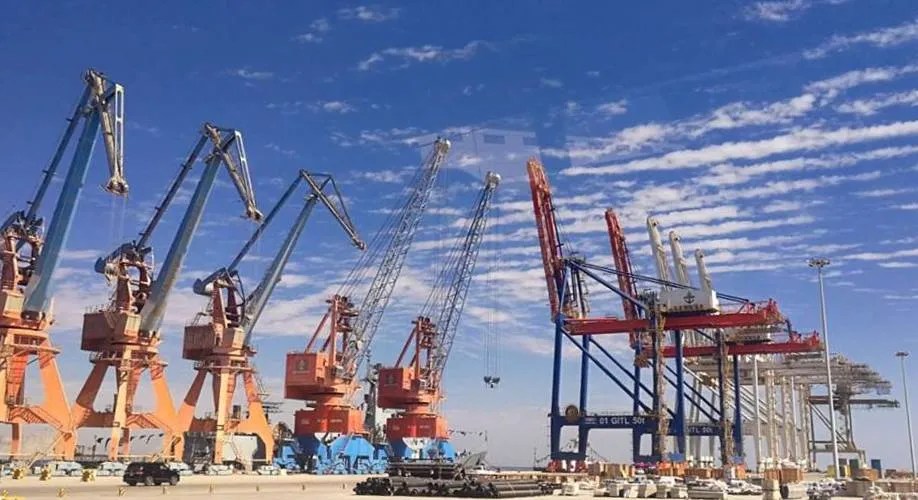
Pakistan’s economy appears to be in pretty bad shape. Riffing on a provocative thread from Atif Mian, the redoubtable Noah Smith compares the economic condition of Indian’s nuclear-armed antagonist with its island neighbor (and current basket case) Sri Lanka…
Many of the particular root causes of Pakistan’s situation are different than in Sri Lanka — they didn’t ban synthetic fertilizer or engage in sweeping tax cuts. The political situations of the two countries, though both dysfunctional, are also different (here is a primer on Pakistan’s troubles). But there are enough similarities at the macroeconomic level that I think it’s worth comparing and contrasting the two.
In my post about Sri Lanka, I made a checklist of eight features that made that country’s crisis so “textbook”:
• An import-dependent country
• A persistent trade deficit
• A pegged exchange rate
• Lots of foreign-currency borrowing
• Capital flight
• An exchange rate crash (balance-of-payments crisis)
• A sovereign default
• Accelerating inflation
[He then examines each as it pertains to Pakistan]
… Pakistan shares a lot in common with Sri Lanka. It doesn’t have a pegged exchange rate, it’s not as dependent on imported food, and it doesn’t have quite as much foreign-currency debt. But the basic ingredients for a slightly more drawn-out version of the classic emerging-markets crisis are there, and there are some indications that the crisis has already begun.
Because Pakistan didn’t peg its exchange rate and didn’t borrow quite as much in foreign currencies as Sri Lanka, it made fewer macroeconomic mistakes than its island counterpart. But in terms of long-term economic mismanagement, it has done much worse than Sri Lanka. No, it didn’t ban synthetic fertilizers — that was an especially bizarre and boneheaded move. But one glance at the income levels of Sri Lanka and Pakistan clearly shows how much the development of the latter has lagged:

Pakistan went from 3/4 as rich as Sri Lanka in 1990 to only about 1/3 as rich today. That’s an incredibly bad performance on Pakistan’s part…
Another emerging-market crisis looms: “Pakistan is in big trouble,” from @Noahpinion.
Oh, and the weather’s not helping either.
For a consideration of the interesting (that’s to say, challenging) questions that Pakistan’s predicament (and the travails of other debtor nations) pose for China, which is an increasingly large lender across the developing world, see the first set of items here.
* Pakistani proverb
###
As we batten the hatches, we might spare a thought for Fazlur Rahman Malik; he died on this date in 1988. A scholar and philosopher, he was a prominent reformer in Pakistan, who devoted himself to educational reform and the revival of independent reasoning (ijtihad). While his work was widely-respected by other reformers, it drew strong criticism from conservative forces– who eventually forced him into exile. He left Pakistan in 1968 for the United States where he taught at the University of California, Los Angeles and the University of Chicago.

“You know why the French hate us so much? They gave us the croissant… We turned it into our croissandwich”*…

There’s a looming crisis in France. Over the last year, the wholesale price of butter there has almost doubled, to over $5,000 per ton. Exploding demand in Asia and a shifting of producer priorities to cheese and cream help explain the spike.
But whatever the reasons, it’s creating a tight squeeze for the 30,000 bakeries in France (a $9.5 Billion industry); butter is 25% of the ingredient make-up of a croissant.
More at “Croissant Apocalypse.”
* Denis Leary
###
As we eat ’em if we have ’em, we might recall that today– the birthday of Sir Frederick Gowland Hopkins, who won the Nobel Prize in Medicine for the discovery of vitamins– is National Vanilla Milkshake Day.

You must be logged in to post a comment.