Archive for October 2020
“Different musical instruments provide for different music”*…

The German polymath and Jesuit priest Athanasius Kircher [see here] had a lifelong fascination with sound and devoted two books to the subject: Musurgia Universalis (1650), on the theoretical (and theological) aspects, and Phonurgia Nova (1673), on the science of acoustics and its practical applications. It’s no surprise then to learn that his famed museum at Rome’s Collegio Romano boasted— in addition to “vomiting statues”, ghost-conjuring mirrors, and other curious wonders — a vast and diverse collection of musical instruments.
Much of what we know of Kircher’s museum today is thanks to his student and fellow Jesuit priest Filippo Buonanni (1638-1725), who succeeded Kircher as both Professor of Mathematics and, upon Kircher’s death, as chief custodian of the museum for which he produced an epic and exhaustive, near-800-page catalogue in 1709. Following in his master’s footsteps, Buonanni too held a dizzying array of interests and specialisms including numismatics, microscopy, spontaneous generation, Chinese laquer, seashells (on which he produced the first monograph), and also, like Kircher, music.
Inspired by the collection of instruments in Kircher’s wunderkammer, and intrigued by the stories behind them, in 1722 Buonanni published his Gabinetto Armonico pieno d’istromenti sonori (or Harmonic cabinet full of sonorous instruments), an attempt to catalogue, for the first time, the musical instruments of the world. While there’s a short and often illuminating text for each instrument it is the 152 engraved plates — executed by Flemish artist and publisher Arnold van Westerhout — which really steal the show. The featured instruments are divided into three sections — wind, string, and percussion — and preceded by thirteen brief discussions of other musical categories, including: military, funeral, used in sacrifices, and, intriguingly, as used at sea: not sirens, but chantying sailors. While some of the instruments gathered in Buonanni’s book are as simple as the bee-keeper banging his tub, or the clacking of shoes against the floor, some are highly crafted, technical machines; the great organ at Palazzo Verospi requires a fold-out page to show it all. We are also treated to what might be considered more incidental instruments, for example, the bell about a bound criminal’s neck and the sound of a soldier’s sword being struck…
Engravings from an ambitious and beautiful attempt to catalogue, for the first time, the musical instruments of the world: “Filippo Buonanni’s Harmonic Cabinet (1722)”
Browse the volume on the Internet Archive; see the full collection of drawings on Flickr.
* Amos Oz
###
As we celebrate sound, we might send melodic birthday greetings to Giuseppe Domenico Scarlatti; he was born on this date in 1685. A composer (and keyboardist), he is regularly classified chronologically as part of the Baroque period (along with his famous father, Alessandro Scarlatti); but Domenico’s work– perhaps especially his 555 keyboard sonatas– were richly influential in the development of the Classical style.

“The crisis consists precisely in the fact that the old is dying and the new cannot be born; in this interregnum a great variety of morbid symptoms appear.”*…

The [New York] Times is becoming a newsy entertainment outlet, à la Jon Oliver, with a business model more like Netflix or Hulu than catchphrases like All The News That’s Fit to Print might suggest. The Times says so itself, announcing a slew of movie and TV deals with Netflix and Amazon, the Hollywood writing room replaced by the New York newsroom. To quote [the Times‘ media columnist, Ben] Smith in a recent piece slamming one of his colleagues: “The paper is in the midst of an evolution from the stodgy paper of record into a juicy collection of great narratives, on the web and streaming services.”
The customer always gets what they want: In the case of an ads-driven business model where the advertiser is the true customer, that’s balanced political news alongside frivolous lifestyle stories as a canvas for ads. In the case of subscribers, it’s being flattered by having their own worldviews echoed back at themselves in more articulate form. Nobody actually pays for news, unless your livelihood depends on it, which is why outlets like The Wall Street Journal and Bloomberg will still flourish, but nothing vaguely resembling news will otherwise remain in a subscription-driven world…
Ideology is like body odor: someone else’s absolutely reeks if strong enough, but you can’t even notice your own. If you remain convinced, in the year 2020 AD, that this or that national outlet remains the megaphone of disinterested chroniclers and selfless truth-seekers, then the BO in question is surely your own. But don’t expect everyone else to put up with the stink.
The Times will triumph financially, dramatically so, and utterly fail as an intellectual institution, at least by its former standards. Sure, the Times staff, like fourth-century Roman emperors intoning the half-remembered tropes of the Roman republic, will speak of ‘objectivity’ and ‘the first draft of history’. But only they and their subscribers will actually believe it. The editorial branding will be august pronouncements about ‘the paper of record’, but the business model is pure Netflix: All The News Fit To Binge.
Advertising-funded journalism is not, as some journalists persist in believing, some ineluctable law of the universe. It’s an entirely contingent artifact of a weird confluence of factors: industrialization and the mass consumer economy, urbanization and burgeoning immigration, plus the secular decline of 19th-century Jacksonian political machines.
As I’ve written before, in century-ago-seeming 2019, and which is doubly correct now, American media is in the process of regressing to 19th (or perhaps even 18th) century models of journalism. Ben Franklin posted under two-dozen different pseudonyms including such bangers as Silence Dogood and Alice Addertongue, and displayed as much nastiness or wit as such modern-day lights like @neontaster or @ComfortablySmug.
Gonzo journalism? Samuel Adams helped organize the Boston Tea Party, and then reported about it after the fact, a level of ‘gonzo’ that even Tom Wolfe and Hunter S. Thompson never quite reached. Through almost the end of the 19th-century, the revenue model for most newspapers was subscriptions from party loyalists when a paper like The Press Democrat meant just that: the Democratic paper in that town giving that faction’s version of events (with some anodyne wire-service news mixed in).
We assume that this idiosyncratic late-20th-century form of American journalism is an essential ingredient to liberal democracy, the sine qua non juju that makes civil liberties and accountable government possible. And yet, our Western European peer nations, which one side of the American political spectrum loves to draw comparisons with when they’re not threatening to move there, have an utterly different journalistic culture…
Antonio Garcia-Martinez (@antoniogm) muses on his interview with Martin Gurri (author of The Revolt of The Public and the Crisis of Authority in the New Millennium)… Into the morbid interregnum? “Twilight of the Media Elites.”
Garcia-Martinez’s full piece is eminently worth reading in full– and best understood in tandem with his conversation with Gurri: “The Prophet of the Revolt.” (For a variation on this diagnosis, see also: “Why Facts Are Overrated.”)
For an argument that yes, the full range of facts and the journalism that reports them do matter, but no, we’re not necessarily doomed to a cacophonous interregnum– that journalistic institutions, while troubled, can be saved– see “The First Amendment in the age of disinformation” by Emily Bazelon (in the New York Times…).
And for a set of painful reminders that this conversation is taking place against an active set of campaigns to widen social and cultural divisions via disinformation, see “The Media Manipulation Casebook.”
* Antonio Gramsci, Prison Notebooks
###
As we sieve signal from noise, we might recall that it was on this date in 1924, four days before a British General Election, that the [London] Daily Mail published the “Zinoviev letter.” Purportedly a directive from Grigory Zinoviev, the head of the Communist International (Comintern) in Moscow, to the Communist Party of Great Britain, ordering it to engage in seditious activities, it “predicted” that the resumption of British-Soviet diplomatic relations (by a Labour government) would hasten the radicalization of the British working class. Offensive to many British voters and frightening to others, the letter– now widely-viewed by scholars as a forgery– aided a Conservative landslide.
But historian A. J. P. Taylor argued that the more important impact was on the psychology of Labourites, who in his estimation for years afterwards blamed foul play for their defeat. Though that was accurate, it distracted them from grappling with the broad political forces at work in Britain and postponed what (Taylor argued were) necessary reforms in the Labour Party.

“The daily hummingbird assaults existence with improbability”*…

High in the Andes, thousands of meters above sea level, speedy hummingbirds defy near-freezing temperatures. These tiny flyers endure the cold with a counterintuitive trick: They lower their body temperature—sometimes as much as 33°C [over 90°F] —for hours at a time, new research suggests…
Among vertebrates, hummingbirds have the highest metabolism for their size. With a metabolic rate roughly 77 times that of an average human, they need to feed nearly continuously. But when it gets too cold or dark to forage, maintaining a normal body temperature is energetically draining. Instead, the small animals can cool their internal temperature by 10°C to 30°C. This slows their metabolism by as much as 95% and protects them from starvation, says Blair Wolf, a physiological ecologist at the University of New Mexico, Albuquerque.
In this state, called torpor, a bird is motionless and unresponsive. “You wouldn’t even know it was alive if you picked it up,” Wolf says. But when the morning comes and it’s time to feed, he says, the birds quickly warm themselves back up again. “It’s like hibernation but regulated on an even tighter schedule.”…
One of Nature’s (many) marvelous tricks: “To survive frigid nights, hummingbirds cool themselves to record-low temperatures.”
* Ursula K. Le Guin, No Time to Spare: Thinking About What Matters
###
As we admire adaptation, we might send closely-observed birthday greetings to Antonie Philips van Leeuwenhoek; he was born on this date in 1632. A largely self-taught man in science, he is commonly known as “the Father of Microbiology“, and one of the first microscopists and microbiologists (he discovered bacteria, protists, sperm cells, blood cells, and numerous structures in animal and plant tissues). A central figure in the Golden Age of Dutch science and technology, his letters to the Royal Society were widely read and richly influential… which is fair dues, as it’s widely believed that van Leeuwenhoek was inspired by illustrations in Robert Hooke’s earlier book, Micrographia [and here].

“Once, centuries ago, a map was a thing of beauty, a testament not to the way things were but to the heights scaled by men’s dreams”*…

George III’s extensive ‘K.Top’ [King’s Topographical] collection of around 40,000 maps and views reflects changing impressions of place and space across the 16th–19th centuries through manuscript and printed atlases; architectural drawings and garden plans; maps and records of military campaigns, fortifications, barracks, bridges and canals; records of town and country houses, civic and collegiate buildings; drawn and printed records of antiquities including stained glass, sculpture, tombs, mosaic pavements and brasses; and thousands of drawn and printed views.
The collection includes the work of familiar names from Hollar to Hawksmoor, alongside the works of a host of lesser-known artists and amateurs and much anonymous or unidentified material. The British Library has received support from a number of generous donors to make this material available digitally…

Maps: King George III Topographical and Maritime collections, digitized by the British Museum– on their web site, here; on Flickr, here.
* Bea González, Mapmaker’s Opera
###
As we find our way, we might recall that it was on this date in 4004 BCE that the Universe was created… as per calculations by Archbishop James Ussher in the mid-17th century.
When Clarence Darrow prepared his famous examination of William Jennings Bryan in the Scopes trial [see here], he chose to focus primarily on a chronology of Biblical events prepared by a seventeenth-century Irish bishop, James Ussher. American fundamentalists in 1925 found—and generally accepted as accurate—Ussher’s careful calculation of dates, going all the way back to Creation, in the margins of their family Bibles. (In fact, until the 1970s, the Bibles placed in nearly every hotel room by the Gideon Society carried his chronology.) The King James Version of the Bible introduced into evidence by the prosecution in Dayton contained Ussher’s famous chronology, and Bryan more than once would be forced to resort to the bishop’s dates as he tried to respond to Darrow’s questions.
– source

“It is the province of knowledge to speak, and it is the privilege of wisdom to listen”*…
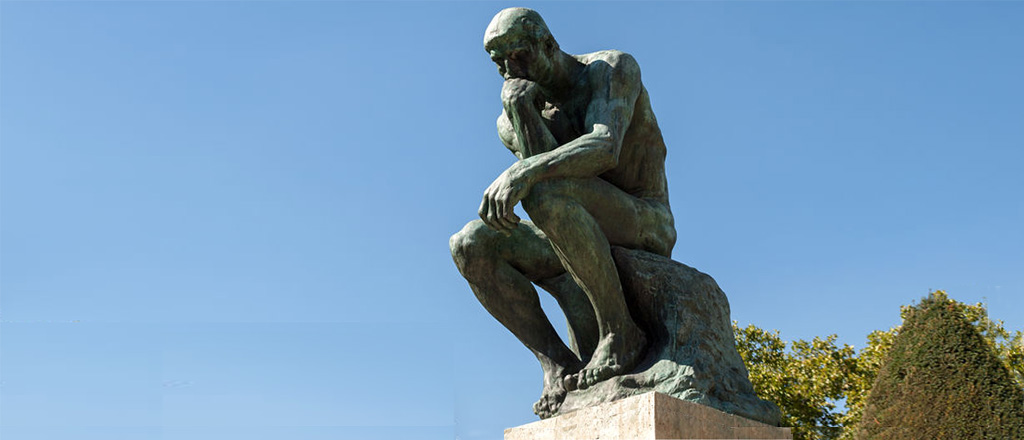
Wisdom is full of paradoxes. It is one of the oldest topics in the intellectual history of humanity, and yet talking about wisdom can feel odd and disingenuous. People seem to have intuitions about who is and isn’t wise, but if you press them to define wisdom, they will hesitate. Wisdom, with its mystical qualities, sits on a pedestal, inspiring awe and trepidation, a bit of hushed reverence thrown in. It’s easy to distil wisdom’s archetypes in history (druids, Sufi sages) or popular culture (Star Wars’ Yoda, or Harry Potter’s Dumbledore), but harder to apply to the person on the street. Most people would agree that wisdom is desirable, yet what exactly is it?…
Some psychologists are increasingly confident that they can now measure– and nurture– wisdom, superseding the “speculations” of philosophy and religion: “The Science of Wisdom.”
* Oliver Wendell Holmes
###
As we savor sagacity, we might recall that it was on this date in 1964 that Jean-Paul Sartre was awarded the Nobel Prize in Literature despite attempting to refuse it, saying that he always declined official honors since “a writer should not allow himself to be turned into an institution.”

You must be logged in to post a comment.