Archive for October 2019
“Law; an ordinance of reason for the common good, made by him who has care of the community”*…

In the fall of 1713, measles struck the city of Boston, where Cotton Mather, a Puritan theologian and pastor, lived with his pregnant wife and numerous children. Within a month, his wife, their twin newborn babies, another child, and their maidservant had all died. On November 12, Mather wrote in his journal, “The epidemical Malady began upon this Town, is like to pass thro’ the Countrey. . . . it [might] be a service unto the public, to insert in the News-paper, a brief Direction for the managing of the sick. I will advise with a Physician or two.” On November 21, he wrote, “Lord I am oppressed; undertake for me!” On November 23, he wrote, “My poor Family is now left without any Infant in it, or any under seven Years of Age.”
Eight years later, when an explosive smallpox epidemic threatened Boston’s population of eleven thousand, Mather became an outspoken advocate for a new prophylactic against the virus: inoculation. Dr. William Douglass, one of the few doctors in town with a medical degree, rallied others to oppose Mather, claiming that the method was untested (which was true, at least in the new colony) and that it jeopardized the lives of all those who received it. In young Boston, the fight over inoculation tore at epidemic-addled nerves. In November 1721, a bomb was thrown through Mather’s window. A letter attached to it read, “Cotton Mather, you dog, dam you! I’ll inoculate you with this; with a pox to you.”
Douglass won out, quashing Mather’s plans for a systematic inoculation of the town’s population. Eight hundred and forty-four people died of the virus, accounting for 75 percent of all deaths in Boston that year. The unexploded bomb on Mather’s floorboards disabuses those of us living in 2019 of the impression—generated over the past two years by endless news stories about the current global measles outbreak—that inoculation controversies are a novel feature of our present hyper-mediated, hyper-politicized time.
Measles was considered to be eliminated in the United States in 2000. Still, the virus has regained extraordinary ground—and claimed an increasing number of lives—in recent years. Seven hundred and four cases were reported in the United States in the first four months of 2019, according to the Centers for Disease Control and Prevention. The count reached 1,077 by mid-June, occurring in twenty-eight states. More than six hundred cases have occurred in New York City alone since September of 2018.
In June, the CDC issued a warning to travelers planning to leave the country, by which point outbreaks were occurring in all the places you’d expect, countries beset by depressed economies, poor public health management, war, or extreme poverty, including Ethiopia, Madagascar, Kyrgyzstan, the Democratic Republic of Congo, the Philippines, Sudan, and Georgia (not the U.S. state, although cases have been reported there as well). But also, cases were appearing in countries where entrenched vaccination systems existed and where measles had been thought largely a disease of the past: Belgium, France, Germany, and Italy.
The grand cause for these infections—and for the 300 percent growth of reported measles cases around the world in the first quarter of the year over the same quarter the previous year—is precisely the absence of what Cotton Mather proposed for 1721-era Boston: systematic vaccination of the population. The more interesting question, beyond simple international vaccination logistics, is: What ideological and historical shifts have allowed the reemergence of a disease once believed to be under controlled decline?…
A history of the debates over vaccination that asks, can the social contract be protected from a measles outbreak?: “Herd Immunity.”
* Thomas Aquinas
###
As we pull up our sleeves, we might send healing birthday greetings to Giovanni Maria Lancisi; he was born on this date in 1654. A doctor (he was personal physician to three popes), epidemiologist (he made the correlation between mosquitoes and malaria), and anatomist (his study of the heart resulted in the eponymous Lancisi’s sign), he is considered the first modern hygienist.
He carried out extensive anatomical and physiological studies, also epidemiology studies on malaria, influenza and cattle plague. Contrary to the then-traditional conception of “mal’ aria ” – literally, “bad air” – Lancisi observed that the lethal fever, malaria, disappeared when the swamps near to the city were cleared. He concluded that injurious substances transmitted from flies and mosquitoes were the origin of the disease.

“It Don’t Mean a Thing (If It Ain’t Got That Swing)”*…

In Atlanta’s historic Vine City neighborhood, hidden among the trees overgrowing the lot at the corner of Sunset and Magnolia, is a barren concrete slab. On this spot, in the heart of an early-1930s African American community, Atlanta was first introduced to what would become “America’s National Dance”: the Lindy Hop.
Teenagers from all over the Westside would flock to the Sunset Casino and Amusement Park. The cavernous pavilion, which had been converted to a dance hall, featured a rotating cast of local talent along with the best swing bands in the world — Duke Ellington, Count Basie, Ella Fitzgerald. The Sunset also held Saturday afternoon dances and weekly Jitterbug contests. At the Sunset, for just 25 cents, the city’s black youth could briefly escape the ravages of the Depression and Jim Crow and dance their cares away…
Swing Dance is a modern umbrella term that describes a range of partner dances associated with swing music. But the realest swing dance is the Lindy Hop. The Lindy Hop was an art form invented by black dancers at the Savoy Ballroom in Harlem during the late 1920s, and almost the entire history of African American dance was its source material. The dance is based on a core move called the “swing out,” in which two partners engage in a reciprocally counterbalanced swinging movement around each other. The dancers then layer on infinite embellishment and elaboration, including the acrobatic “air steps” for which the dance is known. Lindy hoppers may use rehearsed choreography when competing or performing. When dancing socially — as we normally do — Lindy Hoppers, like jazz musicians, improvise all their movements in real time, creating a wholly new dance at each moment on the floor.
The Lindy Hop evolved through the growing popularity of big bands in the mid-1930s, especially as dance troupes began touring and appearing in Hollywood movies. The term “jitterbug” was introduced to the lexicon by a Cab Calloway song in 1932 and became the preferred term for young Lindy Hop dancers, ultimately becoming synonymous with the dance itself. By the time that LIFE magazine belatedly proclaimed the Lindy Hop to be “America’s national folk dance” in 1943, the dance had been a part of cultural and social life in African American communities across the country for well over a decade…
In the South of 90 years ago, young African Americans started dancing the Lindy Hop. It was an act of resistance, an assertion of freedom against the discrimination and violence of the time. Today, swing dancers across the South — black and white together — pay proper tribute to that legacy: “Jitterbugging With Jim Crow.”
* music by Duke Ellington, lyrics by Irving Mills (1931)
###
As we trip the light fantastic, we might recall that it was on this date in 1940 that Benjamin Oliver Davis, Sr. became the first African American to rise to the rank of General in the U.S. Army. His son, Benjamin Oliver Davis, Jr., was the first African American General in the U.S. Air Force, a rank he attained after commanding the famous Tuskegee Airmen.

Benjamin O. Davis, Sr., in 1944
“It is still an unending source of surprise for me how a few scribbles on a blackboard or on a piece of paper can change the course of human affairs”*…

For the last year, Jessica Wynne, a photographer and professor at the Fashion Institute of Technology in New York, has been photographing mathematicians’ blackboards, finding art in the swirling gangs of symbols sketched in the heat of imagination, argument and speculation. “Do Not Erase,” a collection of these images, will be published by Princeton University Press in the fall of 2020…
This is what thought looks like.
Ideas, and ideas about ideas. Suppositions and suspicions about relationships among abstract notions — shape, number, geometry, space — emerging through a fog of chalk dust, preferably of the silky Hagoromo chalk, originally from Japan, now made in South Korea.
In these diagrams, mysteries are being born and solved…

More (and larger) examples from this photo survey of the blackboards of mathematicians at “Where Theory Meets Chalk, Dust Flies.”
###
As we scribble “do not erase,” we might spare a thought for Herbert Aaron Hauptman; he died on this date in 2011. A mathematician, he pioneered and developed a mathematical method that has changed the whole field of chemistry and opened a new era in research in determination of molecular structures of crystallized materials. Today, Hauptman’s “direct methods,” which he continued to improve and refine, are routinely used to solve complicated structures… work for which he shared the the 1985 Nobel Prize in Chemistry.

“Turn the page”*…

Like elevators, page turners are only remarkable when things go awry. And go awry they do…
But then…
There are breakout moments in musical history where turners become visible and audible through neither accident nor error. In Ravel’s two-piano version of his Introduction and Allegro, he calls for a mysterious “third hand ad lib.” to perform an impossible trill—a part that could only be executed by an especially daring page turner, reaching across the keyboard and right into the middle of the action. In the middle movement of Charles Ives’s Violin Sonata No.2, a raucous hoe-down, the composer’s manuscript features an additional stave with a drum-like rhythm instructing the page turner to smash out noisy cluster chords at the bottom end of the keyboard. It’s a strong reaction to anonymity…
Why pager turners matter (with an number of very amusing examples): “Turning Over.”
* Metallica (from the 1988 album “Garage, Inc.”)
###
As we keep time, we might recall that it was on this date in 1897 that Alexander Scriabin’s piano concerto premiered in Odessa, with Scriabin as soloist. Already a renowned pianist, the then-24-year-old Scriabin was making his debut as a composer for the orchestra (with what turned out to be his only concerto). While this early work was influenced by Chopin, Scriabin went on to develop (independently of Schoenberg) an atonal musical system, and was one of the most innovative– and most controversial– of early modern composers. The Great Soviet Encyclopedia said of Scriabin that “no composer has had more scorn heaped on him or greater love bestowed.”

“What we need in this country is a general improvement in eating”*…

A Mexican official examines chili powder at an American factory, Gebhardt Mexican Foods Company
Gumbo. Chile con queso. California roll. Spaghetti and meatballs.
The names are as familiar as household brands. Yet how much do you know about these dishes? Based on the names alone, with their roots in other languages and other cultures, each dish sounds like an import. In some ways, they are. But each dish also morphed and adapted to its new environment, transforming into something uniquely American.
Some transformed through industrialization. Another required the ingenuity of chefs willing to break from tradition. One adapted, and continues to adapt, to the dizzying constellation of cultures that is New Orleans…
How four dishes with roots in other lands tell a story of immigration and transformation: “Made in America.”
* H.L. Mencken (who arguably got, per the article linked above, what he asked for)
###
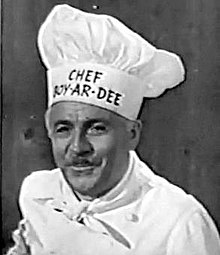
As we dig in, we might send tasty birthday greetings to Ettore “Hector” Boiardi; he was born on this date in 1897. An Italian immigrant who became a successful chef (at The Plaza and the Greenbrier), he opened his first restaurant, Il Giardino d’Italia (The Garden of Italy) in Cleveland in 1926. The following year he met Maurice and Eva Weiner, patrons of his restaurant and owners of a local self-service grocery store chain; they helped him market his spaghetti sauce in jars… and the heat-and-eat Italian food empire that became known as Chef Boy-Ar-Dee was born. Boiardi became a wealthy man– and something of a celebrity via his appearances in television commercials for his products.
You must be logged in to post a comment.